


A calm guide for family and friends: what schizophrenia and psychosis can look like, how to talk when their reality feels different, what to say and avoid, everyday support, when it is a crisis, and caring for yourself.

Panic attacks feel dangerous, but they are not. Here is how to help an attack pass sooner, what to do afterward and how therapy can break the cycle so the next one is less likely.
This article explains the difference between everyday sadness and clinical depression. It describes key symptoms of depression, reasons we confuse them, self-care tips for feeling down, and guidance on when to seek professional help. It also offers advice on supporting someone with depression and invites readers to book an appointment with Transformation Counselling.
Learn what countertransference is and why it matters in therapy. Discover the difference between transference and countertransference, examples, how therapists manage their reactions, what clients should know, and why exploring these dynamics in counselling can lead to healing. Includes a compassionate invitation to book with Transformation Counselling.
Learn how to become a psychiatrist in Canada, from completing an undergraduate degree and medical school to psychiatry residency, licensing exams, and provincial registration. Explore the education requirements, training timeline, and essential steps needed to begin a career in Canadian psychiatry.
Learn how trauma affects your Window of Tolerance and leads to emotional overwhelm, anxiety, or shutdown. Discover signs of hyperarousal, hypoarousal, and how to heal with grounding tools and online trauma counselling. Start your healing journey with Transformation Counselling today.
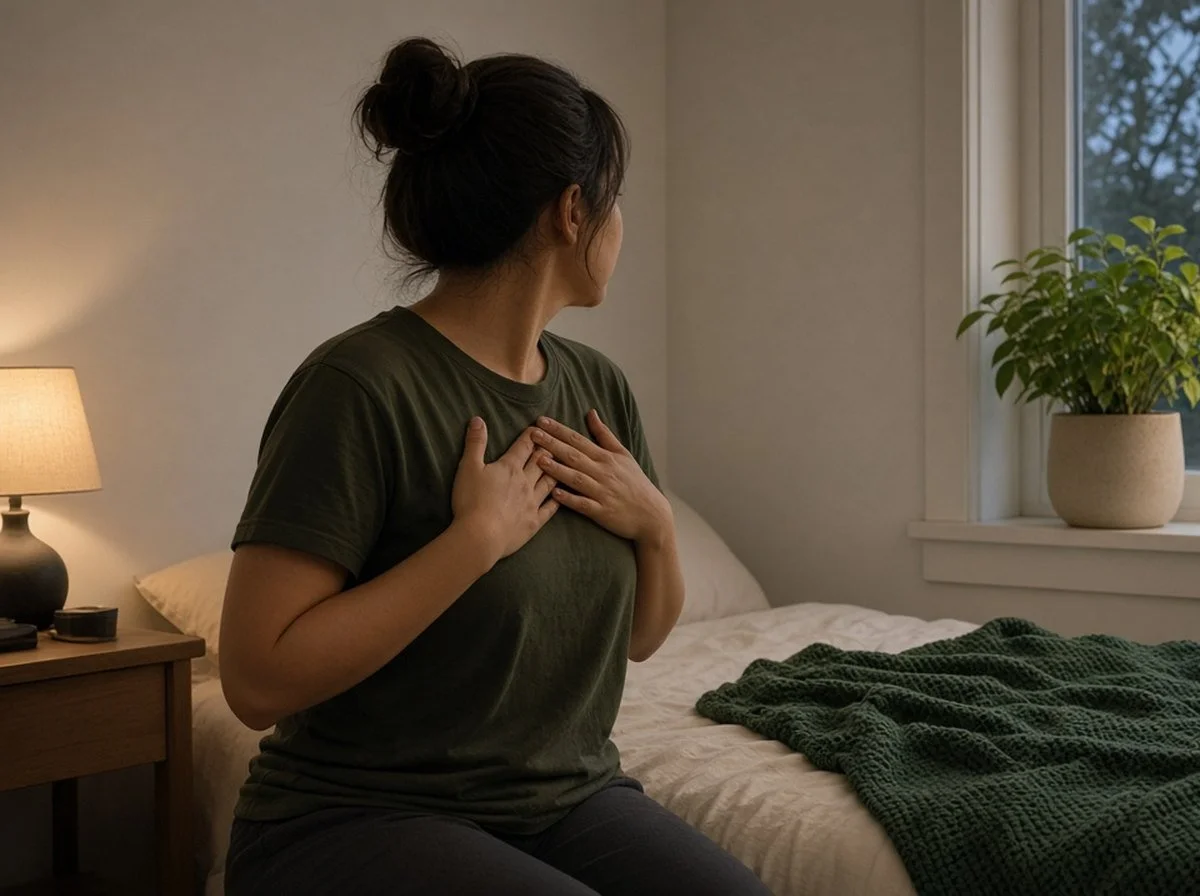
If you've already had the first conversation and it went badly, you can have a second one. Most first conversations go badly. You were frightened, frightened people reach for the wrong sentence, and a teenager who heard the wrong sentence on Tuesday can hear a better one on Thursday. Nothing about self harm in teens is settled by the first five minutes. This guide is written for you, the parent.

Teenage self harm signs are rarely dramatic. Often the first thing is an explanation that didn't quite fit. A mark with a story attached, a cat that doesn't scratch, a fall nobody saw.
Then the pattern around it. Long sleeves in weather that doesn't call for them. Getting changed with the door shut, when that never used to happen. A bag or a drawer that's suddenly private. Sleep gone strange in either direction.
And sometimes nothing visible at all. A teenager can be cheerful in company and fine at school while this is going on. Much of what gets written concerns self harm in teenage girls, and none of the signs below change if your teenager is a boy. If what you've got is a feeling rather than evidence, that's still worth acting on.
Parents call us about this more often than you'd guess. A free fifteen-minute conversation with a teen counsellor lets you ask the awkward questions before your teenager is in the room.
Almost always, relief. Something inside has got bigger than they can hold, or gone so numb that feeling anything is preferable, and this brings the volume down fast. That's the hard part for a parent: it works, briefly, which is why it repeats.
Underneath the relief there's usually something else. Low mood that's been running for months. Anxiety with no off switch. A breakup, a friendship that turned, bullying, something that happened that they haven't told anyone. Sometimes it's self-punishment, from a teenager who has decided they deserve it.
Why do teens self harm rather than talk? Because talking means trusting that the listener can take it, and most teenagers haven't tested that. They also know how frightened you would be, and protecting you from that keeps them quiet.
Is self harm the same thing as being suicidal? Usually not. Most young people who hurt themselves are trying to keep going rather than to stop. Both things are true at once: it is not an attempt, and it does raise risk over time. You take it seriously without assuming the worst out loud.
It is not attention seeking. Even where a young person does want to be noticed, that is a request worth answering rather than a crime.
How to talk to my teen about self harm starts with picking the moment. No audience, no deadline, and side by side rather than face to face, so a car or a walk helps.
Start by removing the two things they're braced for, anger and panic:
"I saw your arm. I'm not angry, and I'm glad I know."
Give them a way to say nothing without it being a failure:
"You don't have to explain it now. I'd like to sit here for a minute."
Ask what it does for them, rather than why they'd do it:
"Can you tell me what it does for you? I want to understand it before I say anything else."
Ask the other question plainly, because it changes what happens next:
"Sometimes when things get this heavy, people also think about not being here. Has any of that been happening?"
Say what you're going to do, and leave them a say in it:
"I'm going to find you someone good to talk to. You get a say in who it is."
And close the loop, so honesty isn't a one-time offer:
"If it happens again, you can still tell me. I'd rather know than not know."
Your tone matters more than your wording. Low, slow, unhurried.
"Promise me you'll stop." A promise extracted while you're frightened protects you, not them, and what it produces next is a lie.
"Do you know how this makes me feel?" It lands as one more person to look after, which is often part of how they got here.
"Show me." Inspecting them turns you into someone to hide from. Ask whether anything needs cleaning or covering instead.
"Is this because of that boy?" A fast cause settles your nerves and dismisses theirs. It is rarely one thing.
"You're doing it for attention." This is the sentence that ends the conversation for good.
Nothing at all. Some parents ask once, hear an answer they can't handle, and never raise it again. From the other side that reads as: even my parent couldn't cope.
Reduce access, calmly and out loud. Put the obvious things somewhere less immediate and say why. Do it with them if they'll let you, and don't make it a search of their room, which costs more trust than it buys. Urges rise and fall rather than hold steady, and a few steps between your teenager and the means gives one room to fall.
Keep basic first aid in the house and tell them it's there. It's an uncomfortable thing to say, and better than an infection they hide.
Don't take the phone as a punishment. Whatever else it is, it's where their friends live, and removing the support along with the behaviour leaves them with less.
Keep the ordinary going. Meals, lifts, the dog, the jokes. A household entirely about this exhausts everyone, and normality steadies.
Book something. Book a free 15-minute consultation and we’ll help you find the right counsellor for your teen. For children and youth up to 18 in Waterloo Region, Front Door at Starling Community Services is the publicly funded way in, on 519-749-2932, Monday to Friday, 8:30am to 4:30pm. In Ottawa, public intake goes through OCCARS, which a doctor or the school applies to on your family’s behalf rather than you phoning in.
Tell one adult at school, with your teenager's knowledge. Not the details. Ontario schools have social workers and child and youth workers you can ask for.
You'll go over the last two years looking for the moment you missed. Most parents do, and it rarely produces anything useful. Young people arrive here through many doors, most out of a parent's sight.
Find one adult outside the house to talk to, so your teenager isn't managing your fear.
Expect to feel angry as well as frightened, and guilty about the anger. Both are ordinary, and neither makes you a bad parent.
Sleep when you can, and share the worrying with another adult if there is one.
Move faster if the marks are getting worse, if it's happening more often, if they've talked about not being here, or if they can't tell you they'll be safe tonight.
Waterloo Region has Here 24/7, and the number is 1-844-437-3247, staffed overnight as well as through the day. From anywhere in Canada, 9-8-8 is there for your teenager and for you, by call or by text. Ottawa has the Youth Services Bureau crisis line on 613-260-2360, and 1-877-377-7775 for callers beyond the city. Parents can use it as readily as young people 17 and under. If the risk is right now, call 911 or get to an emergency department. That's what those lines are for, and it isn't what our practice does.
Teen suicide warning signs covers the signs worth knowing, and depression in teens covers the low mood underneath. If this is something you do yourself, self harm in adults is written for you rather than a parent.
In counselling, our clinicians work on the feeling the behaviour manages and build other ways to bring it down, often drawing on DBT skills, developed for exactly this. Our teen counsellors are at all five of our offices, and video is an option when getting a teenager into a building isn't realistic. Billing goes straight to your insurer, a family doctor doesn't have to be involved to start, and your teenager isn't joining a queue.
Not knowing the next step is where most parents start. Describe what you've found in a free quarter-hour with one of our teen counsellors and we'll work out the next move together.
Your eight-year-old asked from the back seat why everyone keeps whispering. You said something about a friend of Dad's being very sick, and you've regretted it at every red light since. Your teenager has already heard the real version at school. Your team has gone quiet. And you're the one who'll have to say it out loud, at the dinner table or in Monday's meeting, without knowing how to talk about suicide in a way that helps rather than harms. This page covers the days and weeks after a death, at home, at work and at school. Asking someone you're worried about whether they're safe is a different conversation, covered in how to ask about suicide.
Most of what follows started as guidance for journalists, because how a death is reported can raise the risk for people already struggling, young people most of all. The same principles hold at home. Here are five things reasonable people believe, and what's true instead.

Said in good faith: "If we bring it up with the kids, or say the word at work, we're planting something. Better to keep it vague and let the people who need to know find out quietly."
Does talking about suicide make it more likely? Talking about it plainly doesn't. Naming the death, saying the word, asking someone how they're doing with it: none of that raises anyone's risk, and silence leaves the people most affected alone with what they've heard. What can raise risk is a particular way of talking. Describing the method. Presenting the death as a solution to a problem, or as a release. Making the person a legend. Repeating it in graphic detail. That's contagion, the way one death can be followed by others in the same school or town, and it's driven by how the story gets told, not by whether it's told.
So the fix isn't silence. It's saying the true thing, in plain words, without the details that turn a death into a template.
If your family or your workplace is in the first weeks after a death, a free fifteen-minute talk with a counsellor is a fair place to plan the conversation you're dreading.
Said in good faith: "They're eight. They don't need to know how he died. We'll say he was sick, and when they're older we'll explain."
A kind instinct, with a flaw. Children find out. From an older cousin, from a phone, from a classmate whose parents were less careful. And when they learn you knew and didn't say, the lesson is that this subject can't be brought to you.
How do I explain a suicide to my child? In words that fit their age, without lying. For a young child: "Uncle Pete died. He had an illness in his brain that made him hurt so much that he made his body stop working. It isn't anything you did, and it isn't something that happens to people who are sad for a while." For an older child or a teenager, more directly: "He died by suicide. He'd been struggling for a long time, more than most of us knew. If you ever feel anything like that, I want you to tell me, and I won't be angry." Then stop and let them ask. They'll ask less than you fear.
For a teenager who knew the person, ask directly whether they've had thoughts of their own. The question doesn't plant anything. It opens a door they might not have known was there. Our page on teen suicide warning signs covers what to watch for in the months after.
Said in good faith: "She was suffering for years. At least she's not in pain anymore. Saying that is a comfort, isn't it?"
What words should I avoid? This is the one that matters most, and here's why. To someone who's still alive and still in pain, "at peace now" describes an exit. It says that death worked. For a person already thinking about it, hearing suicide framed as relief, as rest, as the end of suffering, can make the option feel more like a solution than it did yesterday. You don't know who in the room is that person.
A second phrase to retire: "committed suicide" comes from an era when it was a crime, and it keeps a whiff of blame. "Died by suicide" or "took her own life" say the same thing without the verdict. And avoid "successful" or "failed" for attempts. Nobody succeeds at dying.
What to say instead of "at peace": "She was in more pain than we could see, and I wish she'd been able to get more help." That's honest, it's warm, and it points toward help rather than toward death.
Said in good faith: "People are going to ask how. If we don't say, the rumours will be worse. Better to be open about what happened."
Openness is usually right. The method is the exception, the one detail that does harm and no good. Knowing how a person died doesn't help anyone grieve, and for someone who's vulnerable it can supply the missing piece of a plan they'd only half formed. The same goes for the location, the note, and any picture of the scene.
So when someone asks how, you can be open without answering. "He died by suicide. I'm not going to talk about how, because it doesn't help and it can hurt. I'd rather tell you about him." Then do. The person's life is the story. The death is one line of it.
At work, say it once, clearly, to the whole team, so nobody hears it from the hallway. Name the death as suicide if the family has agreed. Leave out the method. Say what support exists and where.
Said in good faith: "It's been three weeks. Everyone's talked it out. Bringing it up again reopens the wound."
Grief after suicide doesn't run on the news cycle. The first weeks are numb and busy. The hard part often arrives later, at the first birthday, the first ordinary Tuesday, when the cards have stopped. And the people closest to the person, especially young people, need watching for months, not days. A conversation that ends at three weeks tells them the window for asking for help has shut.
What does continuing look like? Not a weekly memorial. A check-in that names the person. "I was thinking about Marc this morning. How are you doing with it?" Asked at six weeks, three months, and the anniversary. At work, a manager who asks the closest colleague how they're sleeping, twice. At school, a teacher who notices the friend who's gone quiet in May.
How do we talk about it at work or school? Plainly, once, and then again later. Ontario school boards have mental health staff, so ask what the school is doing before you assume it's nothing. And if someone at any point says they've been having thoughts of their own, that's the moment the conversation changes shape. Anywhere in Canada, they can call or text 9-8-8. Around Kitchener, Waterloo and Cambridge, Here 24/7 answers 1-844-437-3247 whatever the hour. Ottawa's Distress Centre answers 613-238-3311 day and night, and the city's Mental Health Crisis Line takes 613-722-6914 in town or 1-866-996-0991 toll free. Ottawa's Youth Services Bureau answers a young person on 613-260-2360, with 1-877-377-7775 for families farther out. Immediate danger is a 911 call or the closest emergency room. Our practice can't offer crisis support, and those services can.
Say the word. Leave out the method. Talk about the life more than the death. Keep asking after the news stops.
At home, choose a time when nobody has to rush off. Tell the children together, in words that fit their ages, and tell them it wasn't their fault, because children look for their own part in things. Expect the questions to come in pieces over weeks. Let them see you sad. And watch the one child who seems fine, because seeming fine wears out.
At work, one clear message from the top, then practical care. Time off for the funeral. Lighter loads for the people closest to it. A named person to talk to, whether that's an employee assistance program or a counsellor brought in for a day. Don't rank grief. The quiet colleague two desks over may have been closer than anyone knew.
At school, follow the school's lead and fill the gaps at home. Ask your child what they've heard, correct the rumours gently, and repeat the two things that matter: it wasn't anyone's fault, and if they ever feel that way, they can tell you.
In Ontario, Bereaved Families of Ontario runs free peer support through affiliates across the province, including Ottawa, led by people who've lost someone themselves, and 211 Ontario lists grief programs by region. Counselling helps too, for the family or for one person in it. What a therapist does with a bereaved family isn't to make the grief smaller. It's to give the anger, the guilt and the unanswered why somewhere to go, to help parents find words for children, and to watch for anyone whose grief is starting to look like something else. We do that work face to face in Waterloo Region, where the practice has been since 2016, at the Ottawa office, or over a video link, and most workplace plans cover it with the claim sent from our side. No referral is needed.
Say the word. Book a free fifteen-minute sit-down, by video if that is easier and tell us who you need to talk to, and what you're afraid of getting wrong.
If you are in a crisis or any other person may be in danger, don't use this site. These resources can provide you with immediate support.