
A nap can be a kindness to a tired body, and it can also be a clue that something else is going on. Napping and mental health are linked in both directions: a short rest can help you feel more alert, and a strong, frequent urge to nap can go with low mood or anxiety. This article looks at when a nap helps, when it may be a signal, and how to treat rest as information rather than as a problem in itself.
This article is general information, not medical advice and not a treatment plan for sleep problems. We do not offer insomnia treatment.
Is napping good for you?
Often, yes, in moderation. An umbrella review of napping research has linked shorter naps with better recovery, especially when you have not had enough rest the night before, while treating longer regular naps as a different pattern. The findings are associations, not proof that a nap causes a later problem, and they are not a medical rule for your day. That is an association, not a promise that a nap will fix a hard week, and it is not a reason to ignore what your nights look like.
Naps are not a substitute for ongoing poor night sleep. If evenings are restless or mornings are heavy most days, the night pattern is the larger issue. Our article on sleep and mental health looks at that night-time picture more closely. A nap can still help you get through a given afternoon. It just cannot do all the work of a regular night. If you are using naps to paper over a long stretch of short nights, it may be time to look at the evening routine as well, without turning that into a new source of self-criticism.
How long should a nap be?
There is no single perfect length that fits everyone, and this article will not treat a clock number as a medical rule. A useful everyday distinction is between shorter naps and long regular naps. Shorter naps are the ones people often use for a quick lift. Long regular naps, especially if they start to take up a large part of the afternoon, are a different pattern and may be worth noticing.
Timing matters in a practical way. An earlier afternoon rest is less likely to crowd the evening than a late one, though your own body is the better guide. If a nap leaves you groggy, or makes it harder to fall asleep at night, that is information you can use to adjust, not a failing. Some people do better with a brief rest in a chair rather than a full lie-down. Others do better skipping the nap on days when they know they need to be sleepy at a regular bedtime. Experiment gently, and give a change a few days before you decide it does not help.
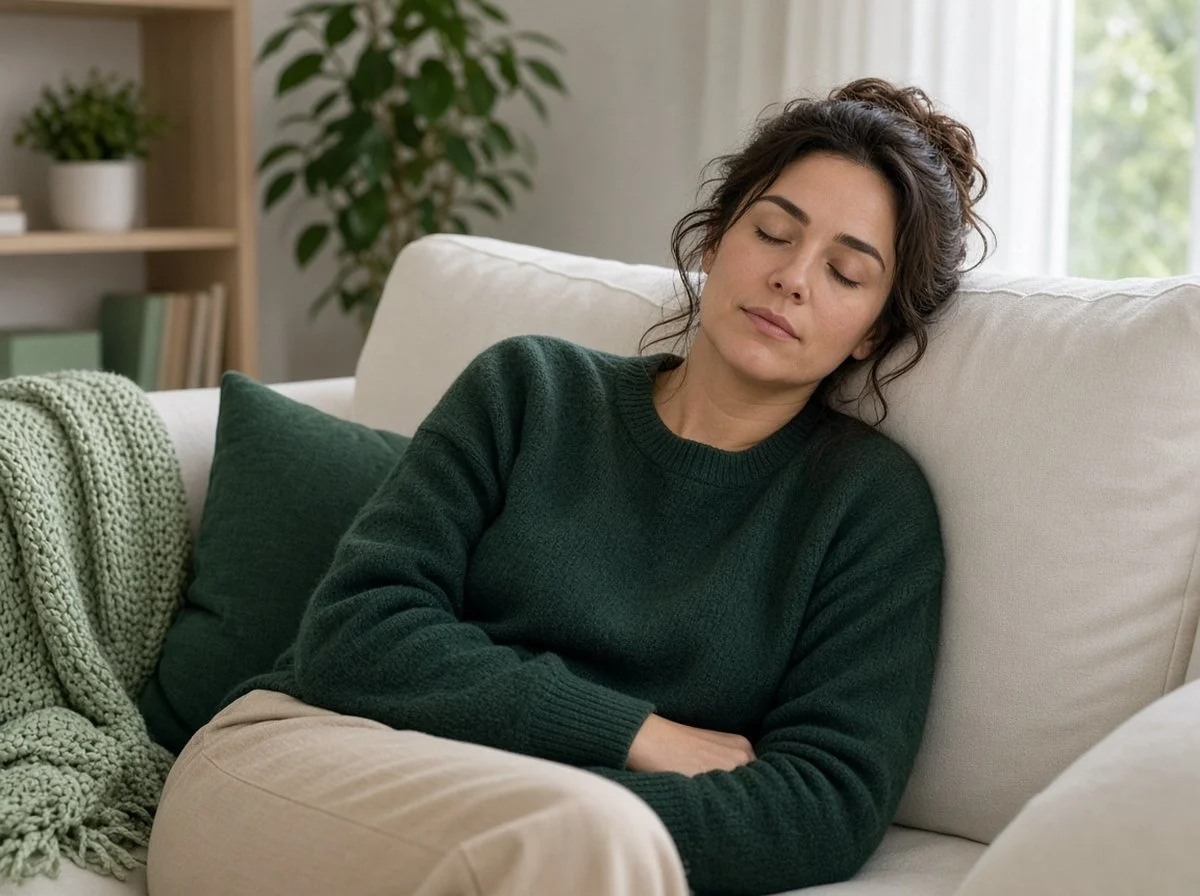
Napping and depression: when the urge to nap is a signal
The urge to nap can sometimes be a louder signal than the nap itself. In two U.S. studies, Allie Ostrow, Erin Shattuck, and Martin Seehuus found that wanting to nap was linked with more low mood and anxiety, more than actually napping was. In other words, the pull toward sleep, on its own, may be worth paying attention to.
That does not mean a nap is harmful, or that wanting a rest means you are depressed. It means a frequent, strong desire to check out into sleep can be one clue, among others, that your mood or your load needs a closer look. Sleeping a lot can also be part of depression for some people. If the urge to nap is new, strong, or paired with a heavier mood, it is reasonable to talk with someone, rather than only trying to optimise the nap.
Naps, stress and an overloaded mind
Sometimes a nap is also a way out of a stressful afternoon. Rest can be exactly what you need. Avoidance can hide in the same shape: you lie down not because the body is asking for sleep, but because email, a hard conversation, or a low mood feels like too much.
A useful question is, “Do I need rest, or do I need a pause that is not sleep?” If it is rest, a planned shorter nap can be kind. If it is escape, a different reset may serve you better, such as a short walk, a glass of water, or a few minutes of tensing and releasing the muscles. Our article on progressive muscle relaxation walks through that kind of pause. You can still nap later if the body is genuinely tired.
Simple nap habits that support your mood
A few simple habits can keep napping on the helpful side of the line. Pick a set window in the afternoon rather than drifting onto the couch whenever the mood dips. Use a timer so a shorter nap does not slide into a long one by accident. After you get up, add a little light and movement, even if that is only standing by a window and stretching.
Notice the pattern over a week. When do you want the nap? How do you feel after? Is the pull stronger on days when your mood is lower, or only on days when you slept poorly? This is not a medical test. It is a way of treating the nap as information. If the week tells you that you only want to nap when your mood is low, the next step may be support for mood or stress, not a stricter nap rule. This article does not recommend sleep medicines, supplements, or a specific treatment for insomnia.
When to talk to someone
It may be time to talk to someone if tiredness, low mood, or the wish to escape into sleep has been hanging around, or if no amount of rest seems to help you feel like yourself. Counselling can help with mood, stress, and daily routines. We do not offer insomnia treatment, and we will not pretend a talk session is a sleep clinic.
You do not have to figure out, on your own, whether the nap is helpful rest or a signal. A first conversation can help you look at the pattern in context, including stress, mood, and what nights have been like. If you want that kind of support, visit our page on individual counselling. A free 15-minute consultation with our admin team can help match you with a therapist who works this way.

Cost, billing and your first step
Individual sessions with our therapists range from $130 to $200, depending on the clinician. Couples and family sessions range from $170 to $200.
We accept Health Spending Accounts. We can direct bill many insurers, including for RP (Qualifying) clinicians. Some plans cover up to 100% of the session fee. Coverage still depends on your plan, so check with your insurer before you start. We cannot promise what any one plan will pay.
We see people in Kitchener, Waterloo, Cambridge and Ottawa, and online across Ontario.
If you want help, book a free 15-minute consultation with our admin team. It is a chance to ask questions and see whether counselling is a good fit. Booking it does not commit you to ongoing sessions. The call is not a therapy session or a crisis service. Our admin team can match you with a therapist who works this way.
If you are in immediate danger, call 911. If you are thinking about suicide, call or text 9-8-8, any time.
Last reviewed: November 2026