
When you have been tense for a long time, it can be hard to remember how to let go. Progressive muscle relaxation, often called PMR, is a simple way to practise that letting go, one muscle group at a time. You gently tense a group of muscles, then release them, and notice the difference.
This article explains what progressive muscle relaxation is, how to do a full practice and a shorter version, how people use it for anxiety or at bedtime, what to try if relaxing feels hard, a playful version for children, and what research has found. It is a skill, not a medical treatment, and it will not work the same way for everyone.
What is progressive muscle relaxation?
The National Center for Complementary and Integrative Health describes progressive muscle relaxation as a relaxation technique that involves tensing different muscles in your body and then releasing the tension. The idea is simple. If you notice the contrast between tight and soft, your body may learn, over time, what “softer” feels like.
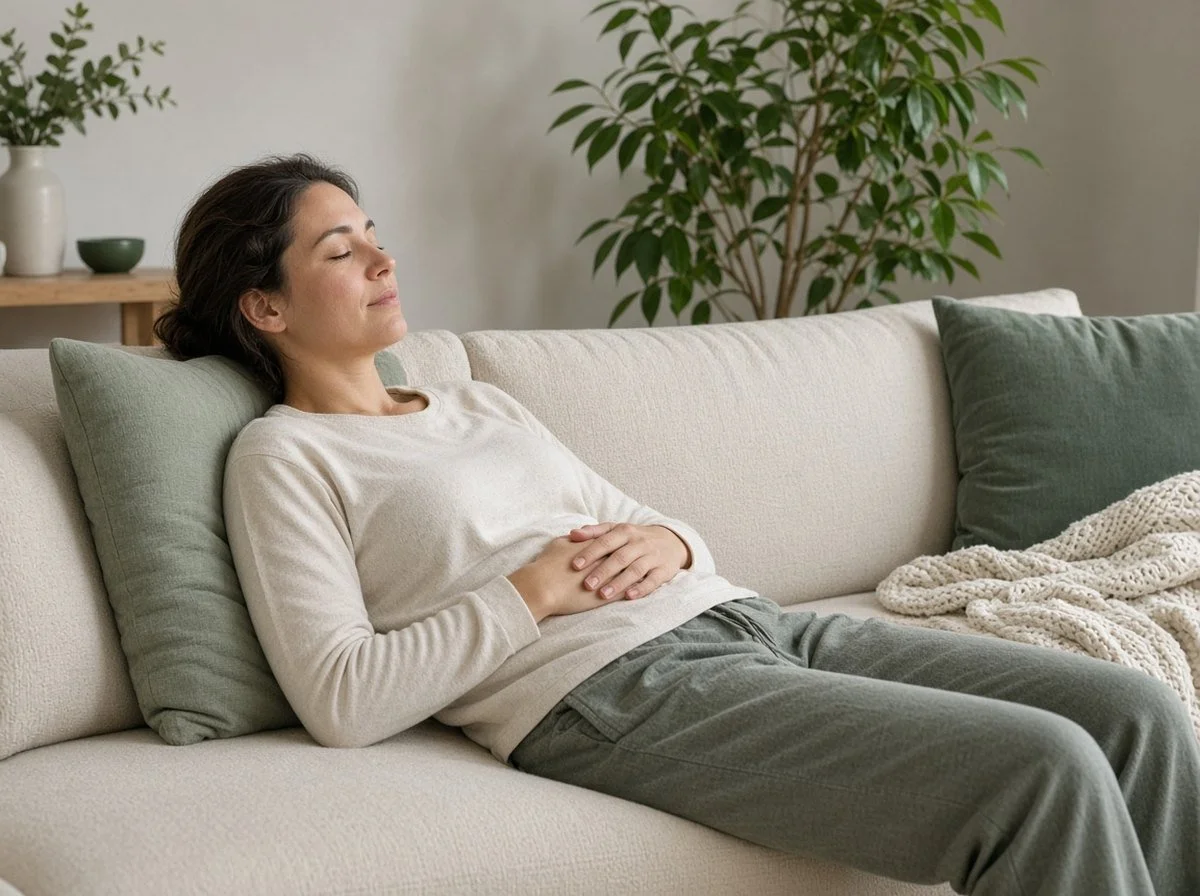
You can practise sitting or lying down, in a quiet place if you can find one. Eyes can be closed or open. If you have a sore or injured area, skip that part and keep the rest gentle. You are in charge of the pace.
How to do progressive muscle relaxation, step by step
The American Psychological Association’s guidance on handling stress includes a simple timing pattern: inhale and tense a muscle group for five to 10 seconds, then exhale and release the muscles, and rest for 10 seconds or more before you move on. You do not need a recording or a special setting. A few minutes and a comfortable position are enough.
A common order is to start at the hands and move downward, then finish with a quick scan of the whole body. Move slowly, and stop if anything hurts.
Hands and forearms. Make fists and tighten your forearms, then let them go and notice the warmth or heaviness that follows.
Upper arms and shoulders. Draw your shoulders up or tighten your upper arms, then drop them and let the shoulders rest.
Face and neck. Gently tighten your jaw, eyes or brow, then soften your face. If your neck is tight, a small tense-and-release is enough.
Chest and back. Take a slightly deeper breath and tighten across the chest or upper back, then release and let the breath be ordinary again.
Belly. Tighten your abdomen as if you were bracing, then let the belly be soft.
Thighs. Tighten the front of your thighs, then let them go.
Calves and feet. Point or gently flex the feet, then release and let the legs feel heavy.
Whole-body scan. Let your attention move from head to toe, and invite any leftover tightness to soften, without forcing it.
You can do this once, or repeat a group that still feels busy. There is no prize for finishing quickly.
A 5 minute version for busy days
On a busy day, a short version can still help. Think of four large groups and spend about a minute on each, including the rest after you release.
Legs, from the thighs to the feet
Midsection, including the belly and lower back
Arms and shoulders
Face and neck, then a brief whole-body pause
Five minutes will not fix a hard week. It can be enough to remind your body that it does not have to stay braced all afternoon. If you only have two minutes, do the hands and the shoulders, and stop there.
Using progressive muscle relaxation for anxiety
Anxiety often lives in the body as much as in thoughts. Tight shoulders, a clenched jaw, or restless legs can keep a worry loop going. A slow tense-and-release cycle can give your attention somewhere specific to land, which is one reason people use progressive muscle relaxation for anxiety.
It can also sit beside other calming skills. Our article on how to calm your nervous system offers more ways to settle when you feel wound up. Progressive muscle relaxation is one option, not the only one.
If you have a history of trauma, keep the practice short and stay in control. You can keep your eyes open, sit up, and skip any area that feels exposing or unsafe. If a wave of feeling shows up, you can stop, look around the room, and come back later.
If you are thinking about suicide or hurting yourself, call or text 9-8-8 now. If you or someone else is in immediate danger, call 911.
Using progressive muscle relaxation at bedtime
Some people use progressive muscle relaxation at bedtime to help the body shift out of the day’s tension. A dim room, a comfortable position, and a slow pass through the muscle groups can be part of winding down. Our article on sleep and mental health looks at the wider link between rest and mood.
This is not a claim that the practice treats a sleep disorder, and it is not a replacement for other care you may already have. It is one settling skill you can try, and you can stop if it leaves you more alert instead of sleepier.
Tips if relaxing feels hard
Relaxing is a skill, and it can feel awkward at first. You might find yourself checking whether you are “doing it right,” or feeling restless when you try to let go.
A few adjustments can help. Keep the first practices short. Use a lighter tense, not a strain. Keep your eyes open if closing them feels uneasy. Practise at a time of day when you are not already exhausted, then try it in the evening later if you want.
For some people, trying to relax actually turns the anxiety up. If that happens, you are not failing. Our article on relaxation-induced anxiety explains this pattern and what can help. You can switch to a shorter practice, keep your eyes open, or choose a different calming skill for a while.
A simple version for kids
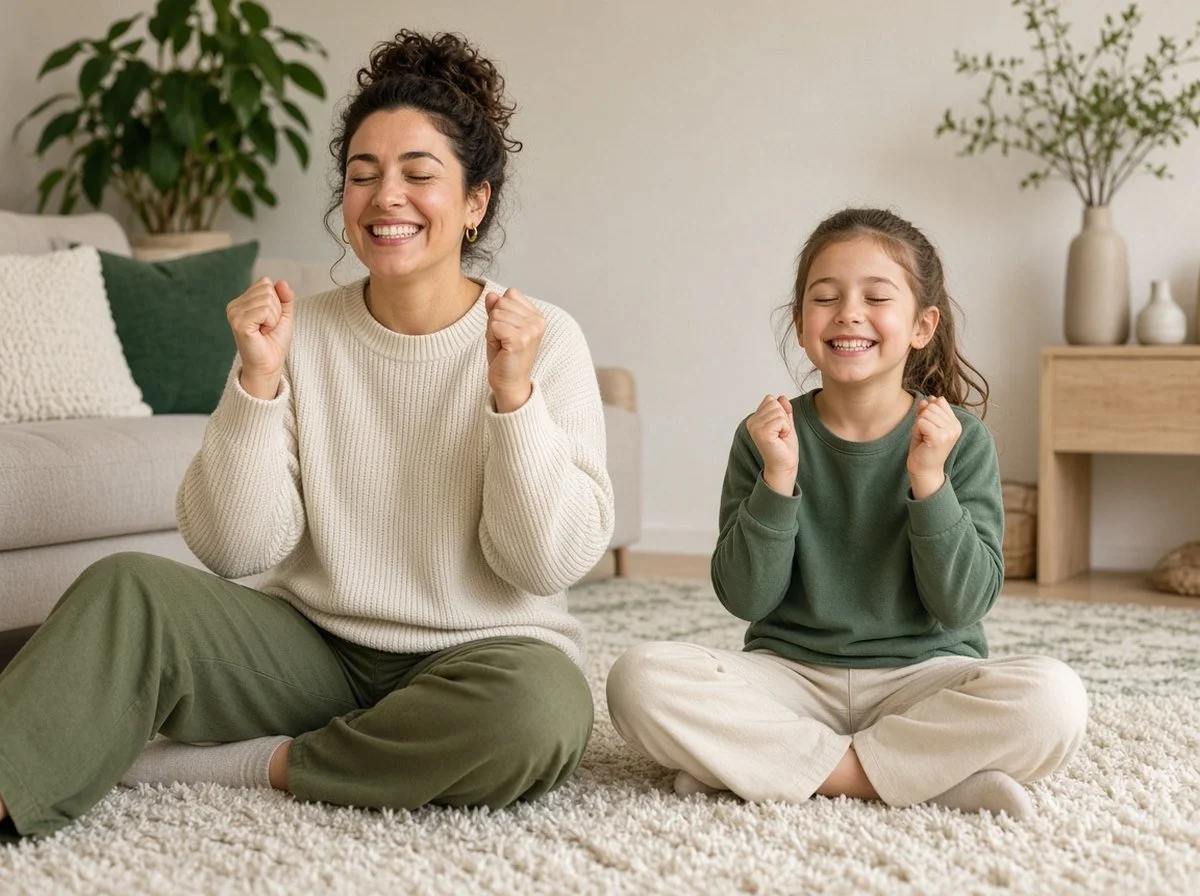
Children aged 6 and up can try a playful, shorter version with a parent or caregiver. Keep it light, and stop if the child is not interested.
You might say, “Squeeze your hands like you are pressing lemons, then drop the lemons and shake your fingers out.” Then, “Lift your shoulders up toward your ears like a turtle, then let the turtle come back out.” Then, “Press your legs into the floor as if you were standing strong, then let them go soft.” One or two rounds is enough. Praise the effort, not a perfect still body. This is a home practice, not a classroom lesson.
What the research shows
A small 2021 study by Toussaint and colleagues asked 60 undergraduate students to complete a single 20-minute session of progressive muscle relaxation, deep breathing, or guided imagery, compared with a control group. All three relaxation practices increased feelings of relaxation compared with the control group. This was one short session in a small student sample, not a test of long-term change.
A 2026 review by Donato and colleagues pooled 31 randomized trials with 2,277 participants. Across those trials, progressive muscle relaxation was linked with better sleep quality and lower anxiety than comparison conditions. The results varied widely from study to study, and the authors noted that effects can differ across people and settings. In plain terms, many people find it helpful, and it is not a guarantee. It is a low-cost skill you can try and then judge by how your own body responds.
How counselling can help
If stress or anxiety keeps your body on edge, counselling can help you learn skills that fit you, including progressive muscle relaxation when it is a good match, and other approaches when it is not. A counsellor can also help if worry, trauma, or sleep trouble is part of a bigger picture. Sessions are individual, in person or online, and can include a child and parent when that is the right fit.
We offer counselling at our Kitchener-Waterloo, Cambridge and Ottawa offices and online across Ontario. Children 6 and up are seen.
Your next step
If stress or anxiety keeps your body on edge, book a free 15-minute consultation with our admin team and learn skills that fit you. It is a chance to ask questions and see whether counselling is a good fit. Booking it does not commit you to ongoing sessions. The call is not a therapy session or a crisis service.
If you or someone you love is in immediate danger, call 911. If you are thinking about suicide, call or text 9-8-8, any time.
Last reviewed: November 2026