
Kindness and mental health are linked in everyday life and in research. Small acts of kindness can ease loneliness for some people and lift mood for others. World Kindness Day falls on November 13 each year, including November 13, 2026. This post focuses on kindness, not gratitude. The two are cousins, not twins.
This post is general information, not medical advice or a diagnosis.
The benefits of kindness, what research suggests
The benefits of kindness show up in both common sense and studies. In the KIND Challenge trials, adults in the USA, UK and Australia were asked to do at least one act of kindness a week for four weeks. Researchers studied effects on loneliness, mental health and neighbourhood ties (Lim and colleagues, see Sources).
Another experiment compared kind acts for others, kind acts for yourself and a neutral task over four weeks. The study looked at well-being outcomes (Fritz and colleagues, see Sources). We stick to the well-being angle only. We make no claims about cellular aging.
Results vary by person. Kindness is a help, not a cure.
Why kindness may help your mood
Kindness can shift attention outward, create small moments of connection and remind you that you can affect someone else’s day. Kindness and loneliness often meet here. A short, warm exchange can make a day feel less empty.
Kindness can also rebound. When you help, you may feel useful and less stuck in your own loop. That rebound is real for many people, and it is still okay if you do not feel a glow every time.
Small acts of kindness that fit real life
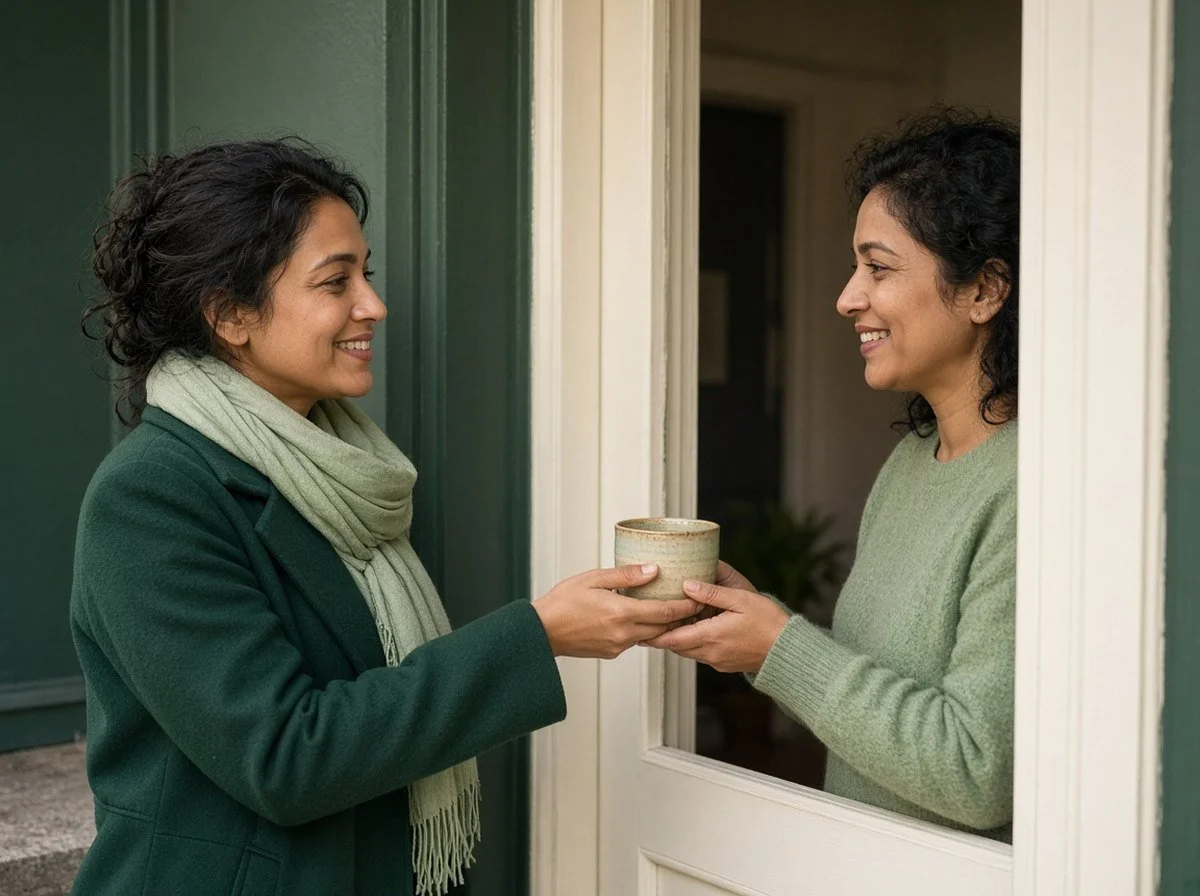
Acts of kindness do not need money or a big stage:
Send a short thank you text
Hold a door with eye contact
Bring a colleague a water
Let someone merge in traffic without the lecture
Check on a neighbour
Donate time or goods you already planned to give
Offer a specific help, like “I can pick up milk”
On World Kindness Day (November 13), you might pick one act and do it on purpose. You can also practise kindness any ordinary Tuesday. The calendar is a reminder, not a rule.
Self-kindness counts too
Self-kindness means speaking to yourself like someone you care about. It means rest without a courtroom trial. It means repair after a mistake instead of a pile on.
If self-kindness feels fake, start smaller. Soften one insult you usually throw at yourself. Our post on self-compassion offers a deeper path.
Kindness to others without any kindness to yourself can tip into burnout. Both directions matter.
When kindness is not enough
Kindness will not fix trauma, depression or an unsafe relationship on its own. If you feel lonely in friendships, our post on friendship anxiety may help. If you want more connection as an adult, see how to make friends as an adult.
Counselling can help when low mood, anxiety or isolation stay stuck. Kindness can sit beside that work. It does not replace it.
We offer counselling at our Kitchener-Waterloo, Cambridge and Ottawa offices, and online across Ontario. Every clinician on our team is registered with their college.
If you are thinking about suicide or hurting yourself, call or text 9-8-8 now. If you or someone else is in immediate danger, call 911.
Keeping notes for yourself
A few lines in a notes app can help you see change. Write what was hard, what helped and what you want to try next. Bring those notes to counselling if you like. Notes are for you, not for a grade.
Kindness is not people pleasing
People pleasing says yes to keep the peace while your needs disappear. Kindness can include a warm no. You can be kind and still have limits.
If you give until you resent everyone, pause. Ask what a kind boundary would look like. Resentful giving helps no one for long.
Common questions about kindness and mental health
Does kindness help mental health? Research suggests acts of kindness can support loneliness and well-being for some people. It is not a cure-all.
When is World Kindness Day? November 13 each year.
What are simple acts of kindness? Texts, small helps, neighbour check-ins and specific offers of support.
Is kindness the same as gratitude? No. Gratitude focuses on appreciation. Kindness focuses on action toward yourself or others.
Tiny experiments beat big overhauls
Pick one change for seven days. Keep it small enough that you can do it on a tired weekday. Review what worked. Then choose the next tiny step. Big overhauls often collapse. Tiny experiments teach you what fits.
Bringing this into daily life
Change sticks when it fits your real week. Choose one idea from this post and try it for seven days. Keep it small. Tell a trusted person if that helps you follow through.
If the idea does not fit, drop it and pick another. You are gathering information about what helps you, not performing wellness.
Counselling can help when you want a guide for the harder parts. A free 15 minute consultation is a low pressure way to see whether talking with someone feels useful right now.
Sleep, food, movement and safe connection make every mental health effort easier. You do not need perfect habits to deserve support. Good enough care still counts.
If a day goes badly, start again the next morning without a speech to yourself. Restarting is a skill. Soft restarts beat harsh resets.
Support is available in person and online across Ontario. You can take one step at a time.

Kindness in hard seasons
In a hard season, kindness can shrink to the size of a text or a warm look. That still counts. You do not owe anyone a grand gesture when you are barely holding your week together.
Community kindness also matters. Checking on a neighbour, tipping fairly or thanking a clerk can stitch a thin social fabric a little thicker. World Kindness Day on November 13 is one reminder. The habit can live all year.
If kindness feels impossible because you are empty, start with self-kindness and support. Pouring from an empty cup helps no one. Counselling can help refill capacity so giving does not mean disappearing.
Cost, billing and your first step
Individual sessions with our therapists range from $130 to $200, depending on the clinician.
Couples and family sessions range from $170 to $200.
Student therapist sessions range from $0 to $80.
We accept Health Spending Accounts (HSAs).
We can direct bill many insurers, including for RP (Qualifying) clinicians. Some plans cover up to 100% of the session fee. Coverage still depends on your plan, so check with your insurer before you start.
Book a free 15-minute consultation with our admin team. We can help you find a therapist who fits what you need, in person or online.
If you’re in crisis: if you or someone you love is in immediate danger, call 911. If you’re thinking about suicide, call or text 9-8-8 any time, day or night.
Many people wait until things feel unbearable before they ask for help. You do not have to wait that long. Early support can make the load lighter.
Hard days will still happen. The goal is not a perfect streak. The goal is a kinder pattern you can return to after a stumble.
If you want company for the next step, book the free consult and tell the admin team what you have already tried. That context helps them match you well.
Kindness works best as a steady practice, not a one day performance.
Last reviewed: November 2026
Sources
Lim MH, et al. “The KIND Challenge community intervention to reduce loneliness and social isolation, improve mental health, and neighbourhood relationships: an international randomized controlled trial.” Social Psychiatry and Psychiatric Epidemiology. 2025;60:931-942. https://pmc.ncbi.nlm.nih.gov/articles/PMC12031860/
Fritz MM, Walsh LC, Cole SW, Epel E, Lyubomirsky S. “Kindness and cellular aging” (well-being outcomes of kind acts). Brain, Behavior, and Immunity - Health. 2021;11:100187. https://pmc.ncbi.nlm.nih.gov/articles/PMC8474583/
“World Kindness Day.” Wikipedia. https://en.wikipedia.org/wiki/World_Kindness_Day (observance date 13 November, including 2026)