
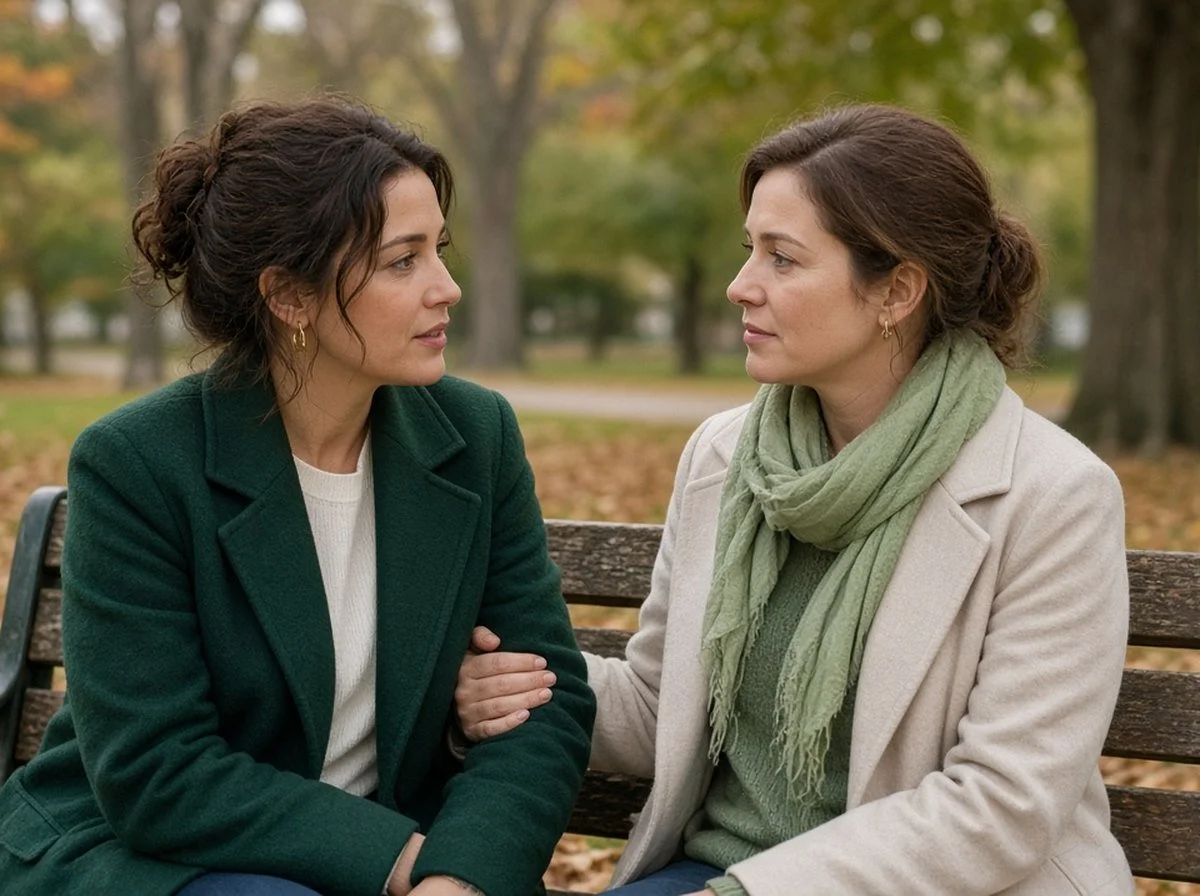
Some people haven't spoken to a parent in years. Others see family twice a year and dread every visit. Some are the parent waiting by a phone that doesn't ring. Family estrangement is painful from every side, and it's often surrounded by silence and judgement. This guide looks at why adults step back, what the grief can feel like, the difference between low contact and no contact, and how counselling can help, wherever you stand.
This post is general information, not a diagnosis or medical advice.
Family estrangement, more common than people say
Estrangement means a relationship between family members has broken down to the point of very little or no contact, usually by choice on at least one side. It can be between adult children and parents, between siblings or across a wider family.
People rarely talk about it. Holidays, weddings and social media make it look as if everyone else has a close family. That can leave people who are estranged from parents feeling ashamed, as if they must have done something wrong. Researchers who study families have described estrangement as managing deep, unresolved emotional problems by cutting down contact or by staying physically present while emotionally withdrawn. In other words, it's a response to pain, not a character flaw.
Why adults step back
There's rarely one reason. Common ones include:
Ongoing hurt. Years of criticism, belittling or being made responsible for a parent's feelings.
Abuse or neglect. Emotional, physical or sexual abuse, in childhood or continuing into adulthood.
Boundaries not respected. Repeatedly asking for change and being ignored, mocked or punished for it.
Very different values. A study of mothers and adult children found that differences in values played a major part in estrangement.
Rejection of who someone is. For example, a family that won't accept a person's identity, partner or faith.
Going no contact with family is usually a last resort, not a first move. Most people describe trying many times to make the relationship work before stepping back.
The grief no one talks about
Estrangement brings a strange kind of grief. The person is still alive, but the relationship you needed may never exist. Psychologists sometimes call this ambiguous loss: grief without a clear ending.
People often feel several things at once:
relief at not bracing for the next hurtful comment
guilt, especially when others say "but they're your mother"
sadness on birthdays, holidays and milestones
anger at what happened, or at what never happened
loneliness, even with a loving partner and friends
A small interview study of people who had cut ties found many reported positive feelings like peace and relief, alongside a mixed effect on their overall well-being. Both can be true. If special days are especially hard, our post on holiday grief may help.
Low contact or no contact
Estrangement isn't always all or nothing. Many people choose something in between.
Low contact might mean seeing family only at certain events, keeping visits short, talking about safe topics only or communicating by text rather than in person. It can protect you while keeping some connection.
No contact means ending communication altogether, sometimes for a set time, sometimes indefinitely.
Neither is right for everyone. The choice depends on your safety, your history and what you can live with. It can also change over time. Coping with family estrangement includes giving yourself permission to adjust. If the holidays are coming up, decide in advance what you'll attend, how long you'll stay and how you'll leave.
What to say when people ask
One of the hardest parts of estrangement is other people's questions. "Are you going home for Christmas?" "How's your dad?" You don't owe anyone your full story. A few short answers you can borrow:
"We're not in touch right now."
"It's complicated, and I'd rather not get into it today."
"I spend the holidays with friends. What are your plans?"
If someone pushes, it's fine to repeat yourself or change the subject. With people close to you, you can decide how much to share, and when. Some people find it helps to tell one or two trusted friends the fuller story, so they have allies at gatherings where family comes up.
If you're the parent or sibling who was cut off
If you're on the other side, the pain can be overwhelming. You might feel confused, blindsided or deeply hurt, and you may not understand what happened. Many parents of estranged adult children describe a mix of grief, shame and anger.
A few things often help:
Resist arguing your case. Long messages explaining your side often push people further away.
Get curious, privately. Ask yourself what your child or sibling has said over the years, even if you didn't agree at the time.
Respect the boundary. Pushing for contact usually backfires. Short, warm messages that ask for nothing tend to land better, if any contact is welcome at all.
Get support for yourself. Your grief is real, too.
When the hurt came from a parent
Many adults who step back describe parents who couldn't meet them emotionally: parents who were self-focused, dismissive or unpredictable. Our post on signs a parent was emotionally immature describes those patterns. Recognizing them doesn't require blaming anyone. It can help you understand why the relationship felt so hard, and why stepping back may have been necessary.
Reconnecting, or not
Some estrangements end. Others don't. Both outcomes can be healthy.
If both people genuinely want to try, it often helps to go slowly, agree on a few ground rules and focus on the present rather than relitigating the past all at once. Some families try family therapy together, with a therapist helping each person speak and be heard. That only works when everyone chooses to take part, and it can't guarantee reconciliation.
If reconnecting isn't safe or wanted, therapy can help you build a full life that doesn't depend on it. That might mean new traditions for the holidays, closer friendships or simply learning to enjoy a birthday without waiting for a call.
How counselling helps
You don't need to have decided anything to start counselling. Therapy can help you:
grieve the family you hoped for
make sense of guilt, and separate it from responsibility
decide what kind of contact, if any, feels right
set and hold boundaries without reopening old wounds each time
build a chosen family and community
rebuild self-worth if you grew up being told you weren't enough
Whether you're the one who stepped back or the one left behind, a therapist won't take sides against anyone who isn't in the room. The focus stays on you and what you need now.

Your first step
Sessions with our therapists range from $130 to $200, depending on the clinician.
Depending on your plan, insurance may cover some or all of the cost. Coverage varies, so check your plan.
We accept Health Spending Accounts (HSAs).
We can direct bill many insurers, including for sessions with a Registered Psychotherapist (Qualifying). Desjardins is the exception: through TELUS eClaims, we can direct bill Desjardins for sessions with an RSW, RP or psychologist, but not for an RP (Qualifying).
We offer sessions in person in Kitchener-Waterloo, Cambridge and Ottawa, and online anywhere in Ontario. Book a free 15-minute consultation with our admin team.
If you're in crisis: if you or anyone else is in immediate danger, call 911. If you're having thoughts of suicide, call or text 9-8-8 any time.
Whatever your family looks like now, you deserve support that doesn't ask you to pretend.
Last reviewed: October 2026
Sources
Gilligan M, Suitor JJ and Pillemer K. Estrangement Between Mothers and Adult Children: The Role of Norms and Values, Journal of Marriage and Family, 2015
Nica A. From family estrangement to empowered exits: new emotional developments, Frontiers in Sociology, 2025