
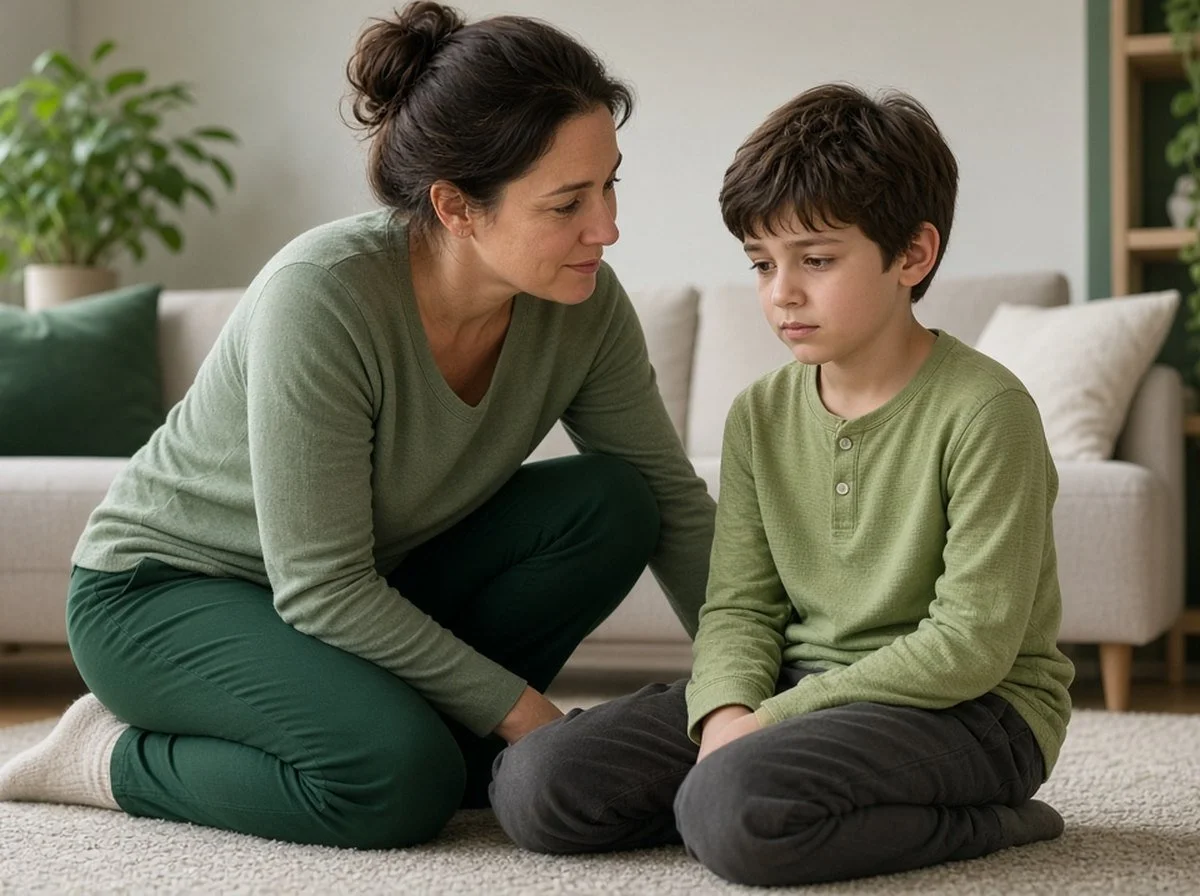
Every parent wonders at some point whether their child's behaviour is just a phase or something more. Maybe your usually chatty child has gone quiet. Maybe bedtime has turned into a nightly battle, or your teen spends every evening behind a closed door. You might worry about overreacting, or about missing something important. This guide looks at signs that suggest talking to someone could help, what's typical, when to get help right away, and how to start the conversation with your child.
This isn't a checklist, and it can't tell you whether your child has a particular condition. Only a qualified professional can do that. What it can do is help you notice patterns and feel more confident about reaching out.
Every child struggles sometimes
Children and teens have hard days, just like adults. Tantrums, tears, moodiness and worries are a normal part of growing up. A child who is nervous before a new school year, or a teen who is grumpy after a late night, isn't necessarily struggling with their mental health.
MedlinePlus, from the U.S. National Library of Medicine, notes that everyday stresses, like a new sibling or a new school, can cause a child to act out for a while. That's expected.
The difference often comes down to how long something lasts, how intense it is, and how much it gets in the way. The U.S. National Institute of Mental Health (NIMH) suggests considering help if your child's behaviour or emotions last for weeks or longer, cause distress for your child or your family, or interfere with how your child is doing at school, at home or with friends.
Signs that suggest talking to someone could help
Here are some changes that may be worth a closer look. NIMH's page on child and adolescent mental health and MedlinePlus both describe signs like these:
Changes in sleep. Sleeping much more or much less than usual, frequent nightmares or seeming tired during the day.
Changes in appetite. Eating much more or less, or new worries about food.
Lasting worry or fear. Often seeming fearful, worried or clingy, or becoming afraid of things that didn't bother them before.
Frequent aches. Stomachaches or headaches with no clear medical cause.
Pulling away. Losing interest in friends, play or activities they used to love.
Big mood changes. Sadness, tearfulness, irritability or anger that seems out of proportion.
Going backward. Returning to behaviours from an earlier age, like bedwetting.
Trouble at school. Falling grades, not wanting to go, or frequent reports from teachers.
One sign on its own doesn't mean something is wrong. A pattern of changes that lasts for weeks, or that's getting worse, is a good reason to talk to someone. Trust your sense of your child. You know them better than anyone.
Our guide on how to help an anxious child has more on what worry can look like in kids.
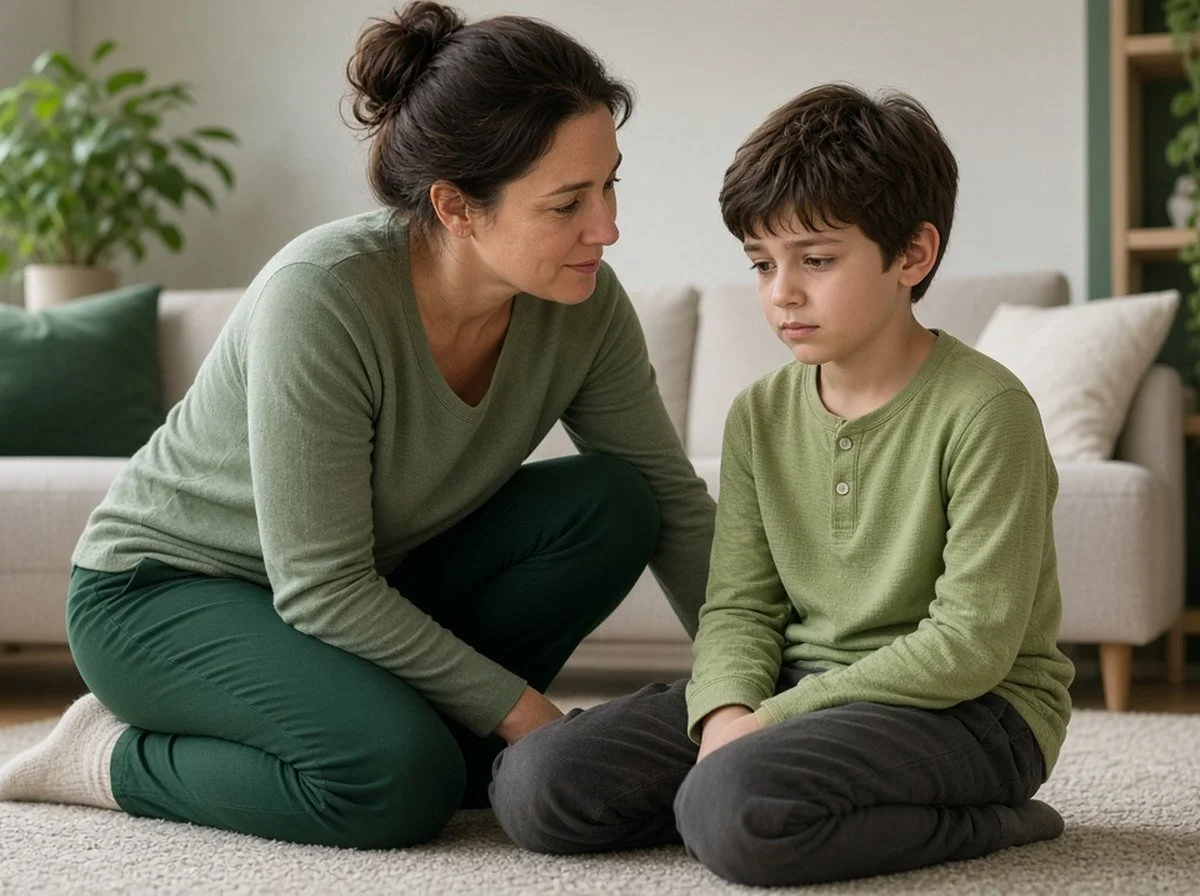
After a big change
Some of the hardest times for children are times of change. These can include:
Separation or divorce.
The death of a family member, friend or pet.
Moving to a new home or school.
A new sibling.
A parent's illness or job loss.
A frightening experience, like an accident.
It's natural for a child to struggle after events like these. Many children adjust with time and support from the adults around them. Others may need extra help to make sense of what happened. If your child seems stuck, or their behaviour changes a lot after a big event, therapy can give them a safe space to work through it.
Signs in teens
Teenagers are supposed to become more independent, and some distance from parents is normal. That can make it harder to know when something is wrong.
Changes that may be worth paying attention to include:
Pulling away from friends, not just family.
Losing interest in things they used to care about.
Ongoing sadness, hopelessness or irritability.
Big changes in sleep, eating or energy.
Falling behind at school or skipping classes.
Taking new risks, like using alcohol or drugs.
Talking about feeling worthless or like a burden.
Anxiety and low mood are not rare at this age. The World Health Organization estimates that 4.1 percent of 10 to 14 year olds and 5.3 percent of 15 to 19 year olds worldwide experience an anxiety disorder. Teens may not tell you directly that they're struggling. Sometimes the signs come through in their mood, their habits or comments they make in passing.
When to get help right away
Some signs need immediate attention. If your child or teen talks about wanting to die, mentions suicide, hurts themselves on purpose or says they don't want to be here anymore, take it seriously and act right away.
If your child is in immediate danger, call 911 or go to your nearest emergency department.
Call or text 9-8-8, the Suicide Crisis Helpline, any time, day or night.
In Waterloo Region, call Here 24/7 at 1-844-437-3247.
Our crisis lines page lists more options.
It's okay to ask your child directly whether they're thinking about suicide. The Centre for Addiction and Mental Health (CAMH) says not to be afraid that asking will put the idea in their head.
Counselling or an assessment?
Parents often ask whether their child needs therapy or an assessment. They're different, and some children benefit from both.
Counselling gives your child a place to talk, play and learn skills for handling feelings, friendships and stress. Our children's counselling is for children ages 6 and up and their parents, in person at our Waterloo, Kitchener, Cambridge and Ottawa offices, or online. Our therapists may use play, art, stories and other creative approaches that fit your child's age.
An assessment is done by a psychologist and looks at things like attention, learning or behaviour in more depth. In Kitchener-Waterloo and Cambridge, we offer ADHD assessments for children ages 6 and up, and psychoeducational assessments for children, teens and adults. Our Ottawa office offers counselling for children but does not offer child assessments.
If you're not sure which one fits, that's a great question for a free consultation.

How to talk with your child about it
Bringing up therapy can feel awkward. A calm, simple approach usually works best. Here are some ideas. These are our suggestions, so adjust the words to fit your child.
For younger children: "You know how we go to the doctor when our body feels sick? There are also people who help with big feelings. They play and talk with kids. I think it could help."
For older children: "I've noticed things have felt hard lately. I'd like you to have someone to talk to who isn't me or your teacher. You can tell them anything."
For teens: "I'm not trying to fix you or get you in trouble. I just want you to have support. Would you be open to trying it? You can help choose who you see."
Try to keep it low pressure. Let your child ask questions, and be honest about what will happen. It also helps to frame therapy as something many people do, not a sign that something is wrong with them.
How we work with families
Family involvement is encouraged in children's counselling. Depending on your child's needs, sessions may include time with your child alone, time with you and time together. Some parents also find it helpful to have parent-only sessions to talk through strategies and their own feelings.
Sessions with our therapists are $130 to $200, and student therapist sessions are $0 to $80. Depending on your plan, insurance may cover some or all of the cost. There's no waitlist.
Your next step
You don't need to be sure something is wrong to reach out. If you're worried about your child, that's enough reason to ask.
Book a free 15-minute consultation with our admin team. They can answer your questions, explain counselling and assessment options, and help you find a therapist who's a good fit for your child.
Reaching out is a caring, brave step for your family.