

If someone you love has died by suicide, you may be carrying shock, sorrow, guilt, anger and questions that keep you up at night, sometimes all in the same hour. There is no right way to feel and no timeline you have to follow. This guide offers gentle ideas on how to cope with losing someone to suicide, what to say to other people, how to look after yourself through hard dates and how grief counselling can help.
If you need help right now: if you or anyone else is in immediate danger, call 911. If you're having thoughts of suicide, call or text 9-8-8 any time, day or night.
This post is general information, not a diagnosis or a treatment plan.
Why grief after suicide loss can feel different
All grief hurts. Grief after suicide loss often comes with extra layers. The death may have been sudden. You may be replaying the last weeks, searching for what you missed. Other people may not know what to say, or may say the wrong thing. And because suicide still carries stigma, you might feel pressure to keep quiet about how your loved one died.
None of this means you are grieving wrong. It means you're carrying something heavy, and it makes sense that it feels heavy.
The questions that may never have answers
"Why?" is often the loudest question. You may go over conversations, messages and moments again and again, looking for a reason. Some people find partial answers over time. Many never get a full one.
It can help to remember that suicide is complex, and that the person you lost was in a kind of pain that can narrow how someone sees their options. That pain was not a measure of how much they loved you, or how much you loved them. Living with unanswered questions is one of the hardest parts of this loss, and it's something you don't have to work through alone.
Guilt and "what if"
Guilt is one of the most common feelings after a suicide loss. "What if I had called that night?" "Why didn't I see it?" These thoughts are a sign of how much you cared.
Try to notice when you're judging your past self with information you only have now. You made the choices you did with what you knew then. If guilt is taking over your days, or you can't stop blaming yourself, that is a good reason to talk with someone.
Feelings you might not expect
Alongside sadness, you might feel:
anger at the person who died, or at yourself, or at others
relief, especially if the months before were full of worry
numbness, as if you're watching your life from outside
fear for other people you love
moments of laughter or ordinary happiness, followed by guilt for feeling them
All of these are part of how people grieve. Feelings can come in waves and catch you off guard in the grocery store or in the car. Being gentle with yourself in those moments is a good place to start.

How to deal with grief after losing someone to suicide, day to day
There's no formula, but small things can help you get through:
Keep basic routines. Sleep, meals, a short walk and fresh air give your body some stability when everything else feels upside down.
Let people help. Say yes to meals, errands or company, even if you don't feel like talking.
Name your loved one. Talk about who they were, not only how they died.
Make room for grief. Some people write, visit a meaningful place or set aside quiet time to remember.
Go easy on big decisions. Where you can, give yourself time before making major changes.
What to tell people
You get to decide how much to share, and with whom. Some people find it freeing to say "they died by suicide" openly. Others share only with a few people they trust. Both are okay.
It can help to have a short answer ready for casual questions, like "We lost him suddenly, and it's been really hard." You can also ask a trusted friend to share the news for you, so you don't have to repeat it. If someone responds with judgment or curiosity about details, you don't owe them more. "I'd rather not talk about that" is a complete sentence.
Stigma and silence
Suicide is still misunderstood. People may avoid you, avoid saying your loved one's name or use language that hurts. Words matter here. Many people now say "died by suicide," because it describes a death with care and without blame. If someone uses older or harsher language, you can gently share that phrase if you have the energy. You don't have to.
Anniversaries, holidays and Survivor Day
Birthdays, holidays and the anniversary of the death can bring grief back with force. Plan ahead where you can. You might spend the day with people who knew your loved one, keep a small ritual or decide to keep it quiet. It's okay to change the plan on the day.
International Survivors of Suicide Loss Day 2026, also called Survivor Day, falls on Saturday, November 21. It's a day set aside for people who have lost someone to suicide. You might choose to mark it privately, or simply know that many others are carrying the same kind of loss.
How to cope with losing a loved one to suicide when it was a parent, partner or friend
Every relationship shapes grief differently. If you're working out how to cope with losing a parent to suicide, you may be grieving the past and the future at once, including milestones they won't see. Losing a partner can upend your home, finances and sense of who you are. And if you're figuring out how to cope with losing a friend to suicide, you may feel your grief is overlooked, because friends aren't always seen as the ones who need care. Your grief counts, whatever your connection was.
Children and teens
Children and teens grieve too, often in bursts. Use honest, simple, age-appropriate words, without details about how the person died. Let them ask questions, and it's fine to say "I don't know." Keep routines steady, and let them see that it's okay to be sad. Watch for changes that last, like pulling away, trouble sleeping or not wanting to go to school. Child counselling (ages 6 and up) and teen counselling can give them a safe place to talk.
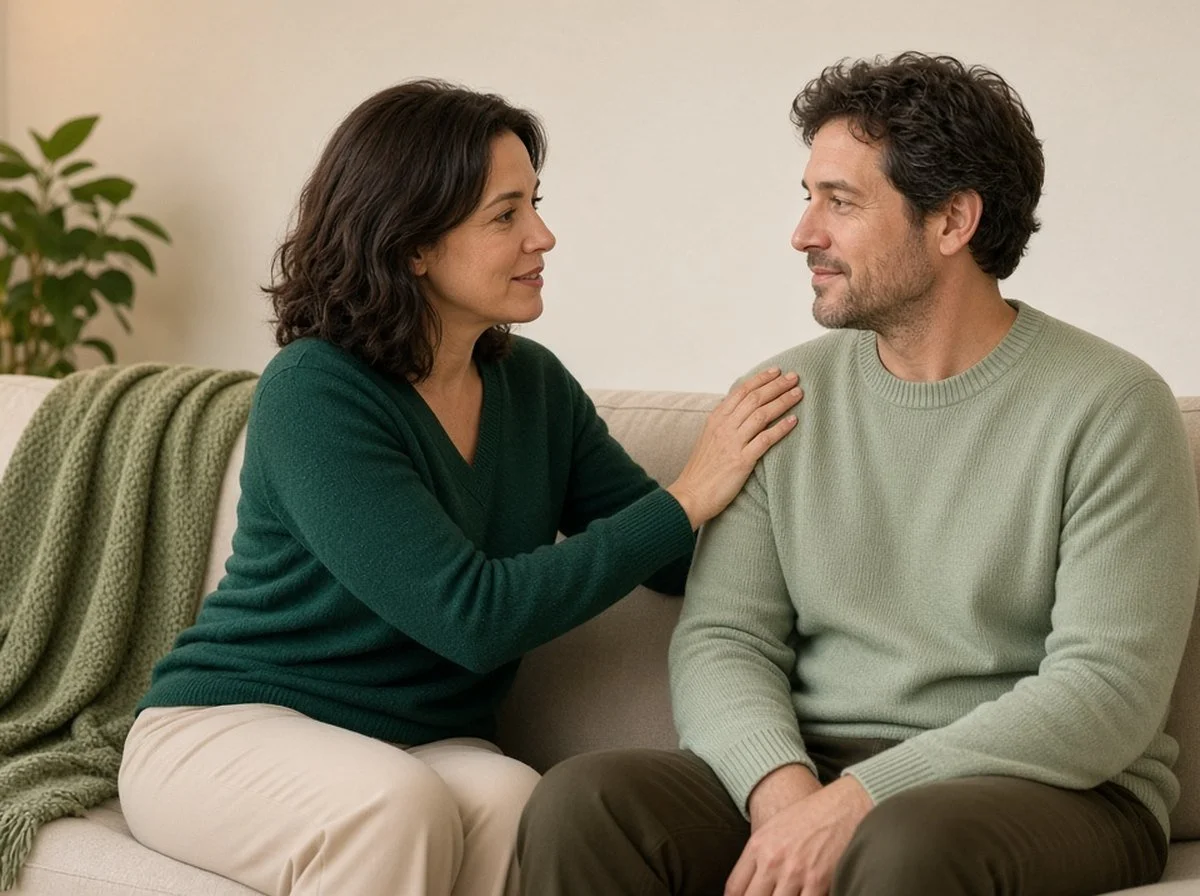
If your own thoughts turn dark
Grief can bring thoughts of wanting to be with the person you lost, or of not wanting to go on. If that happens, please reach out right away. Call or text 9-8-8 any time to talk to someone. If you're in immediate danger, call 911. Tell someone you trust how you're feeling. You deserve support too.
How grief counselling can help
Suicide loss grief can be complicated by trauma, guilt and isolation. A grief counsellor offers a private place to say the things that feel unsayable, make sense of complicated feelings and find ways to carry your loss alongside your life. If the way you learned about the death keeps replaying, some people find trauma-focused approaches like EMDR therapy helpful as part of their care.
Our post on grief counselling in Ottawa explains what sessions can look like. We offer grief counselling at every office.
Getting support
We offer counselling in person in Waterloo, Kitchener, Cambridge and Ottawa, and online anywhere in Ontario on a secure, encrypted video platform.
Sessions with our therapists range from $130 to $200, depending on the clinician.
Depending on your plan, insurance may cover some or all of the cost. Coverage varies, so check your plan.
We can direct bill many insurers, including for sessions with a Registered Psychotherapist (Qualifying). Desjardins is the exception: through TELUS eClaims, we can direct bill Desjardins for sessions with an RSW, RP or psychologist, but not for an RP (Qualifying).
Book a free 15-minute consultation with our admin team. You can go at your own pace.
If you're in crisis: if anyone is in immediate danger, call 911. If you're thinking about suicide or self-harm, call or text 9-8-8 any time. More options are on our crisis lines page.
Last reviewed: October 2026
Sources
Suicide bereavement and complicated grief (Dialogues in Clinical Neuroscience, 2012), peer-reviewed, via NIH PubMed Central
Grief interventions for people bereaved by suicide: A systematic review (PLOS ONE, 2017), peer-reviewed, via NIH PubMed Central