
After the funeral, he went back to work on Monday. He fixed the leaky tap his dad never got to, spent weekends in the garage and didn't say much. People wondered if he was even sad. He was. He was just grieving in his own way. Men are often told to be strong and keep going after a loss. This guide explains why grief can look different for many men, what research says and ways to cope and support the men in your life.
This post is general information, not medical advice or a diagnosis.
Grief has more than one style
There is no single way to grieve. The National Institute on Aging notes that there is no right or wrong way to mourn (see Sources).
Researchers often describe two broad grieving styles:
Intuitive grieving focuses on feelings. People may cry, talk about the loss and want to share their emotions.
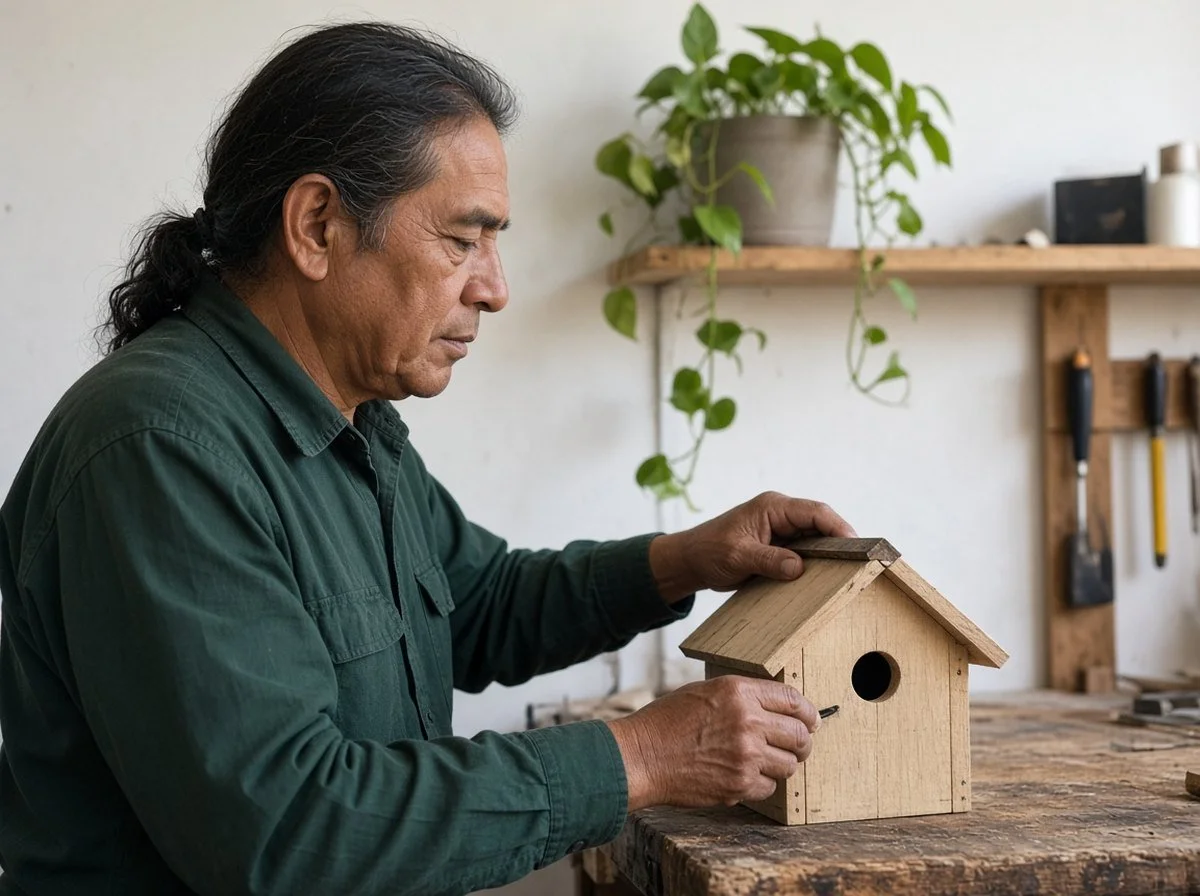
Instrumental grieving focuses on thinking and doing. People may solve problems, stay busy, plan or work with their hands.
These are styles, not rules about gender. Many men grieve intuitively, and many women grieve in instrumental ways. Most people use a mix. A review of research on men's grief found that men's responses fell along a range between these two styles (Martínez-Esquivel and colleagues, 2024, see Sources).
Why men may grieve differently
Many men grow up hearing messages like "boys don't cry" or "be strong for your family." Those messages can shape how grief shows up.
The same review found that men's grief was shaped by many things: their own coping, their relationships, their community and wider ideas about masculinity (Martínez-Esquivel and colleagues, 2024, see Sources). It also found that loneliness and the need for support were common themes.
A study from Belgium, Canada and Spain compared 244 bereaved men with 244 bereaved women who were matched on their relationship to the person who died, time since the loss and country. Men reported lower levels of grief symptoms than women in all three countries (Cherblanc and colleagues, 2025, see Sources). The authors noted this may partly reflect how grief is measured. Questionnaires often ask about feelings, and they may miss grief that shows up through action.
So "lower scores" does not always mean "less grief." It may mean grief that is harder to see.
What grief can look like in men
Grief in men may show up as:
Staying very busy with work or projects
Fixing things, building or doing physical tasks
Wanting to be alone
Feeling angry or irritable
Having trouble sleeping or focusing
Taking more risks than usual
Feeling numb or "fine" on the outside
Talking about the loss in short bursts, or not at all
The National Institute of Mental Health notes that men and women can have different symptoms of mental health concerns. For men, these can include anger, irritability and changes in mood, energy or sleep (see Sources). Sometimes grief and low mood overlap.
None of these are wrong ways to grieve. But some can become a problem if they go on for a long time or start to hurt you or others.
Moving between loss and daily life
One well-known model of grief is called the dual process model (Stroebe and Schut, 2010, see Sources). It describes grief as moving back and forth between two things. Some of the time you face the loss and feel the pain of it. Some of the time you focus on daily life, like work, tasks and new routines.
This model helps explain why staying busy can be healthy. Taking breaks from grief is normal. The goal is not to avoid grief forever, but to make room for both.
When grief gets pushed down
Staying busy can help. But if a man never makes space for the loss, grief can build up. It may show up later as anger, exhaustion or feeling disconnected from people.
Some men feel their grief isn't "allowed," for example after losing a friend, an ex-partner or a pregnancy. Our post on disenfranchised grief explores grief that others don't fully see.
Ways to cope that fit how you grieve
If you grieve in a more active way, there are ways to honour the loss that may feel natural:
Do something in their memory. Finish a project they started, plant a tree or fix up something they loved.
Move your body. A walk, run or bike ride can give grief somewhere to go.
Talk side by side. Many men find it easier to talk while doing something together, like driving or fishing.
Write it down. A few lines in a notebook can help you sort through thoughts.
Set aside time to remember. Look at photos, visit a meaningful place or listen to their music.
Keep some routine. Work and daily tasks can give structure on hard days.
Let one person in. You don't need to share with everyone. One trusted person can be enough.
How to support a grieving man
If someone you care about is grieving:
Don't judge how he grieves. Being quiet or busy doesn't mean he doesn't care.
Offer to do something together. "Want to help me with the yard on Saturday?" can open the door.
Check in, and keep checking in. A short text a few weeks later can mean a lot.
Let silence be okay. You don't need to fill every pause.
Mention the person who died. Saying their name shows you haven't forgotten.
If the grieving man is a colleague, our post on supporting a grieving coworker has ideas for work.
November and men's mental health
November is a month when many people talk about men's health and mental health. It can be a good time to check in on the men in your life, especially those who have had a loss this year.
When to get support
It may be time to reach out if:
Anger is hurting your relationships
You feel numb or hopeless for a long time
You can't sleep or focus most days
You are taking risks with your safety
You feel alone with your grief
If you are thinking about suicide, call or text 9-8-8 any time. If you or someone else is in immediate danger, call 911.
How counselling can help
Counselling can give you a private space to grieve in your own way. A counsellor can help you make sense of anger, guilt or numbness and find ways to carry the loss that fit who you are. Talking is part of it, but so is practical problem solving.
We offer grief counselling at our Kitchener-Waterloo, Cambridge and Ottawa offices and online across Ontario. Male therapists work at every one of our offices, so ask about this in your free consultation if it matters to you.
Common questions about how men grieve
Do men grieve less than women? Not necessarily. Some studies find men report fewer grief symptoms, but grief in men may be harder to see on a questionnaire.
Is staying busy a bad way to grieve? No. Taking breaks from grief is normal. It helps to also make some space to face the loss.
How can I get a grieving man to talk? Try doing something together. Many men talk more easily side by side.

Cost, billing and your first step
Sessions with our therapists range from $130 to $200, depending on the clinician.
We accept Health Spending Accounts (HSAs).
We can direct bill many insurers. Coverage depends on your plan, so check with your insurer before you start.
Book a free 15-minute consultation with our admin team. If you're grieving in a way that feels hard to share, a counsellor can help.
If you're in crisis: if you or someone you love is in immediate danger, call 911. If you're thinking about suicide, call or text 9-8-8 any time, day or night.
Last reviewed: October 2026
Sources
Cherblanc J, Côté I, Zech E, et al. "Gender differences in grief and growth: An international gender-matched controlled study from Belgium, Canada, and Spain." Death Stud. 2025 Sep 30:1-14. Online ahead of print. https://pubmed.ncbi.nlm.nih.gov/41026683/
Martínez-Esquivel D, Araya-Solís M, García-Hernández AM. "Men's mourning experiences for the death of a loved one: An integrative review." Enferm Clin (Engl Ed). 2024;34(6):429-438. https://pubmed.ncbi.nlm.nih.gov/39547441/
Stroebe M, Schut H. "The dual process model of coping with bereavement: a decade on." Omega (Westport). 2010;61(4):273-89. https://pubmed.ncbi.nlm.nih.gov/21058610/
National Institute on Aging. "Coping With Grief and Loss." https://www.nia.nih.gov/health/grief-and-mourning/coping-grief-and-loss
National Institute of Mental Health. "Men and Mental Health." https://www.nimh.nih.gov/health/topics/men-and-mental-health