
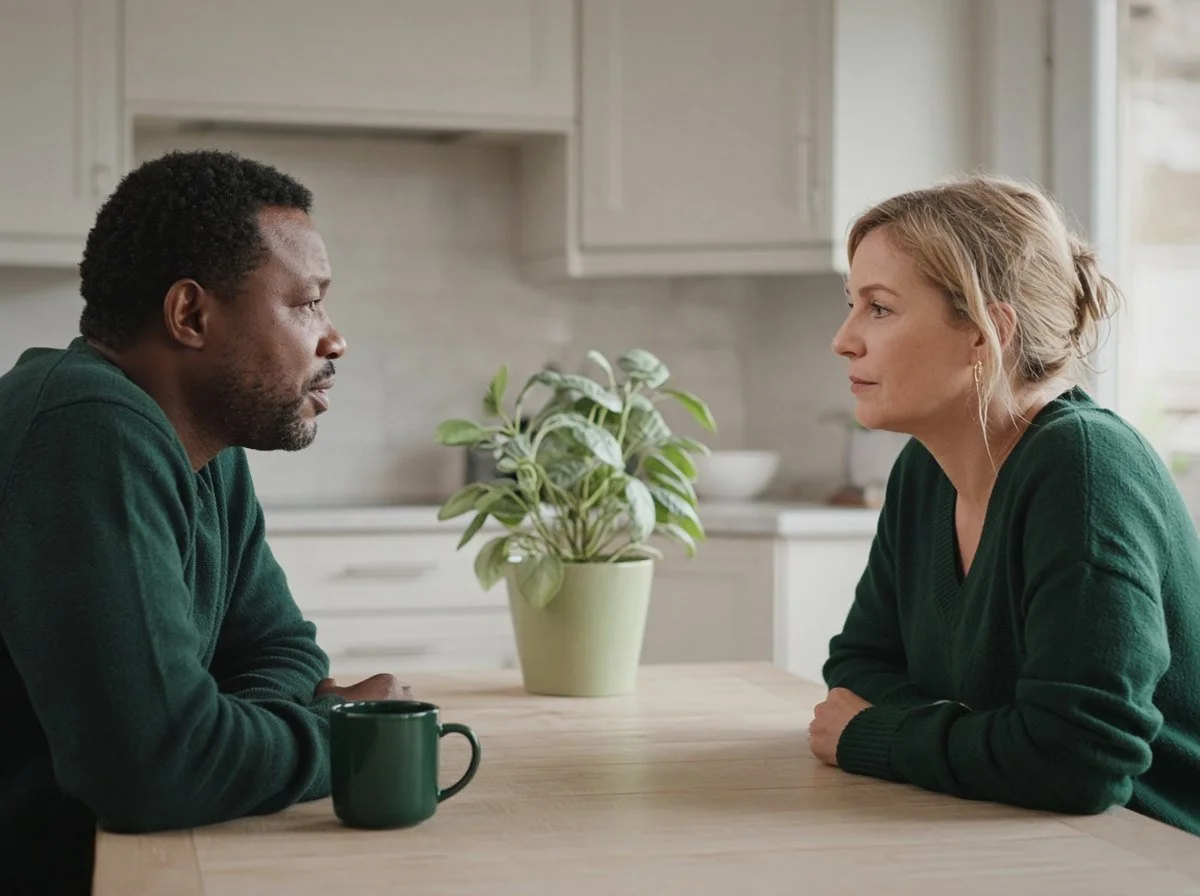
You try to share something that matters. Your partner nods, glances at their phone, or jumps straight to advice. You end up feeling more alone than before you spoke. Feeling unheard in a relationship can hurt deeply, even when you know your partner loves you. The good news is that being heard is a skill both of you can build.
This post is general information, not medical or relationship advice for your situation.
What feeling unheard looks like
Feeling unheard is not only about whether your partner hears your words. It is about whether you feel understood. It may show up as:
Your partner interrupts or finishes your sentences.
They offer fixes when you just want comfort.
They change the subject to their own day.
You repeat the same concern again and again.
You stop sharing because "what's the point?"
You feel dismissed when you bring up something hard.
Often, both partners feel unheard at the same time. Each one is waiting for the other to listen first.
Why feeling unheard hurts so much
When we share something, we are really asking, "Do you get me? Do I matter to you?" When the answer seems to be no, it can sting.
Researchers Guy Itzchakov and Harry Reis study listening in close relationships. In a 2023 paper, they write that listening and "perceived responsiveness" create a sense of connection between people. Perceived responsiveness is the feeling that someone understands, values and cares about you. Their paper sets out questions for future research, so it is a starting point, not a final answer. They also wrote a related paper with a fitting title: "Do you hear me?"
So when you feel unheard, it is not just about one conversation. It touches the bond between you. This is why small moments can lead to big hurt over time.
Why partners stop listening
It is easy to think "my partner doesn't listen to me" means they don't care. Usually, something else is going on.
Stress and tiredness. After a long day, it is hard to give full attention. Listening takes energy.
Wanting to fix it. Many people show love by solving problems. They may jump to advice to help, not to dismiss you.
Feeling blamed. If a talk starts to sound like criticism, the listener may get defensive and stop hearing what is underneath.
Old patterns. Some of us grew up in homes where feelings were not talked about. Listening to big emotions can feel strange or scary.
Distraction. Phones, screens and busy households make it hard to really focus on each other.
Notice that none of these make anyone a "bad partner." They are common habits, and habits can change.
When conversations turn into conflict
Sometimes the problem isn't silence. It is that every talk turns into a fight. Couples researcher John Gottman describes four patterns that make it very hard to feel heard: criticism, contempt, defensiveness and stonewalling. You can read more in our post on the Gottman Four Horsemen.
If you notice these patterns, it doesn't mean your relationship is doomed. It means it is time to slow down and try a different way of talking.
How to feel heard in a relationship: the speaking side
You can't make your partner listen. But you can make it easier for them to hear you.
Pick a good time. Ask, "Is now a good time to talk about something that matters to me?" Avoid starting big talks when one of you is rushed or hungry.
Start gently. Begin with how you feel, not what they did wrong. Try "I felt lonely tonight" instead of "You never pay attention to me."
Say what you need. Your partner can't read your mind. You might say, "I don't need advice right now. I just want you to listen."
Keep it short. Share one concern at a time. A long list can feel like an attack.
Notice what is under the anger. Often, frustration covers hurt, fear or longing. Sharing those softer feelings can help your partner lean in.
Listening in relationships: the listening side
Being a good listener is a gift you can give your partner. It isn't about staying quiet. It is about showing that you are with them. It also makes it more likely they will listen to you.
Put the phone down. Turn toward your partner and give them your full attention.
Listen to understand, not to reply. Resist planning your answer while they talk.
Reflect back. Say what you heard in your own words. "It sounds like you felt left out at dinner. Is that right?"
Ask before you fix. Try, "Do you want ideas, or do you just want me to listen?"
Stay curious. Ask gentle questions like "What was that like for you?"
Validate the feeling. You don't have to agree to say, "That makes sense. I can see why you'd feel that way."
Taking turns
It can help to agree that one person speaks while the other listens, then switch. The listener sums up what they heard before sharing their own view. This simple structure slows things down and helps both people feel heard. If things get heated, agree that either of you can ask for a short break and come back to the talk later.
Feeling heard also grows outside of hard talks. Small daily moments of sharing build closeness. Our post on emotional intimacy has more ideas.
When to get support
Consider reaching out for help if:
You have the same argument over and over.
One or both of you has stopped sharing.
You feel more like roommates than partners.
Talks often end in silence, tears or shouting.
If you are thinking about suicide or hurting yourself, call or text 9-8-8 now. If you or someone else is in immediate danger, call 911.
How counselling can help
Couples counselling gives both partners a safe space to speak and to be heard. A counsellor helps you slow down, notice patterns and try new ways of talking. The goal isn't to decide who is right. It is to help you understand each other.
Sometimes one partner isn't ready to come. Individual counselling can still help you understand your own patterns and needs.
At Transformation Counselling, we see couples in person in Kitchener-Waterloo, Cambridge and Ottawa. We also offer online couples therapy in Ontario. Both partners need to be in Ontario for online sessions, but you can join from different places.
Common questions about feeling unheard
Is it normal to feel unheard sometimes? Yes. Every couple has moments when one person misses what the other is saying. It becomes a concern when it happens often or leaves you feeling alone.
What if my partner says they feel unheard too? That is very common. It can be a starting point. If you both want to be heard, you both have a reason to try listening differently.
Can we work on this online? Yes. Many couples find online sessions easier to fit into busy lives.

Cost, billing and your first step
Couples sessions range from $170 to $200, depending on the clinician.
There is a one-time $50 setup fee.
We accept Health Spending Accounts (HSAs).
We can direct bill many insurers. Coverage depends on your plan, so check with your insurer before you start.
Book a free 15-minute consultation with our admin team. We can help you find a counsellor for couples or individual sessions, in person or online.
If you're in crisis: if you or someone you love is in immediate danger, call 911. If you're thinking about suicide, call or text 9-8-8 any time, day or night.
Last reviewed: October 2026
Sources
Itzchakov G, Reis HT. "Listening and perceived responsiveness: Unveiling the significance and exploring crucial research endeavors." Current Opinion in Psychology. 2023;53:101662. https://doi.org/10.1016/j.copsyc.2023.101662
Reis HT, Itzchakov G. "'Do you hear me?': Understanding the interplay of listening and perceived partner responsiveness." Current Opinion in Psychology. 2023;52:101615. https://doi.org/10.1016/j.copsyc.2023.101615