
Maybe you used to feel mostly okay about your body. Then something changed. A pregnancy, an illness, getting older or a shift in weight, and now the mirror feels like an enemy. Or maybe comparison has crept in, and scrolling, the gym or a family dinner leaves you feeling worse about yourself. Body image counselling in Kitchener-Waterloo can help you step out of that loop. This post looks at common reasons people reach out, what research says about the habits that keep body worries going and how to see a therapist in person or online.
This post is general information, not medical advice or a diagnosis. We do not offer weight-loss or appearance advice.
When your body changes
For many people, body image struggles start after a change they did not choose. Your body may look, feel or work differently than it did before. That can be hard, even when the change is a normal part of life.
Common turning points include:
Body image after pregnancy. Your shape, skin and energy may be different. Others may comment on how fast you "bounce back," which can add pressure.
Getting older. Grey hair, wrinkles or changes in strength can bring up mixed feelings.
Illness or treatment. Scars, weight changes, hair loss or changes in how your body moves.
Weight change. Gaining or losing weight for any reason can shift how you see yourself.
It is okay to grieve the body you had. You can miss how things used to be and still learn to live well in the body you have now. Body image counselling in Kitchener-Waterloo gives you space to feel that grief without judgment. Our body image counselling service page has more on how we help.
Comparing your body to others, online and off
Comparison is one of the most common things people bring to body image counselling. It can happen anywhere:
Scrolling feeds full of edited photos
Change rooms and gyms
Family events where someone comments on your plate or your size
Group chats and photos with friends
Comparison tends to stick because it feels like information. Your brain treats it like a test you keep failing. But the people you compare yourself to are often shown at their most posed and filtered, and you are comparing that to how you feel on a bad day.
Some small ways to step back:
Notice when you start comparing, and name it: "I'm comparing again."
Mute or unfollow accounts that leave you feeling worse.
Spend more time on things your body lets you do, not just how it looks.
Have a short reply ready for comments, like "I'd rather not talk about bodies today."
These steps will not erase comparison overnight. They can make it a little quieter.
Body image issues in men
Body image struggles are not only a women's issue. Many men struggle with how their bodies look too. Their worries often focus on muscle, leanness and body fat.
A study of gay and straight men in Germany looked at many sides of body image, from thoughts and feelings to habits like checking and avoiding. It found body image concerns in both groups. Experiences of everyday discrimination were linked with more body image distress, especially among the straight men in the study (Schmidt and colleagues, 2022, see Sources).
Men may also be less likely to talk about body worries. They may feel shame, or think it is something they "should" handle alone. Body image counselling is for people of every gender.

Weight stigma and the habits it feeds
We all hear negative messages about weight. Over time, many people start to believe them about themselves. Researchers call this internalized weight bias.
A study of female university students found that taking on these negative beliefs about weight was linked with more body dissatisfaction. Part of that link was explained by two habits: body checking and body avoidance (Bennett and colleagues, 2022, see Sources). The authors suggested these habits could be useful things to work on in treatment.
Body checking can look like:
Pinching or measuring parts of your body
Checking the mirror or the scale again and again
Comparing how your clothes fit from day to day
Body avoidance can look like:
Avoiding mirrors, photos or shopping for clothes
Wearing baggy clothes to hide your shape
Skipping the beach, the pool or intimacy
Both habits can bring short-term relief. Over time, they often keep body worries going. The good news is that habits can change, one small step at a time.
What counselling works on, and when eating has changed too
In body image counselling, you and your therapist might work on:
Self-talk. Noticing harsh thoughts about your body and finding kinder, more balanced words.
Checking and avoiding. Slowly cutting back on checking, and slowly facing things you have been avoiding, at a pace that feels okay.
Values. Getting clear on what matters to you beyond appearance, like friendships, creativity or rest.
Self-compassion. Treating yourself with the care you would give a friend.
Therapists may draw on approaches such as acceptance and commitment therapy, dialectical behaviour therapy or internal family systems, depending on what fits you.
Sometimes body image worries come with changes in eating or exercise. You might be skipping meals, eating in secret, exercising to "make up" for food or feeling out of control around eating. If that sounds familiar, it is worth talking about. Our eating disorders counselling page has more on how we support people with eating concerns.
Seeing a body image therapist in waterloo region
This therapist lists body image issues on their own profile and is accepting new clients:
Jaiden sees adolescents 16+ and adults, in person in Kitchener and Waterloo and online.
Our Waterloo office is at 22 King St S in Uptown Waterloo, near King and Erb. Our Kitchener office is at 72 Victoria St S, 3rd Floor, a short walk from the ION Central Station stop. You can also choose online body image counselling from anywhere in Ontario, using a secure video link.
What a first session can look like
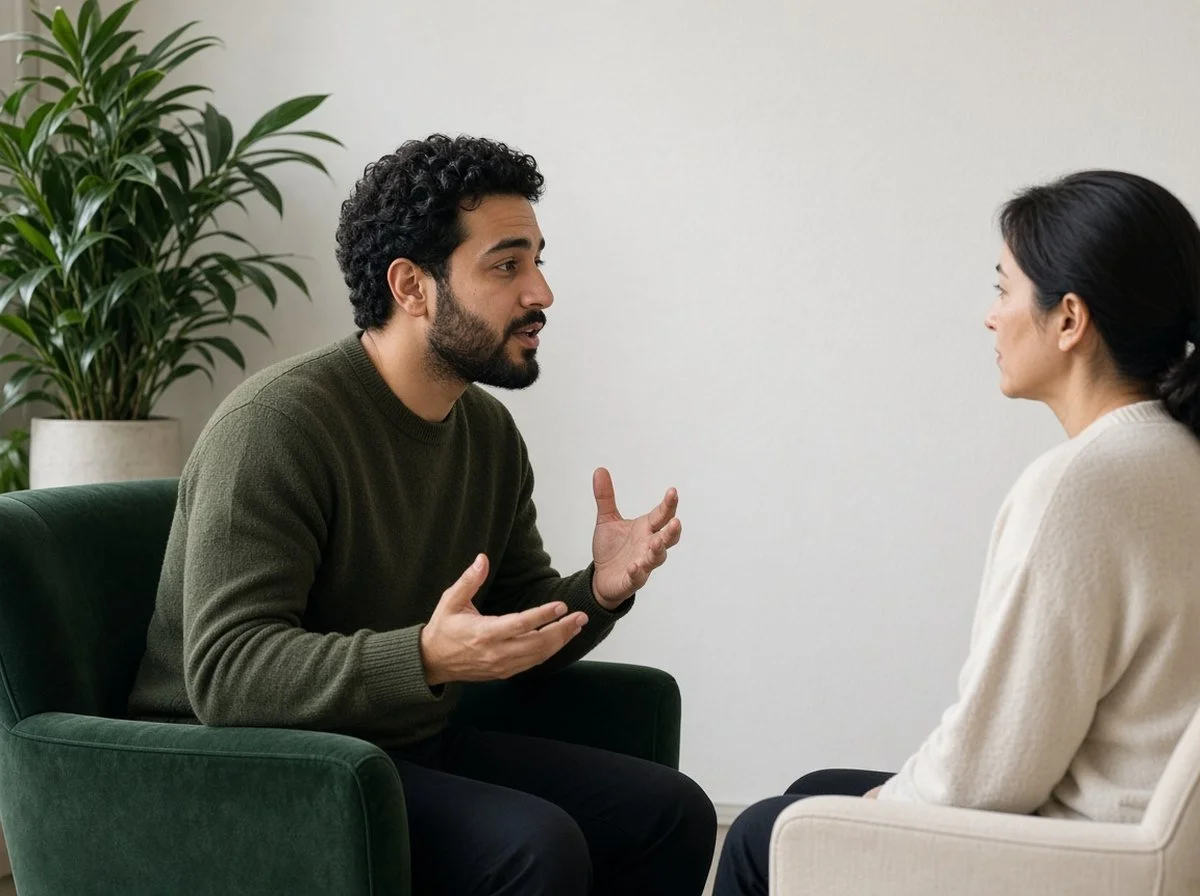
In a first session, your therapist will ask what brings you in and how body worries are affecting your life. You will not be weighed or asked to show your body. You decide what to share.
From there, you can choose where to begin. Some people start with a recent body change. Others start with comparison, comments from family or habits like checking. Your therapist will go at your pace.
Common questions about body image counselling
Do I need an eating disorder to get help with body image? No. Many people come to counselling for body image alone.
Will counselling try to change my weight? No. Body image counselling is about how you think and feel about your body, not about changing it.
Can teens get body image counselling? Yes. The therapist named above sees teens 16+.
Can I do sessions online? Yes. Online sessions are available from anywhere in Ontario.
Cost, billing and your first step
Sessions with our therapists range from $130 to $200, depending on the clinician.
We accept Health Spending Accounts (HSAs).
We can direct bill many insurers. Coverage depends on your plan, so check with your insurer before you start.
Book a free 15-minute consultation with our admin team. We can help you find a body image therapist who is a good fit for you.
If you're in crisis: if you or someone you love is in immediate danger, call 911. If you're thinking about suicide, call or text 9-8-8 any time, day or night.
Last reviewed: October 2026
Sources
Bennett BL, Wagner AF, Latner JD. "Body Checking and Body Image Avoidance as Partial Mediators of the Relationship between Internalized Weight Bias and Body Dissatisfaction." Int J Environ Res Public Health. 2022;19(16):9785. https://pmc.ncbi.nlm.nih.gov/articles/PMC9408144/
Schmidt M, Taube CO, Heinrich T, Vocks S, Hartmann AS. "Body image disturbance and associated eating disorder and body dysmorphic disorder pathology in gay and heterosexual men: A systematic analyses of cognitive, affective, behavioral und perceptual aspects." PLoS One. 2022;17(12):e0278558. https://pmc.ncbi.nlm.nih.gov/articles/PMC9725123/