
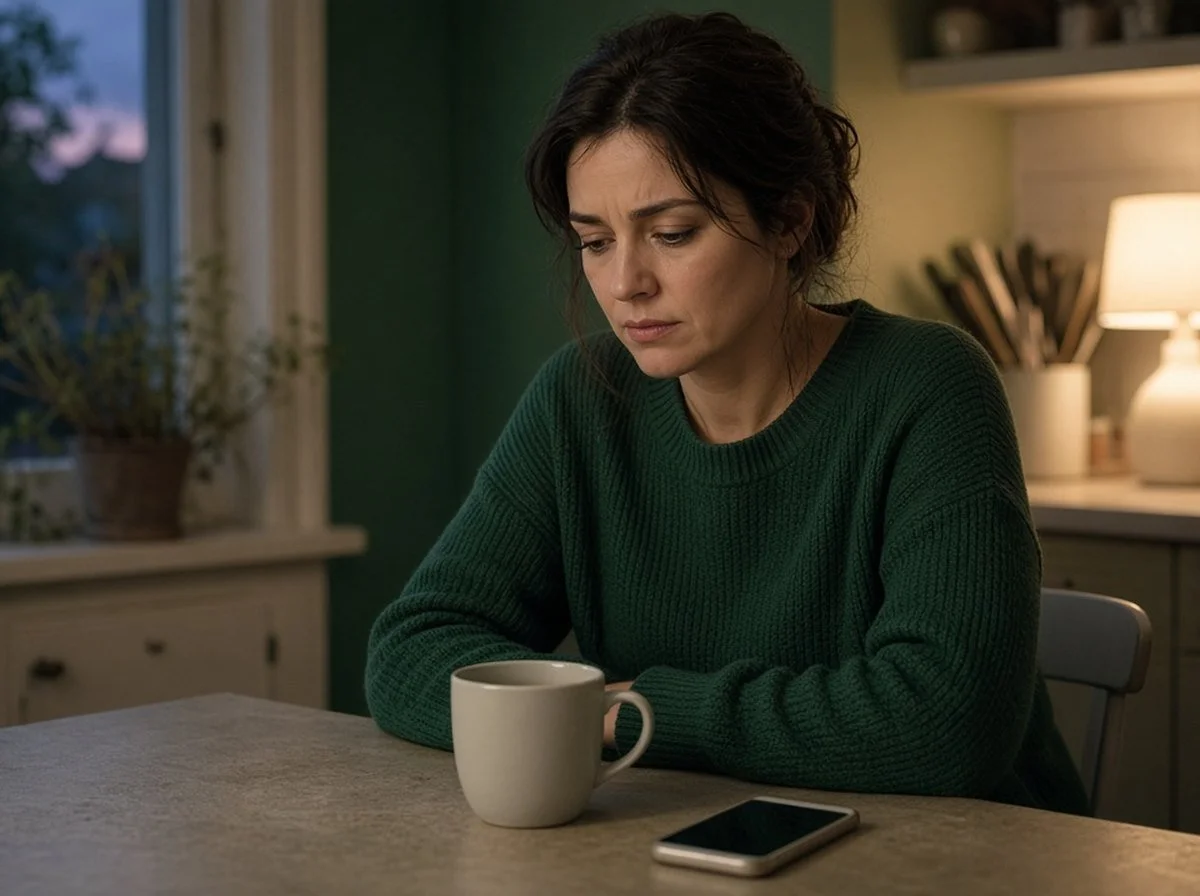
Picture an ordinary Wednesday. He mentions he's going to his brother's on Saturday, in a normal voice, while he looks for his keys. By Wednesday night you've worked out what it means, and by Friday the two of you are being careful with each other and neither can say why.
An anxious attachment style does most of its damage in that gap, between how the week felt to one person and how it looked to the other. From the inside it's an alarm about someone leaving. From across the room it's a week that went strange for no reason anyone can point to.
This page gives both people the same amount of room. Neither one is the problem, and pages that pick a villain don't help anyone who is living it. If you want the story of emotional dependence and healing, we cover that in our guide to anxious attachment and emotional dependence. If the person across from you pulls away when things get tense, anxious vs avoidant attachment explains that dance. Here, we stay with the gap.
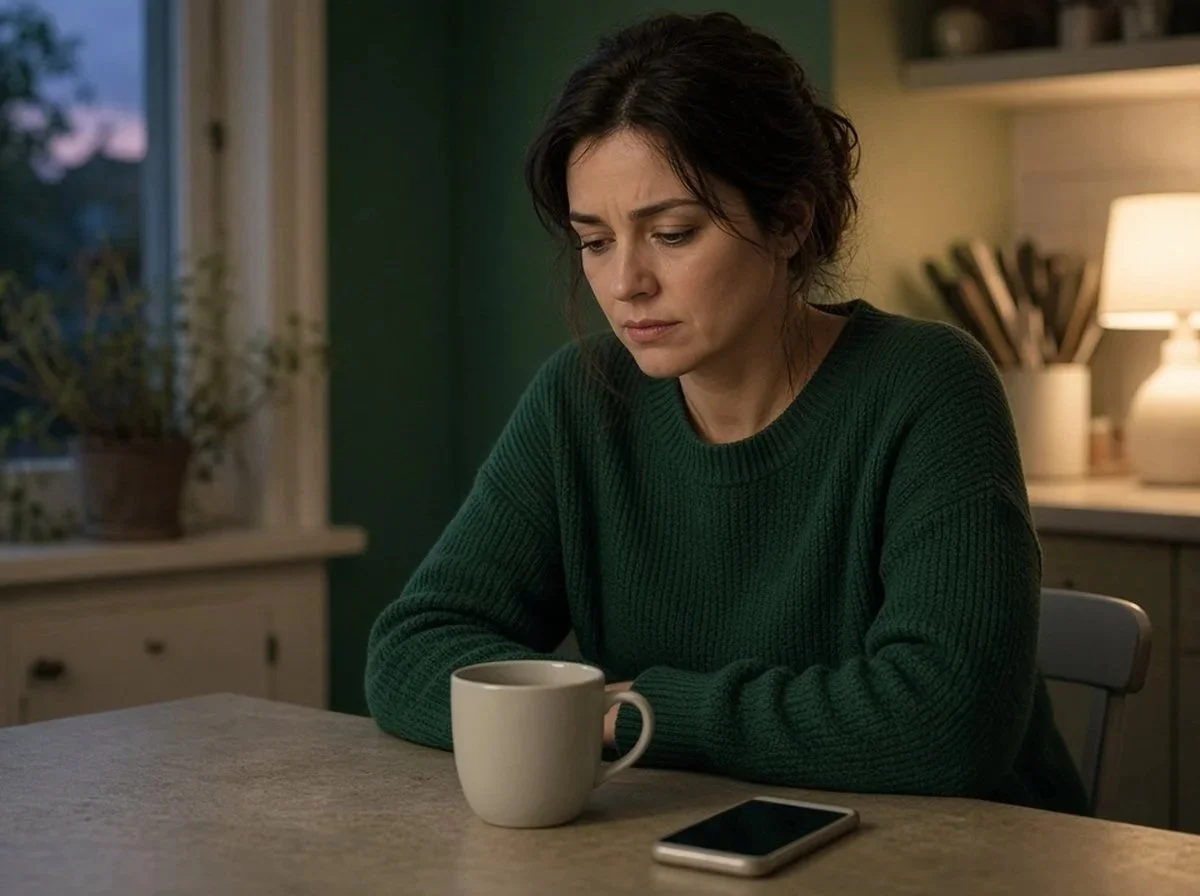
What an anxious pattern feels like from the inside
Researchers who study adult romantic attachment describe it along two lines, anxiety and avoidance. The anxiety line is about how much a person worries that a partner won't be there when needed. You can read how they describe it in this research overview on attachment. What follows is what that worry feels like day to day.
It feels like accuracy, not insecurity
While it's happening, it doesn't feel like worry. It feels like noticing. A reply took longer than usual. A goodbye was one beat short. A "yeah" showed up where a "yes" usually lives.
Part of you is very good at spotting these, and it starts building a case right away. What did I say on Sunday? Have they been quieter since? Is this how it starts, when someone decides in private, weeks before they tell you?
The body gets there first
Your stomach drops. Your chest tightens. There's a kind of static behind your eyes that makes it hard to follow a TV show. You hear your phone buzz from another room, even when it didn't.
The thinking and the body feed each other. The more you picture the worst, the louder the alarm gets, and the louder the alarm gets, the more the pictures feel true.
The reach, and the quick retreat
Then comes the part that is hardest to explain to anyone who hasn't done it. You want to close the distance so badly that you do something that widens it. You send the long message. You bring it up at eleven at night. You say "I'm fine" in a voice that clearly isn't, because a part of you needs them to come and find out.
Or you go cold first. Being the one who pulled away hurts less than being the one who was left.
Underneath it sits a sentence most people never say out loud: if they really saw how much I need this, they'd go. So a second job runs next to the first, which is managing how much of it shows. You draft and delete. You wait a careful hour before you reply. A good evening costs you the hour afterward, going back over it.
What it looks like from across the room
Now stand at the other end of the kitchen.
A test with no subject
To a partner, it often looks like a test they keep failing without being told the topic. You said you weren't upset, and you meant it. Three days later the question is back in new clothes.
That's a strange spot to be in. You're being asked to prove something that can't be proved, and you'll be asked again on Thursday. Your answers don't seem to stick anywhere.
Editing yourself to keep the peace
So you get careful. You start screening what you mention. You skip the coffee with the old coworker, or the fact that you're tired tonight. You aren't hiding anything. You can just see the whole evening attached to it.
A home where one person edits the truth to keep things calm gets lonelier for both people. The one doing the editing usually thinks they're being kind.
Stepping back reads as leaving
Most partners who step back aren't punishing anyone. They're trying to cool things down. Go quiet for an hour, let it settle, come back calmer. In most arguments that is good advice.
Here, it's often the worst move available. A silence can look exactly like the thing the alarm was afraid of. So the reaching gets louder, which makes the retreat feel more needed, and both people speed away from each other while trying to fix it.
The guilt of the person who loves them
There's guilt in this seat too. You can see someone you love in real distress and know that the thing they're asking for, one more definite answer, may be keeping the loop going. Withholding it feels cruel. Giving it feels like feeding something.
And there's a special loneliness in being cast as the one who might leave when you had no plan to. Warmth at the wrong moment gets read as evidence, and a tired evening gets read as the start of the end.
Where the gap does the damage
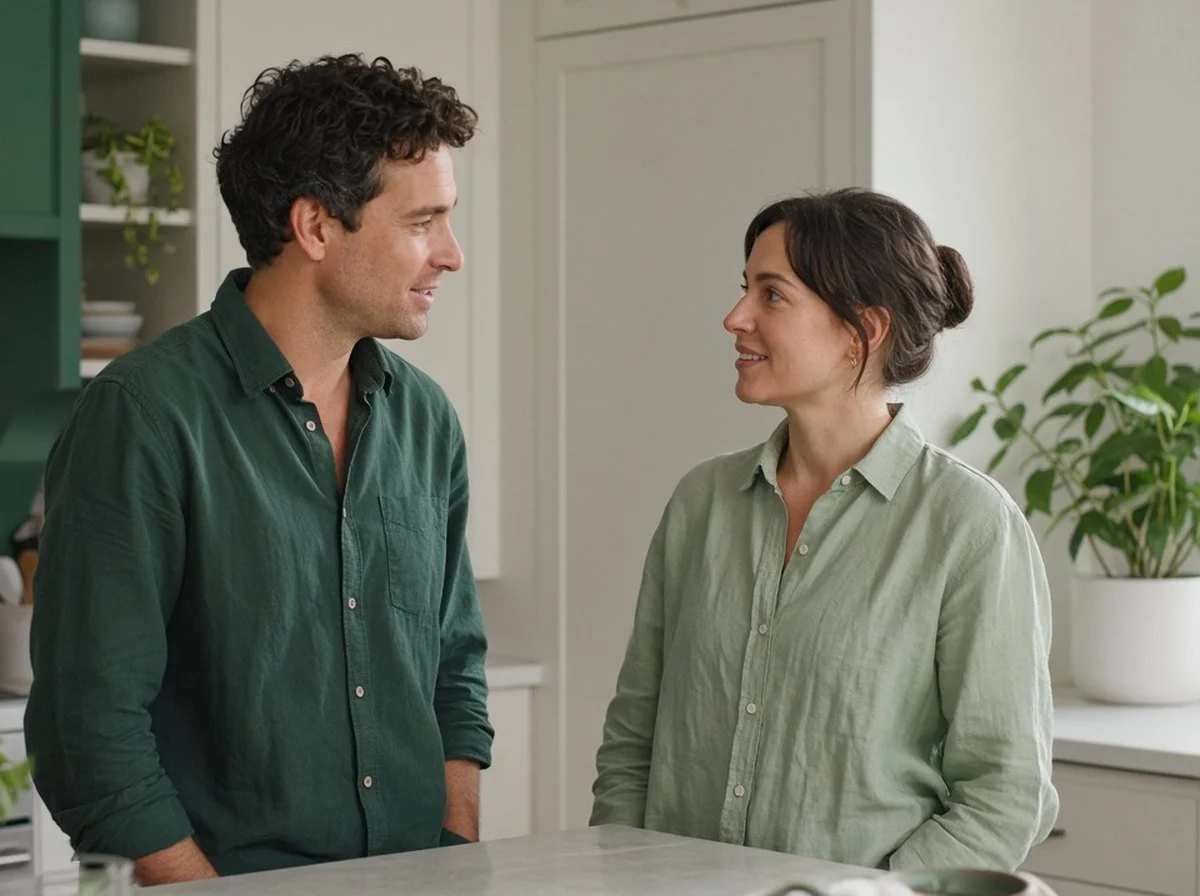
Both stories are partly true, which is why this is so hard. One person sees a threat. The other sees pressure. Each one is reacting to what they can see from where they stand.
A review of research on adult attachment and stress describes how people with high attachment anxiety may underestimate the care a partner is giving when things feel tense, while partners can grow tired of giving reassurance that doesn't seem to land. That can leave one person giving, the other missing it, and both feeling unseen.
There is also hopeful news in the research. In a study of couples, people who felt their partner understood and cared about them felt more secure with that partner, and this was strongest for people who generally felt less secure. The authors wrote it up as perceived partner responsiveness. In plain words, feeling understood helps more than being handed an answer.
How the anxious side can close the gap
You can't switch the alarm off by force. You can change what you do while it's ringing.
Say the feeling before the case. "I'm feeling a bit shaky and I'd like a hug" lands very differently from a list of evidence.
Ask for one small, specific thing. "Could you text me when you get there?" is easier to give than "tell me we're fine."
Give it twenty minutes before you reach. Walk, wash dishes, or call a friend. Alarms often settle with a little time.
Keep a short list of things your partner did that were clearly caring. Read it when the story gets loud.
Notice what you'd tell a friend in your spot, and say that to yourself.
How the partner can close the gap
You aren't responsible for fixing someone else's alarm. You can still make it easier to hear that the relationship is safe.
Say your plan when you need space. "I need an hour. I'll text you at eight" turns a silence into a promise.
Keep reassurance short, warm and real. One clear sentence works better than a long talk that tries to settle it forever.
Keep telling the small truths. Mention the coffee and the tired evening. It keeps you both honest.
Name your own limit kindly. "I want to help, and I'm running low tonight" is fair.
Attachment style is a description, not a diagnosis
Attachment style is a way of describing a pattern, not a diagnosis, and no quiz can hand you one. It's shorthand for how a nervous system learned to cope with the possibility of losing someone.
A pattern like this can sit next to real anxiety, and anxiety can look different from person to person. CAMH explains how anxiety differs from everyday worry, and NIMH describes anxiety disorders and how they are assessed. Only a qualified clinician can tell you whether what you feel is an anxiety disorder.
When it's about safety
Most of what this page describes is a hard, painful loop between two people who care. A few things are different. If you feel afraid of a partner's temper, or you're being controlled, hurt or threatened, that's a safety problem, not an attachment problem.
If you're in danger right now, call 911. In Waterloo Region, Here 24/7 is 1-844-437-3247 any time of day. If you're having thoughts of suicide, call or text 9-8-8 at any hour.
How counselling can help both of you
Many people find it easier to untangle this with someone in the room. A therapist can help you understand where your own alarm came from and practise new ways to ride it out. A partner can come too, and sessions together make room for both stories at the same time.
Not sure yet? A free 15-minute consultation lets you describe your own version of this week out loud, with no commitment.
Individual sessions with our therapists are $130 to $200. Couples sessions are $170 to $200, and you can read about couples counselling on our site. There's a one-time $50 setup fee for new clients, which isn't charged for the free consultation. Depending on your plan, your insurance may cover the full session fee. We offer online sessions across Ontario, and offices in Waterloo, Kitchener, Cambridge and Ottawa.