
Here's the odd part. The task you've been dodging all week is one you actually want done. Nobody's making you do it, you'd be good at it, and you've still found a dozen reasons not to start. So at midnight you type the question into a search bar: why do I procrastinate?
The short answer is that procrastination is usually about feelings, not laziness or poor planning. This article explains what's going on underneath, why the things you want most are often the hardest to start, and what actually helps.
Why do I procrastinate?
Because the task brings up a feeling you'd rather not feel, and putting it off makes that feeling go away for a while. That's the piece most advice skips. Procrastination psychology isn't mainly about time management. It's about mood management. Researchers Fuschia Sirois and Timothy Pychyl describe procrastination as putting short-term mood repair ahead of the longer-term goal.
The task might stir up dread, boredom, self-doubt or resentment. Delay gives instant relief. Your brain notices the relief and files it away as a win, so the next time the same task shows up, delay is the first thing it reaches for. The relief is real. It's also very short. By evening the dread is back with interest, and now it's mixed with guilt about the wasted day.
There's a second piece. People tend to rank what's urgent and quick above what's important and slow, even when the important task pays off more. Researchers call this the "mere urgency effect". Watering a wilting plant feels more pressing than drafting the proposal that could get you promoted, because the plant has a visible deadline and the proposal doesn't.
Curious whether counselling could help with this? A free 15-minute consultation costs nothing and comes with no commitment either way.
Is procrastination laziness?
No. Laziness would mean not caring about the outcome. Most people who procrastinate care a great deal, which is exactly why the task is uncomfortable enough to avoid. Lazy people don't lie awake feeling sick about the thing they didn't do.
Is procrastination a mental health issue? On its own, no. Procrastination vs laziness is the wrong fight, because nearly everyone delays something. It can point to something more when it's constant, when it costs you jobs or relationships, or when it arrives bundled with low mood, anxiety or a lifelong struggle to start anything at all. More on that below.
Why do I put off the things I actually want to do?
This is the version that confuses people most. You want to write the book, apply for the course, book the trip. Nobody's forcing you. And still you don't.
Often it's because the things you want most carry the highest stakes for your sense of who you are. If you never write the book, you get to keep believing you could've. If you write it and it's bad, that story is gone. Some people would rather fail from not trying than find out they tried and fell short. Wanting something badly can make it scarier, not easier. That's fear of failure, and it's worth naming.
What emotions sit under the delay?
Different tasks hide different feelings, and it helps to name yours.
Dread, when the task is unpleasant or long.
Fear of judgment, when someone will see the result.
Perfectionism, when you can't start until you can do it flawlessly. See our article on how to overcome perfectionism.
Resentment, when you didn't choose the task and don't agree with it.
Overwhelm, when the task has no obvious first step.
Boredom, when the work is tedious and nothing about it holds your attention.
Try this. Picture yourself starting the task right now. What's the first uncomfortable thing you feel? That feeling is the real obstacle. The task sits downstream of it.
How do you stop procrastinating without a productivity app?
Since it's an emotion problem, how to stop procrastinating starts with the feeling and ends with the calendar, not the other way round.
Make the plan concrete. "I'll work on it this week" is a wish. "Tuesday at nine, I open the file and write the first heading" is a plan. Research on "if-then" plans, called implementation intentions, suggests specific plans like this make it more likely you'll follow through.
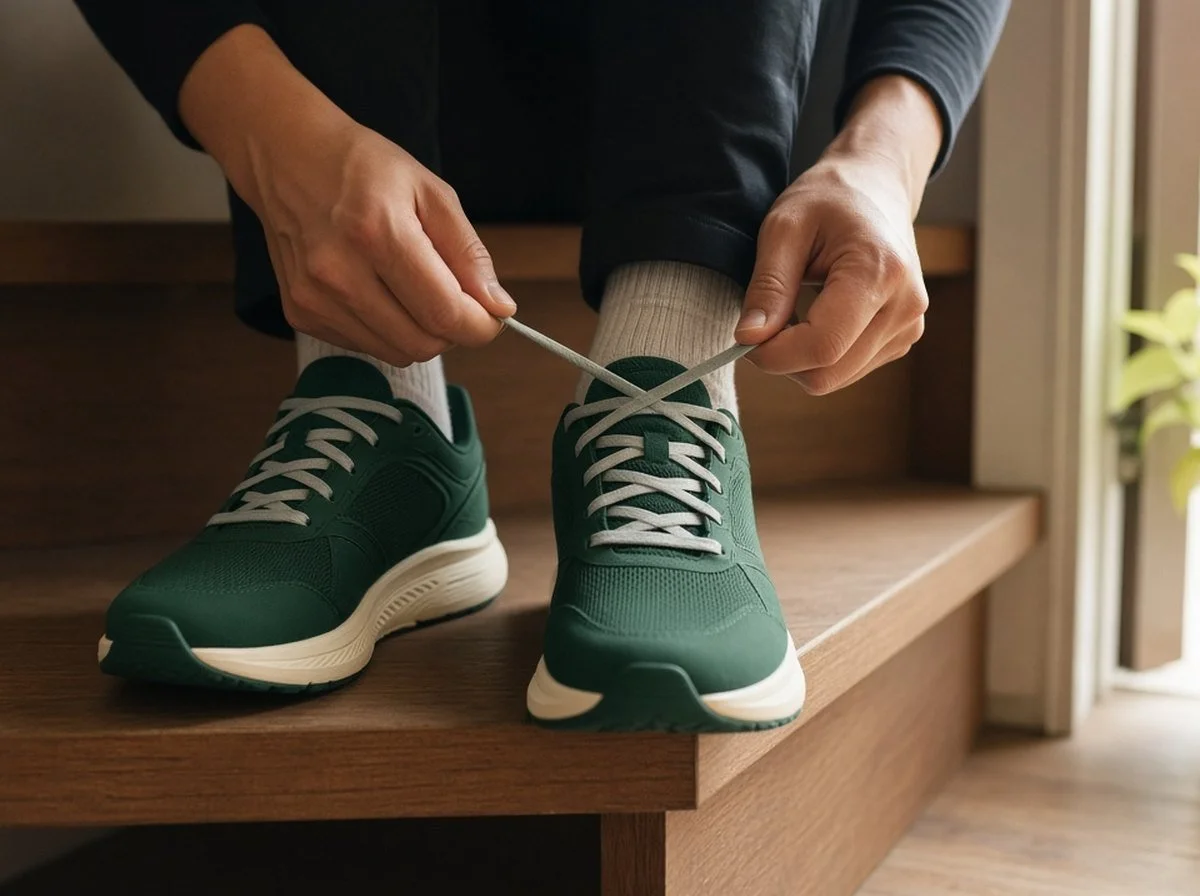
Shrink the first step until it's almost silly. Not "go to the gym", but "put on the shoes". Not "write the report", but "type the title". Momentum often does the rest.
Expect the feeling and start anyway. The dread will show up. Treat it as the entry fee rather than a stop sign, and notice that it often fades a few minutes into the work.
Tie the task to something you value. Ask what the task is in service of. A parent who hates paperwork can still do it for their kid's school application.
Swap the avoidance habit for a better one. If scrolling is where the avoided minutes go, put the phone in another room and give yourself a walk instead.
Go easy on yesterday. In one study of university students, those who forgave themselves for procrastinating before one exam procrastinated less before the next. Beating yourself up adds more bad feeling, and bad feeling is what you were avoiding to begin with.
A five-minute reset for when you're stuck
Next time you catch yourself stalling, try this short routine:
Pause and name it. Say to yourself, "I'm avoiding this because I feel..." and finish the sentence.
Rate the feeling. Give it a number from 0 to 10. Naming and rating a feeling can make it feel more manageable.
Pick a two-minute step. Choose the smallest possible piece of the task.
Set a timer. Work for just those two minutes. You're allowed to stop when it rings.
Notice what happened. Was it as bad as you expected? Often it isn't, and that's useful to remember next time.
When procrastination might be something else
ADHD
Sometimes the delay isn't avoidance. It's a brain that can't get started even when there's no bad feeling attached. If you've always struggled to begin tasks, lose hours to distraction, and find that even fun things are hard to start, it may be worth asking whether an adult ADHD assessment makes sense.
Anxiety and low mood
Procrastination and anxiety are the other common pairing. When avoidance spreads from one task to most of your life, anxiety counselling may be a better place to look than another planner. Low mood can also drain the energy to start anything. If nothing feels worth doing, that is worth talking through with a counsellor.
How counselling helps with procrastination
Here's what a counsellor actually does with this. We don't hand you a schedule. We look at what the avoidance protects you from, work on tolerating that feeling in small doses, and build starts that are small enough to be boring. If procrastination and ADHD are tangled together for you, our psychologists can assess for it.
We've supported Kitchener-Waterloo since 2016, and we see people in person in Waterloo, Kitchener, Cambridge and Ottawa, or by video anywhere in Ontario. Sessions with our therapists are $130 to $200, and there is a one-time $50 setup fee. Many extended health plans cover counselling, and in many cases we can bill your insurance directly, depending on your plan and your therapist.
Frequently asked questions
Can procrastination be a sign of anxiety?
It can. Avoiding tasks is one way anxiety keeps you away from feelings of worry or fear. If avoidance is spreading, it's worth talking to someone.
Will I ever stop procrastinating completely?
Probably not, and that's okay. Everyone delays something. The goal is to start more often and recover faster when you slip.
Why do I procrastinate more when I'm stressed?
Stress makes hard feelings louder, so the pull toward quick relief gets stronger. Looking after sleep, food and breaks can make it easier to start.
Taking the first step
You don't need a referral or a finished plan to reach out. Book a free 15-minute consultation and start from wherever you are.