
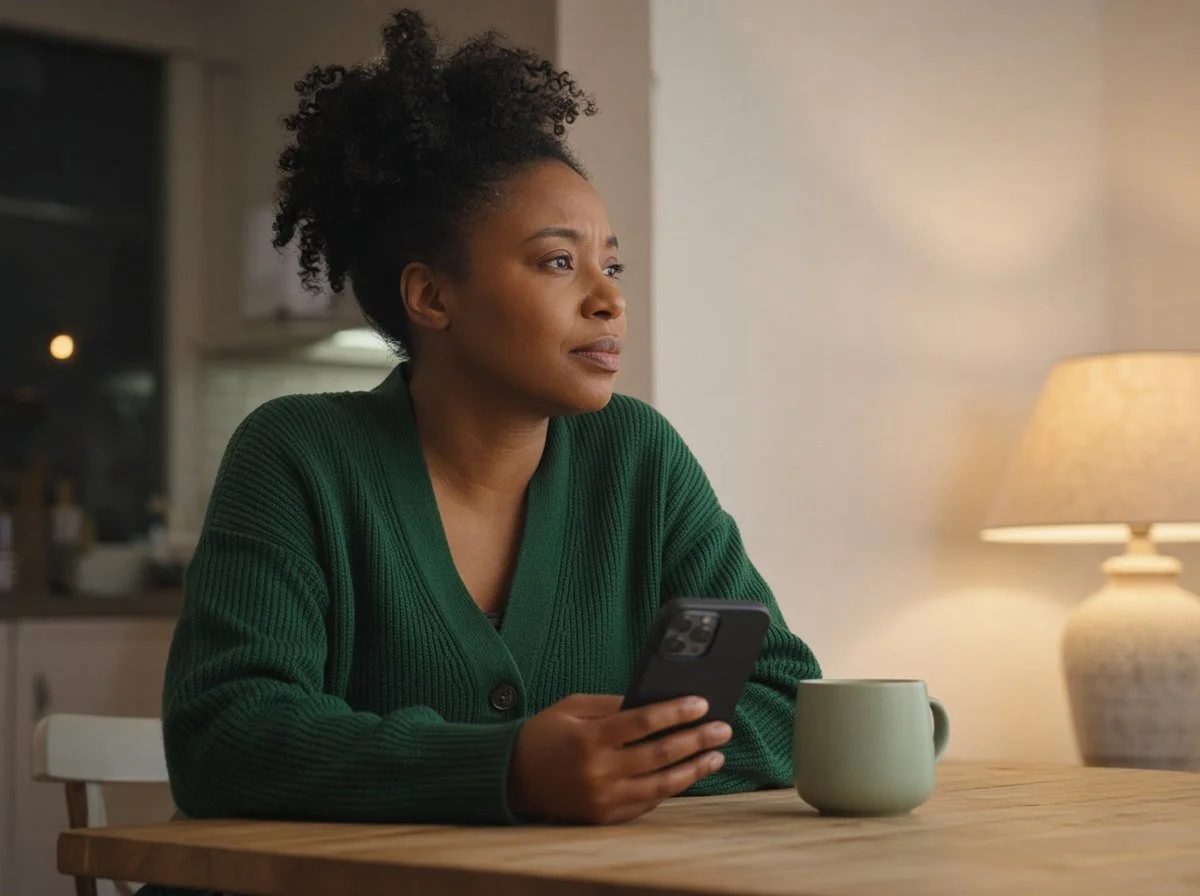
It is late at night and your mind won't settle. You open a chatbot and start typing about how you feel. It answers fast, it sounds kind, and it never gets tired. Many people now try using AI for therapy in moments like this. So is it a good idea? The honest answer is that it depends on what you need.
This post is general information, not medical advice or a diagnosis.
Why so many people are turning to AI for support
It makes sense that people reach for a chatbot. It is free or low cost. It is there at 3 a.m. You don't have to wait for an opening or explain yourself to a stranger's face.
The American Psychological Association (APA) noted this trend in a health advisory in November 2025. It said that millions of people now use general chatbots and wellness apps for mental health needs. It also said that emotional support is one of the most common reasons people use these tools.
Some people feel less shame typing to a machine. Others just want to sort out their thoughts before they talk to anyone. These are real needs, and there is nothing wrong with having them.
What AI therapy can help with
A chatbot can be a useful tool for some everyday tasks. For example, it may help you:
Put a messy feeling into words.
Brainstorm ideas for a hard conversation.
Learn what a term like "cognitive distortion" means.
Get a prompt for writing in a journal.
Plan small steps when a task feels too big.
Used this way, AI is a bit like a notebook that talks back. It can help you think. If you like writing things down, you may also enjoy our post on journaling for anxiety.
What the research says so far
Research on AI and mental health is still early, and the results are mixed.
One randomized trial, by Heinz and colleagues in 2025, tested a chatbot built just for mental health support. It included 210 adults with symptoms of depression, anxiety or eating concerns. People who used the chatbot for four weeks had bigger drops in symptoms than people on a waitlist. The authors said larger studies are still needed.
A 2023 review by Li and colleagues looked at 35 studies of AI chat tools. Across the trials they pooled, these tools reduced symptoms of depression and distress. But they did not clearly improve overall well-being, and the long-term effects are not yet known.
Notice what these studies tested. They looked at tools built for mental health, often for a short time. They did not show that a general chatbot can replace a counsellor. The APA advisory makes the same point. It says research on general chatbots for mental health does not yet allow strong conclusions.
Is AI therapy safe?
AI tools can feel helpful and still carry real risks. The APA advisory lists several.
It may agree with you too much. Many chatbots are built to be agreeable. That feels good, but a counsellor will sometimes gently challenge you. Being agreed with all the time can keep you stuck in unhelpful thoughts.
It can get things wrong. Chatbots can make up facts or give advice that does not fit your life. They also may not reflect your culture or background.
It can't read the room. A chatbot mostly sees your words. It misses your tone, your face and the long story behind what you are saying.
It can feel like a relationship when it isn't. The APA warns that people can grow to depend on a chatbot. Watch for signs like choosing the chatbot over people, hiding how much you use it, or spending hours with it.
It may not handle a crisis well. The APA says these tools can't be counted on to manage a crisis safely.
It may keep what you type. Be careful about sharing names, places and other personal details. Read the privacy settings before you share anything sensitive.
The APA also notes that for people with anxiety or OCD, chatbots can feed reassurance seeking. You ask "Am I okay?" again and again, and the worry never truly settles.
ChatGPT as a therapist: AI therapist vs real therapist
Many people search for "ChatGPT as a therapist." It is a fair question to ask. Here is how a chatbot and a human counsellor differ.
A trained counsellor:
Has clinical training and follows a professional code of ethics.
Is overseen by a regulatory body.
Notices your body language, tone and pauses.
Remembers your story and how it fits together.
Can tell when you need support, and when you need a gentle push.
Can help you make a safety plan if things get hard.
Research also shows that the bond between a client and a therapist is one of the strongest predictors of how well therapy works. The APA points out that a relationship with an AI is one-sided, even when it doesn't feel that way.
None of this means AI cannot help anyone. It means AI and a counsellor do different jobs.
How to use AI more safely
If you choose to use a chatbot for support, a few habits can help.
Treat it as a tool, not a therapist.
Keep personal details out of your chats.
Notice how you feel after you use it. Calmer, or more stuck?
Check advice that matters with a real person.
If you see a counsellor, tell them how you use AI. The APA recommends this, so your counsellor can spot advice that may not fit your care.
It also helps to keep people in your life. A chatbot should not become your only place to talk.
When to talk to a person instead
Some things need a human. Reach out to a counsellor if:
Low mood, worry or stress has lasted for weeks.
It is getting hard to work, sleep or care for yourself.
You keep asking a chatbot the same worried question.
You feel more alone, even though you talk to AI often.
If you are thinking about suicide or hurting yourself, call or text 9-8-8 now. If you or someone else is in immediate danger, call 911. Please do not turn to a chatbot in a crisis.
How counselling can help
Counselling gives you a real person who knows your story. Together you can look at what is going on, notice patterns and try new skills. Your counsellor can adjust the plan as you change.
There are many styles of counselling. If you are not sure what fits, read our guide to types of therapy. If you have never been to therapy, our post on what to talk about in therapy can help you get started.
At Transformation Counselling, we see clients in person in Kitchener-Waterloo, Cambridge and Ottawa, and online across Ontario. Online sessions can fit into a busy day, much like opening a chat window, but with a trained person on the other side.
Common questions about using AI for therapy
Can AI replace a therapist? Not according to current research. The APA says chatbots and wellness apps should not replace a qualified mental health provider. They may play a supporting role alongside real care.
Is it okay to use AI between counselling sessions? For some people, it can be. Talk it over with your counsellor so you both agree on how you will use it.
Is it weird that I feel close to a chatbot? No. People naturally respond to things that seem to listen. Still, notice if it starts to take the place of the people in your life.

Cost, billing and your first step
Sessions with our therapists range from $130 to $200, depending on the clinician.
We accept Health Spending Accounts (HSAs).
We can direct bill many insurers. Coverage depends on your plan, so check with your insurer before you start.
Book a free 15-minute consultation with our admin team. A real person will be there to listen.
If you're in crisis: if you or someone you love is in immediate danger, call 911. If you're thinking about suicide, call or text 9-8-8 any time, day or night.
Last reviewed: October 2026
Sources
American Psychological Association. "Health advisory: Use of generative AI chatbots and wellness applications for mental health." November 2025. https://www.apa.org/topics/artificial-intelligence-machine-learning/health-advisory-chatbots-wellness-apps
Heinz MV, et al. "Randomized trial of a generative AI chatbot for mental health treatment." NEJM AI. 2025;2(4). https://doi.org/10.1056/AIoa2400802
Li H, et al. "Systematic review and meta-analysis of AI-based conversational agents for promoting mental health and well-being." NPJ Digital Medicine. 2023. https://pubmed.ncbi.nlm.nih.gov/38114588/