
You're in your thirties, forties or older. You have your own life, your own home, maybe your own kids. Then you sit down for a holiday dinner with your brother or sister, and within an hour you feel twelve years old again. A small comment stings. You find yourself keeping score. If that sounds familiar, you're not alone. This post looks at why sibling rivalry in adults happens, the signs to notice and practical ways to handle it.
This post is general information, not a diagnosis or medical advice. If you're worried about your mental health, a counsellor or your doctor can help.
Is sibling rivalry in adults normal?
Yes, it's very common. The APA Dictionary of Psychology describes sibling rivalry as competition between siblings for the attention, approval or affection of one or both parents, or for other recognition or rewards. That competition often starts in childhood, but it doesn't always end there.
For many people, adult sibling rivalry eases over time, then flares up during big life moments. For others, it stays in the background for years. Either way, it doesn't mean your family is broken or that you've done something wrong. Sibling relationships are often the longest relationships in our lives, so it makes sense that they carry a lot of history.
This post is about adult siblings, including step and half siblings, and siblings in every kind of family and culture.
Signs of sibling rivalry in adults
Rivalry between adult siblings can be loud or quiet. Here are some common signs. This isn't a test, just a way to reflect.
You keep score of who calls, who visits or who helps more
Digs get made and then passed off as jokes
You dread family gatherings because of one sibling
You still compete for a parent's attention or approval
You compare careers, homes, partners, kids or money
Old arguments come back, almost word for word
You feel like a kid again around them, and not in a good way
You feel jealous when good things happen to them, then guilty for feeling that way
Why sibling rivalry comes back in adulthood
Even when siblings get along most of the time, certain things can stir old feelings back up:
Old roles. At family gatherings, people often slip back into who they were growing up, like the responsible one, the funny one or the one who gets blamed.
Comparison. Adult life gives you new things to compare, from jobs and income to relationships and parenting.
A parent's attention or praise. Feeling that a parent favours a sibling can still hurt at any age.
Caring for ageing parents. Questions about who helps, how much and who decides can bring tension to the surface.
Big decisions after a loss. After a parent dies, siblings may need to make choices together while grieving, and old feelings can come up then.
Research suggests that how fairly siblings feel treated by parents matters well into adulthood. In a study of young adult siblings by Jensen and colleagues, the sibling who felt less favoured reported more depressive symptoms, and bigger differences in how siblings were treated were linked with less closeness between them. In a study of adults in their sixties, Stocker and colleagues found that sibling conflict and perceived parental favouritism were linked with more depression, anxiety and loneliness, while warmth between siblings was linked with less loneliness.
In other words, these relationships matter for your wellbeing at every stage of life, which is why it's worth working on them.
Sibling jealousy in adulthood
Jealousy can be one of the hardest parts of adult sibling rivalry. Maybe your sister seems to have the career you wanted. Maybe your brother's kids get more attention from your parents. Maybe a sibling has more money and doesn't seem to notice.
Feeling envious doesn't make you a bad person. It often points to something you want or a hurt that hasn't healed. Try this:
Name it to yourself. "I feel jealous right now" takes some of the sting out.
Get curious. Ask what the jealousy is pointing to. Is it about recognition, security or feeling loved?
Don't act on it right away. Let the feeling pass before you respond to your sibling.
Remember you see only part of their life. Things that look easy from the outside may come with struggles you don't see.
In some families, one sibling was treated as the golden child while another was blamed. If that's part of your story, both roles can leave marks, and it can help to see your sibling with some compassion too.
How to deal with sibling rivalry as an adult
You can't control your sibling, but you can change how you show up. These steps can help:
Notice your triggers. Pay attention to which topics, comments or situations set you off, so you can plan for them.
Separate the past from the present. Ask yourself whether you're reacting to the person in front of you or to something that happened years ago.
Talk about one thing at a time. If you need to raise something, pick one specific issue and stay with it.
Use calm, clear words. Try "I felt hurt when..." rather than "You always...".
Set limits on topics. It's okay to steer away from money, parenting or politics if those always end badly.
Plan your visits. Decide how long you'll stay, take breaks and have a way to leave if things get tense. Our post on setting boundaries with family during the holidays has more ideas.
Share caregiving in clear terms. If you're caring for a parent together, talk openly about who does what, and check in often.
Let go of winning. You don't need your sibling to admit you were right to feel at peace.
Accept the relationship you can have. Some siblings become close. Others stay cordial. A respectful, friendly relationship can be a good outcome too.
Sometimes rivalry with a sibling is tied up with hard feelings about a parent. If that's true for you, our post on I hate my mom explores those feelings gently.
When to get help
Consider reaching out if:
Conflict with a sibling is affecting your mood, sleep or health
Tension with your sibling spills into your relationship with your partner or kids
Every family event ends badly
You feel stuck in resentment, jealousy or guilt
You'd like a better relationship but don't know where to start
If you're thinking about suicide or hurting yourself, call or text 9-8-8 now. If you or someone else is in immediate danger, call 911. If conflict with a sibling ever includes threats or violence and anyone is in danger right now, call 911.

How counselling can help with sibling conflict
Counselling can help you understand where the rivalry comes from, make sense of your feelings and find new ways to respond. You might work on your own, in individual counselling, or with your siblings in family therapy if they're willing.
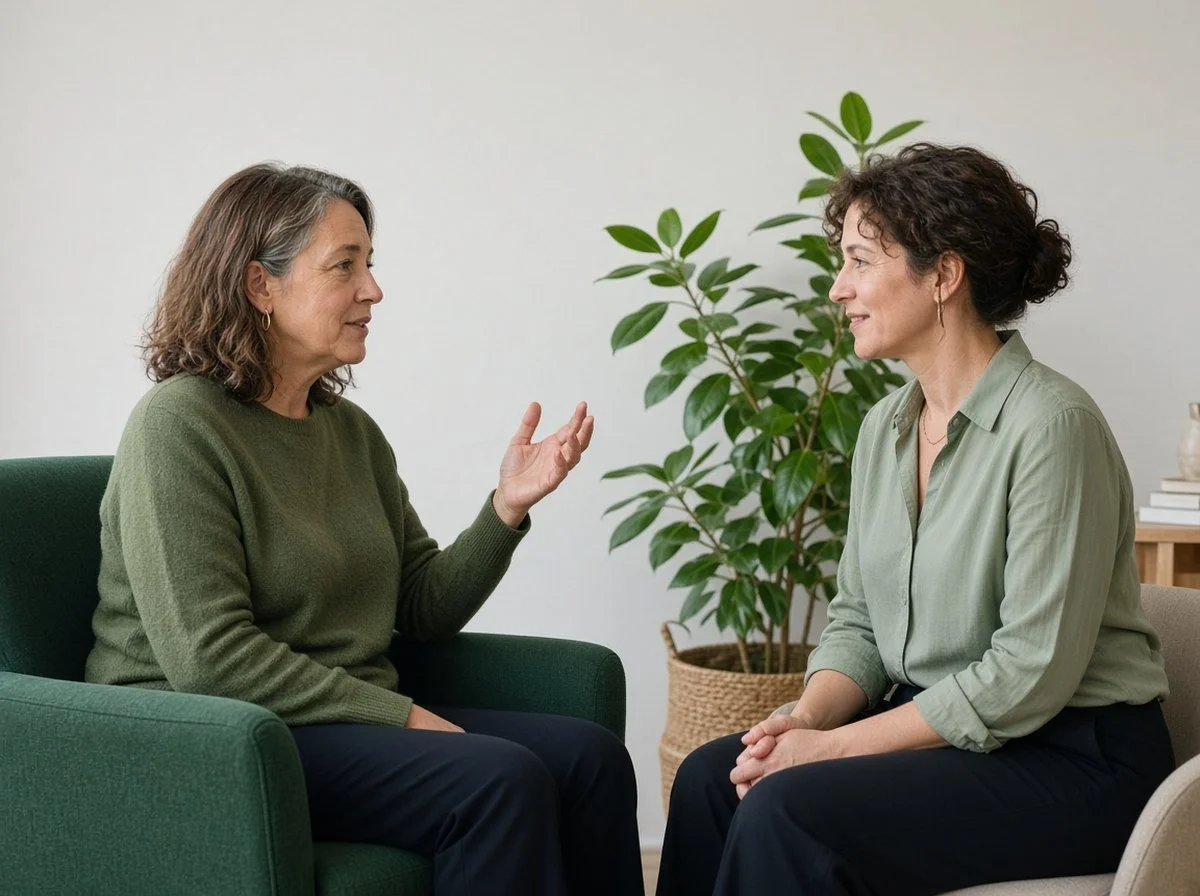
Our family counselling and family therapy gives siblings a calm, guided space to talk about hard things, listen to each other and work out how to move forward. A counsellor won't take sides. Their role is to help everyone feel heard.
You can see us in Kitchener, Waterloo, Cambridge or Ottawa, or by secure video from anywhere in Ontario.
Cost, billing and your first step
We accept Health Spending Accounts (HSAs).
We can direct bill many insurers. Coverage depends on your plan, so check with your insurer before you start.
Book a free 15-minute consultation with our admin team. Let them know sibling conflict is what's bringing you in, and they'll help you find a good fit.
If you're in crisis: if you or someone you love is in immediate danger, call 911. If you're thinking about suicide, call or text 9-8-8 any time, day or night.
Last reviewed: October 2026
Sources
Sibling rivalry, APA Dictionary of Psychology
"Life still isn't fair": parental differential treatment of young adult siblings, Jensen, Whiteman, Fingerman and Birditt, Journal of Marriage and Family, 2013
Sibling relationships in older adulthood: links with loneliness and well-being, Stocker and colleagues, Journal of Family Psychology, 2020