
Roommate syndrome is a popular way to describe a relationship that still runs the household, but has lost much of its warmth, play and closeness. It is not a diagnosis. Many couples go through a season like this. It does not mean the relationship is over, but it is worth paying attention to.
Maybe you and your partner are a great team. The bills get paid, the kids get to practice, and dinner happens. But at the end of the day, you sit in the same room on separate screens, and it feels a little lonely. If that sounds familiar, you are not alone. This guide explains what the term means, why it happens, and some first steps back toward each other.
What roommate syndrome means
What is roommate syndrome? It is not a medical or psychological term. It is an everyday phrase people use when a couple feels more like housemates than partners. The roommate syndrome meaning is simple: the practical side of the relationship works, but the emotional and physical connection has faded.
Roommate syndrome in a marriage or a long-term relationship often creeps in slowly. There is usually no big fight or single moment when it starts. Instead, life fills up, and the small moments of connection get squeezed out. There is no test for it, and you do not need a label to know something feels off.
Signs you may be living more like housemates than partners
Everyone’s relationship is different, but some common experiences include:
Most conversations are about tasks, schedules or the kids
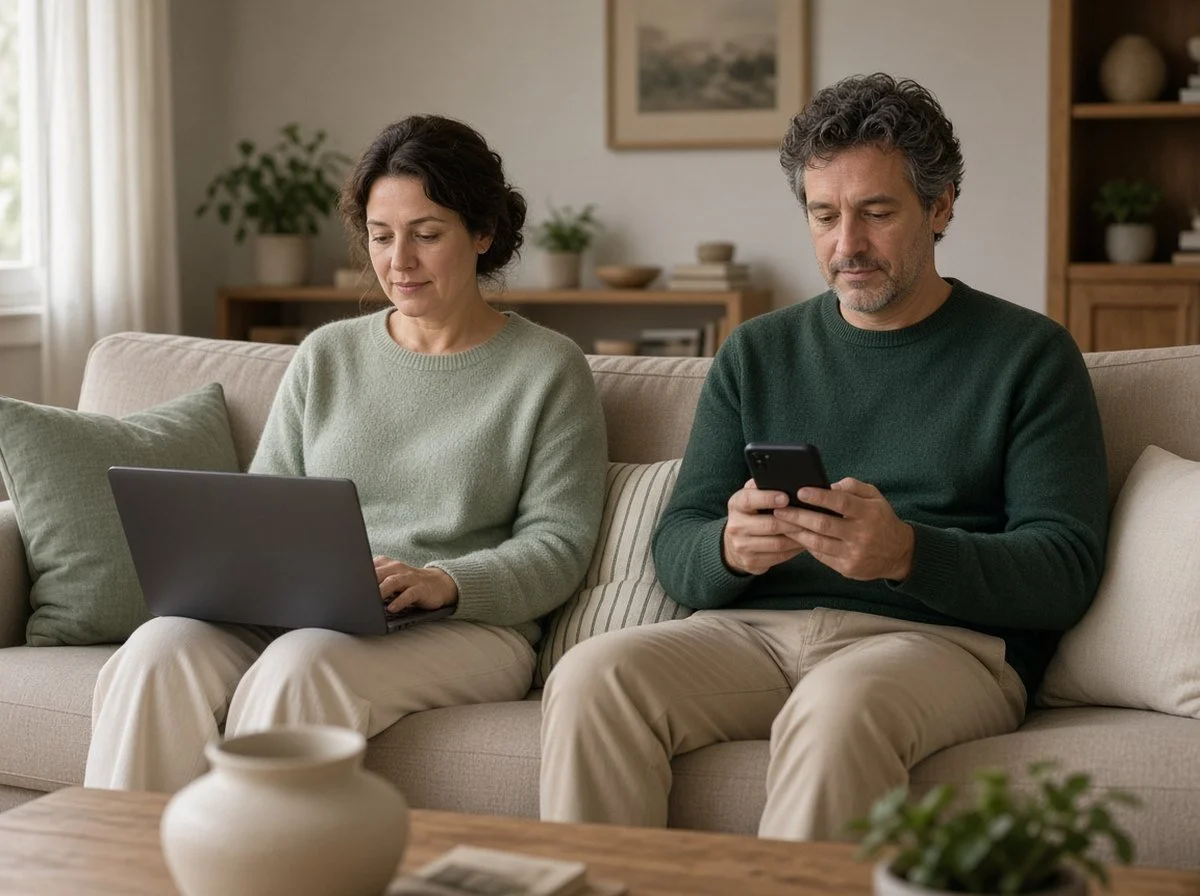
You spend evenings in the same room, each on a phone or laptop
There is little touch, flirting or curiosity about each other
You feel like a good team, and also a bit lonely
Sex has faded, or feels like one more thing on the list
You cannot remember the last time you laughed together
These are not a checklist or a quiz. If several feel true, it may simply be a sign that your relationship needs some care and attention.
Why couples drift into a logistics-only rhythm
Roommate syndrome in a relationship rarely has one cause. Often, a few things stack up:
Time pressure. Work, kids, caregiving and chores can leave little time or energy for each other.
Conflict that went quiet. Some couples stop arguing, not because things are resolved, but because they gave up on the topic.
Less newness. After years together, life can fall into the same routine.
Fewer small bids. The little moments of reaching out, like a joke or a touch, can fade when you are tired.
Unspoken disappointment. Hurts that never got talked about can build distance over time.
Research supports the idea that boredom matters. A study by Tsapelas, Aron and Orbuch followed 123 married couples. Couples who felt more often that their marriage was “in a rut” at one point were less satisfied nine years later. Feeling less close to each other seemed to help explain that link.
Researchers Arthur Aron and J. M. Tomlinson describe a related idea. Early in a relationship, getting to know each other feels new and exciting. Over time, that excitement naturally slows. This does not mean something is wrong. It is a common part of long relationships.
Is this the end of the relationship?
Feeling like roommates does not, on its own, mean your relationship is finished. Many couples hit this kind of season during big life changes, such as a new baby, a job change, a move or caring for a parent. Underneath the distance, there is often still care and goodwill.
For other couples, the distance has gone on for a long time, and one or both people may already feel checked out. This post cannot tell you which is true for you, and that is okay. What matters is that you do not have to ignore the distance or decide everything right now.
Small first steps back toward each other
You do not need a big plan to start. Small, steady moments often matter more than grand gestures. You might try:
Notice one thing. Tell your partner one thing you appreciated today, even something small.
Share one non-task sentence. Tell them something about your day that is not about chores or schedules.
Suggest one small shared plan. A short walk, a new recipe or a new place to visit together.
Name the distance gently. Try “I miss us” instead of “You never pay attention to me.”
Aron and Tomlinson describe research showing that doing new and challenging activities together can help couples feel closer. It does not have to be big. Trying something new, side by side, can help bring some spark back.
If you want a fuller guide, our post on how to reconnect with your partner goes into more detail.

How to bring it up with your partner
Talking about distance can feel risky. You may worry your partner will feel blamed, or that saying it out loud will make it real. A few ideas can make the talk feel safer:
Pick a calm time. Not in the middle of a busy morning, and not right after an argument.
Start with care. You might say, “I love our life together, and I miss feeling close to you.”
Speak for yourself. Share how you feel, instead of listing what your partner does wrong.
Listen to their side. They may have felt the distance too, or they may see it differently.
Keep it short the first time. One honest talk is a start, not a full fix.
If the talk turns into a fight, that is okay. Take a break and try again another day. Some couples find it easier to start this talk with a counsellor in the room.
What usually does not help
When a relationship feels flat, it is tempting to try a quick fix. Some common moves tend to backfire:
A single grand gesture used in place of regular attention
Keeping score of who tries harder
Starting a fight just to feel something
Setting up a “test” to see if your partner still cares
These are very human reactions. But they often add pressure and blame, which can push you further apart.
A note on safety: if the distance in your relationship came from fear, control or contempt, date nights are not the answer. If there is violence, threats or you are afraid of your partner, individual counselling is a safer place to start. If you are in immediate danger, call 911. If you are having thoughts of suicide, call or text 9-8-8.
How couples counselling can help
Couples counselling gives you both a place to talk about the distance with less blame and less defensiveness. A counsellor can help you understand how you drifted, name what has been left unsaid, and practise turning toward each other again.
Our couples counselling is offered at our Kitchener-Waterloo, Cambridge and Ottawa offices, by phone and online. For online couples sessions, both partners need to be in Ontario during the session. If your partner is not ready yet, you can start with individual counselling on your own.
If you are nervous about what happens in the first session, our guide to your first couples therapy session walks you through it.
Getting started
Roommate syndrome can feel heavy, but it is often a signal, not a verdict. If your relationship still runs the household but the closeness has faded, book a free 15 minute consultation, in person, online or by phone, and we can talk about what would help. Booking does not commit you to anything, and the call is not a crisis service.
Last reviewed: November 2026