
Booking a first couples therapy session can feel like a big step. Maybe you have been talking about it for months, or maybe one of you only just said yes. Either way, it is normal to feel nervous. Knowing what usually happens in the first session, and how to prepare together, can make walking in (or logging on) a lot easier.
This post is general information, not medical advice or a diagnosis.
What happens in a first couples therapy session
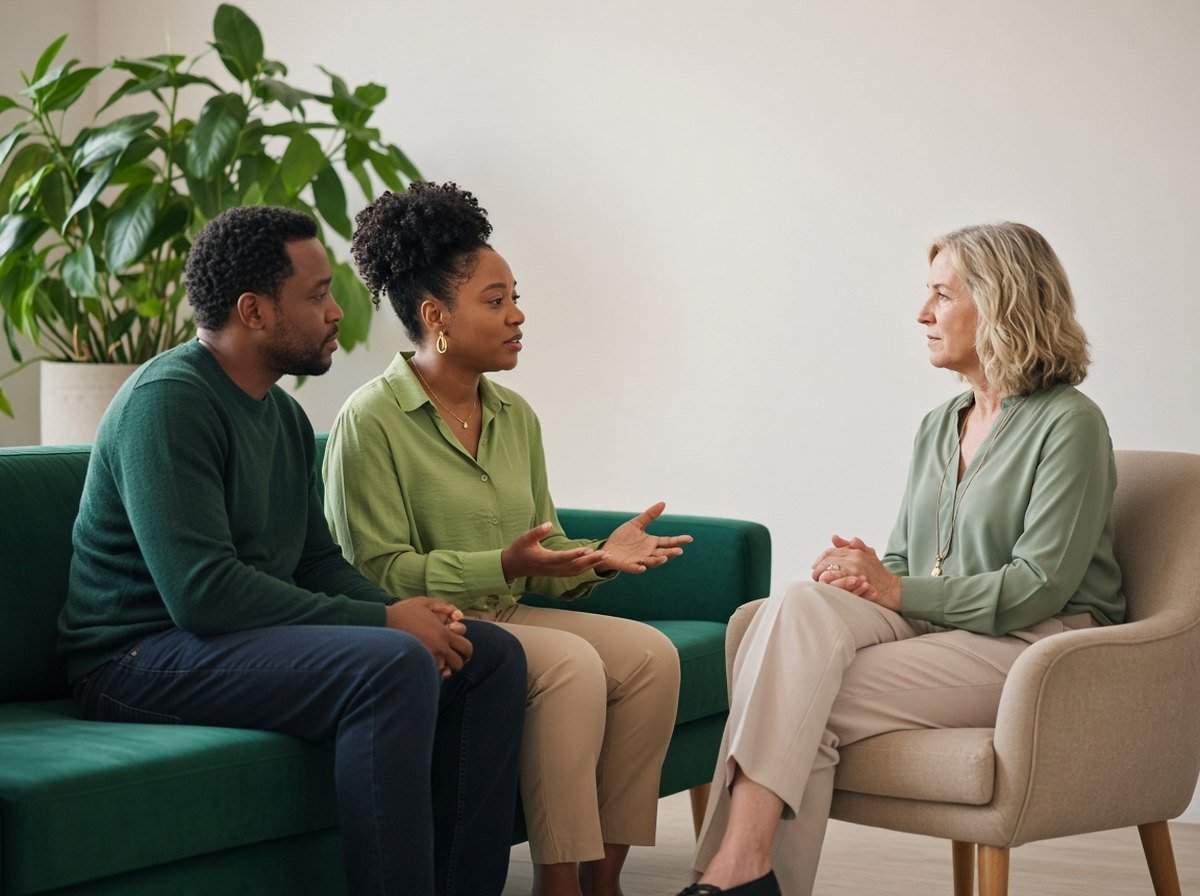
Every therapist works a little differently, but most first sessions have a few things in common. The first session is mostly about getting to know you as a couple. Your therapist will want to hear what brought you in, what each of you hopes will change and what is already working.
In couples therapy, the focus is the relationship itself. The APA Dictionary of Psychology describes couples therapy as therapy where both partners are seen together by the same therapist, and notes that individual sessions are sometimes offered to each partner, often near the start (see Sources). So some therapists will meet with each of you on your own at some point, and others will mostly see you together. Your therapist can explain how they work.
You can expect the first session to feel more like a conversation than a test. There are no right answers. You do not need to have a clear story, and you do not need to agree on what the problem is.
Before the session: booking and the free consultation
A lot of the nerves come before you ever sit down with a therapist. A few things can help:
Start with a free consultation. You can book a free 15-minute call with our admin team to talk about what you are looking for and get matched with a couples therapist who fits you both.
Decide together where you will meet. You can meet at our Kitchener-Waterloo, Cambridge or Ottawa office, or online.
Check the practical details. Our post on how much couples therapy costs in Ontario covers fees, insurance and billing, so you are not caught off guard.
Plan some time after. If you can, avoid booking the session right before a busy meeting or a family event. Many couples like a little quiet time afterward.
What the therapist will likely ask
Most couples therapists use the first session to understand your relationship from both sides. Questions often include:
How did you meet, and what drew you to each other?
What made you decide to come to couples therapy now?
What does a typical disagreement look like?
What would you like to be different a few months from now?
What is going well, even if it feels small?
Is there anything about your history, family or culture that is important to understand?
Your therapist will also likely ask about safety in the relationship. That is a routine question, not an accusation. It helps them understand what kind of support makes sense.
You do not have to answer anything you are not ready to share. It is okay to say, "I'm not ready to talk about that yet."
How to prepare alone and together
You do not need to do homework before your first session. Still, a little reflection can help you get more out of it.
On your own, you might think about:
What you hope will change
What you think your part in the pattern might be, if you can see it
What you appreciate about your partner
Anything you are worried about saying
Together, you might talk about:
Why you both agreed to come, even if your reasons are different
How you will get there, or where you will each sit if the session is online
How you want to treat each other on the way home or after the call ends
Try not to rehearse a case against your partner. Couples therapy is not a courtroom, and the goal is not to decide who is right. It is usually more helpful to come in curious about the pattern you both get stuck in.
When one partner is nervous or reluctant
It is very common for one partner to be more eager than the other. The less eager partner may worry they will be blamed, outnumbered or pushed to talk about things they are not ready for.
A few things can help a reluctant partner:
Say plainly that the goal is to help the relationship, not to put one person on trial.
Let them choose some of the details, like the time or whether to meet in person or online.
Agree that either of you can say "pass" on a question.
Remind each other that a first session is not a commitment to months of therapy.
A good couples therapist works to make sure both partners feel heard. If one of you feels the therapist is taking sides, it is okay to say so. That feedback is useful.
Questions to ask your couples therapist
The first session is also a chance for you to get to know your therapist. You might ask:
How do you usually work with couples?
Do you ever meet with partners on their own, and how do you handle what is shared?
What approach do you use?
How will we know if this is helping?
How often do couples usually meet with you?
Approaches vary. Research reviews of couple therapy describe several well-studied approaches, including emotionally focused therapy and integrative behavioural couple therapy (see Sources). If you are curious about one of them, our post on emotionally focused couples therapy explains how it works.
Online couples therapy in Ontario
Many couples prefer online sessions. They can make it easier to fit therapy around work and childcare, and some people feel more relaxed at home.
A few things to know:
Both partners need to be in Ontario during online sessions.
You can join from the same room or, if that is easier, from different places.
Find a private spot where you will not be overheard, and use headphones if others are home.
Test your video and sound a few minutes before you start.
Our post on online couples therapy in Ontario has more tips for making online sessions work.
If you feel unsafe with your partner
If you feel afraid of your partner, or someone is hurting you, your safety comes first. Couples sessions may not be the right first step when there is fear, threats or violence in a relationship. Individual counselling can be a safer place to start, and our admin team can help you think about options during a free consultation. If you are in immediate danger, call 911.
After your first session
It is normal to leave a first session with mixed feelings. Some couples feel hopeful. Others feel tired, raw or unsure. Talking about painful things out loud can stir up a lot.
After the session, it can help to:
Be gentle with each other for the rest of the day
Avoid picking the argument back up right away
Share one thing you noticed or appreciated
Write down any questions for next time
It is also okay if you are not sure the therapist is the right fit. Give it a little time, but if it still does not feel right, you can ask to be matched with someone else. Fit matters.
If you are thinking about suicide or hurting yourself, call or text 9-8-8 now. If you or someone else is in immediate danger, call 911.
How our couples counselling can help
Couples therapy is a well-researched way to work on relationship distress. Research reviews describe it as a widely accepted method for reducing relationship distress and improving relationship quality (see Sources). Every couple is different, though, and we cannot promise a particular outcome.
Our couples therapists can help you:
Understand the pattern you keep getting stuck in
Talk about hard topics with less blame
Feel more heard by each other
Make decisions about your relationship with more clarity
We offer couples counselling at our Kitchener-Waterloo, Cambridge and Ottawa offices and online across Ontario. Every clinician on our team is registered with their college.
Common questions about a first couples therapy session
What should I say in my first couples therapy session? Just be honest about what brought you in and what you hope will change. Your therapist will guide the conversation.
What if we argue during the session? It happens, and couples therapists are used to it. Your therapist can help slow things down so you both feel heard.
Will the therapist take sides? A couples therapist's job is to support the relationship, not to pick a winner. If you ever feel they are taking sides, say so.
Do we both have to come to the first session? Many couples come together. Some therapists also meet with each partner on their own at some point. Ask your therapist how they work.
What if I am nervous about couples therapy? That is very common. Starting with a free consultation can help you know what to expect before your first session.
Your first step
Not sure where to start as a couple? Book a free 15 minute consultation and we'll help you find a couples therapist who fits you both.
Book a free 15-minute consultation with our admin team. For fees, insurance and billing, see our post on couples therapy costs in Ontario.
If you're in crisis: if you or someone you love is in immediate danger, call 911. If you're thinking about suicide, call or text 9-8-8 any time, day or night.
Last reviewed: October 2026
Sources
Lebow JL, Chambers AL, Christensen A, Johnson SM. "Research on the treatment of couple distress." Journal of Marital and Family Therapy. 2012;38(1):145-168. https://pubmed.ncbi.nlm.nih.gov/22283385/
Lebow J, Snyder DK. "Couple therapy in the 2020s: Current status and emerging developments." Family Process. 2022;61(4):1359-1385. https://pubmed.ncbi.nlm.nih.gov/36175119/
American Psychological Association. "Couples therapy." APA Dictionary of Psychology. https://dictionary.apa.org/couples-therapy