
You finally sit down for a quiet evening, run a bath or try a guided meditation. Instead of calm, you feel your heart speed up, your thoughts race and a strange sense of dread creeps in. If that sounds familiar, you may be dealing with relaxation-induced anxiety. It is a real, studied experience, and it is not a sign you're "bad at relaxing." This post explains what it is, why it happens, the idea of contrast avoidance, what it can feel like and gentler ways to slow down.
This post is general information, not a diagnosis. Only a qualified professional can assess what you're going through. If you have new or severe physical symptoms, like chest pain or trouble breathing, get medical care first, and call 911 if it is severe.
What is relaxation-induced anxiety?
Relaxation-induced anxiety is when anxiety goes up, instead of down, while you try to relax. It can happen during:
Meditation or a body scan
Breathing exercises
A bath or a massage
Lying in bed at night
A day off with nothing planned
Researchers have studied this for decades. It is described as more common in people who worry a lot (see Sources). So if you notice anxiety when relaxing, you are not doing it wrong. Your body and mind are reacting in a way that makes sense, once you understand it.
Why do I get anxious when I relax?
There are a few common reasons. You may notice one or several.
You notice your body more. When you're busy, you don't pay much attention to your heartbeat or breathing. When you slow down, you suddenly notice every thump and breath. For someone prone to anxiety, those sensations can feel alarming.
You feel less in control. Relaxing means letting go a little. If you are used to staying alert, letting go can feel unsafe, even when nothing is wrong.
Worries rise to the surface. Busyness can keep worries at bay. When you stop, they have room to show up. It can feel like the quiet itself is making you anxious.
Guilt about resting. Some people grew up hearing that rest is lazy. Sitting still can bring a nagging feeling that you should be doing something.
Contrast avoidance, staying tense to avoid a drop
One research idea that helps explain relaxation-induced anxiety is called contrast avoidance.
Here's the idea in plain words. For some people, a sudden drop from feeling calm into feeling worried is very unpleasant. It's like the shock of jumping into cold water. To avoid that shock, the mind may stay a little tense and worried all the time. That way, if something bad happens, the fall isn't as far.
From this view, staying on guard feels safer than relaxing. Letting go of worry feels risky, because it means you might be caught off guard later.
One small study found that this sensitivity to sudden negative shifts was linked with relaxation-induced anxiety in people with generalized anxiety and depression (see Sources). This is one explanation, not settled fact. But many people find it describes their experience well.
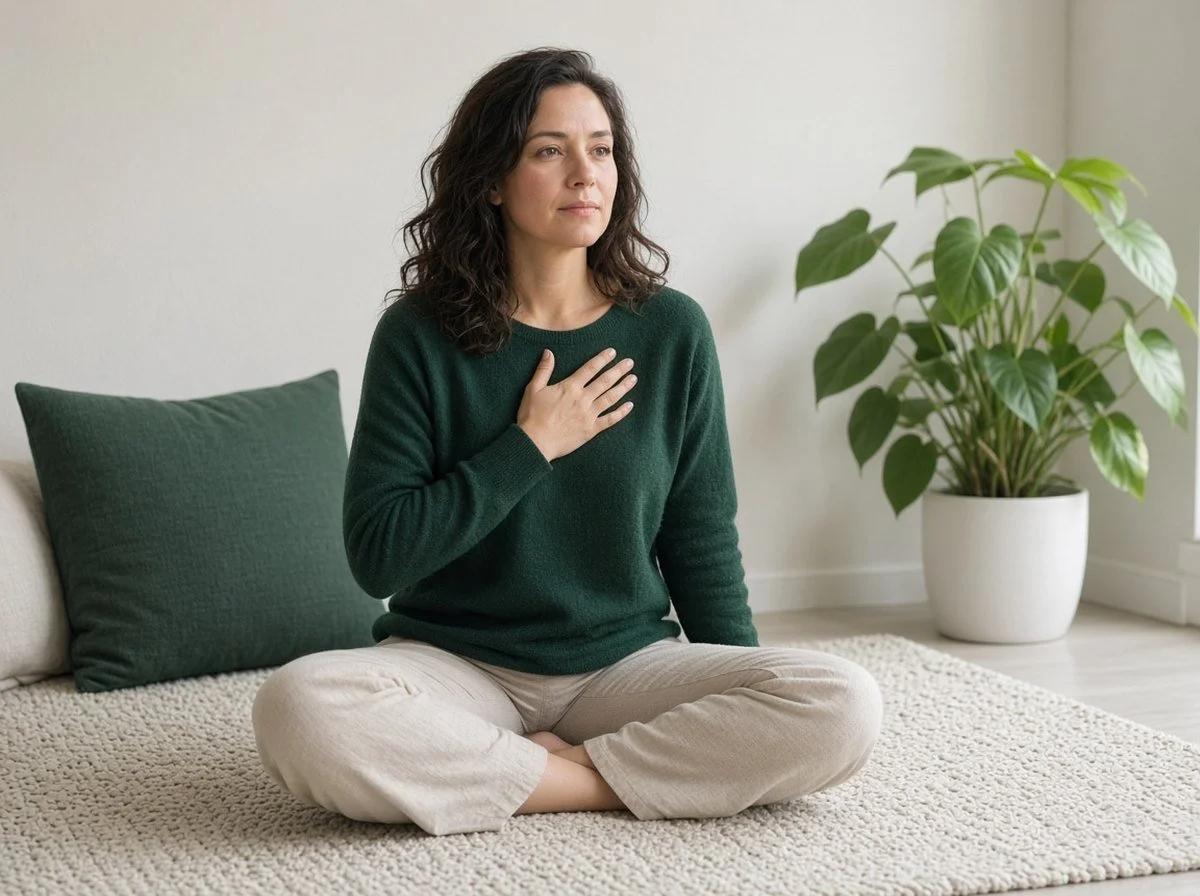
What it can feel like
Relaxation-induced anxiety can look different for each person. You might notice:
A racing heart or tight chest during meditation
Restlessness on a day off, as if you need to find a task
Feeling strange or unreal when you lie still
Sudden worry or dread during a bath or massage
Needing to keep busy every evening
Trouble falling asleep, even when you're tired
Many people who can't relax have ongoing worry in other parts of life too. Some keep very busy and seem to be coping well on the outside. If that sounds like you, our post on high-functioning anxiety may also be helpful.
Gentler ways in
The goal is not to force yourself to relax. It's to slowly teach your body that slowing down is safe. Some ideas to try:
Keep it short. Start with one minute of a calming practice, not twenty. Build up slowly.
Keep your eyes open. Closing your eyes can make some people feel less safe. Try a soft gaze at the floor instead.
Move instead of sitting still. Gentle walking, stretching or yoga can feel easier than lying down.
Focus outward. Pay attention to sounds, colours or textures around you instead of your breath or heartbeat.
Name the feeling. Quietly say, "This is anxiety showing up because I'm slowing down." Naming it can take away some of its power.
Expect some discomfort. A bit of anxiety does not mean the practice isn't working. It often eases with practice.
Stop if it's too much. You can always pause and come back later.
If you'd like a guided practice, try our page on progressive muscle relaxation. Start with just one or two muscle groups and see how it feels.
Rest that doesn't look like relaxing
Rest does not have to mean doing nothing. For people with relaxation-induced anxiety, some kinds of rest can feel easier than others. You might try:
Doing a puzzle, colouring or knitting
Listening to music while you cook
Gardening or caring for plants
Chatting with a friend on a walk
Reading a light book
These activities give your mind something gentle to hold on to. Over time, they can help you get used to slower moments without feeling as if you've dropped your guard.
When it's worth reaching out
A little unease when you slow down is common, and it often fades with gentle practice. But it may be time to talk with someone if:
You avoid rest, quiet or bedtime because of how it makes you feel
Anxiety shows up most days and is hard to switch off
You feel worn out from always staying busy
Worry is affecting your sleep, work or relationships
You don't have to wait until things feel serious. Talking it through early can help you understand your own pattern and find a pace that works for you. Many people feel relief just knowing that what they're feeling has a name and is shared by others.
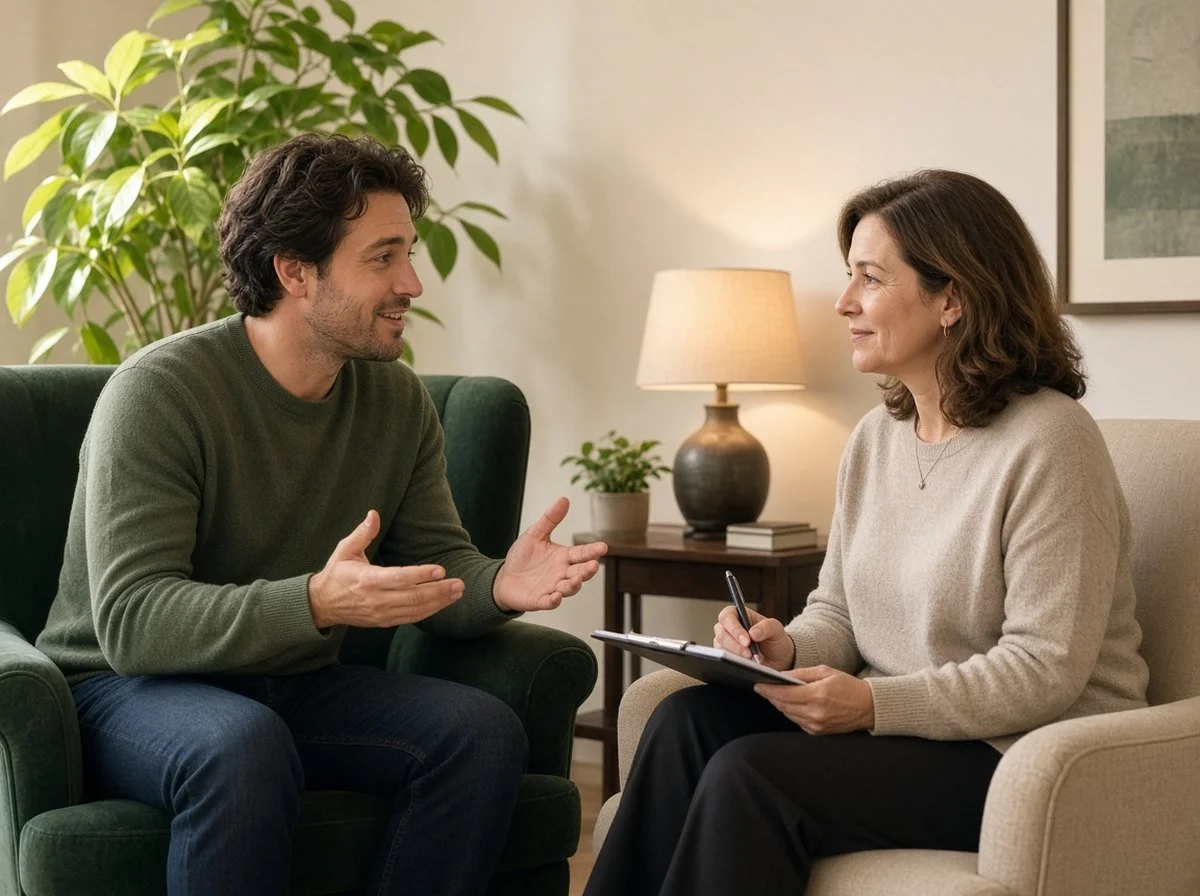
How anxiety therapy can help
If relaxation-induced anxiety keeps getting in your way, anxiety therapy can help. A therapist can work with you to build up your comfort with slowing down at a pace that feels safe.
Cognitive behavioural therapy (CBT) can help you notice the thoughts that make relaxation feel risky, like "If I let go, something bad will happen," and test them gently. Mindfulness-based approaches can be adapted, using shorter, eyes-open or movement-based practices. Your therapist may also help you look at what worry is doing for you and whether you still need it to stay on guard (see Sources).
You can read more about our anxiety counselling. We also offer CBT counselling and mindfulness therapy, in person in Kitchener, Waterloo, Cambridge and Ottawa, or online across Ontario. The free consultation can match you with a therapist who works this way.
Cost, billing and your first step
Sessions with our therapists range from $130 to $200, depending on the clinician.
We accept Health Spending Accounts (HSAs).
We can direct bill many insurers. Coverage depends on your plan, so check with your insurer before you start.
Book a free 15-minute consultation with our admin team. Let them know you're looking for help with anxiety, and whether you'd prefer in person or online.
If you're in crisis: if you or someone you love is in immediate danger, call 911. If you're thinking about suicide, call or text 9-8-8 any time, day or night.
Last reviewed: October 2026
Sources
Relaxation-induced anxiety: effects of peak and trajectories of change on treatment outcome for generalized anxiety disorder, Psychotherapy Research, 2018
The paradox of relaxation training: relaxation induced anxiety and mediation effects of negative contrast sensitivity in generalized anxiety disorder and major depressive disorder, Journal of Affective Disorders, 2019
Anxiety disorders, Centre for Addiction and Mental Health (CAMH)