

You wake at the same time most nights. Not roughly the same time. The same. Heart pounding, sheets damp, and a few seconds where you have to work out which room this is.
How to stop PTSD nightmares is a fair thing to want answered, so here's a straight answer first. Nothing on this page switches the dreams off overnight, and anyone promising that is overselling. What can help is working on the nightmare with a therapist, having the first two minutes after waking already planned, cooling the room, keeping the last hour before bed calm, and taking back the evening the dread has been eating. Treatment aimed at the trauma itself is what tends to change the dreams most. Nightmares in PTSD are a symptom of PTSD, not a failure of your bedtime habits.

Rewriting the nightmare with a therapist
What is imagery rehearsal therapy? It's a structured approach aimed at nightmares themselves rather than sleep in general. It's best done with a trained therapist, not from a web page, because working with nightmare content can stir up a lot.
Here's the general shape, so you know what to expect. With your therapist, you usually pick one recurring nightmare, often a frequent one rather than the worst one. Together you create a changed version, with the change often coming early, before the frightening part, so you don't have to relive the worst moment. The new version can be ordinary, strange or dull. Then you rehearse the new version while awake, at a time away from bedtime, and give it weeks rather than days.
Your therapist helps you pace it, and stops or slows down if it brings the memory too close. That's the main reason not to try it alone.
What this will not do: it doesn't work for everyone or work quickly, and it usually focuses on one nightmare at a time. It also isn't treatment for the PTSD underneath. Some people find the nights improve while everything else stays where it was, which is a real gain, but not the whole picture.
Nights like these are a lot to manage from a page. A free 15-minute consultation is an easy way to find out what support could look like.
What to do in the first two minutes awake
What should I do when I wake up panicked? The first two minutes often decide whether you lose the rest of the night, so plan them in daylight rather than improvising at three in the morning.
Waking from a nightmare is different from a daytime flashback. It's dark, your body is at full alarm, and you're lying down. So, in order:
Sit up. Feet on the floor, within the first few seconds.
Light on. Keep a lamp you can reach without getting up.
Find the now. Pick one thing in the room that didn't exist back then, like your phone, a photo or a chair you bought since. The anchor you want is time, because what your body is confused about is when.
Say the date out loud. The day of the week, the year and where you are.
Something cool in your hands. A glass of water from the bedside. Hold it if drinking feels like too much.
Then decide about sleep. If the alarm has come down and you feel heavy, go back to bed. If you're wide awake and braced, get up, keep the light low, do something dull, and go back when your body starts asking.
What this will not do: it doesn't prevent the nightmare or shorten the one you've had. It shortens the confused stretch afterward, which is worth having.
Cooling the room and the body
Body temperature naturally drops as you fall asleep, and a room that's too warm works against that. Waking hot and damp is harder to recover from in a room that was already warm.
Cooler than feels right when you get in. Slightly cool at bedtime is usually about right by the middle of the night.
Layers rather than one heavy duvet, so you can adjust without getting up.
A cool glass of water within reach, so step five doesn't need a trip to the kitchen.
A fan, if the sound helps. Some find steady noise calming, others don't.
What this will not do: temperature doesn't change whether the nightmare happens or what's in it. It just makes waking less unpleasant. Heavy, regular night sweats are worth getting checked medically rather than assuming they come from the nightmares.
A wind-down hour without a plot
The hour before bed matters here, because what your attention has been doing is what your system carries into the dark. The rule is less about blue light and more about content.
Nothing with news, conflict or a storyline in the last hour.
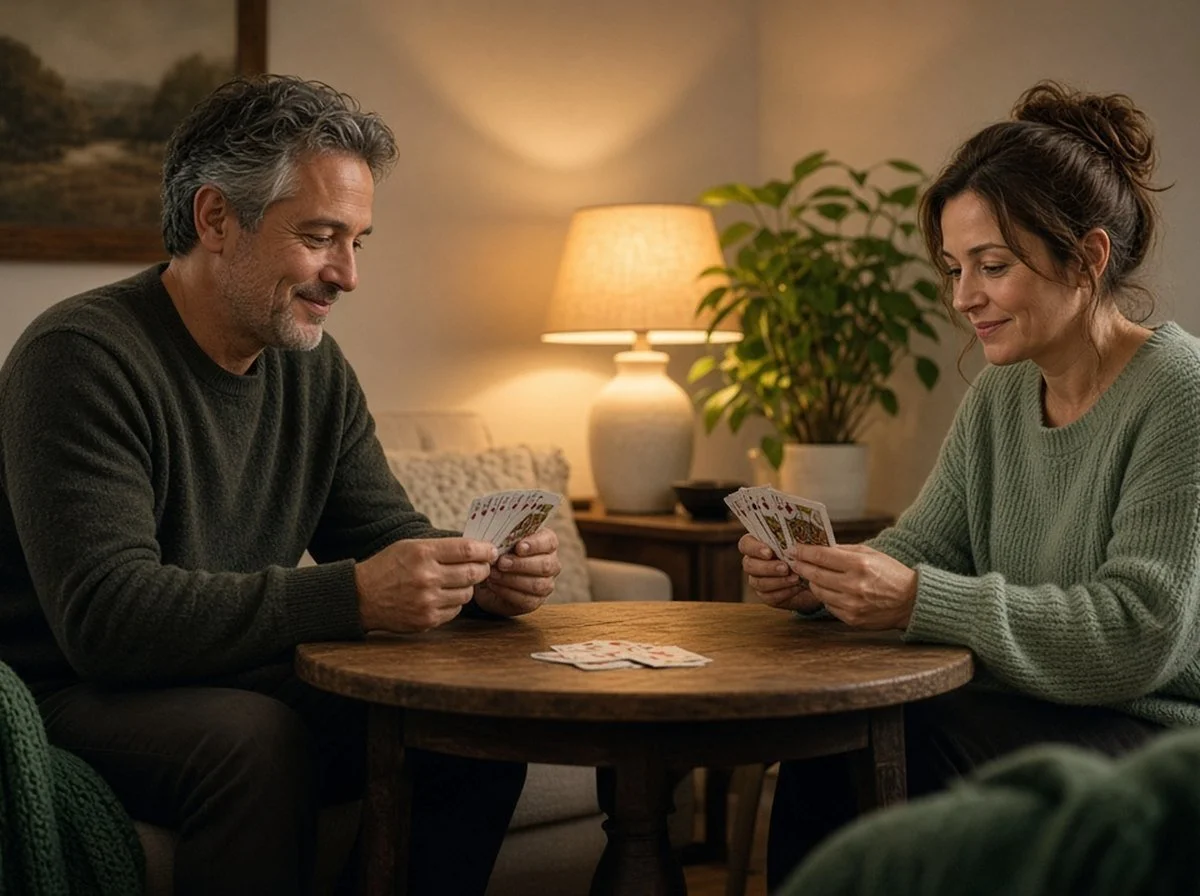
Something with your hands. Cards, tidying, a puzzle, cooking something for tomorrow.
The same order every night. A predictable sequence tells your system what's coming.
Finish the evening outside the bedroom, so the bedroom doesn't become the place where the waiting happens.
Check the doors once, at a fixed point. Make it part of the routine rather than something you keep returning to.
On alcohol, since it's a common answer: it may help you fall asleep faster, but it tends to break up the second half of the night, which is where many of the hardest hours are.
What this will not do: a wind-down won't stop nightmares. It lowers how switched on you are going in. And if it grows into a long list of conditions that must all be met, it's become a ritual, and rituals get stricter.
Cutting the daytime dread of nightfall
For many people, the nightmares take the evening too: a low dread from dinner on, then staying up because being awake feels safer.
That pattern builds sleep debt, and short sleep tends to make nights harder, so the strategy that protects you tonight costs you later in the week.
Notice the hour it starts. Naming it turns a mood into an event with a time attached.
Put something in that hour. A walk, a phone call, a task with a beginning and an end.
Keep bedtime fixed anyway. Delaying bed is a form of avoidance, and it tends to cost more later.
Write your 3 a.m. plan on paper by the bed. Where you'll sit, what you'll put on, who you could message.
Tell a partner what helps, once. Short sentences, their name, no touching without asking first. It's easier to say at seven than at three.
What this will not do: none of this reduces the nightmares, and being afraid of something that happens most nights is an understandable response. What it changes is how much of your day the fear gets.
How to stop PTSD nightmares when techniques are not enough
All five of these help you manage the nights. None of them is treatment for PTSD itself. If the dreams haven't changed after a good routine, the fault isn't yours.
Why do the nightmares get worse some weeks? Often because something has loaded the system. The run-up to an anniversary. A stretch of short sleep. More alcohol than usual. A new reminder, a court date or a move. Starting or changing a medication. Even the early weeks of trauma therapy. A bad run is information about the week, not proof you're going backward.
Trauma-focused therapies work on the memory rather than the night, and nightmares often ease alongside that work. You can read about what happens in an EMDR session or see how we approach trauma and PTSD counselling.
Medication is sometimes used for PTSD nightmares too, alongside therapy rather than instead of it. Our Nurse Practitioners, who see clients in Kitchener, Waterloo and Cambridge, can assess, diagnose and prescribe medication when it's needed. If you already take something, raise it with your prescriber or ask about our Nurse Practitioners, and don't stop anything on your own.
If a night ever turns into thoughts of ending your life, stop working through techniques and reach out. Our practice can't offer crisis support. Call or text 9-8-8 any time. In Waterloo Region, call Here 24/7 at 1-844-437-3247. In Ottawa, call the Mental Health Crisis Line at 613-722-6914. If you're in immediate danger, call 911 or go to the nearest emergency department.
Taking the first step
You won't need a referral, and we don't have a waitlist. We see people in person in Waterloo, Kitchener, Cambridge and Ottawa, or online anywhere in Ontario. Sessions with our therapists are $130 to $200, and there is a one-time $50 setup fee. Many extended health plans cover counselling, and in many cases we can bill your insurance directly, depending on your plan and your therapist. Depending on your plan, your insurance may cover the full session fee.
Sleeping badly for years isn't something you should have to manage privately. A free 15-minute consultation is a simple place to start.