
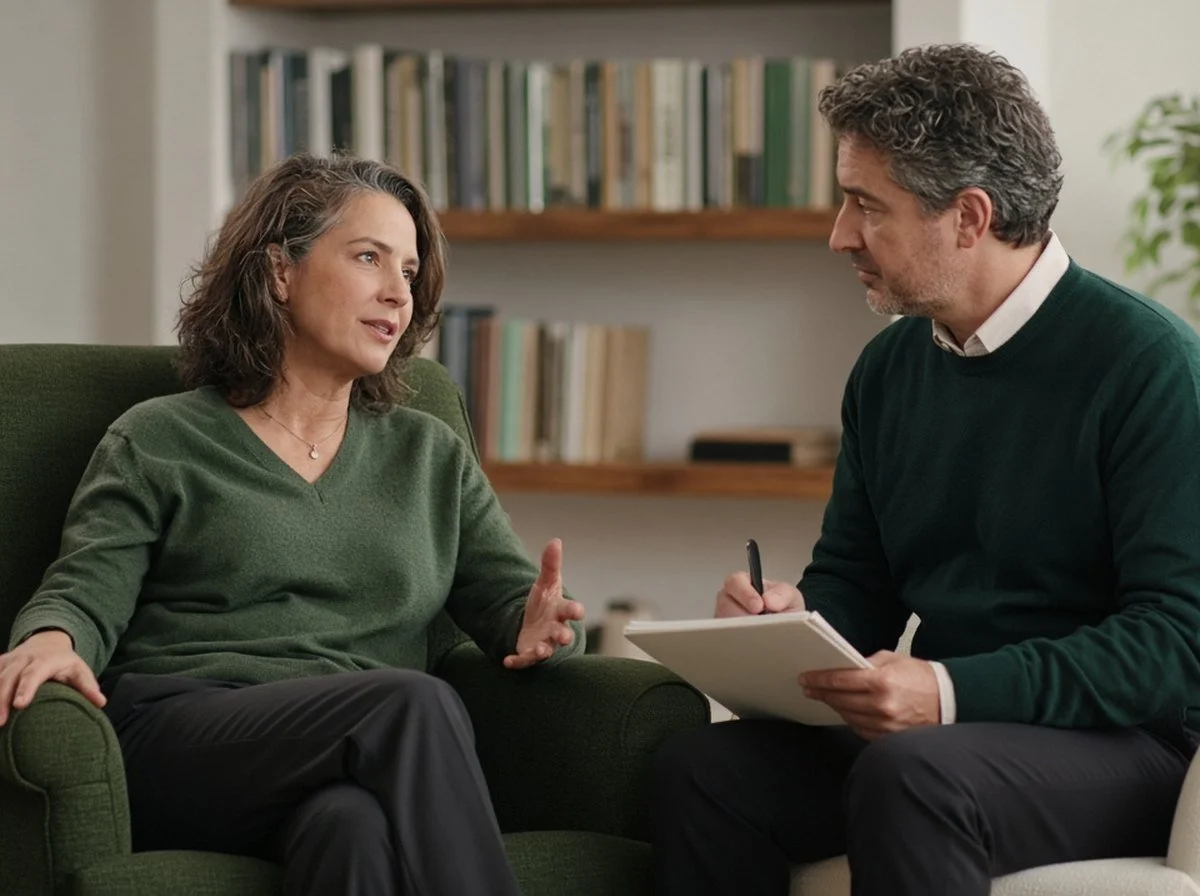
You keep ending up in the same kind of relationship. The same conflict keeps coming up at work, no matter where you work. Or the low mood lifts for a while, then comes back, and you can't quite say why. Many people know their patterns well and still feel stuck in them. Psychodynamic therapy in Ottawa is a depth-oriented approach that helps you understand where those patterns come from and loosen their hold. This post explains what sessions focus on, how attachment fits in, what the evidence shows and how to start downtown or online.
This post is general information, not a diagnosis. Only a qualified professional can assess what you're going through.
Why Ottawa adults look for depth-oriented therapy
Some people come to therapy wanting quick tools for a specific problem. Others want to understand themselves more deeply. They may have tried other things and found that, while they learned a lot, the same feelings and choices kept coming back.
Psychodynamic therapy in Ottawa is for adults 18 and up who want to look beneath the surface. It can be a good fit if you want to understand why you react the way you do, not just how to cope in the moment. Sessions are offered in person at our downtown Ottawa office or online from anywhere in Ontario.
What sessions focus on, in plain words
Psychodynamic psychotherapy starts from a simple idea: our past shapes how we feel, think and relate to others today, often in ways we are not fully aware of.
In sessions, you and your therapist might pay attention to:
Patterns. Themes that repeat across relationships, jobs or stages of life.
Feelings that are hard to name. Sadness under anger, or fear under a need to be in control.
How the past shows up now. Early experiences that still colour how you see yourself and others.
The relationship with your therapist. Sometimes the patterns you live out elsewhere show up in therapy too. That gives you a safe, real-time chance to notice them and try something different.
Sessions are often less structured than some other types of therapy. You may be invited to talk about whatever is on your mind, and your therapist will help you notice links and themes. You can read more about psychodynamic therapy on our service page.
Patterns that bring Ottawa adults in
People look for psychodynamic therapy for many reasons. Some common ones include:
Choosing partners who feel familiar in painful ways
Pulling away when someone gets close, or holding on too tightly
Repeating conflicts with bosses, coworkers or family
Low mood or emptiness that keeps returning
Feeling stuck, even when you understand why you feel the way you do
Harsh self-criticism that started long ago
None of these is a diagnosis. They are simply patterns that many people want to understand and change.
Attachment-focused therapy in Ottawa, how early bonds show up now
Attachment is the bond we form with the people who cared for us early in life. Those early bonds can shape what we expect from relationships later on. If care felt steady and warm, closeness may feel safe. If care felt unpredictable, distant or frightening, closeness may feel confusing or risky.
As adults, these early lessons can show up as:
Trouble trusting others, even when they are trustworthy
Fear of being left, and needing a lot of reassurance
Feeling smothered or wanting to escape when things get close
Finding it hard to ask for help
Attachment-focused therapy in Ottawa helps you notice these patterns with care, not blame. Over time, a steady relationship with a therapist can help you build a new sense of what closeness can feel like.
Some therapists also draw on related approaches, like Internal Family Systems (IFS) therapy. IFS looks at the different "parts" of you, such as a part that protects you and a part that still feels hurt.
Evidence behind psychodynamic therapy
Psychodynamic therapy has a research base. A large review of studies found that it is supported for depression, anxiety and some longer-standing difficulties, including personality and body-based symptoms. In those studies, it did about as well as other active therapies (see Sources).
That doesn't mean it is the best choice for everyone. Different people do well with different approaches, and research can't predict exactly how therapy will go for you. If you are dealing with depression in particular, you can read more about psychodynamic therapy for depression.
Finding a psychodynamic therapist in Ottawa
The right fit with a therapist matters in any kind of therapy. It may matter even more in depth work, because the relationship itself is part of how change happens.
When you look for a psychodynamic therapist in Ottawa, it can help to ask:
How do you use psychodynamic ideas in your sessions?
How do you blend them with other approaches?
What might our first few sessions look like?
How will we know if therapy is helping?
Our free consultation can match you with a therapist who works this way and fits your schedule. You can also ask about online sessions if that is easier.
What the first few sessions can feel like
The first sessions are a time to get to know each other. Your therapist will ask what brings you in and what you hope will change. They may ask about your family, your past relationships and the times in your life that stand out. You can share as much or as little as you like.
At first, it can feel strange to talk without a set plan. That is normal. Over time, many people find it a relief to have a space where they don't have to perform or be fine. You may start to notice links you had not seen before. A feeling from childhood may suddenly make sense of a fight you had last week.
Depth work can take time. Some weeks you will leave with a clear new insight. Other weeks you may just feel tired. Both are part of the process.
Depth work or skills work, choosing what fits
Psychodynamic therapy focuses on understanding the roots of your patterns. Skills-focused approaches, like cognitive behavioural therapy (CBT), focus more on changing thoughts and actions in the present, often with practice between sessions. Both have research support, and both can help. One is not better than the other.
Some people want clear tools to use right away. Others want to dig into the "why" behind their struggles. Many want a bit of both. In fact, many Ottawa therapists blend approaches, using depth work and practical skills together.
If you are not sure which approach fits you, that is completely normal. The free consultation is a good place to talk it through. You don't need to know what kind of therapy you want before you call.
Downtown Ottawa or online
Our Ottawa office is at 1 Rideau St, 7th Floor, inside the Fairmont Chateau Laurier in downtown Ottawa.
You can also meet by secure video from anywhere in Ontario. You get a link by email, and there is nothing to download. Some people start online and move to in-person sessions later, or mix both.

Cost, billing and your first step
Sessions with our therapists range from $130 to $200, depending on the clinician.
We accept Health Spending Accounts (HSAs).
We can direct bill many insurers. Coverage depends on your plan, so check with your insurer before you start.
Book a free 15-minute consultation with our admin team. Let them know you're interested in psychodynamic therapy, and whether you prefer downtown Ottawa or online, and they'll help you find a good fit.
If you're in crisis: if you or someone you love is in immediate danger, call 911. If you're thinking about suicide, call or text 9-8-8 any time, day or night.
Last reviewed: October 2026
Sources
The status of psychodynamic psychotherapy as an empirically supported treatment for common mental disorders: an umbrella review based on updated criteria, Leichsenring and colleagues, World Psychiatry, 2023
Psychotherapies, National Institute of Mental Health