
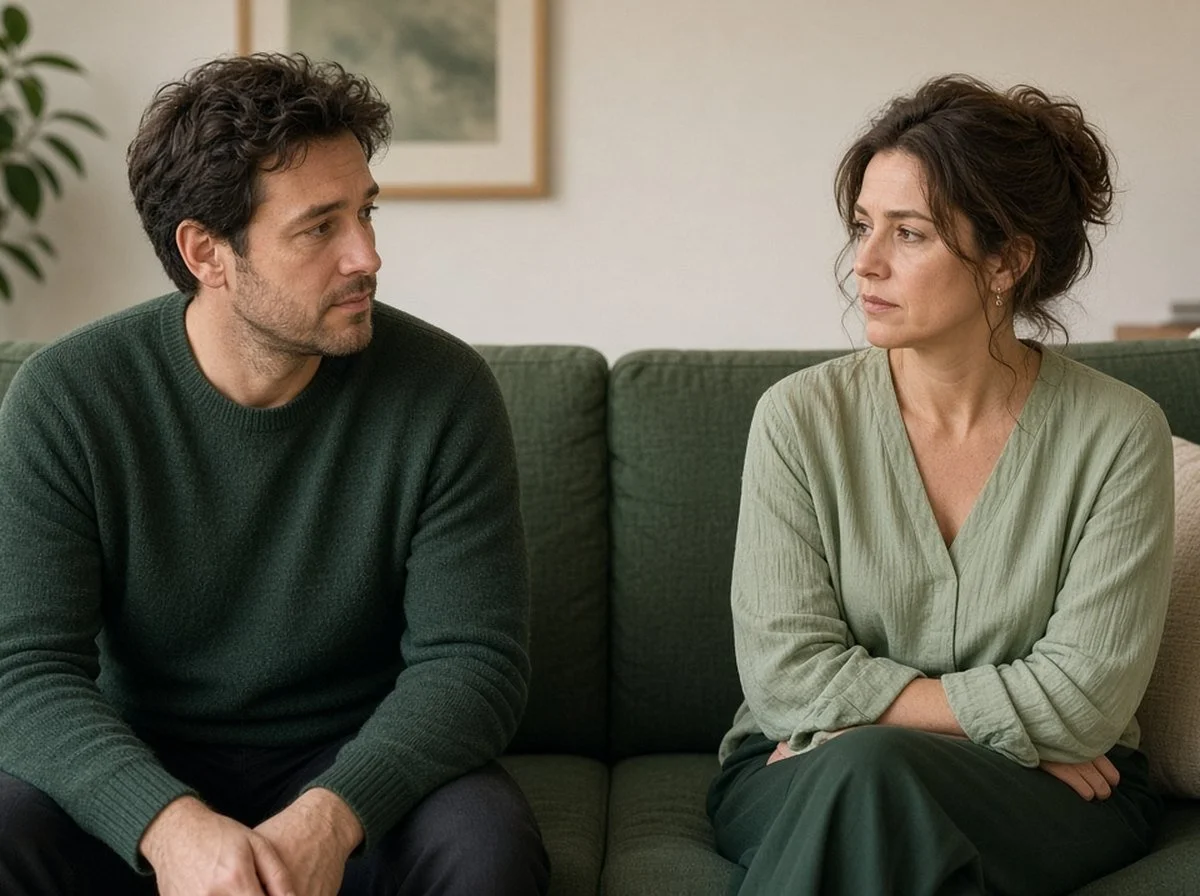
You finally said it out loud: "I think we need help." And your partner said no. Maybe they said it kindly. Maybe it ended in a fight. Either way, it hurts when your partner won't go to couples therapy and you feel alone with the problem. This guide looks at why people say no, gentle ways to ask again, what you can do if the answer stays no and when safety has to come first.
A "no" to couples therapy is not the end of the road, and it doesn't mean your relationship is doomed.
Why some partners say no
When someone refuses couples therapy, it often has little to do with how much they care. Common reasons include:
Fear of being blamed. Many people picture a room where they are named as the problem.
Shame. Needing help can feel like failing, especially if they were raised to handle things alone.
Privacy. Talking to a stranger about private things can feel exposing.
A bad past experience. A rough time in therapy before can make "never again" feel sensible.
Not seeing a problem. One person may feel the issues are smaller than the other does.
Cost or time. Some people say "it's too much" when what they mean is "I'm not sure it's worth it."
"We can fix it ourselves." Some people really hope to.
None of these makes your partner a bad person. Understanding the reason can help you ask in a way that is easier to say yes to.
Check your own ask first
It's worth looking honestly at how the question was asked. Not because you did anything wrong, but because a small change in timing can change the answer. A few things to think about:
Timing. Asking in the middle of an argument can sound like a weapon. Pick a calm, private moment.
Tone. "I miss us" lands differently than "You never listen."
Wording. Try "I" statements, like "I feel lonely lately and I'd like us to get support."
No ultimatums. "Come to therapy or I'm done" tends to bring out defences. If you truly are at that point, say so honestly instead of using it as pressure.
One request at a time. Don't bring up every issue while you're asking.
Ways to invite them in
Here are a few low-pressure ways to open the door again. Use your own words. Many people also worry that a therapist will take the other person's side, so it can help to say clearly that the goal is for both of you to be heard.
Make it small. "Would you be willing to try one conversation and then decide?" is much easier than "Will you go to therapy for months?"
Use the free consultation. Our free 15-minute consultation is a phone call with our admin team, not a therapy session. You can book the call yourself, ask your questions and bring back what you learn.
Look at our team together. Seeing the people on our team page can make it feel less like a leap into the unknown.
Say what it's for. "I don't want to blame anyone. I want us to feel closer" tells your partner that this is about the two of you, not about fault.
Name what they'd get. Some partners say yes when they hear what's in it for them: less fighting, more calm or a space where they also get heard.
Words you can borrow
Sometimes the hardest part is finding the first sentence. Here are a few you can adjust:
"I'm not saying you're the problem. I'm saying we're stuck, and I'd like help getting unstuck with you."
"You don't have to commit to anything. Can I tell you what I found out about the free 15-minute call?"
"I'd like us to be on the same team. A third person might help us hear each other."
"If you'd rather not come, would you at least tell me what worries you about it?"
The last one matters most. When your partner explains the worry, you learn what is really in the way. It might be cost, fear of blame or something you can answer on the spot.
What if they still say no
Sometimes the answer is still no, even after a gentle ask. That is painful, and it's okay to feel angry or sad about it.
You can respect the no without giving up your needs. You might say, "I hear that you don't want to go right now. I'm going to get some support for myself, and I'd like us to talk about it again in a few weeks." That keeps the door open.
Pick a date to talk again, perhaps in two or three weeks, and put it on the calendar. Knowing there's a set time can ease the pressure on both of you. In the meantime, look for small ways to be kind to each other. Those moments matter, even while the bigger question is still open.
A few cautions:
Please don't use guilt, threats or silent treatment to get a yes. They tend to build distance.
Don't treat the refusal as proof of anything. People change their minds.
Do keep your own needs on the table. A "no" to therapy isn't a "no" to the conversation.
If you're already wondering where this leaves the relationship, our guide on how to know if your marriage is over may help you sort out your own thoughts.
Going alone, and what it can change
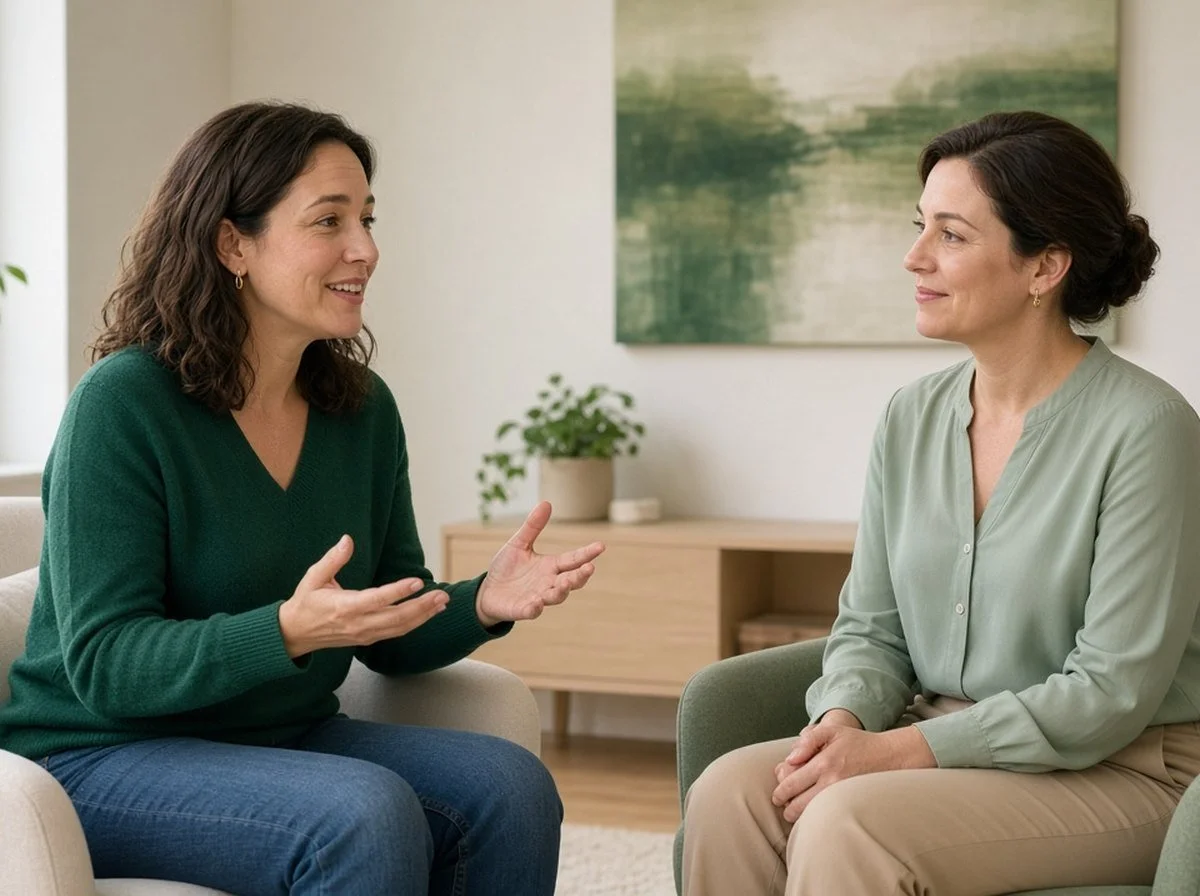
Many people come to therapy by themselves while their partner stays out of it. That's allowed, and it can still help.
NIMH describes the goals of talk therapy as relief from symptoms, steadier daily life and a better quality of life. In a relationship that is under strain, one person's therapy can help you in several ways:
Understand your own patterns in conflict
Learn to say what you need without it turning into a fight
Cope with the stress, sadness or anxiety this standoff brings
Think clearly about what you want and what you're willing to try
Feel less alone
There are honest limits. Therapy for one person can help you, but it can't promise your partner will change or that the relationship will turn out a certain way. What it can do is give you more steadiness, whatever happens next.
Our clinicians offer individual sessions at $130 to $200, and couples and family sessions at $170 to $200. Student therapists offer sessions for $0 to $80. New clients pay a one-time $50 setup fee, which isn't charged for the free consultation. Depending on your plan, your insurance may cover the full session fee. We don't have a waitlist.
If you later find your partner is open to joining, you can read about our couples counselling and see what a joint start might look like.
When refusal is a safety issue
Couples therapy is not safe or helpful in every relationship. If you are afraid of your partner, or your partner controls what you do, who you see or your money, or threatens or hurts you, please put your safety first. Asking your partner to attend therapy together can raise the risk in some situations.
Ontario.ca explains intimate partner violence and notes that it can include psychological harm and controlling behaviour. It also lists free, confidential helplines open 24 hours a day on its page about connecting with supports for survivors.
Our page on support for survivors of violence explains how our clinicians can help you on your own, at your pace.
If you are in immediate danger, call 911. If you are thinking about suicide, call or text 9-8-8 any time. In Waterloo Region and Wellington, you can also call Here 24/7 at 1-844-437-3247.
Questions for yourself
When your partner won't go, it can help to turn the focus back to you for a moment. Try writing down your answers:
What do I most want from this relationship right now?
What have I already tried, and what am I willing to try next?
What would "a little better" look like in the next three months?
What is my line, the thing I can't live with long term?
Who supports me, apart from my partner?
You don't need to answer everything today. Even one honest answer can help you take your next step.
Taking a first step
You don't need your partner's agreement to get support for yourself. If you'd like to talk it through, book a free 15-minute consultation. You can ask about individual sessions now and couples sessions later if your partner changes their mind.
We see clients in person in Waterloo, Kitchener, Cambridge and Ottawa, and online across Ontario. No referral is needed.