
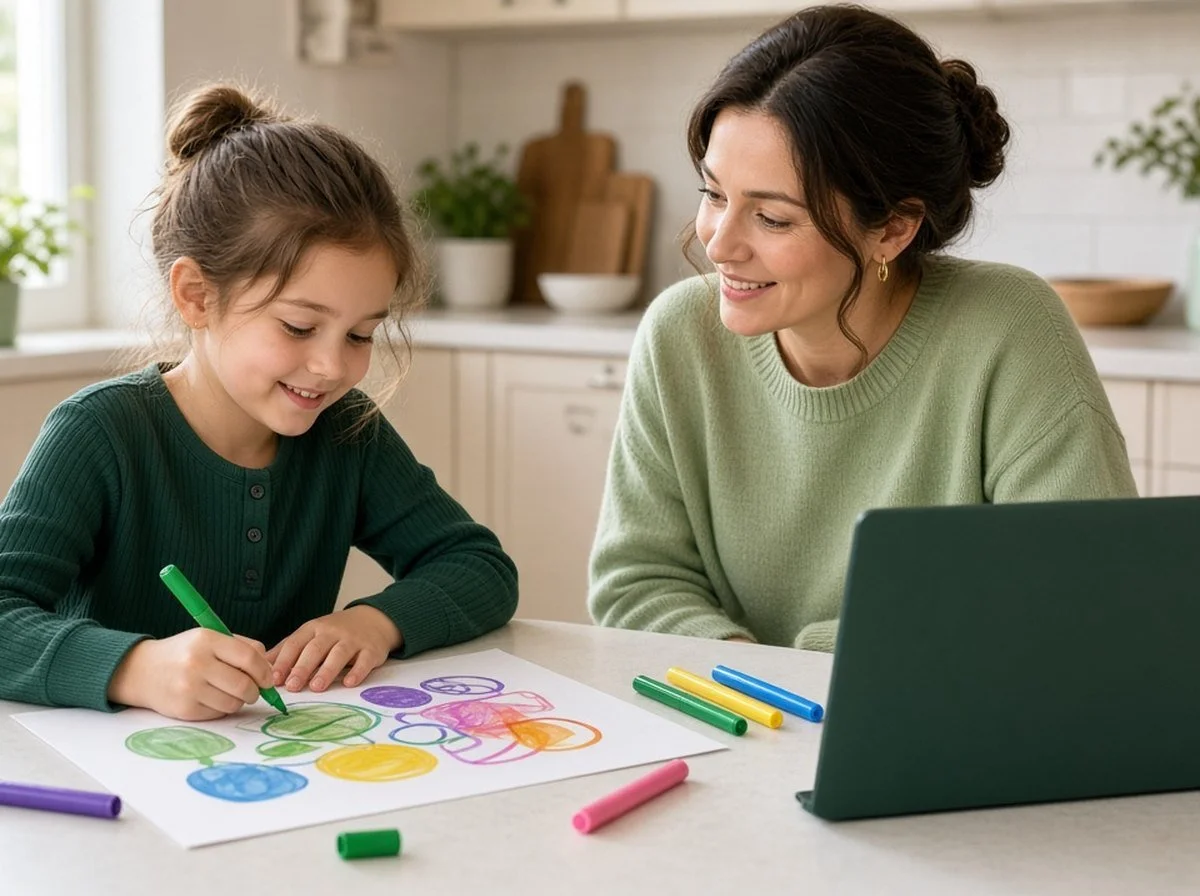
Your child is struggling, and you're ready to get help. But between school, activities, work and the drive to an office, fitting in weekly sessions feels hard. Maybe your child would also feel more relaxed at home. Online therapy for kids can be a good option for many families, but it isn't right for every child. This guide explains what an online session looks like for a child, who it tends to suit, how parents are involved and how to set things up at home.
At Transformation Counselling, children 6 and up can be seen online or in person at our Kitchener-Waterloo, Cambridge and Ottawa offices. This post is general information, not a diagnosis.
Is online therapy effective for kids?
Research is encouraging. A 2024 review of 10 studies, published in Clinical Child Psychology and Psychiatry, found that technology-assisted cognitive behavioural therapy (CBT), including therapy by video, worked about as well as face-to-face CBT in helping children and young people with anxiety and depression.
A 2022 review of randomized trials in JMIR Mental Health, which included childhood mental health problems, found no significant difference in symptoms or client satisfaction between telehealth and face-to-face therapy. Researchers still call for more studies, and results depend on the child, the concern and the fit with the therapist.
So online therapy for children can work well. The better question is whether it will work well for your child.
What an online session looks like for a child
An online session happens by video, with your child on a computer or tablet and the therapist on screen. It's not just talking at a camera. Our children's therapists tailor their approach to each child, using methods such as:
play therapy
visualization
narrative therapy, using stories to make sense of experiences
cognitive behavioural therapy (CBT)
art and sound activities
body movement work, like simple stretches or yoga
Some of these adapt easily to video, such as drawing together, telling stories or practising calming exercises. Others, like sandtray work, are usually easier in the office. Sessions with younger children may be more active, with movement breaks to help them stay engaged.
Who it can suit, and when in person may fit better
Online counselling for kids often works well for children who:
feel more relaxed and open at home
are comfortable on video calls
have busy schedules or live far from an office
can stay focused, with a few breaks, for a session
In person may be a better fit for children who find screens very distracting, are especially young or restless, need a lot of hands-on play to express themselves or don't have a private space at home. In-person sessions may also be better when there are safety concerns at home.
You don't have to figure this out alone. Your child's therapist will help you decide, and you can switch between online and in person if your child's needs change. Some families find a mix of the two works best, for example starting in the office and moving online once their child feels settled.
If your child is in immediate danger, call 911. If your child or you are thinking about suicide, call or text 9-8-8 any time. Our crisis lines page lists both.
How parents are involved
In children's counselling, family participation is encouraged. Parents are usually part of the first session, where the therapist learns about your child's history, strengths and what's been hard. Each child also receives a thorough assessment of their needs, so the therapist can build a plan with you and your child.
After that, you might join part of a session, have regular check-ins or have separate parent sessions to work on communication and strategies at home. Our counselling for parents can help you feel more prepared too.
Your child also needs some privacy to build trust. Your therapist will explain what stays between them and your child and when they would always share something with you, such as a safety concern.
Setting up at home
A little preparation helps online therapy for kids go smoothly:
A private room with a door, where your child won't be overheard by siblings
A charged device with a working camera and microphone, and headphones if possible
A steady internet connection, with other streaming paused if it tends to lag
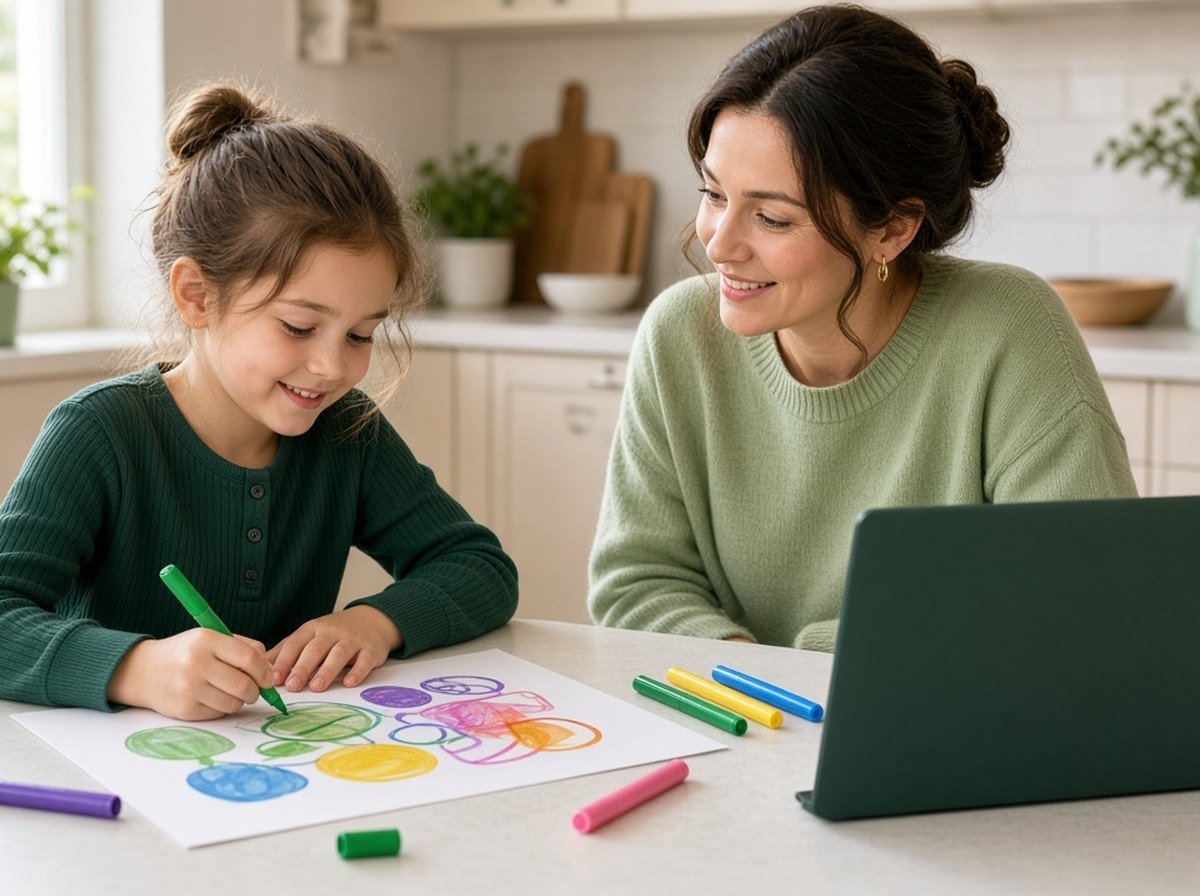
A few art supplies, like paper, markers or crayons
A snack, a drink and a bathroom break before the session starts
A do-not-disturb sign on the door
Stay nearby in case your child needs you, but not in the room unless the therapist asks you to join.
Helping your child feel ready
Kids do better when they know what to expect. A few days before the first session, explain it simply: "You'll have a video call with someone whose job is to help kids with big feelings. You can talk, draw or play, and you can't get it wrong."
Let your child help choose their spot, test the camera together and pick something to show the therapist, like a drawing or a favourite toy. Avoid framing virtual therapy for kids as a punishment or a sign that something is wrong with them. Instead, present it as a time that's just for them.
After the session, keep it light. Ask how it felt rather than what they talked about. A short walk, a snack or a quiet activity can help them settle back into their day. Some children feel tired or a little emotional afterward, which is normal.
Privacy and safety online
Online counselling at Transformation Counselling is simple to join. We email you a link, and there's nothing to download and no account to set up. Our video software is encrypted, secure and compliant with Ontario's health privacy law, PHIPA.
At home, privacy also means a space where your child can talk freely. Remind siblings not to listen in, and avoid asking your child to repeat everything afterward. If they want to share, they will.
Online therapy for kids with anxiety
Anxiety is one of the most common reasons parents look into online therapy. For some anxious children, being at home lowers the stress of a new place and a new person, so they settle in faster. For others, being seen in an office helps them practise facing new situations. Your child's therapist can help you weigh this, and many families start online and add in-person sessions later, or the other way around.
Starting online child counselling with us
We offer children's counselling for kids 6 and up and their parents, online anywhere in Ontario or in person at our Kitchener-Waterloo, Cambridge and Ottawa offices. Our admin team will help match your child with a children's therapist online or in person.
Sessions with our therapists range from $130 to $200, depending on the clinician.
Depending on your plan, insurance may cover some or all of the cost. Coverage varies, so check your plan.
We accept Health Spending Accounts (HSAs).
We can direct bill many insurers, including for sessions with a Registered Psychotherapist (Qualifying). Desjardins is the exception: through TELUS eClaims, we can direct bill Desjardins for sessions with an RSW, RP or psychologist, but not for an RP (Qualifying).
Book a free 15-minute consultation with our admin team. "I'd like to learn about online counselling for my child" is enough.
If you're in crisis: if your child or anyone else is in immediate danger, call 911. If your child or you are having thoughts of suicide, call or text 9-8-8 any time, day or night. Our crisis lines page lists both.
Last reviewed: October 2026
Sources
Bevilacqua L, et al., Clinical Child Psychology and Psychiatry (2024), Effectiveness of technology-assisted vs face-to-face cognitive behavioural therapy for anxiety and depression in children and young people
Greenwood H, et al., JMIR Mental Health (2022), Telehealth versus face-to-face psychotherapy for less common mental health conditions: systematic review and meta-analysis