
Maybe you're a nurse who couldn't give every patient the care they needed. A paramedic who arrived too late. A soldier who followed an order that still sits wrong. Or someone in an ordinary workplace who was asked to look the other way. Afterward, you feel guilt, anger or a sense of betrayal that won't let go. There's a name for this kind of pain: moral injury. It's real, and healing is possible.
This post is general information, not a diagnosis. Only a qualified professional can assess what you're experiencing.
What is moral injury?
Moral injury describes the lasting distress that can follow events that go against your deeply held moral beliefs or values. According to the US Department of Veterans Affairs National Center for PTSD, in traumatic or unusually stressful situations people may do something, fail to prevent something or witness something that contradicts what they believe is right.
Psychologists Brett Litz and Hannah Walker describe moral injury as a potential clinical problem that can affect your emotions, beliefs and behaviour, and even your sense of humanity and life's meaning. It can come from your own actions, or from being a victim of or witness to other people's harmful actions.
Moral injury isn't a formal mental health diagnosis. It's a way of naming a specific kind of hurt, one that's less about fear and more about conscience, trust and meaning.
Moral injury examples
Moral injury was first studied mostly in military service members and veterans. Today, research shows it can affect people in many roles. The National Center for PTSD notes that it has been found among law enforcement officers, first responders, health care workers and civilians. General examples include:
Moral injury in healthcare. Making hard decisions about who gets care during shortages, or being unable to give patients the care you know they need.
First responders. Arriving at a scene where you couldn't save someone, or following a protocol that felt wrong.
Military service. Experiences during service that conflict with the values you live by at home.
Moral injury in the workplace. Being pressured to cut corners, hide mistakes or treat people unfairly.
Betrayal by leaders. Feeling let down by an organization or person in charge who failed to do the right thing.
Moral injury can also build slowly. It isn't always one dramatic event. For some people, it's months or years of small compromises, like rushing patients, skipping steps or staying silent, that gradually wear away their sense of doing good work.
What these situations share is a sense that a line was crossed, by you or by someone else, and that the world no longer feels as fair or trustworthy as it once did.
Moral injury symptoms
Moral injury can show up in many ways. The National Center for PTSD describes guilt, shame, betrayal, disgust and anger as some of its hallmark reactions. You might notice:
Guilt. Replaying what you did or didn't do, again and again.
Shame. Feeling like you're a bad person, not just that something bad happened.
Anger. Frustration with yourself, leaders, systems or the world.
Betrayal and loss of trust. Finding it hard to trust others or institutions.
Loss of meaning. Questioning your purpose, your work or what you believe.
Pulling away. Avoiding people, reminders or the work you once cared about.
These are general signs, not a test. Only a qualified professional can help you understand what you're experiencing.

Moral injury vs PTSD vs burnout
Moral injury, PTSD and burnout can overlap, and many people experience more than one.
PTSD is a diagnosis that often centres on fear and threat, with symptoms like flashbacks, nightmares and feeling constantly on guard. The National Center for PTSD notes there's significant overlap between moral injury and PTSD, though it's possible to have either one without the other. Guilt and shame are core to moral injury and can also be part of PTSD.
Burnout is exhaustion from ongoing stress, often at work. It can feel like running on empty. Moral injury can sit underneath burnout, especially when people feel they're being asked to work in ways that go against their values. If that sounds familiar, our post on healthcare worker burnout therapy explores this further.
Research suggests moral injury can affect mental health. In a review of 13 studies, mostly of military samples, Victoria Williamson and colleagues found that work-related morally injurious experiences were associated with PTSD, depression and suicidal thoughts. The authors note that more research is needed, especially in civilians.
If you're thinking about suicide, call or text 9-8-8 now. If you or someone else is in immediate danger, call 911.
How healing from moral injury can start
Moral injury can feel permanent, but many people find a way through. Healing often starts with small steps:
Name it. Recognizing "this is moral injury" can make the pain feel less confusing.
Practise self-compassion. Ask how you'd treat a colleague who went through the same thing.
Look at the full picture. Consider the limits, pressures and choices you faced at the time.
Repair where you can. Sometimes that means an apology or a change at work. Sometimes it means honouring what was lost.
Reconnect with meaning. Find small ways to live by your values again.
Talk with someone safe. Sharing the story with someone who won't judge can ease the weight of carrying it alone.
Healing isn't about pretending the event didn't matter or that you should simply move on. It's about finding a way to hold what happened honestly, while still seeing yourself as a person worthy of care and connection.
Litz and Walker describe treatment approaches that focus on rebuilding belonging through valued actions and relationships. In plain words, healing often happens in connection with others, not in isolation.
You don't have to carry this alone or wait until it gets worse. Support can help you make sense of what happened and find a path forward.
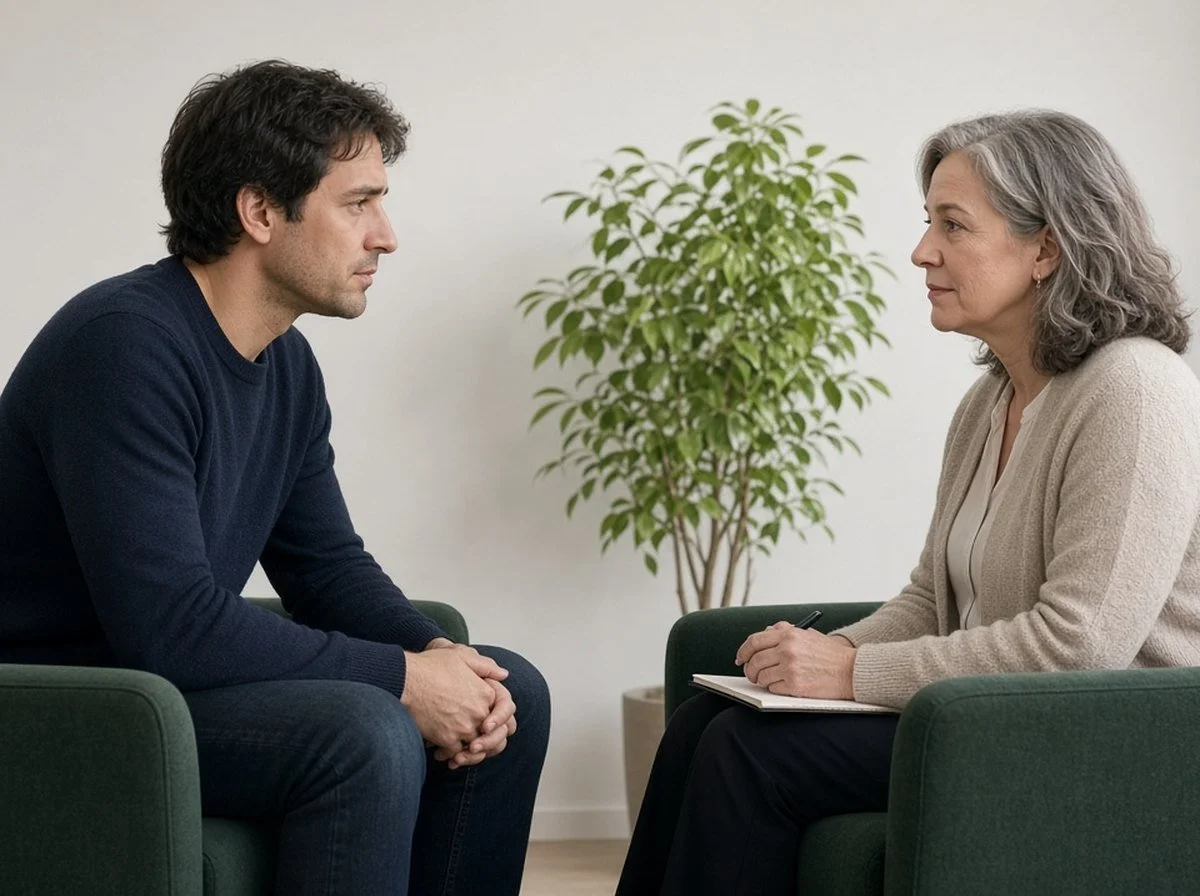
How trauma counselling can help
Counselling gives you a confidential space to talk about what happened without being judged. A trauma-informed therapist can help you:
untangle guilt, shame and anger
separate what you could control from what you couldn't
rebuild trust in yourself and others
reconnect with your values and sense of purpose
manage overlapping PTSD, depression or burnout
Approaches such as trauma-focused counselling and EMDR therapy may help when memories of the event still feel raw. At Transformation Counselling, our trauma counselling for moral injury supports healthcare workers, veterans and many others. We also offer dedicated counselling for first responders. Counselling is available at our Kitchener-Waterloo, Cambridge and Ottawa offices, and online anywhere in Ontario.
On the practical side, we can direct bill many insurers, including for sessions with a Registered Psychotherapist (Qualifying). Desjardins is the exception: through TELUS eClaims, we can direct bill Desjardins for sessions with an RSW, RP or psychologist, but not for an RP (Qualifying). Coverage depends on your plan, so check with your insurer.
Reaching out can feel hard when shame is part of the pain. Book a free 15-minute consultation with our admin team, and we'll help you find a therapist who understands moral injury.
If you're in crisis: if you or someone you love is in immediate danger, call 911. If you're thinking about suicide, call or text 9-8-8 any time, day or night.
What happened went against who you are. That pain is a sign of how much your values matter, and with support, you can find your way back to them.
Last reviewed: October 2026
Sources
Moral Injury, National Center for PTSD, US Department of Veterans Affairs
Williamson V, Stevelink SAM, Greenberg N. Occupational moral injury and mental health: systematic review and meta-analysis. British Journal of Psychiatry, 2018;212(6):339-346
Litz BT, Walker HE. Moral injury: an overview of conceptual, definitional, assessment, and treatment issues. Annual Review of Clinical Psychology, 2025;21(1):251-277 (PubMed 39879547)