

When your child is struggling, you want to help, and fast. But searching for a child therapist in Ottawa can quickly get overwhelming. There are different titles, different approaches and a lot of websites that all sound alike. This guide gives you a simple checklist: what to look for, which questions to ask and how to help your child feel okay about going. It won't rank anyone or tell you who to pick. It's here to help you choose with confidence.
The National Institute of Mental Health reminds families that mental health conditions in children can be treated. Looking for support doesn't mean you've failed as a parent. It means you're paying attention, and that's one of the best things you can do for your child.

Signs it may be time to look for support
Every child has hard days, and many changes are a normal part of growing up. The National Institute of Mental Health has a helpful guide for parents who are wondering whether something is "just a stage."
MedlinePlus notes that problems showing up in more than one setting, such as at school, at home and with friends, can be a sign that something more is going on. Some things parents often notice before reaching out:
Worry, sadness or anger that lasts for weeks rather than days
Big changes in sleep, eating or energy
Pulling away from friends, family or activities they used to love
Frequent stomach aches or headaches before school or social events
Trouble coping after a move, a loss, a divorce or another big change
Meltdowns or outbursts that feel much bigger than the situation
You don't need to be sure something is wrong before you reach out. A good therapist can help you understand what's going on and whether therapy is a good fit right now. Sometimes kids hide how much they're struggling, especially if they're used to being "the easy one." Our post on a child hiding their feelings looks at what that can look like.
Titles you will see
When you start looking, you'll see a few different titles. In Ontario, these are regulated health professions, and the province's page on regulated health professions explains the college that oversees each one.
Here's a simple way to think about the main titles:
Psychologists can assess and diagnose, and many also provide therapy.
Registered Psychotherapists (RP) provide therapy. You may also see Registered Psychotherapist (Qualifying), or RP(Q), which means the therapist is registered and practising under supervision while they complete the requirements for full registration.
Registered Social Workers (RSW) provide therapy and often bring a strong family and systems lens.
All of these professionals can be a good fit for a child. What matters most is that they're registered, experienced with kids your child's age and a good match for your family.
What to check
Once you have a few names, here's what to look at.
Registration. Make sure the therapist is registered with their college. Each college has a public register you can search by name. For example, the College of Registered Psychotherapists of Ontario lets you look up registered psychotherapists. This is a quick credential check, and it's worth doing.
Experience with your child's age. Working with a six-year-old is very different from working with a twelve-year-old. Ask what age groups the therapist sees most often.
Experience with your child's concerns. If your child is dealing with anxiety, grief, big feelings or a family change, ask whether the therapist has worked with similar concerns.
Parent involvement. Some therapists meet with parents regularly, while others focus mostly on time with the child. Ask how they'll keep you in the loop while still respecting your child's privacy.
Approach. Younger children often express themselves better through drawing, games or play than through talking. Older kids may be ready for more conversation. The National Institute of Mental Health's page on psychotherapies describes common approaches, including cognitive behavioural therapy, if you'd like to learn the terms before you call.
Practical fit. Location, session times, in-person or online options and fees all matter. A great therapist your child can't easily get to may not be the best choice.
Questions to ask on a first call
Many clinics offer a short free call before booking. Here are some questions worth asking:
Which therapists see children my child's age?
What does a first session look like? Will I be in the room?
How do you involve parents along the way?
What do you share with parents, and what stays between you and my child?
What approaches do you use with kids?
Are sessions in person, online or both?
What are the fees, and can you direct bill my insurance?
What happens if my child doesn't click with the therapist?
Trust your gut. If you feel heard and respected on that first call, that's a good sign.
What therapy with a child can look like
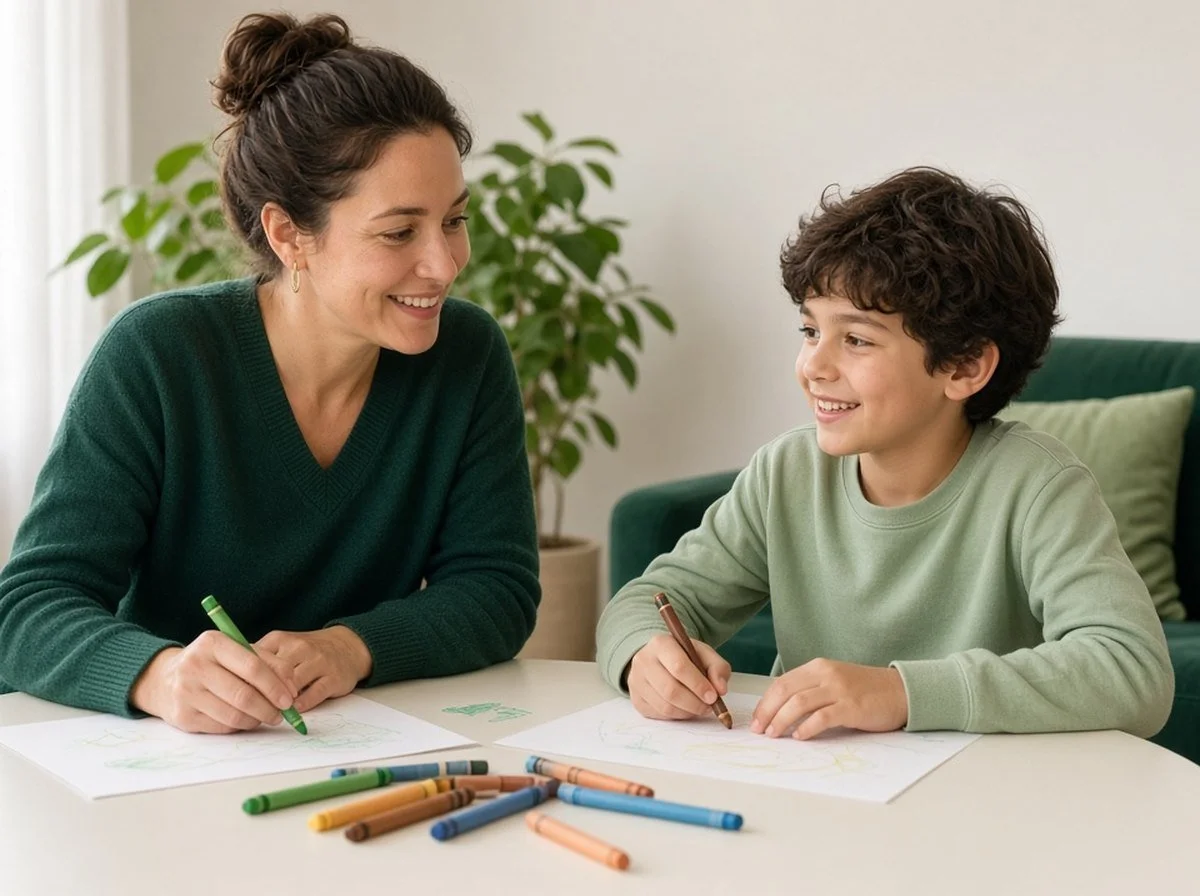
Parents are often surprised by how different child therapy looks from adult therapy. For younger kids, a session might involve drawing, building, playing a game or reading a story together. These activities aren't just to pass the time. They give children a way to show what they feel when they don't have the words yet.
Older kids and preteens may talk more, but they still benefit from hands-on tools, like a worry scale, a feelings chart or practising a calming skill during the session.
Most therapists also make time for parents. You might get a short check-in at the end of a session or a separate parent meeting now and then. That's where you can learn how to support new skills at home, which is often where the biggest changes happen.
Helping your child feel okay about going
Kids often feel nervous about meeting a new adult and talking about feelings. A little preparation goes a long way.
Keep it simple and honest. You might say, "This is someone whose job is to help kids with big feelings. Lots of kids go."
Avoid making it a punishment. Therapy works best when kids see it as support, not a consequence.
Share what to expect. Let them know they might talk, draw or play games, and that they don't have to share anything they're not ready to.
Give them a little choice. Letting them pick a snack for the drive or what to bring can help them feel more in control.
Stay calm yourself. Kids pick up on our stress. If you're relaxed about it, they're more likely to be too.
It's normal for a child to be shy or quiet for the first session or two. Trust usually grows with time. If your child's main struggle is worry, our guide on how to help a child with anxiety has ideas you can use at home in the meantime.
What we offer in Ottawa
Our Ottawa office is at 1 Rideau St, 7th Floor, inside the Fairmont Château Laurier, Ottawa, ON K1N 8S7. You can reach the office at (613) 691-1006.
Here's what to know about working with a child therapist in Ottawa at our clinic:
Child counselling is in person, for kids ages 6 and up. We also see teens and adults.
Our Ottawa therapists are Registered Psychotherapists (Qualifying), working under clinical supervision.
Sessions with our therapists are $130 to $200, and there's a one-time $50 setup fee for new clients. That fee isn't charged for the free consultation.
Billing: we direct bill many insurance plans, including for RP(Q) therapists. Some insurers have their own credential rules, so it's worth asking us before the first session. Depending on your plan, your insurance may cover part of the cost. Health Spending Accounts are accepted.
Assessments: our Ottawa office offers psychological assessments for children ages 6 and up, teens and adults.
Your next step
You don't need to have all the answers before you call. A free 15-minute consultation is a chance to share what's going on with your child, ask the questions above and see whether our Ottawa team is a good fit for your family.
If your child is ever in crisis or you're worried about their safety, call the Ottawa youth crisis line at 613-260-2360, call or text 9-8-8, or call 911 in an emergency.