
Grounding techniques for anxiety are simple skills that bring your attention back to the here and now. When worry pulls you into the future or the past, grounding uses your senses, your body and your breath to help you feel steadier. They are coping skills, not a cure, but many people find them useful.
This post is general information, not medical advice or a diagnosis.
What grounding means and why it can help with anxiety
Anxiety often lives in “what if” thoughts. What if I fail? What if something bad happens? Your mind races ahead, and your body reacts as if the danger is real right now.
Grounding gently moves your attention away from that story and toward what is actually around you. You notice the chair under you, the sounds in the room or the air going in and out. This can help your mind settle enough to think more clearly.
Grounding does not make anxious feelings disappear. It gives you a short break from them, so they feel less in charge. Think of it like an anchor. The waves still move, but you are less likely to drift away.
You can use grounding exercises almost anywhere: at your desk, in the car once you are parked, in bed or in a busy store. Most take one to five minutes.
The 5 4 3 2 1 grounding technique, step by step
The 5 4 3 2 1 grounding technique is one of the best known. The University of Rochester Medical Center describes it as a five-step exercise that can help ground you in the present when your mind is bouncing between anxious thoughts (see Sources). It suggests starting with slow, deep, long breaths.
Then go through each step:
5: Name five things you can see. A lamp, a crack in the ceiling, your own hands.
4: Name four things you can touch. Your hair, a pillow, the floor under your feet.
3: Name three things you can hear. A fan, traffic, birds outside.
2: Name two things you can smell. Soap, coffee, fresh air.
1: Name one thing you can taste. Toothpaste, tea or just the inside of your mouth.
Say the items out loud or in your head. Take your time. If you lose track, start again. There is no wrong way to do it.
Grounding through touch and movement
Your body can be a quick way back to the present. Here are some ideas to try.
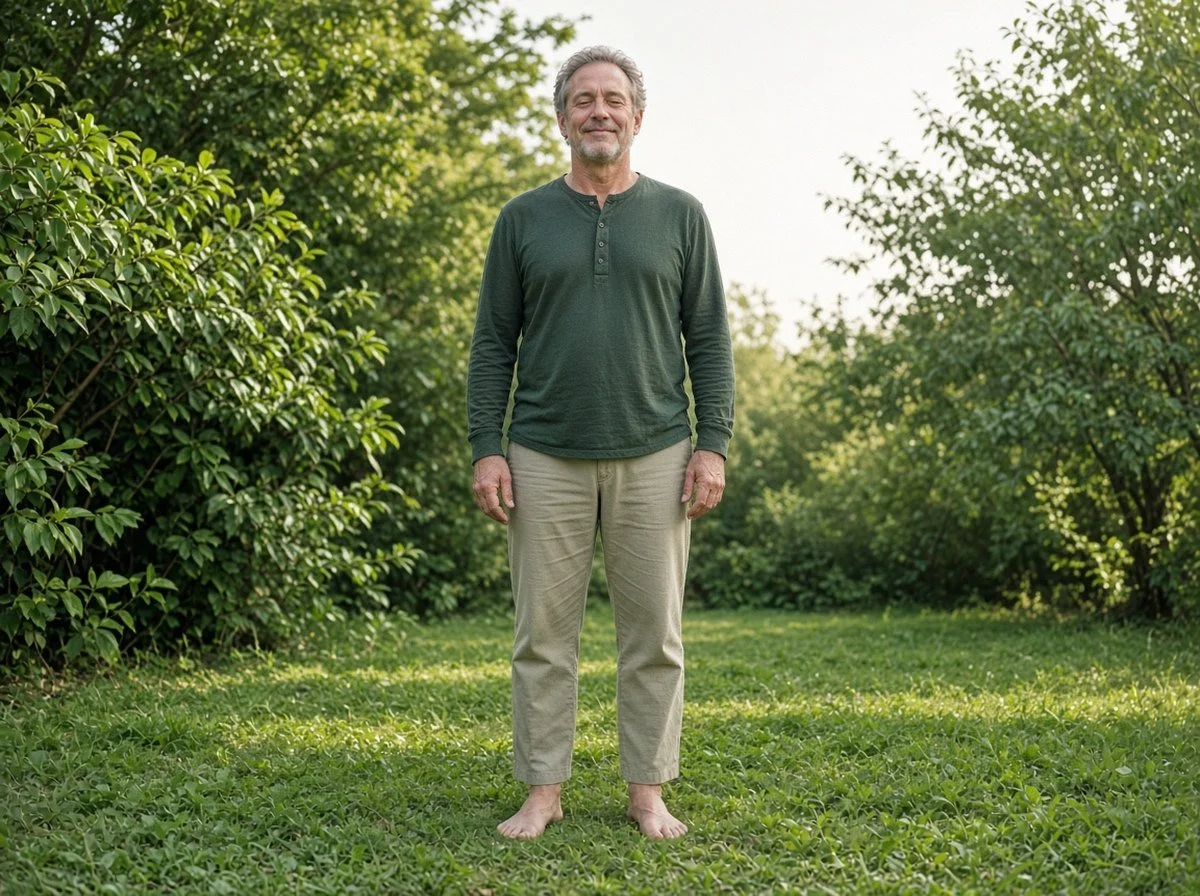
Feet on the floor. Sit or stand and press your feet into the ground. Notice the pressure, the texture of your socks or shoes and the floor holding you up.
Hold something. Pick up an object near you, like a mug, a stone or your keys. Notice its weight, temperature and shape. Describe it to yourself in detail.
Temperature change. Run your hands under cool or warm water. Pay attention to how it feels on your skin.
Gentle movement. Stretch your arms over your head, roll your shoulders or walk slowly and notice each step. Movement can help when you feel too restless to sit still.
Grounding through breath and sound
Breathing is always with you, which makes it a handy tool.
Slow breathing. The National Center for Complementary and Integrative Health describes breathing exercises that focus on taking slow, deep breaths, also called diaphragmatic breathing (see Sources). Try breathing in through your nose, letting your belly rise, then breathing out slowly through your mouth.
Count your breaths. Count each breath out, from one to ten, then start again. If your mind wanders, simply go back to one.
Listen closely. Close your eyes or soften your gaze and notice every sound, near and far. Name each one without judging it.
Our post on how to calm your nervous system shares more breathing and body-based ideas.

Mental grounding: thinking your way back to the present
Some people prefer to use their thoughts as an anchor. These mental grounding exercises can be done quietly, so no one around you will notice.
Describe where you are. Say the date, the time, where you are and what you are doing. “It is Tuesday afternoon. I am sitting at my kitchen table. I am safe right now.”
Play a category game. Pick a category, like fruits, colours or sports teams, and name as many as you can.
Count backward. Count back from 100 by sevens, or by threes if that is easier.
Describe a routine. Walk yourself through a familiar task in detail, like making a cup of tea, step by step.
These can also work as grounding techniques for anxiety and depression, when low mood leaves you feeling foggy or far away.
How to use grounding during a panic surge
Grounding techniques for panic attacks are best used early, when you first notice the surge. They will not always stop panic, but they can help you ride it out with a little more steadiness.
Try this order:
Put your feet on the floor and notice the ground.
Breathe out slowly, a bit longer than you breathe in.
Name five things you can see.
Remind yourself, “This feeling is uncomfortable, and it will pass.”
If you want to help someone else through a panic surge, our post on how to help someone having a panic attack has steps you can use.
At night, grounding can also help when worries keep you awake. Keep it simple: feel the weight of the blanket, notice your breath and name a few sounds in the room.
Grounding techniques for kids and teens
Grounding techniques for kids can be playful. Children often enjoy turning them into games.
Senses scavenger hunt. Ask your child to find something blue, something soft and something that makes a sound.
Balloon breathing. Breathe in to fill an imaginary balloon in the belly, then let it out slowly.
Squeeze and let go. Make tight fists for a few seconds, then relax and notice the difference.
Name the room. Take turns naming things in the room that start with a certain letter.
Practise when your child is calm, so the skills feel familiar when they are needed. Teens may prefer quieter options, like the 5 4 3 2 1 technique or counting breaths.
When grounding is not enough
Grounding is a helpful tool, but it is only one tool. If anxiety shows up most days, stops you from doing things you care about or keeps getting stronger, it may be time for more support.
Signs it may help to talk to someone:
You use grounding many times a day just to get through
You avoid places, people or tasks because of anxiety
Panic surges are happening more often
Worry is affecting your sleep, work or relationships
If you are thinking about suicide or hurting yourself, call or text 9-8-8 now. If you or someone else is in immediate danger, call 911.
How counselling can help with anxiety
Counselling can help you understand what drives your anxiety and build skills that last. At Transformation Counselling, our therapists use cognitive behavioural therapy (CBT) for anxiety, along with other approaches that fit your needs. A therapist can help you:
Learn grounding and calming skills that fit your life
Notice the thought patterns that feed worry
Face hard situations step by step, at your own pace
Build confidence that you can cope
If you like the idea of mindfulness, you can learn more about our mindfulness therapy
We offer counselling at our Kitchener-Waterloo, Cambridge and Ottawa offices, and online across Ontario. Every clinician on our team is registered with their college.
Common questions about grounding
What are grounding techniques for anxiety? They are simple skills that use your senses, body, breath or thoughts to bring your attention back to the present moment.
How does the 5 4 3 2 1 grounding technique work? You name five things you see, four you can touch, three you hear, two you smell and one you taste.
How do I ground myself during a panic attack? Start early. Press your feet into the floor, breathe out slowly and name things you can see.
Do grounding techniques actually help anxiety? Many people find they can help in the moment. They are coping skills, not a treatment on their own.
Can kids use grounding techniques? Yes. Games like a senses scavenger hunt or balloon breathing can make grounding fun for children.
Billing and your first step
We accept Health Spending Accounts (HSAs).
We can direct bill many insurers. Coverage depends on your plan, so check with your insurer before you start.
If anxiety keeps pulling you out of the present, book a free 15-minute consultation and we can help you find skills that fit.
If you’re in crisis: if you or someone you love is in immediate danger, call 911. If you’re thinking about suicide, call or text 9-8-8 any time, day or night.
Last reviewed: October 2026
Sources
University of Rochester Medical Center, Behavioral Health Partners. “5-4-3-2-1 Coping Technique for Anxiety.” https://www.urmc.rochester.edu/behavioral-health-partners/bhp-blog/april-2018/5-4-3-2-1-coping-technique-for-anxiety
National Center for Complementary and Integrative Health. “Relaxation Techniques: What You Need To Know.” https://www.nccih.nih.gov/health/relaxation-techniques-what-you-need-to-know