
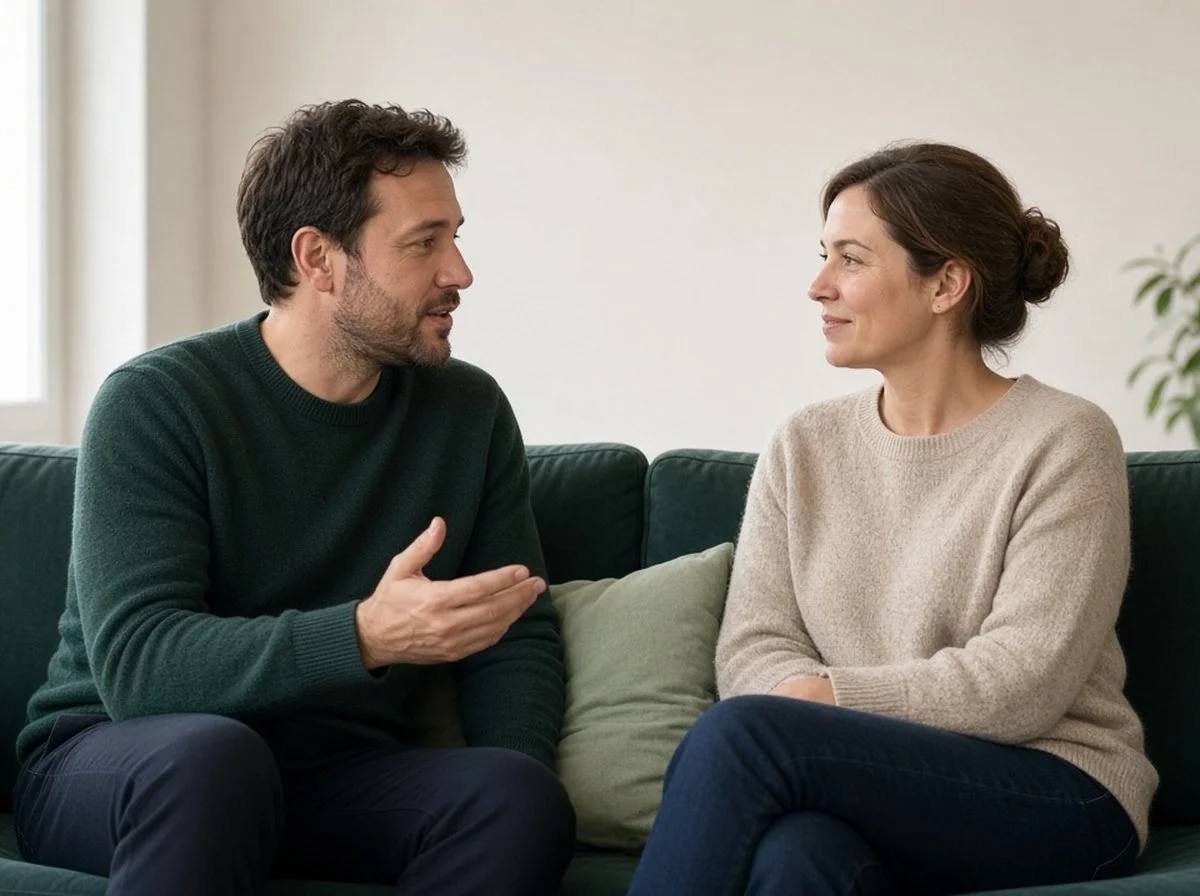
In many Ottawa homes, love happens in two languages. Maybe you grew up speaking French and your partner grew up in English. Maybe you both speak French, but work, friends and screens pull you into English all day. Most of the time it works fine. But when you fight, feel hurt or try to say something tender, language can suddenly get in the way. French couples therapy gives you both a place to be understood, in the language that feels most like home.
This guide looks at why language matters so much in a relationship, the common struggles bilingual couples face and how couples therapy in French works at our Ottawa office.
Why language matters in a relationship
The language you learned first is often tied to your earliest feelings and memories. Research on people who speak more than one language backs this up. In one large study of multilingual adults, most said "I love you" felt strongest in their first language. Other research has found that emotional words often feel weaker or more distant in a second language.
That doesn't mean your second language is fake or cold. Many people love deeply in both. But it helps explain why:
a compliment in your first language can land differently
an insult or harsh word in your first language can hurt more
you might feel calm and logical in English, then flooded with emotion in French
one partner may say "you're overreacting" when the other is simply feeling in a deeper language
When couples understand this, they often start to see each other with more patience.
The language you argue in matters
Every couple argues. For bilingual couples, the language of the argument adds another layer.
When one partner is always "at home"
If you always argue in one partner's first language, that partner has an edge. They can find the right words fast, use humour and make their point clearly. The other partner may feel slow, clumsy or unheard, even if they speak the language well. Over time, this can feel unfair, and the quieter partner may stop sharing.
Switching languages in the middle of a fight
Many bilingual people switch languages when emotions rise. You might move into French to vent, or into English to calm down. Your partner might hear the switch as shutting them out, even when you don't mean it that way.
"That's not what I meant"
Words don't always translate. Tone, sarcasm and jokes can mean something different across languages and cultures. A phrase that feels playful in French can sound rude in English. Small misunderstandings can pile up and turn into bigger fights.
Common challenges for bilingual couples
Language is rarely the only issue. It often connects to other parts of your life together. Bilingual couples in Ottawa often bring up:
Family and in-laws. A partner may feel left out at family dinners held in a language they don't speak well.
Culture and identity. Being Franco-Ontarian, Québécois, Acadian or from a French-speaking country can shape values, roles and traditions.
Raising children. Which language to speak at home or which school to choose can bring up strong feelings.
Work and home. Working all day in one language and coming home to another can be tiring.
Moving to a new country. Newcomers who speak French may carry extra stress from settling in, missing family or starting over.
These are normal things to bring to couples therapy. You don't have to sort them out alone.
How French couples therapy works
Couples therapy helps you understand your patterns, feel heard and find better ways to handle conflict. Doing it in French, or in both French and English, can make that work feel more natural.
Choosing the language of your sessions
At the start, you and your therapist can decide how you'd like to use language. Sessions can be in French, in English or a mix, based on what works for you both. Some couples choose French for the hardest talks, so the partner who feels most in French can speak freely. Others switch back and forth. There's no single right way.
What the first sessions look like
Your therapist will want to understand your relationship as a whole. Early sessions usually include time together and a chance to talk about your history, your strengths and what brings you in.
Some of our clinicians have Gottman Method Couples Therapy Level 1 and Level 2 training. They may use the Gottman Relationship Checkup, an online questionnaire you each fill out on your own. It helps your therapist see where your relationship is strong and where it needs support.
Our couples therapists also follow a no-secrets policy. In general, this means your therapist won't keep secrets for one partner that affect the relationship. Your therapist will explain how it works at the start, so you both know what to expect.
Tools bilingual couples can try at home
Therapy works best alongside small changes at home. Here are a few ideas to try together:
Agree on a language for hard talks. Decide ahead of time which language you'll use when things get tense, and take turns if that feels fairer.
Check what you heard. Try saying, "What I heard was... Is that right?" before you respond.
Name the feeling first. If a word is hard to translate, say it in your first language, then explain what it means to you.
Slow down. Speaking more slowly gives both of you time to understand.
Take a break when you're flooded. Agree to pause for at least 20 minutes, then come back to the talk at a time you both agree on.
Learn each other's words for repair. Knowing how to say "I'm sorry" or "Can we start over?" in your partner's first language can mean a lot.
Premarital counselling in French
If you're engaged or planning to move in together, premarital counselling can help you talk through language, family, culture and future plans before they become problems. There's no set number of sessions and no fixed package. We meet you where you are and work at the pace you need.
French couples therapy at Transformation Counselling
We offer therapy in French in person at our Ottawa office, located on the 7th floor at 1 Rideau Street inside the Fairmont Château Laurier. French therapy is also available online anywhere in Ontario, which can help if you live outside downtown or have busy schedules.
Learn more about our couples therapy and marriage counselling, or read about online counselling if meeting from home suits you better.
Sessions with our therapists are $130 to $200, and there is a one-time $50 setup fee. Many extended health plans cover counselling, so check your plan. No doctor's referral is needed, and evening and weekend appointments are available.
Frequently asked questions
Do we both need to speak French?
No. Couples therapy can work well when one partner is more comfortable in French and the other in English. Your therapist can help you find a language plan that works for both of you.
Can we switch between French and English in a session?
Yes. Switching is normal for many bilingual couples, and it can help your therapist notice where the strongest feelings are.
Can we do couples therapy online in French?
Yes. French therapy is available online anywhere in Ontario, and in person at our Ottawa office.
Do we have to be in crisis to start?
Not at all. Couples often start therapy to understand each other better, prepare for a big change or stop the same argument from repeating.
Will the therapist take sides?
No. Your therapist's job is to support the relationship and help each of you feel heard.
Take the first step
Love in two languages can be rich and beautiful, and it can also be hard. You don't have to keep getting lost in translation. Book a free 15-minute consultation to talk about French couples therapy, or book an appointment to get started.