
Your to-do list keeps growing while you stare at it. A simple email feels like climbing a hill, and you're tired before the day even starts. If you're feeling overwhelmed all the time, it usually means the demands on you have outgrown the time, energy and support you have. That gap can be closed, often with small, steady changes.
This post is general information, not medical advice or a diagnosis.
Why you feel overwhelmed all the time
Overwhelm often builds when life asks more of you than you can give right now. Work, family, money, health and home all pull at you at once, and there is no time to catch up.
The National Institute of Mental Health (NIMH) describes stress as the body's or mind's response to an outside cause, like a heavy workload. Anxiety, by contrast, can keep going even when there is no current threat. NIMH also notes that everyone feels stress, and sometimes it can feel overwhelming (see Sources).
CAMH explains that stress often comes up when a person feels the pressures on them are high and they don't have enough resources to cope (see Sources). So feeling overwhelmed by everything is not a sign of weakness. It is often a sign that the load is too heavy.
Signs overwhelm is building
You might notice that you:
Feel behind, no matter how much you get done
Snap at people over small things
Freeze or scroll instead of starting tasks
Forget things or lose track of plans
Have trouble falling asleep because your mind won't stop
Feel like crying for no clear reason
Feel tense, tired or on edge most days
Feeling overwhelmed for no reason can happen, too. Often the reason is there, but it is spread across many small things instead of one big one.
Why simple tasks can feel huge
Being overwhelmed by simple tasks is very common. A task like booking an appointment is really a chain of small steps and choices: find the number, check your calendar, decide on a time, make the call. When your mind is already full, each step takes more effort.
Other things that can make small tasks feel big:
Too many choices. Every decision uses energy. Our post on decision fatigue explains why choices can wear you down.
No clear first step. If you don't know where to start, it's easy to not start at all.
Tiredness. When you're low on sleep or energy, everything feels harder.
Avoidance. Putting a task off brings short-term relief, but the pressure grows each day it waits.
Some people also find planning, starting and finishing tasks hard in general. This is sometimes called executive dysfunction, and a therapist can help you sort out what is going on.
Common reasons overwhelm sticks around
Overwhelm can stay for weeks or months when something keeps feeding it. Common reasons include:
No real breaks, even on weekends
Poor sleep
Caring for children, parents or a partner who needs a lot of help
Money worries
Anxiety, which can keep your mind racing
Low mood, which can drain your energy
Long-standing trouble with focus and planning
Time around lots of people, which can leave some people drained
Any of these can be part of the picture. None of them means you have a specific condition. They are simply common things that can add to the load.
Overwhelm vs stress vs burnout
These words overlap, but they are not quite the same.
Stress is a response to a demand, like a deadline. It often eases once the demand passes.
Overwhelm is the feeling that there is too much at once and you can't keep up.
Burnout usually builds over a long time. It can bring deep exhaustion, a sense of detachment and feeling like nothing you do matters.
If overwhelm has gone on for a long time and you feel empty or numb, our post on how to recover from burnout may help.

How to stop feeling overwhelmed today
You don't have to fix everything at once. Try one or two of these:
Write it all down. Get every task, worry and reminder out of your head and onto paper. Seeing it in one place often makes it feel smaller.
Choose one next step. Pick a single action you can do now. Not a project, just one step.
Shrink it to five minutes. "Clean the kitchen" becomes "load the dishwasher for five minutes."
Say no to one thing. Drop, delay or hand off one task this week.
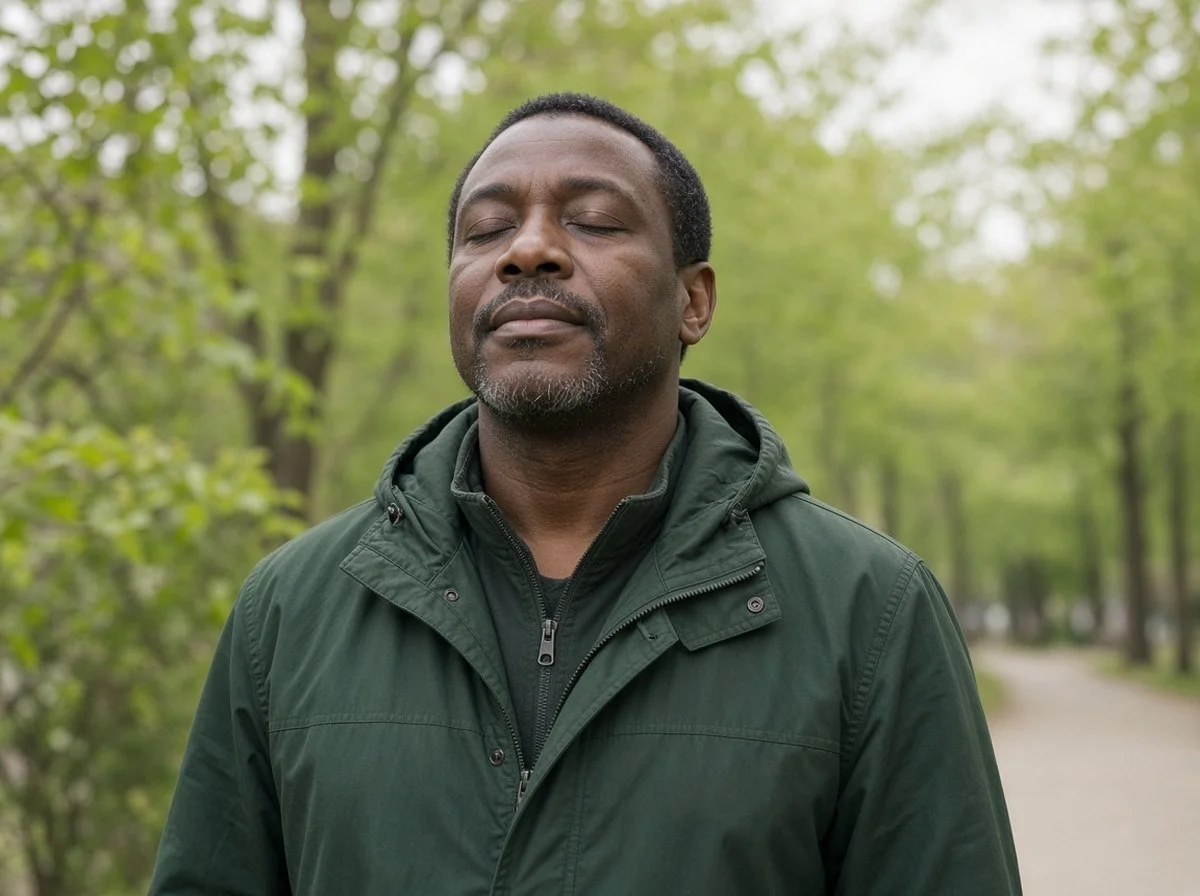
Move or breathe. A short walk or a few slow breaths can help your body settle so your mind can think.
Longer-term changes that help
Quick resets help in the moment. Longer-term changes can stop overwhelm from building so fast.
Protect recovery time. Researchers Sonnentag and Fritz describe four kinds of recovery experiences: mentally switching off from work, relaxing, doing something that builds skill or mastery, and having control over your free time. In their research, these experiences were moderately related to job stress and wellbeing (see Sources). Ask yourself which of the four you get least of, and add a little more.
Set boundaries. Saying no, or "not right now," protects time for what matters most.
Share the load. Look at who does what at home and at work. Ask for help with one thing.
Notice your thoughts. Thoughts like "I have to do it all" or "it all has to be perfect" can add pressure. Gently question them.
When it might be more than a busy season
NIMH notes that it may be time to get more help if stress feels like more than you can manage and it gets in the way of everyday life, makes you avoid things or seems to be there all the time (see Sources).
Feeling overwhelmed and anxious every day, or feeling low and hopeless, is a good reason to reach out. If you feel like you can't function at all, our post on signs of a mental breakdown explains what that can look like.
If you are thinking about suicide or hurting yourself, call or text 9-8-8 now. If you or someone else is in immediate danger, call 911.
How counselling can help
You don't have to carry it all at once. In counselling, a therapist can help you understand what is feeding the overwhelm and find changes that fit your life. Cognitive behavioural therapy (CBT) tools can help you notice pressure-building thoughts and break tasks into steps. Counselling can also support you with anxiety, stress and burnout.
We offer individual counselling at our Kitchener-Waterloo, Cambridge and Ottawa offices and online across Ontario.
Common questions about feeling overwhelmed
Why do I feel overwhelmed all the time? Often the demands on you are bigger than your time, energy and support. Poor sleep, no breaks, anxiety or low mood can add to it.
Is feeling overwhelmed a sign of anxiety? It can be one sign, but it can also come from stress, a heavy load or tiredness. Only a professional can tell you if it is anxiety.
How do I stop feeling overwhelmed? Start small. Write everything down, choose one next step and shrink it to five minutes.
Cost, billing and your first step
Sessions with our therapists range from $130 to $200, depending on the clinician.
We accept Health Spending Accounts (HSAs).
We can direct bill many insurers. Coverage depends on your plan, so check with your insurer before you start.
Book a free 15-minute consultation with our admin team. You don't have to carry it all at once.
If you're in crisis: if you or someone you love is in immediate danger, call 911. If you're thinking about suicide, call or text 9-8-8 any time, day or night.
Last reviewed: October 2026
Sources
National Institute of Mental Health. "I'm So Stressed Out! Fact Sheet." https://www.nimh.nih.gov/health/publications/so-stressed-out-fact-sheet
Centre for Addiction and Mental Health (CAMH). "Stress." https://www.camh.ca/en/health-info/mental-illness-and-addiction-index/stress
Sonnentag S, Fritz C. "The Recovery Experience Questionnaire: development and validation of a measure for assessing recuperation and unwinding from work." Journal of Occupational Health Psychology. 2007;12(3):204-221. https://doi.org/10.1037/1076-8998.12.3.204