
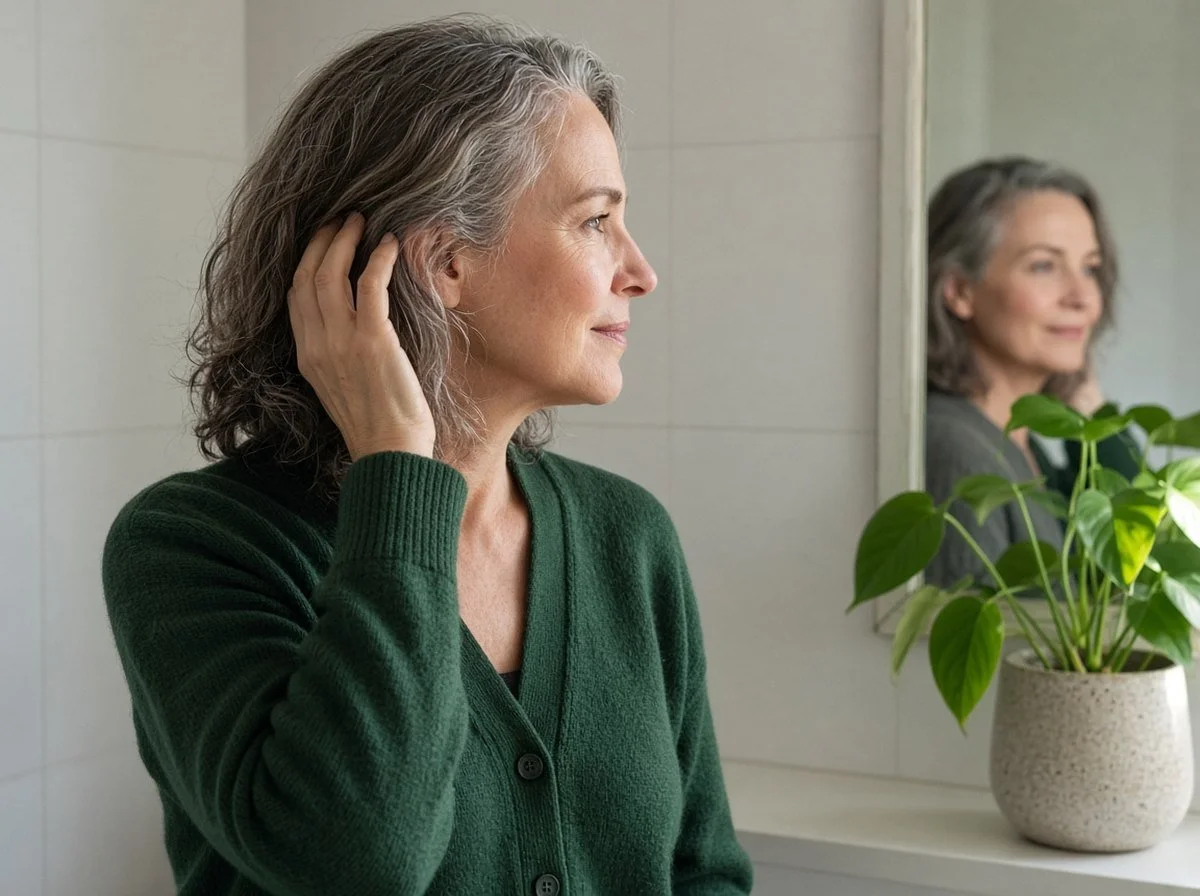
You spot a new grey hair and your stomach drops. A birthday is coming and you would rather skip it. You catch yourself picturing frailty, loneliness or being a burden, and the thought sticks for days. A fear of aging, or a fear of getting old, is more common than most people admit. It can show up in your twenties or your sixties. This post explains what aging anxiety is, where it often comes from, how it can affect daily life and what can help you feel steadier.
This post is general information, not a diagnosis. Only a qualified professional can assess what you are going through.
What is a fear of aging?
A fear of aging is worry, dread or distress about growing older. Some people focus on how their body or face will change. Others worry about health, money, losing independence or being left alone.
You may see the word gerascophobia used online for a strong fear of aging. It is not a formal diagnosis. It is simply a name some people use. What matters more than the label is how much the fear affects your life.
A little concern about the future is normal. Aging brings real changes, and it makes sense to think about them. Aging anxiety becomes a problem when it takes up a lot of space, keeps you from enjoying life or drives choices you later regret.
Common worries behind aging anxiety
The fear of aging often has a few threads woven together. You might relate to some of these:
Looks. Wrinkles, weight changes, hair loss or looking "old."
Health. Illness, pain or losing strength and memory.
Independence. Needing help with daily tasks or no longer driving.
Loneliness. Losing a partner or friends, or feeling forgotten.
Money. Not having enough saved, or outliving your savings.
Purpose. Feeling less useful after work or parenting ends.
Time. A sense that time is running out, or that you have wasted it.
Sometimes the fear of aging overlaps with fear of death. That is a related but different topic. Here, we focus on the fear of growing older itself.
Where the fear of getting old comes from
There is rarely one cause. Some common sources include:
A culture that prizes youth. Ads, movies and social media often treat youth as the ideal and aging as something to fight. Over time, it is easy to absorb those messages.
Ageism. Ageism means negative beliefs about older people. A 2019 study of 886 adults in Italy looked at how knowledge about aging, anxiety about aging and stereotypes connect (Donizzetti, see Sources). It found that anxiety about aging and limited knowledge fed into negative stereotypes of older people, which in turn fed ageism. The author suggests that learning more about the aging process could help reduce both anxiety and stereotypes. In plain words, the less we understand about aging, the scarier it can seem.
Past experiences. Watching a parent or grandparent struggle with illness or loneliness can leave a deep mark. You may fear the same thing will happen to you.
Life milestones. Big birthdays, children leaving home, retirement or a health scare can bring these fears to the surface. Our post on the midlife crisis looks at how these questions often show up in the middle years.
How aging anxiety can affect your life
When the fear of aging grows strong, it can show up in many ways:
Avoiding birthdays, photos or mirrors.
Spending a lot of time or money trying to look younger.
Constant checking of your body for signs of illness.
Feeling low or anxious about the future most days.
Pulling away from older relatives because seeing them is upsetting.
Putting off plans because "it is too late anyway."
How we feel about aging may matter later in life too. A 2025 study of 400 older adults living in the community in Turkey found that attitudes toward aging, along with symptoms of depression, predicted how much death anxiety people felt (Kulakci Altintas and Ercan Sahin, see Sources). This suggests that the way we think about aging is worth paying attention to, at any age.
Ways to feel steadier about growing older
You cannot stop time. But you can change how you relate to it.
Notice your stories about aging. Write down what you believe getting older means. Then ask: where did this come from? Is it always true? Many beliefs come from ads or one hard family story, not from the full picture.
Learn about aging. Since limited knowledge is linked with more fear, learning can help. Read about people who found new meaning later in life. Talk with older adults you admire about what has been good about getting older.
Spend time across ages. Friendships with people older and younger than you can make aging feel less like a cliff and more like a path.
Focus on what you can shape. Movement, sleep, friendships, learning and planning ahead are all things you can work on now. They will not stop aging, but they can help you feel more in charge.
Look for meaning, not just youth. Ask what you want the next ten years to be about. Values like connection, creativity or helping others do not expire.
Go easy on yourself. Some sadness about getting older is part of being human. You do not have to love every change to live well.
If retirement is part of what you fear, our post on retirement depression explores that change in more depth.
Talking about aging with people you love
Fears often feel bigger when we keep them to ourselves. It can help to talk about getting older with a partner, a friend or a sibling. You may find they share some of the same worries.
You might also talk with older people in your life about what they have learned. Ask what surprised them about getting older, or what they wish they had worried less about. Their answers can give you a fuller and kinder picture than the one you see in ads.
If family plans are part of your worry, like who will help if you need care someday, talking openly can ease some of the unknown. Even a first, short talk is a start.
When to talk with a counsellor
It may help to talk with someone if your fear of aging:
Takes up a lot of your thoughts most days.
Leads to panic, low mood or trouble sleeping.
Keeps you from enjoying your life now.
Is tied to a loss, health scare or big life change.
The U.S. National Institute of Mental Health notes that mental health matters at every stage of life, and that effective treatment options are available (see Sources). Anxiety therapy can help you understand where your fear comes from, challenge thoughts that keep you stuck and build a more hopeful view of the years ahead. You can learn more on our anxiety counselling page.
Online counselling is available across Ontario, so you can start from home.
Cost, billing and your first step
Sessions with our therapists range from $130 to $200, depending on the clinician.
We accept Health Spending Accounts (HSAs).
We can direct bill many insurers. Coverage depends on your plan, so check with your insurer before you start.
Book a free 15-minute consultation with our admin team. We can help you find a counsellor for anxiety, in person or online.
If you're in crisis: if you or someone you love is in immediate danger, call 911. If you're thinking about suicide, call or text 9-8-8 any time, day or night.
Last reviewed: October 2026
Sources
Donizzetti, A. R. "Ageism in an Aging Society: The Role of Knowledge, Anxiety about Aging, and Stereotypes in Young People and Adults." International Journal of Environmental Research and Public Health. 2019. https://pmc.ncbi.nlm.nih.gov/articles/PMC6517915/
Kulakci Altintas, H., and Ercan Sahin, N. "Attitudes to aging, depression, and death anxiety among community-dwelling older adults: a cross-sectional correlational study." BMC Geriatrics. 2025. https://pmc.ncbi.nlm.nih.gov/articles/PMC12219969/
National Institute of Mental Health. "Older Adults and Mental Health." https://www.nimh.nih.gov/health/topics/older-adults-and-mental-health