
You get a new job offer, and before you feel excited, you feel a knot in your stomach. What will your mom think? Will your dad be hurt? It's hard to tell where their feelings end and yours begin. If that sounds familiar, you may have come across the word enmeshment. Enmeshment is when family members are so involved in each other's lives and feelings that it becomes hard to have your own identity and make your own choices.
This post is general information, not a diagnosis of you or anyone in your family. Every family is different, and only you can decide what fits your experience.
What is enmeshment
The APA Dictionary of Psychology describes enmeshment as two or more people, usually family members, being involved in each other's lives to an extreme degree. This limits healthy interaction and can weaken each person's sense of independence and identity (see Sources).
In plain words, enmeshment meaning comes down to blurred lines. In an enmeshed family, it can be hard to have separate feelings, opinions, plans or privacy. Love is often very real. But the closeness can leave little room for each person to be their own self.
Enmeshment usually isn't anyone's fault. Patterns like this are often passed down without anyone choosing them.
Closeness vs enmeshment
A close family is not the same as an enmeshed family. Closeness can be a real strength.
In a warm, close family, people can share a lot and spend lots of time together. They still respect that each person can feel differently, choose differently and keep some things private.
In an enmeshed family, those differences can feel threatening. Disagreeing may feel like betrayal. Choosing your own path may feel like leaving the family behind.
Culture matters here, too. What counts as healthy closeness looks different across cultures and families. One study of 98 South Korean immigrant families in the United States found that close, enmeshed family ties were linked to better social and emotional outcomes for children in that group (see Sources). That doesn't apply to every culture. But it's a reminder that closeness itself isn't the problem. The question is whether you have room to be yourself.
Signs of an enmeshed family
These are common signs of enmeshment. They are not a checklist for a diagnosis.
You feel guilty when your opinion is different from your family's.
You were, or are, a parent's main confidant about adult problems.
Wanting privacy is treated as hiding something or as betrayal.
Big decisions, and even small ones, seem to need family approval.
You feel responsible for keeping everyone's mood steady.
It's hard to know what you want, separate from what your family wants.
You might recognize a few of these, or most of them. Either way, noticing is a helpful first step.
How enmeshment can affect you as an adult
Growing up in an enmeshed family can shape how you see yourself as an adult. You might notice:
trouble knowing what you like, want or believe
people pleasing, or saying yes when you mean no
strong guilt when you set a boundary
feeling responsible for other people's feelings
strain in your own relationships, as you juggle partner and family
Research is still growing. One 2025 study of 360 university students looked at a pattern of beliefs linked to enmeshment and an undeveloped sense of self. The study found this pattern was linked, partly through worries about relationships, with a less clear sense of who you are (see Sources). This shows a link, not a cause, and it used students only. Still, it fits what many adults describe.
Enmeshment vs codependency vs parentification
These three ideas overlap, but each one focuses on something a little different.
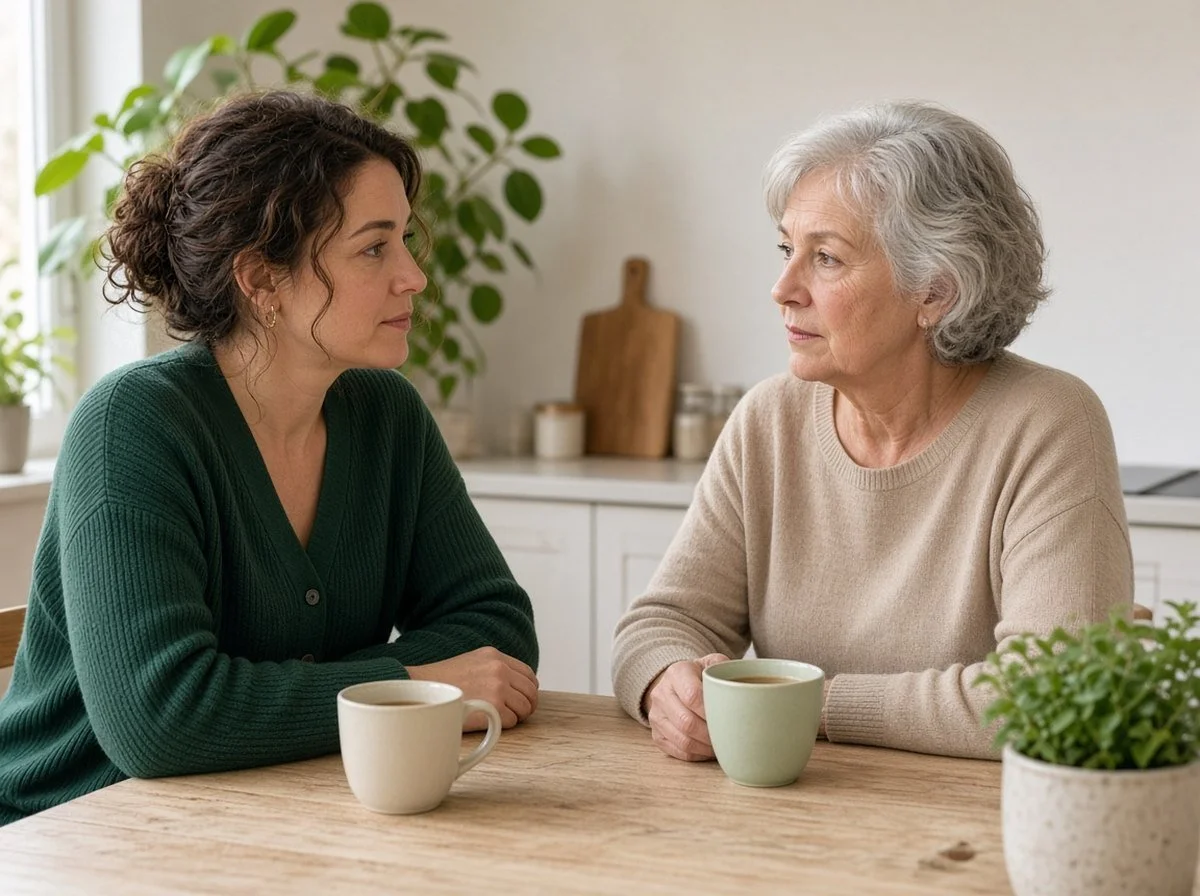
Enmeshment is about blurred boundaries within a family, where feelings and choices are hard to separate.
Codependency usually describes a pattern in adult relationships, where you focus so much on someone else's needs that you lose track of your own. Our post on codependency signs and therapy explains it in more detail.
Parentification is when a child takes on adult roles in the family, like caring for a parent emotionally or raising younger siblings. Our post on parentification looks at how that can affect you later.
You might relate to one, two or all three. Looking at enmeshment vs codependency is less about the right label and more about understanding your pattern.
Is enmeshment trauma
You may see the phrase "enmeshment trauma" online. It's a popular phrase, not a diagnosis. You won't find it as a formal condition.
That doesn't mean your experience isn't real. Growing up without room to be yourself can hurt, and that hurt deserves care. You don't need a label to take your feelings seriously, or to get support.
If your family experience included abuse, threats or danger, that is more than enmeshment. If you are in danger now, call 911. If you are thinking about suicide, call or text 9-8-8.
How to build a self of your own without cutting everyone off
Many adult children of enmeshed families don't want to cut ties. They want a relationship with more room to breathe. Some small steps:
Notice your own preferences. Start small. What do you want for dinner? Which show do you like? Pay attention to what you feel before you check what others think.
Try small boundaries. You might wait a day before replying to a message, or say, "I'll think about it and let you know." Small boundaries can feel big at first.
Expect guilt, and let it pass. Guilt doesn't always mean you did something wrong. Sometimes it just means you did something new.
Stay connected on new terms. You can still call, visit and care deeply. You can also keep some choices and some parts of life your own.
Our post on how to set boundaries with parents has more ideas and example phrases.
How counselling can help
If you are thinking about suicide or hurting yourself, call or text 9-8-8 now. If you or someone else is in immediate danger, call 911.
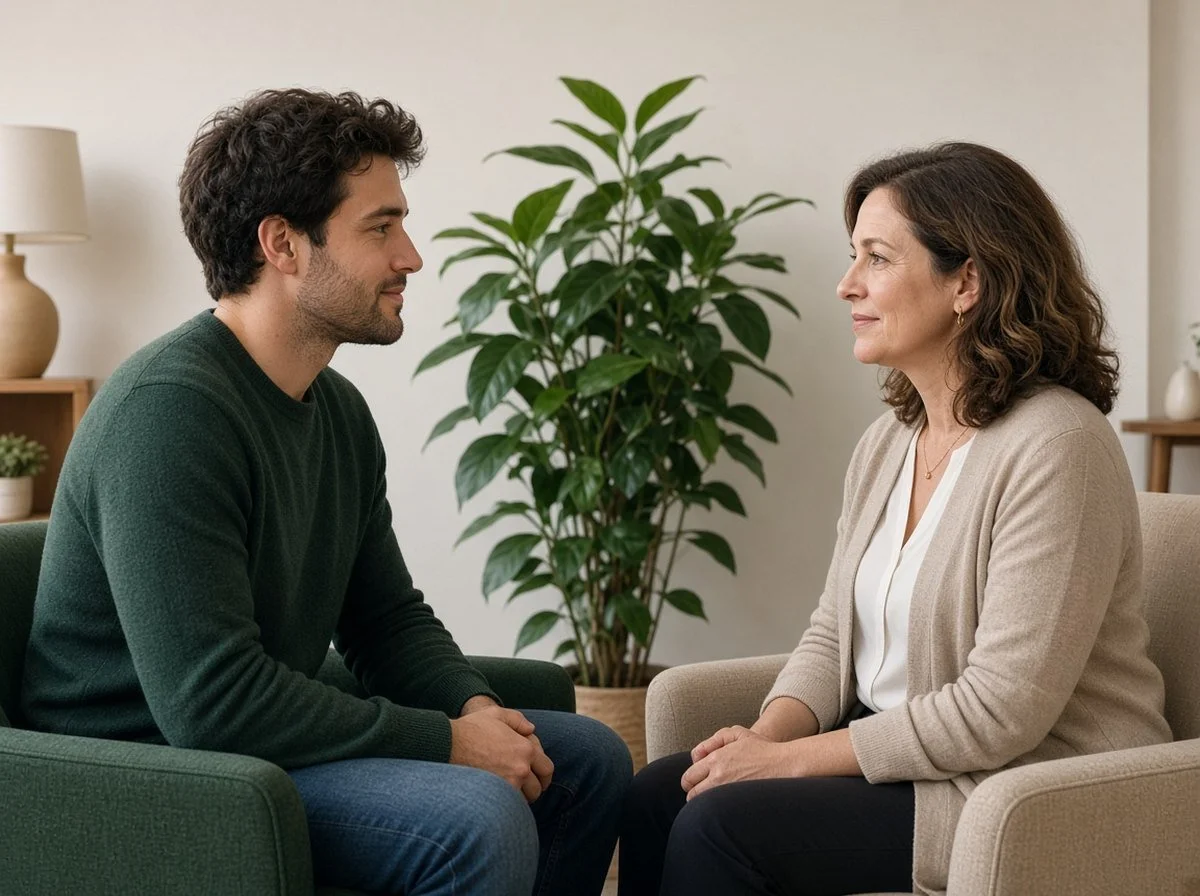
Counselling can give you a private space to sort out your own feelings from your family's. A therapist won't tell you to cut off your family or blame them. Instead, they can help you understand the pattern, build a clearer sense of yourself and find a balance that fits your values and culture.
In counselling, you might:
explore what you want, apart from family expectations
practise setting kind, clear boundaries
work through guilt and people pleasing
use approaches like Internal Family Systems to understand different parts of yourself
Some families also choose family therapy to work on these patterns together. We offer individual counselling and family therapy at our Kitchener-Waterloo, Cambridge and Ottawa offices, and online across Ontario.
On the practical side, we can direct bill many insurers, including for sessions with a Registered Psychotherapist (Qualifying). Desjardins is the exception: through TELUS eClaims, we can direct bill Desjardins for sessions with an RSW, RP or psychologist, but not for an RP (Qualifying). Coverage depends on your plan, so check with your insurer before you start.
Book a free 15-minute consultation with our admin team. "I want to understand my family pattern and find more of myself" is enough to start.
If you're in crisis: if you or someone you love is in immediate danger, call 911. If you are thinking about suicide, call or text 9-8-8, any time.
Loving your family and becoming your own person can go together. With time and support, you can build both.
Last reviewed: October 2026
Sources
American Psychological Association, APA Dictionary of Psychology, enmeshment
Baroncelli CMC, Lodder P, van der Lee M, Bachrach N. The role of enmeshment and undeveloped self, subjugation and self-sacrifice in childhood trauma and attachment related problems: the relationship with self-concept clarity. Acta Psychologica, 2025;254:104839
Jin B, Roopnarine JL. The beneficial role of family enmeshment among South Korean immigrants in the United States. International Journal of Psychology, 2022;57(5):676-684