
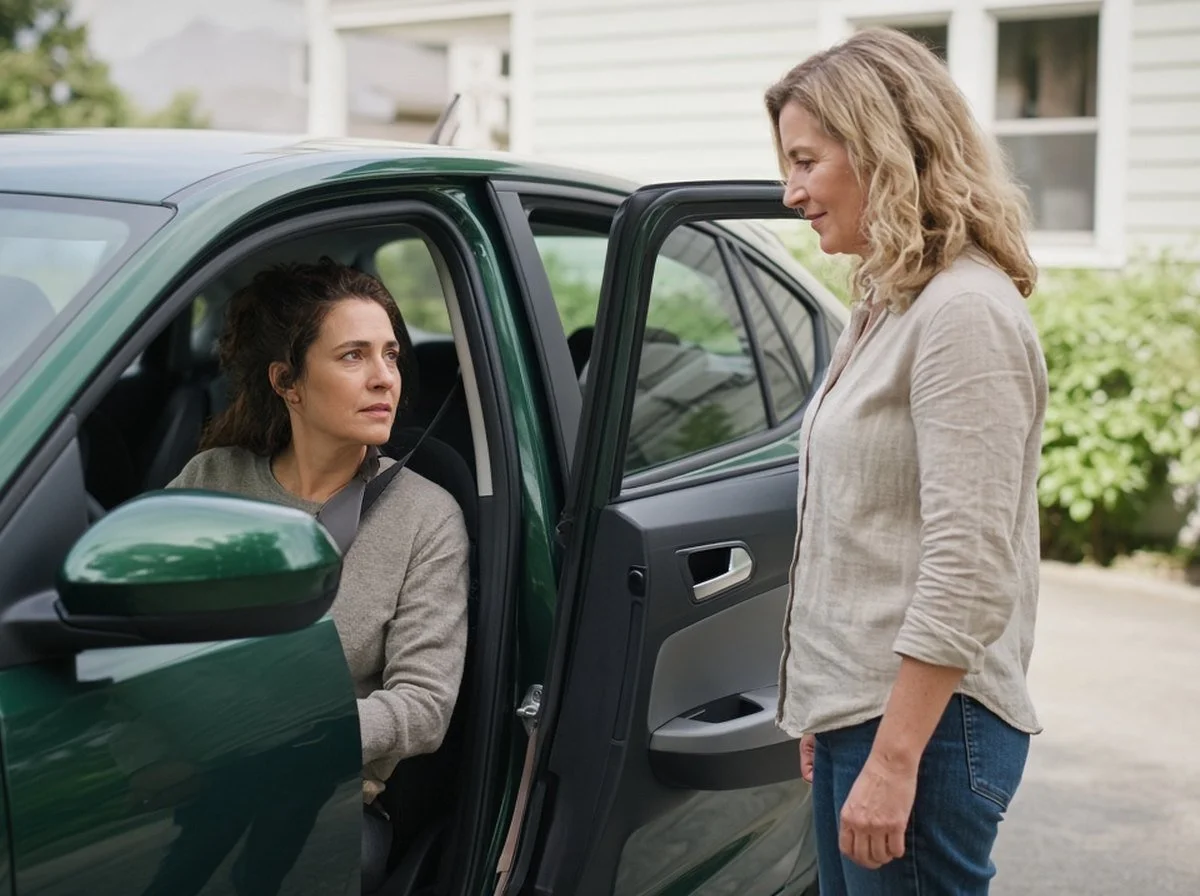
The highway is eleven minutes. The way you actually go is thirty-four, and you know both numbers without checking.
Driving anxiety rarely announces itself. It edits. A route changes, then a time of day, then who's in the car. You tell yourself you prefer the back roads, and there's enough truth in that to avoid the question for another year. Then the editing runs out of room: a job moves, or someone who drove the highway stretch for you no longer can. So here are five tools for getting back behind the wheel, built for Ontario roads, each with a line on what it won't do.
Is it normal to fear driving after a crash? Yes, and for a while afterward it isn't a problem to solve. It becomes worth acting on when the wariness spreads from the road to the route, then the highway, then the car. If what comes back is less like worry and more like the sound or image of the crash, or a jolt when a vehicle appears in your mirror, that may be a trauma response, and our page on trauma and PTSD counselling is a better starting point.
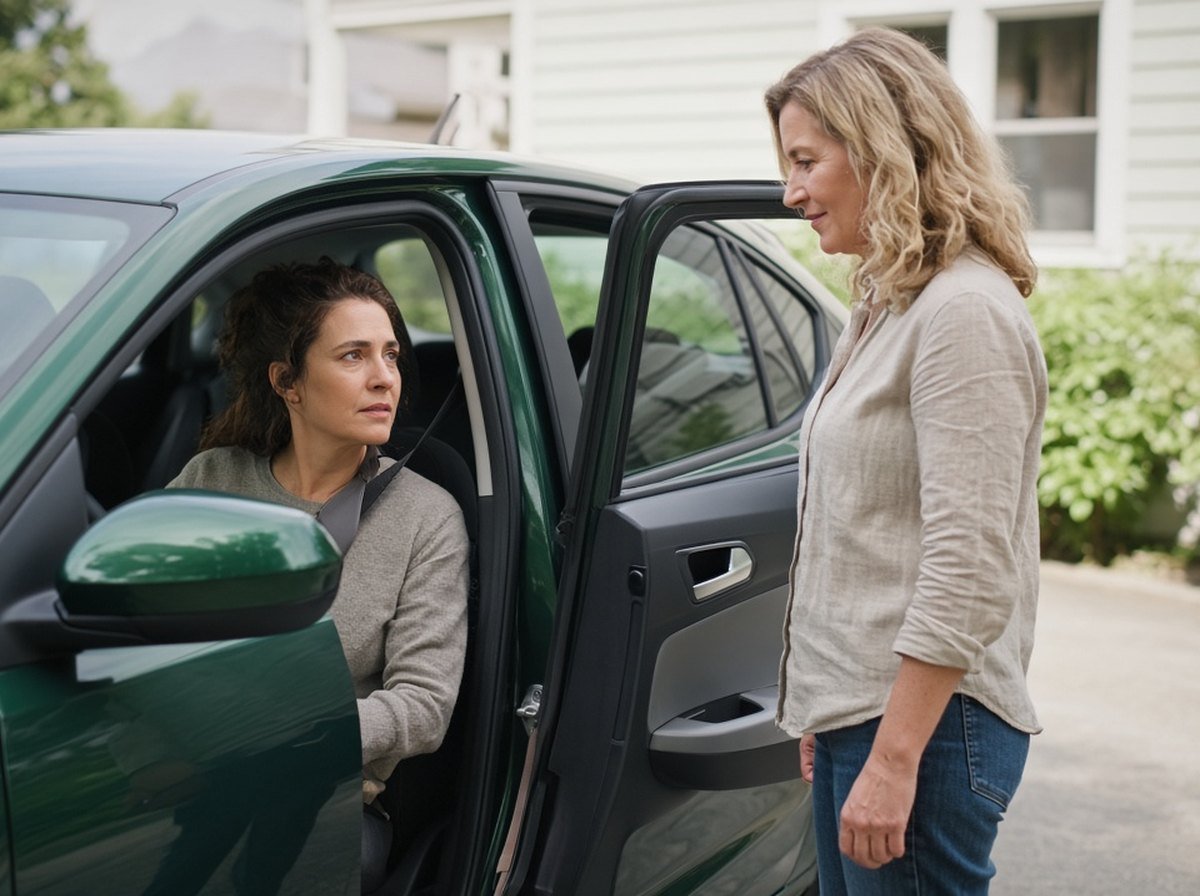
Short familiar routes, chosen on purpose
Many people wait until they feel ready, try something big, have a bad time and decide the fear has won.
The order that works is boring: short, familiar and repeated, chosen while you're calm. Pick a route you know well, fifteen minutes or less, at a quiet hour. Drive that same route three times in a week. Repetition is what helps.
Change only one thing at a time when you add difficulty: a busier hour, or driving at dusk, or a slightly longer version.
Ontario winters add a wrinkle. Progress made in September can feel lost by January, but the road just got harder. Step back a rung when the first real snow arrives, drive the short loop in daylight on cleared roads, and treat winter as its own ladder. And on a truly bad morning, leaving the car at home is good judgment, not avoidance.
It's working when you get home and can barely remember the drive.
What this will not do: familiar routes won't prepare you for unfamiliar ones, and the same loop for a month builds a comfortable rut.
If the map of where you'll drive has been getting smaller, a free 15-minute consultation is a simple way to talk it through, with nothing to commit to afterward.
Breathing that works with both hands on the wheel
Most breathing instructions assume you can close your eyes or count on your fingers. You can't do that while driving, so this version is stripped down. Eyes stay on the road. Hands stay on the wheel. Let each out-breath be a little longer than the in-breath, with no held breath and no big breath to start. Two extras matter in a car. Unclench your jaw, because many people drive with their back teeth together. And loosen your grip by half, because anxious hands squeeze the wheel hard enough to ache. Time it to the road: one long out-breath at each set of lights.
What this will not do: it won't settle a body that's already flooded, and it can't compete with a genuinely difficult stretch of road. The most important limit is this: if the breathing is taking any attention off the road, stop doing it. Nothing on this page is worth a moment of divided attention while driving.
Highway merging, broken into stages
Fear of highway driving is often fear of one specific move, usually the merge: a short ramp, fast traffic and a gap you have to judge from the side. So practise the merge, not the highway.
Ride it as a passenger with someone calm, and watch where they speed up.
Drive one exit, off-peak. On, up to speed, off at the next exit.
Repeat that same stretch three or four times in one outing.
Add one exit, then another on a different day.
Change the conditions, like a busier hour or rain, one change per outing.
Take a merge you haven't rehearsed. This is the last rung, not the first. Get up to the speed of traffic before the lane ends, and look where you're going rather than at the vehicle you're worried about.
What this will not do: merging practice won't touch other highway fears, like driving beside transport trucks, bridges or long stretches with no exit. Each needs its own ladder, built the same way.
What to do if panic starts while you're driving
A panic attack at the wheel is the fear underneath much driving anxiety, and it deserves a plan. Make the plan now, while you're sitting still.
In the car, in order. Ease off the gas rather than braking hard. Signal, move right, and take the next exit or side street. Stop somewhere safe and legal, ideally with people around. Stopping on a highway shoulder with traffic rushing past carries its own risk, so an exit or service centre is better if you can reach one safely. Once stopped, put your hazards on, take your hands off the wheel, put your feet flat and let your out-breath be long. Panic peaks and comes down. That's what it does.
Before you drive again. Don't drive until your hands are steady and you feel fully alert. If you feel settled and safe, a short drive afterward can stop the car from becoming the thing you fear. If you don't feel safe to drive, don't. Getting home another way is fine, and you can work on the next drive later.
What to have in place. One person who knows this happens and will answer the phone. A charged phone in a holder.
What to stop doing. Checking yourself for early signs at every light, which guarantees you'll find something. And pulling over every few minutes in case you panic. Both teach your alarm that the car needs constant supervision.
If you ever have chest pain with a racing heart that feels new or different, don't assume it's panic. Pull over safely and call 911 if it's severe or comes with shortness of breath, sweating or pain spreading to your arm or jaw. If you've never had these symptoms checked, it's worth getting checked medically. Our guide on how to stop a panic attack covers the panic itself in more detail.
What this will not do: a plan doesn't prevent the attack. It gets you stopped safely and keeps the day from getting worse.
Riding as a passenger first
This is the rung below everything else, and it's the place to start if you haven't driven in months or since a collision. The passenger seat gets you back in the car without the responsibility.
Work up gradually: the back seat, then the front seat on a familiar route, then the road you've been avoiding. Then the driver's seat in your parked car, engine off, then engine on, then to the end of the street.
Tell the driver what you need beforehand. Something like: don't talk me through it, don't tell me it's fine, and pull over when it's safe if I ask.
What this will not do: being a passenger builds tolerance for being in a car, not driving skill. Stay here too long and it becomes the avoidance it was meant to break, especially if someone else's life now revolves around driving you.
How you actually get over driving anxiety
How do I get over driving anxiety? Not through willpower. What tends to work is a ladder: every situation you avoid, ranked from easiest to hardest, then worked through from the bottom with repetition, dropping your safety behaviours as you go. Safety behaviours are the quiet ones, like only driving with someone else in the car or never using the left lane. A therapist helps design and pace the ladder. Our anxiety counselling page explains how we work.
It's worth booking a conversation if you've stopped driving, if you're turning down work or plans because of distance, if someone else has taken over the driving without either of you saying so, or if you're having panic attacks at the wheel.
If driving ever comes with thoughts of not being here, or of steering into something, pull over when it's safe and reach out to someone today. Our practice can't offer crisis support. Call or text 9-8-8 any time. In Waterloo Region, call Here 24/7 at 1-844-437-3247. In Ottawa, call the Mental Health Crisis Line at 613-722-6914. If you're in immediate danger, call 911 or go to the nearest emergency department.
Taking the first step
You won't need a referral, and we don't have a waitlist. We see people in person in Waterloo, Kitchener, Cambridge and Ottawa, or online anywhere in Ontario. Sessions with our therapists are $130 to $200, and there is a one-time $50 setup fee. Many extended health plans cover counselling, and in many cases we can bill your insurance directly, depending on your plan and your therapist. Depending on your plan, your insurance may cover the full session fee.
Getting back behind the wheel is a project. A free 15-minute consultation is a good place to start mapping yours.