
The default parent is the one other people, and often the children, turn to first. That parent usually holds the calendar, the backups and the invisible noticing, even when both adults love the children. If that is you, the load can feel endless, and it can also feel hard to name.
This article explains what default parent means, why the phrase is not a diagnosis, how the role often forms, what it can cost you, and how to talk about sharing the load. It is written for every kind of parent. The default parent meaning, or default parent definition, is straightforward: you are the person others treat as automatically in charge of the children. What is the default parent in a two-parent home? Often it is the one who holds the calendar, even when both adults love the kids.
What default parent means
Being the default parent means you are the first call when a child is sick, the one who knows which form is due, and the one who notices that the boots are too small. Other people assume you will know, plan and handle the children’s day. The other adult may help, and still not be the person everyone looks to first.
The role is about who is automatically in charge of the children’s lives, not about who loves them more. It can show up in two-parent homes, blended families and same-gender couples. It can also be a father, not only a mother, even though many people still use the phrase default mother.
Why this is not a diagnosis
You may have seen the phrase default parent syndrome online. It is a popular way to describe this pattern. It is not a medical diagnosis, and it is not something a quiz can prove. Feeling worn down by the role does not mean there is something wrong with you as a parent.
A label can be tempting when you want language for a hard season. Plain language is enough. You have been the person who carries the children’s day by default, and you would like that to change.
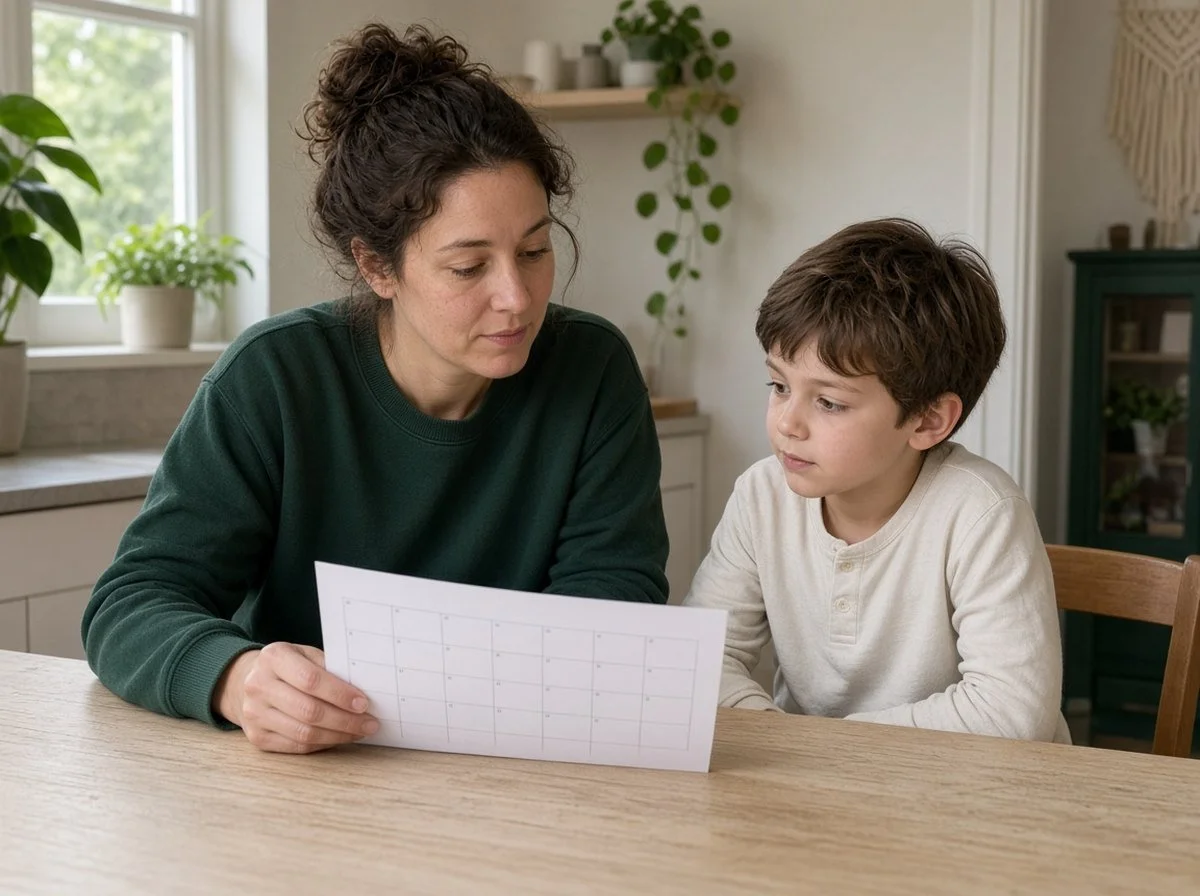
How someone becomes the default parent
There is no single cause. The role often grows out of habit. One parent may have taken parental leave, or stepped back at work, and then kept the mental calendar after that season ended. The parent with more flexible hours may be the one a school or a relative calls first. Someone may feel more judged if a form is missed, so they quietly take it on.
Unspoken expectations play a part too. Families and workplaces still often assume that one parent, frequently the mother, will be the backup plan. Over time, the children learn who to find, and the pattern settles in.
Statistics Canada research on how parents share child care shows that the load is often uneven, at least on average. In 2022, mothers spent an average of 7.5 hours a day caring for their children, while fathers spent 4.9 hours. Those figures come from the 2022 Time Use Survey. They count care tasks and other time when children aged 14 and under were present. They are averages, not a rule about your home.
Among parents in different-gender couples, about 55% said they shared at least half of child-care tasks equally. Fathers in that group were more likely to say sharing was equal (64%) than mothers were (46%). Two people in the same house can tell the story of the load quite differently.
A 2017 Statistics Canada release, based on 2015 time-use data, found that mothers provided 65% of the total hours spent helping and caring for children. That analysis looked at married or common-law parents, including same-gender couples, with at least one child aged 17 or under. Lone parents were not included in that study.
The default parent can be a mother, a father or a parent in any kind of family. The national averages are a backdrop, not a verdict on your household.
Becoming a parent also changes how you see yourself. Our article on matrescence looks at that identity shift. The default role can grow in the same stretch of life, when one person quietly becomes the organiser of the children’s world.
What it can cost you
Carrying the default can leave you resentful, even when you love your kids. Rest gets postponed. You may feel unseen, as if the noticing you do is invisible until something is missed. The couple relationship can get strained, because one person is always on and the other is not sure why the mood at home has changed.
Guilt often sits beside the resentment. You may feel guilty for wanting a break, or for snapping when you are tired. If guilt in the early years is part of what you are carrying, our article on mom guilt speaks to that feeling.
People sometimes talk about parental burnout when the exhaustion from caring for children runs very deep. Others talk about emotional labour, the invisible work of tracking everyone’s needs. Those ideas can help you name a heavier load. This article stays with the default itself: who is assumed to be in charge of the children.
If exhaustion, hopelessness or harsh thoughts about yourself or your child turn into thoughts of suicide or self-harm, or if you or a child is in danger, call or text 9-8-8 now, or call 911.
How to talk about sharing the load
A tense night is a hard time to change a long pattern. Choose a calmer hour. Start with the pattern, not a list of everything that went wrong last week.
Try a simple inventory of default tasks. Who books the dentist? Who tracks the school forms? Who is up at night? Who remembers the birthday parties and the weekly schedule? Write it down together if that helps you both see it. The point is not to prove you do more. The point is to make the invisible work visible.
Then ask for ownership, not a one-off favour. “Can you handle bedtime this week?” keeps you as the manager. “I would like you to own bedtime, including baths, pyjamas and the morning after if the night goes badly,” transfers the role.
Two short scripts you can adapt:
“I have become the person everyone comes to first, and I am worn down. I need us to move a few of these defaults, not just have extra help on busy nights.”
“Would you take the school forms from here on, including the deadline reminders? I do not want to be the backup person who still has to remember.”
Expect a clumsy start. New ownership includes the right to do the task a little differently, as long as the child is safe and the work is actually done.

If you parent on your own, or the other adult will not shift
If you parent on your own, you are the default by circumstance, not by failure. There may be no one to hand a form to at night. Counselling can still help with the load, and with the loneliness of carrying it.
If there is another adult in the home and they will not shift, you cannot force a change. Counselling can help you name the pattern, decide what you can change, and find a little more room to breathe. This is not a plan for leaving, and it is not legal advice. It is support for you while you work out what is possible.
How counselling can help
Parenting counselling and family counselling can give you a place to talk about the load without having to argue it out alone at the kitchen table. Couples counselling can help when both of you want a fairer way to share the children’s day. For online couples sessions, both partners need to be in Ontario during the session.
We offer counselling at our Kitchener-Waterloo, Cambridge and Ottawa offices and online across Ontario.
Your next step
If you are tired of being the one who is always on, book a free 15-minute consultation with our admin team. It is a chance to ask questions and see whether counselling is a good fit. Booking it does not commit you to ongoing sessions. The call is not a therapy session or a crisis service.
If you or someone you love is in immediate danger, call 911. If you are thinking about suicide, call or text 9-8-8, any time.
Last reviewed: November 2026