
Anxiety has a way of taking over. Your heart races before a meeting, your mind replays every worst case at 2 a.m., and you start avoiding things you used to handle just fine. The good news is that coping with anxiety is a skill, and skills can be learned. This guide shares 10 practical ways to cope with anxiety that therapists often teach in session, explained in plain language so you can start trying them this week.
These skills can help with everyday anxiety and worry. They are not a replacement for therapy, especially if anxiety is getting in the way of work, school, sleep or relationships.
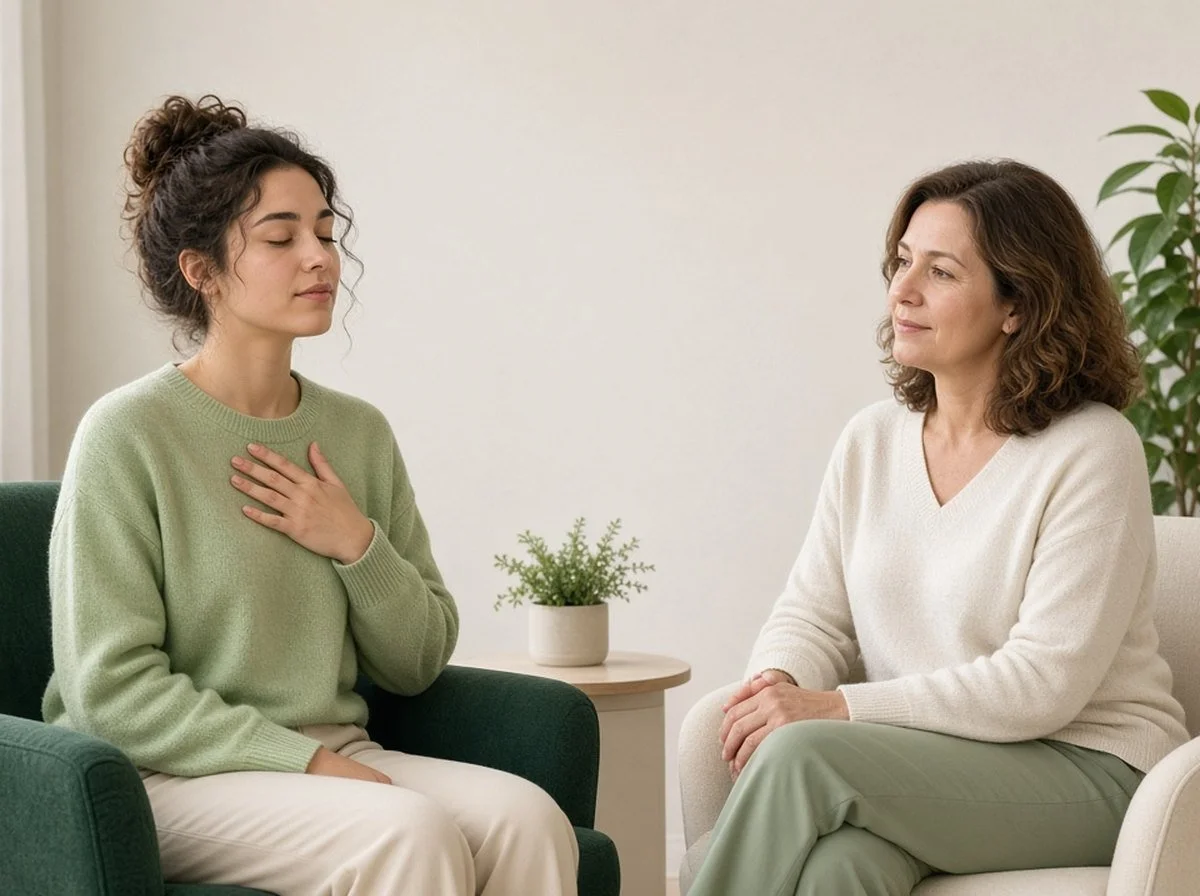
First, what anxiety is trying to do
Anxiety is your body's alarm system. When it senses danger, it gets you ready to act: your heart beats faster, your breathing speeds up and your mind scans for threats. That's helpful if a car is heading toward you.
The problem is that the alarm can go off when there is no real danger, or stay on long after the danger has passed. You can't switch anxiety off completely, and you wouldn't want to. The goal is to turn the volume down and stop it from running your life. That's what the skills below are for.
Skills to calm your body
When anxiety hits, your body often reacts first. These skills work from the body up.
1. Slow your breathing, with a longer breath out
Breathe in gently through your nose for a count of four. Breathe out slowly through your mouth for a count of six. Keep going for a minute or two. A longer out-breath tells your body it's safe to slow down. Practise when you're calm, so it's easier to use when you're not.
2. Ground yourself with your senses
When your mind races ahead, bring it back to the room. Name five things you can see, four you can feel, three you can hear, two you can smell and one you can taste. It sounds simple, but it pulls your attention out of "what if" and into "what is."
3. Relax your muscles on purpose
Anxiety often lives in tight shoulders, a clenched jaw or a knotted stomach. Try tensing one muscle group for five seconds, then letting it go. Work your way from your feet up to your face. Notice the difference between tense and relaxed.
Skills to work with your thoughts
Anxious thoughts can feel like facts. These skills help you step back and look at them.
4. Name the feeling
Simply saying "I'm feeling anxious right now" can create a little distance. You are noticing the feeling, not drowning in it. Some people find it helps to rate it from 0 to 10 and watch the number change.
5. Catch thinking traps
Anxiety loves certain patterns, like jumping to the worst case, predicting the future or assuming you can't cope. When you notice a worried thought, ask: What's the evidence? What would I tell a friend who thought this? What's a more balanced way to see it? This is a core part of cognitive behavioural therapy (CBT).
6. Set a daily worry time
Pick a 15-minute window each day to worry on purpose. When a worry pops up at other times, jot it down and tell yourself, "Not now, later." Many people find their worries feel smaller by the time worry time comes. If you tend to replay the same thoughts over and over, our guide on how to stop ruminating goes deeper.

Skills to change what you do
What you do when you're anxious can either feed anxiety or shrink it. These skills focus on actions.
7. Face fears in small steps
Avoiding what scares you brings quick relief, but it teaches your brain that the thing really was dangerous. Over time, the list of things you avoid can grow. Instead, make a ladder. Start with a small step that feels a little uncomfortable, stay with it until the anxiety settles, then move up one rung. Therapists call this exposure, and it's often done with support.
8. Drop your safety behaviours
Safety behaviours are the little things you do to feel less anxious, like checking over and over, always sitting near the exit or rehearsing every sentence. They help in the moment, but they keep anxiety going because you never learn you would have been okay without them. Try letting go of one at a time.
9. Make room for the feeling
Fighting anxiety can make it louder. Acceptance-based skills invite you to let the feeling be there, like a wave, while you keep doing what matters to you. You might say, "Here's anxiety again. I can feel this and still go to the meeting."
10. Look after the basics
Anxiety is harder to manage when you're running on empty. Aim for regular sleep, meals and movement. Notice whether caffeine or alcohol makes your anxiety worse, since both can affect sleep and mood. Spend time with people who help you feel steady. These aren't cures, but they give every other skill a better chance to work.
Putting the skills into practice
You don't need to use all 10 at once. Pick one or two that fit your life and practise them daily for a couple of weeks. Skills work best when they become habits, not just emergency tools.
It also helps to notice what's working. A quick note on your phone, like "Tried breathing before the call, anxiety went from 7 to 5," can show you progress you might otherwise miss.
If your anxiety comes in sudden waves with a pounding heart and a feeling of losing control, you may be having panic attacks. Our guide on how to stop a panic attack walks through what to do in the moment.
When to get help for anxiety
Self-help skills are a great start, but sometimes anxiety needs more support. Consider reaching out if:
Anxiety is affecting your work, school, sleep or relationships
You avoid more and more places, people or tasks
You have panic attacks or feel on edge most days
You rely on alcohol or other substances to calm down
You've tried these skills and still feel stuck
In therapy, a therapist can help you understand what's driving your anxiety, tailor these skills to you and support you as you face the hard parts. Learn more about our anxiety therapy. If a diagnosis would help, our psychologists can assess, and our nurse practitioners can diagnose and talk with you about medication.
We see clients in person in Waterloo, Kitchener, Cambridge and Ottawa, and online across Ontario, with evening and weekend appointments. No referral is needed. Individual sessions with our therapists are $130 to $200, and student therapist sessions are $0 to $80.
If anxiety ever comes with thoughts of suicide or harming yourself, call or text 9-8-8 at any time, or call 911 in an emergency.
Frequently asked questions
Is it normal to feel anxious?
Yes. Everyone feels anxious sometimes, and a little anxiety can even help you prepare or stay safe. It becomes a problem when it's intense, lasts a long time or keeps you from living the way you want.
Why do I feel worse when I first try these skills?
Paying close attention to anxiety can make it feel bigger at first, and facing fears is uncomfortable by design. That usually means you're doing the work, not doing it wrong. A therapist can help you adjust the pace.
Can anxiety go away for good?
For many people, anxiety becomes much more manageable, even if it still shows up now and then. The aim is not to never feel anxious again. It's to feel confident that you can handle it when it does.
You can feel calmer than this
Anxiety can feel permanent, but it's something many people learn to manage. Book a free 15-minute consultation to talk with our team about what you're dealing with and find a therapist who fits.
Last reviewed: October 2026
Sources
Anxiety Disorders, CAMH
Relaxation Techniques: What You Need To Know, National Center for Complementary and Integrative Health (NIH)
Efficacy of exposure versus cognitive therapy in anxiety disorders: systematic review and meta-analysis (BMC Psychiatry, 2011), peer-reviewed, via NIH PubMed Central