
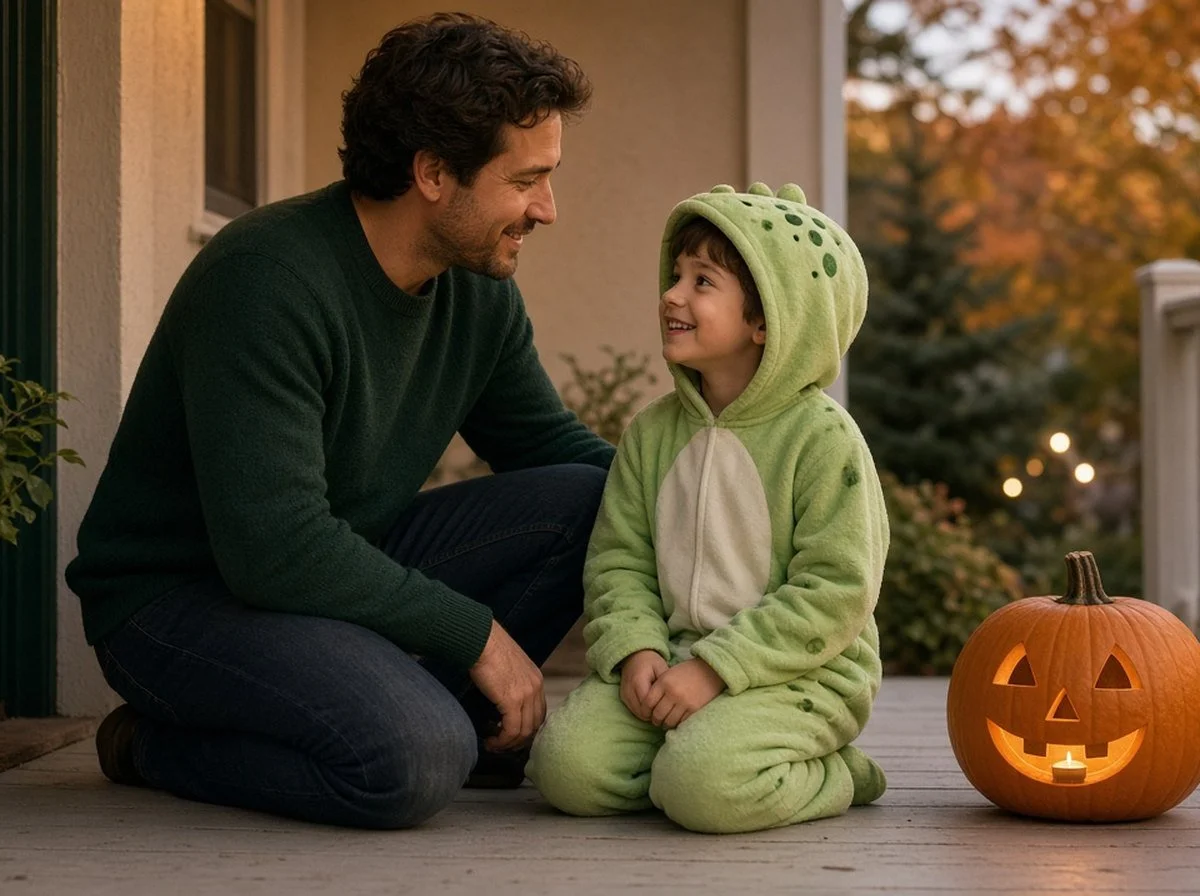
The decorations go up, the costume aisle appears and your child suddenly wants nothing to do with any of it. Maybe they hide behind you when a neighbour's inflatable moves, or they cry at the sight of a mask. If you have a child scared of Halloween, you're not doing anything wrong, and neither are they. This guide explains why Halloween can feel so scary to kids, how to prepare, what to say, how to handle the night itself and when a fear might need more support.
This post is general information, not a diagnosis or a treatment plan.
Is it normal for kids to be scared of Halloween?
Is it normal for kids to be scared of Halloween? For many children, yes. Fear is a normal part of growing up, and what children fear tends to change with age.
A parent handout in Paediatrics & Child Health, the journal of the Canadian Paediatric Society, notes that children aged 3 to 5 often fear imaginary dangers, because they have trouble separating real from pretend, and that fear of the dark or of a mask covering a familiar face is common. It adds that school-aged children's fears tend to be more reality-based, and that many fears fade as understanding matures.
So a toddler scared of Halloween is usually right on track for their age. Older kids can be frightened too, especially by gory displays or sudden scares. Kids getting scared of Halloween isn't a sign that something is wrong. It's a sign they're taking in a lot.
Why Halloween can feel so scary to a child
From a child's point of view, Halloween turns the familiar world upside down. Some common reasons kids are scared of Halloween:
Masks and hidden faces. A familiar person can suddenly look like a stranger, which can be unsettling.
Sudden sounds and movement. Decorations that cackle, light up or jump out can startle anyone.
The dark. Trick-or-treating usually happens after sunset, when shadows look bigger.
Crowds and busyness. Lots of people, noise and excitement can be overwhelming.
Scary imagery. Some displays and costumes are designed to frighten, and kids can't always tell they're pretend.
Stories from others. Older kids or siblings may share spooky tales that stick.
A child scared of Halloween costumes may be reacting to just one of these, or several at once.
Getting ready before the night
A little preparation can make Halloween feel more predictable. Some ideas:
Preview in daylight. Walk past decorations during the day, when they look less spooky. Talk about how they're made.
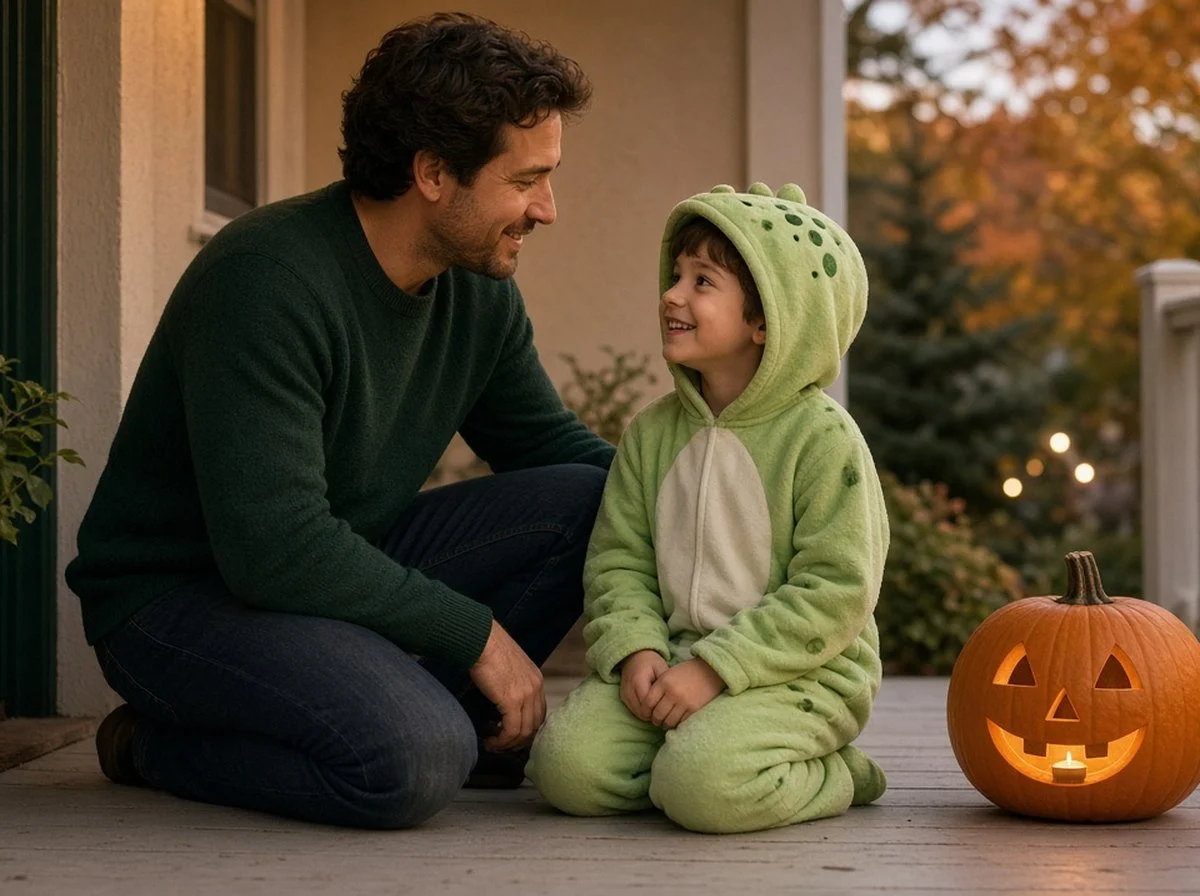
Try on costumes at home. Let your child see a family member put on and take off a costume, so they know the person is still there.
Let them choose. A not-scary costume, like an animal, a superhero or a favourite character, is a perfectly good choice.
Pick the route together. Choose a short, familiar loop, and decide in advance which houses feel friendly.
Agree on a signal. A special word or hand squeeze means "I want to go home now," no questions asked.
Plan an alternative. A cozy night handing out treats or watching a gentle movie at home is a fine way to celebrate too.
Kids scared of Halloween decorations often feel braver when they know what to expect.
What to say, and what to skip
How you respond to the fear matters as much as the plan.
Try:
"That mask looked really scary. It's okay to feel scared."
"I'm right here with you."
"We can look from far away, or we can skip that house. You choose."
"You were brave to walk past that, even though you felt nervous."
Skip:
"There's nothing to be scared of." The fear feels real to them.
Teasing or laughing at the fear, even kindly.
Forcing them to touch, approach or stay near something scary.
Comparing them to braver siblings or friends.
Validating the feeling doesn't make the fear bigger. It helps your child feel safe enough to try.
On the night: small brave steps
On Halloween itself, aim for small wins rather than a perfect night:
stay close and hold hands if they'd like
go out early, while it's still a little light
start with a few houses you know well
let them watch from the sidewalk while you go to the door, if that feels better
leave whenever they want to, without disappointment
Celebrate what they did, not what they didn't. "You went to three houses!" is a real accomplishment for a nervous child. Gentle, gradual steps help build courage. Pushing too hard, too fast, can make a fear stronger.
After Halloween: talking it through
The next day, take a few minutes to talk about the night. What was fun? What felt scary? What helped? Drawing a picture of their costume or the friendliest house can help younger kids make sense of it. These small chats show your child that scary feelings can be talked about, and that they got through it.
When siblings or friends love the scary stuff
Some families have one child who loves spooky costumes and one who wants to hide. You can make it work for both. Ask the brave sibling to save the scariest costume parts for later in the evening, or for a party where the nervous child isn't present. Split up if you have two adults, so each child gets a night that suits them. And talk with both kids about being kind to each other's feelings.
Why forcing it usually backfires
It can be tempting to push a child through the fear, especially if you're worried they'll miss out. But forcing a frightened child to face something scary often teaches them that the scary thing really is dangerous, and that their feelings won't be listened to. Avoidance isn't the answer either, because it can keep fears going over time. The middle path is small, chosen steps, with you close by.
If the fear spreads beyond Halloween
Halloween fears usually fade once the decorations come down. Sometimes, though, a scary moment lingers. You might notice nightmares, trouble sleeping, new fears of the dark or avoiding places linked to what frightened them.
If the fear lasts for weeks or spreads to other parts of life, keep responding the same way: name the feeling, stay calm and encourage small, chosen steps. Parents sometimes need support too. Our counselling for parents page explains how sessions can help you feel more confident handling worries at home.
When to get support for an anxious child
It may be worth reaching out if your child's fears:
are very intense or last long after Halloween
stop them from sleeping, going to school or seeing friends
seem to be growing rather than fading
leave you feeling stuck or unsure how to help
We offer counselling for children 6 and up at our Kitchener-Waterloo, Cambridge and Ottawa offices and online. A child therapist can help your child understand their worries and build brave skills, and help you support them at home. Our post on choosing a child therapist in Ottawa has tips for finding a good fit, wherever you live.
Sessions with our therapists range from $130 to $200, depending on the clinician.
Depending on your plan, insurance may cover some or all of the cost. Coverage varies, so check your plan.
We accept Health Spending Accounts (HSAs).
We can direct bill many insurers, including for sessions with a Registered Psychotherapist (Qualifying). Desjardins is the exception: through TELUS eClaims, we can direct bill Desjardins for sessions with an RSW, RP or psychologist, but not for an RP (Qualifying).
Book a free 15-minute consultation with our admin team. Tell them a little about your child and what you're noticing.
If you're in crisis: if you're worried about a child's safety or anyone is in immediate danger, call 911. For thoughts of suicide or self-harm, call or text 9-8-8 any time. More options are on our crisis lines page.
Halloween can be fun again, at your child's pace.