
Box breathing is a simple breathing pattern you can use when stress or anxiety starts to climb. You breathe in, hold, breathe out and hold again, usually for the same count each time. This article explains how to do it, when it may help, and what the research does and does not show.
It is a coping skill, not a cure. For many people, it is one more way to give the body a steady rhythm when thoughts are racing.
What is box breathing?
Box breathing is also called square breathing. The “box” is just a way to remember four equal sides: in, hold, out, hold. Many people use a count of four, but the number matters less than keeping the pace gentle and even.
The idea is to slow and even out your breath, without straining. You are not trying to breathe as deeply as possible. You are giving your attention something simple to follow, and giving your body a chance to settle.
How to do box breathing, step by step
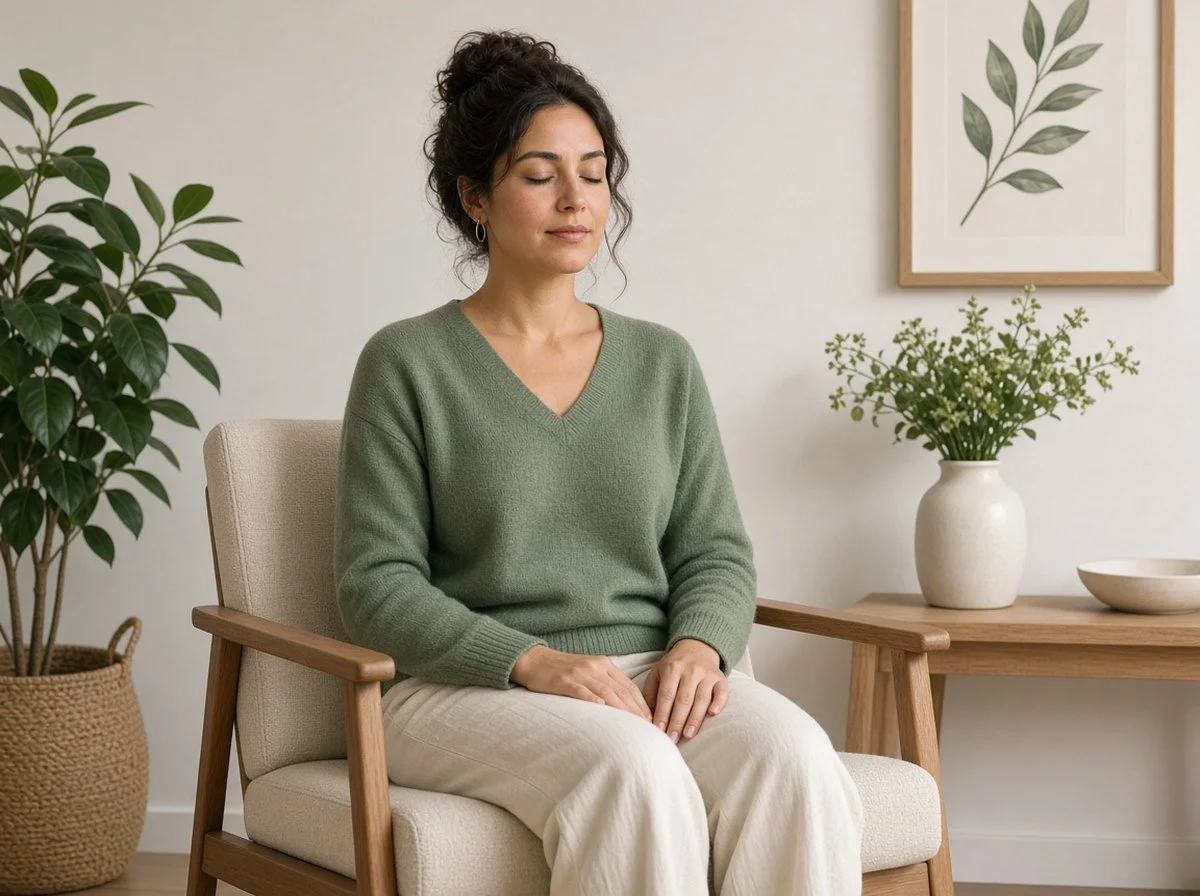
You can practise this sitting or standing, in a quiet place if you have one. Keep your shoulders soft. Breathe in a way that feels comfortable, not forced.
Cleveland Clinic describes a simple version like this:
Breathe out fully, to clear the breath you are already holding.
Breathe in through your nose for a count of four.
Hold your breath for a count of four.
Breathe out for a count of four.
Hold again for a count of four.
Repeat for three or four rounds.
Breathe gently. Do not strain or tighten your neck and chest to hit the count. If a count of four feels like too much, use a count of three, or skip the holds and just even out the in-breath and the out-breath.
When box breathing can help
People often use box breathing when they notice stress building, before a hard conversation, or when anxiety is starting to rise. It can also be useful at night if your mind is busy and your body has not caught up to bedtime.
It works best as a skill you have already practised in calmer moments. Cleveland Clinic notes that working on the pattern when you are not already overwhelmed can make it easier to use when you are. A short daily practice, once or twice a day, is enough for many people to learn the rhythm.
Box breathing will not fix the situation that is stressing you. It may help you feel steady enough to take the next step, whether that is a conversation, a pause or going back to what you were doing.
Some people also use it at a desk, before a meeting, or after a hard phone call. You do not need a special room. You only need a minute or two, and a count you can keep without strain. If you are in a public place, you can do the pattern quietly, with your eyes open.
Tips if it feels uncomfortable
Some people feel dizzy, light-headed or tingly when they first try breath holds. If that happens, stop. Return to easy, normal breathing. You can try again later with a shorter count, or with no holds at all.
Stay at a comfort level that feels safe for you. If focusing on your breath makes anxiety worse, switch to something else, such as feeling your feet on the floor or naming objects in the room. Our post on grounding techniques for anxiety has other options that do not rely on breath holds.
You do not have to do this perfectly. A few gentle rounds are enough. More is not always better. If you lose the count, start again at the in-breath. There is no need to start over from the beginning of the day, or to treat a missed round as a failure.
Box breathing and other calming skills
Box breathing is one tool among many. Slow breathing, a short walk, a cool splash of water or a grounding exercise can all help the same system settle. What works can change from day to day.
If you want a wider set of body-based options, our post on how to calm your nervous system collects several practices in one place. If anxiety tends to show up after dark, anxiety at night looks at that pattern in more detail.
Use whatever helps you come back to the present, and drop what does not.
What the research does and does not show
Breathing exercises are widely used for stress and anxiety, and many people find them helpful. That does not mean every method has been proven to work the same way.
In a 2023 study, researchers compared three short daily breathwork practices with a mindfulness exercise over one month. The breathwork practices included box breathing, cyclic sighing and another pattern with a faster pace and a hold. Overall, the breathwork groups reported a greater improvement in mood, and a greater drop in breathing rate, than the mindfulness group. The standout pattern in that study was cyclic sighing, which emphasizes a longer exhale, not box breathing.
This is early research, not a promise. Box breathing was one of the methods tested. It was not shown to be the best of the three. It is a coping skill, not a treatment or a cure, and it is not a replacement for counselling or other care when you need that support.
Box breathing also should not be treated as a medical treatment for blood pressure, heart rate or other health conditions. If a breathing practice makes you feel worse, stop. You can use a different calming skill, or talk with a counsellor about what would fit you better.
Can children use box breathing?
Some children aged 6 and older can use a simple version of box breathing, especially if a parent or caregiver practises it with them in a calm moment first. Keep the count short. Make it optional. Stop if the child feels dizzy, silly in an uncomfortable way, or more upset.
Do not force a child to “calm down” with a breathing exercise in the middle of a big feeling. The skill is more likely to help if it is familiar, and if the child can choose it.
How counselling can help
If stress or anxiety keeps taking over, counselling can help you understand the pattern and build a wider set of skills than breathing alone. Box breathing can be one tool you bring into that work. It does not have to be the only one.
A counsellor can also help you notice when a breathing exercise is useful, and when the anxiety needs a different kind of support. If panic, trauma or ongoing worry is getting in the way of daily life, you do not have to keep handling it with a four-count breath on your own.
We offer counselling at our Kitchener-Waterloo, Cambridge and Ottawa offices and online across Ontario.
If you are thinking about suicide or hurting yourself, call or text 9-8-8 now. If you or someone else is in immediate danger, call 911.
Your next step
If stress or anxiety is getting hard to manage on your own, you can book a free 15-minute consultation with our admin team. It is a chance to ask questions and see whether counselling is a good fit. Booking it does not commit you to ongoing sessions. The call is not a therapy session or a crisis service.
If you or someone you love is in immediate danger, call 911. If you are thinking about suicide, call or text 9-8-8, any time.
Last reviewed: November 2026