
Bright lights, loud music, new foods, crowded rooms and a schedule that changes every day. For many people, that sounds like the holidays. For many autistic kids and adults, it can also sound exhausting. The season can bring real joy, but it often asks a lot of a nervous system that processes the world differently. A little planning can make room for both the fun and the rest.
This post is general information, not a diagnosis or medical advice. Every autistic person is different, so take what fits and leave the rest. We use identity-first language here ("autistic person"), but the best language is the one the autistic people in your life ask you to use.
Why the holidays can be hard for autistic people
Autism is a lifelong neurodevelopmental difference. Autistic people may communicate and connect in different ways, have sensory processing differences, and focus deeply on things they love (see Sources). None of that is a problem to fix. But the holidays tend to pile on exactly the things that can be hard:
more noise, lights, smells and people than usual
breaks from school, work and daily routines
long visits, travel and late nights
social rules about greetings, hugs, gifts and small talk
pressure to look happy and act "normal"
Any one of these might be fine on its own. Together, over several weeks, they can add up fast. A child who seems "fine" at the party may fall apart at home afterward. An adult may get through the big dinner and then need days to recover. That's not bad behaviour or ingratitude. It's often a sign that someone has been coping with a lot.
Sensory load during the holidays
A review of 35 studies found that most autistic adults are very sensitive to at least some kinds of sensory input, and many try to avoid it. The same review described a stress cycle: stress can make sensory sensitivity stronger, which then adds more stress (see Sources).
You can lower the sensory load without skipping the season:
Dim things down. Choose steady lights instead of flashing ones, and keep one room in the house calm and quiet.
Turn the volume down. Keep background music low, or have a music-free time of day.
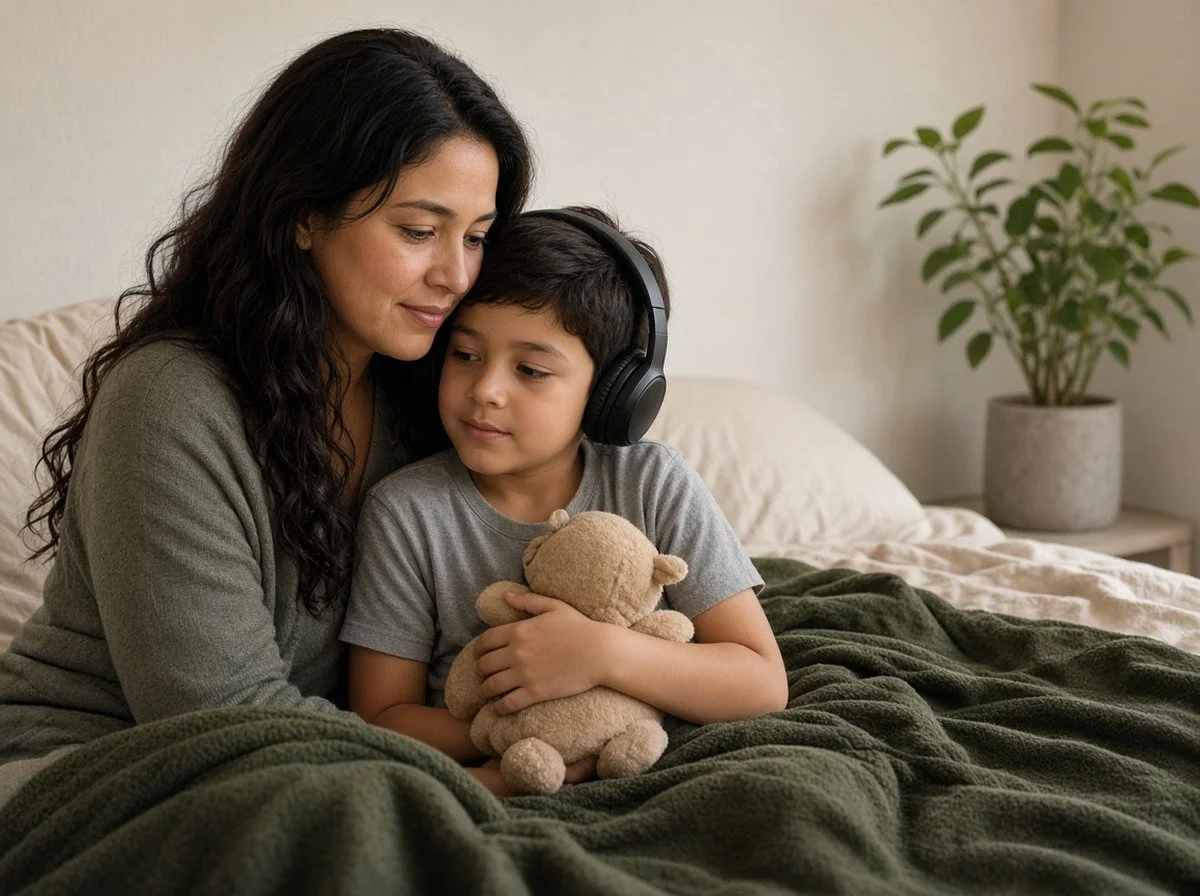
Bring comfort items. Headphones, ear defenders, sunglasses, a favourite hoodie or a fidget can travel anywhere.
Mind the smells. Scented candles and strong cooking smells can be a lot. Open a window or skip the candles.
Let clothes be comfortable. A soft favourite shirt is better than a scratchy holiday sweater.
Stimming, like rocking, flapping or humming, can help autistic people calm and regulate. The review found that hiding these behaviours, often called masking, can be stressful (see Sources). If you can, make your home a place where stimming is welcome.
When routines change
School breaks and holiday travel can turn a familiar day upside down. For many autistic people, knowing what comes next brings a sense of safety. When that disappears, anxiety often goes up.
A few ideas can help:
Preview the plan. Talk through the week ahead, or make a simple picture or written schedule.
Keep some anchors. Try to keep wake-up time, meals or a bedtime routine close to normal.
Warn about changes early. "Grandma is coming on Saturday" is easier to handle on Wednesday than at the door.
Plan quiet days. Put a rest day between busy ones, if you can.
Leave space for "no". Not every event needs a yes.
For autistic adults, the same ideas apply. You're allowed to keep your own routines during the holidays, even when others want to change them.
Planning family gatherings
Gatherings are often the hardest part. A little planning ahead can make them feel much more manageable.
Arrive early or leave early. Arriving before the crowd can feel easier than walking into a full room.
Find a quiet space. Ask the host ahead of time for a room where someone can take a break.
Agree on a signal. A word or gesture can mean "I need a break" or "I'm ready to go."
Have an exit plan. Decide in advance how and when you'll leave, so leaving early isn't a crisis.
Bring safe foods. It's okay to eat the same foods as always. Bring them along if needed.
Skip forced greetings. A wave or a high five can replace hugs and kisses.
You may also need to talk with relatives ahead of time. A short message can help: "Sam enjoys family time but gets overwhelmed by noise. If he heads to the quiet room, that's how he takes care of himself. Please let him be." Our post on setting boundaries with family during the holidays has more scripts for hard conversations.
Gifts and unwrapping without pressure
Gift time can be loud, surprising and full of expectations. Many autistic people find it hard to fake a reaction, or they need time to understand how they feel about something new.
Some ideas:
Open gifts in a smaller group, or at a different time.
Let the person open gifts at their own pace, or not at all that day.
Don't expect a big reaction or an instant thank you.
Share wish lists with relatives, so gifts are a good fit.
Leave tags or let the person know what is in the box ahead of time if surprises are hard.
If you're looking for ideas, our gift guide for autistic adults has suggestions that respect sensory needs and special interests.
If you are an autistic adult
Many autistic adults spend the holidays caring for others or hiding their own needs to keep the peace. You might be the host, the parent, or the one who travels. You still deserve rest.
It can help to:
plan alone time each day, even if it's just a short walk
tell one trusted person what you need ahead of time
limit the number of events you go to
say no without long explanations
bring headphones and use them without guilt
If you notice signs of burnout, like deep exhaustion, losing skills you usually have, or needing to pull away from everything, that's a signal to slow down. Our post on autistic burnout talks more about what it looks like and how to recover.

After the big day
The days after a big event can be just as important as the event itself. Many autistic people need recovery time to process everything that happened.
Plan a quiet, low-demand day after a big gathering.
Let kids rest in whatever way calms them.
Expect that sleep, mood or eating may be off for a few days.
Notice what went well, and what you might change next year.
Try not to judge a hard moment too harshly. A meltdown or shutdown after a holiday event is often a sign of overload, not a sign that you or your child did something wrong.
How counselling can help
If you are thinking about suicide or hurting yourself, call or text 9-8-8 now. If you or someone else is in immediate danger, call 911.
Counselling can be a space for autistic people and their families to plan for hard seasons, process stress and feel more understood. We offer autism-affirming counselling for adults, teens, children and families. That means we respect autistic ways of being and focus on what helps you, not on making anyone look less autistic.
In counselling, you might:
plan ahead for gatherings, travel and routine changes
talk through anxiety, sensory overload or burnout
learn ways to explain your needs, or your child's needs, to family
work through stress or conflict at home
find ways to rest without guilt
Clinicians on our team with autism experience include:
We offer autism-affirming counselling at our Kitchener-Waterloo, Cambridge and Ottawa offices, and online across Ontario. Our Ottawa clinicians also support autistic children, teens and their families.
On the practical side, we can direct bill many insurers, including for sessions with a Registered Psychotherapist (Qualifying). Desjardins is the exception: through TELUS eClaims, we can direct bill Desjardins for sessions with an RSW, RP or psychologist, but not for an RP (Qualifying). Coverage depends on your plan, so check with your insurer before you start.
Book a free 15-minute consultation with our admin team. "I want help planning for the holidays" is enough to start.
If you're in crisis: if you or someone you love is in immediate danger, call 911. If you are thinking about suicide, call or text 9-8-8, any time.
The holidays don't have to look like anyone else's. A calmer plan, a quiet room and permission to rest can make the season feel more like your own.
Last reviewed: October 2026
Sources
Public Health Agency of Canada, Autism: Overview
Collis E, Dark E, Russell A, Brosnan M. Self-Report of Restricted Repetitive Behaviors in Autistic Adults: A Systematic Review. Autism in Adulthood, 2024;8(1):47-67