
An attachment injury is a hurt that happens when a partner is not there, or betrays trust, at a moment when you really needed them. Researchers in emotionally focused therapy use the term for this kind of relationship wound. It is not a diagnosis. Some couples work on repair in counselling, though repair is never guaranteed.
This article explains what an attachment injury is, examples beyond affairs, why the hurt can linger, signs it is still between you, and how couples counselling in Ontario can support a repair process.
What is an attachment injury?
In 2001, Johnson, Makinen and Millikin described an attachment injury as a moment when one partner violates the expectation that the other will offer comfort and care in a time of danger or distress. It can be an abandonment, or a betrayal of trust, at a critical moment of need.
The event is not only “a bad memory.” It can become a recurring theme in the relationship. It can start to feel like proof of whether you can depend on your partner. That is why a hurt from years ago can still arrive, fresh, in an ordinary argument.
This is a relationship wound, not a medical diagnosis. You do not need the term to take the hurt seriously. The name is simply a way to talk about a specific kind of break in trust.
Examples of attachment injuries
Affairs are one example, and they are not the only one. People also describe hurts like these:
a partner who was absent during a miscarriage, an illness or a death
having your fear dismissed during a crisis
a partner siding with family at a moment that really mattered
a cruel comment made when you were already vulnerable
The details vary. The common thread is that you needed comfort, protection or honesty, and what you got instead left a mark. Two couples can live through similar events and only one will experience it as an attachment injury. What matters is the meaning the moment took on between you. If trust has been shaky for a while, our post on trust issues in relationships may be useful alongside this one.
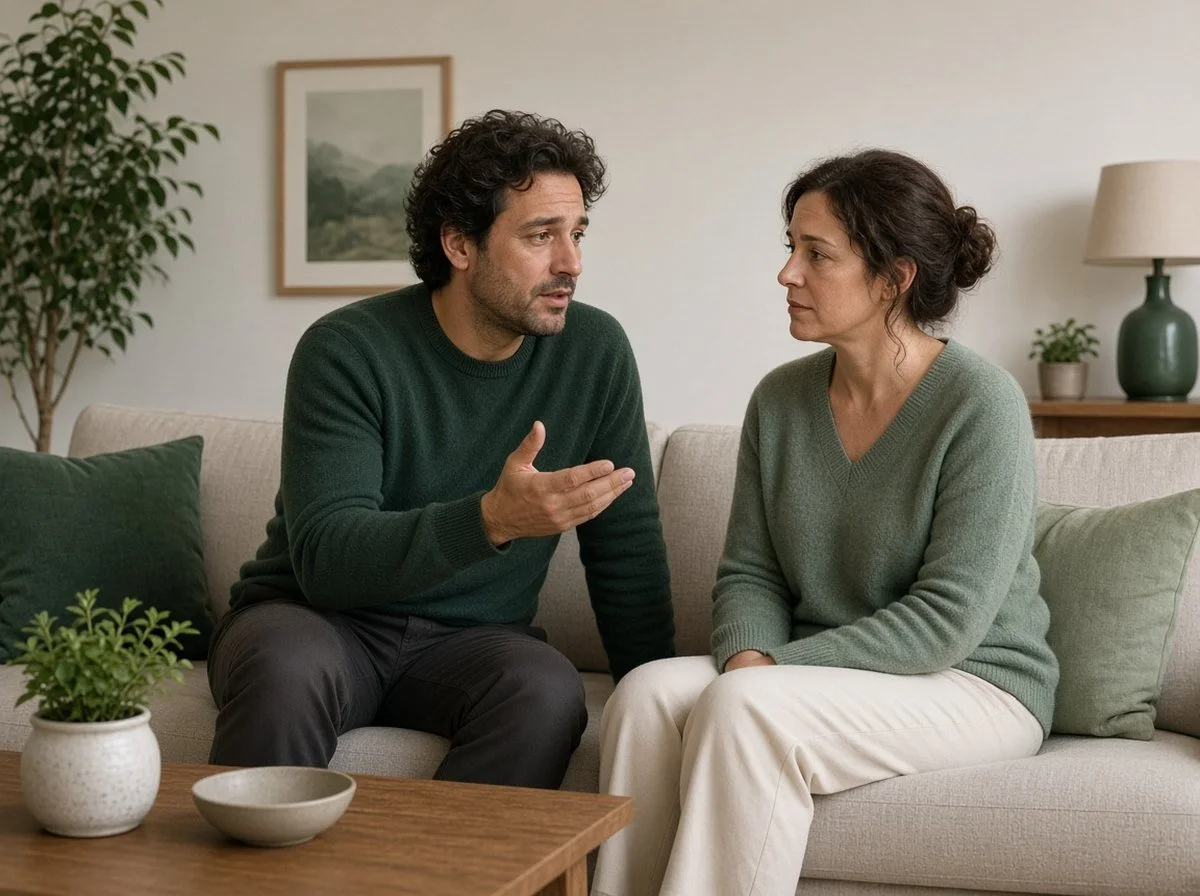
Why some hurts do not fade with time
Many everyday hurts fade after an apology and a little time. An attachment injury can linger because it touches whether you feel safe depending on this person. Johnson and colleagues noted that the incident can become a standard for judging the other partner’s dependability. It can also block closeness until it is faced.
New arguments can reopen the old scene. A late text, a cancelled plan or a distracted look may not be about today at all. They may touch the original question: “Will you be there when I need you?” Until that question is taken seriously, advice to “just move on” often lands as another dismissal. Time alone does not always close the wound. What often helps is a new experience of being met, in the present, about what happened then.
Signs an old hurt is still between you
These signs are descriptions, not a test.
the same event comes up in fights that seem to be about something else
the hurt partner keeps testing, watching or asking for proof
the other partner feels stuck, defensive or hopeless, as if nothing they do is enough
closeness starts, then stops, around the same sore point
Either partner can feel exhausted. The hurt partner may feel unseen. The other partner may feel they are being tried for a crime they cannot undo. Both experiences can be true at once. The relationship can still have love in it and still feel unsafe around this one point. Those two facts can sit together for a long time.

How couples repair an attachment injury
If you feel afraid of your partner, or there is violence, threats or control, couples counselling may not be the right first step. Individual counselling can help you think about safety, and if you are in danger, call 911.
When it is safe to work together, emotionally focused therapy describes a repair process in careful steps. In a 2006 study, Makinen and Johnson outlined that process. In plain words, it often looks like this. The hurt partner describes the injury and what it meant, not as a calm report but as something that still matters. The other partner is invited to stay present and understand, rather than defend or minimize. When that starts to land, the hurt partner can share the deeper fear or grief underneath. The other partner can then take responsibility and offer a sincere, caring response. Later, the hurt partner may risk asking for the comfort that was missing at the time.
That is a process some couples work through in counselling. It is not a promise that forgiveness will happen, or that the relationship will recover. Some couples stay together and grow closer. Some do not. This article will not tell you which path to take.
What each partner can do
If you are the hurt partner, it can help to name the need under the anger. Anger often protects a more tender question: “Did I matter to you in that moment?” Sharing that question is hard. It is also often what makes a real response possible.
If you are the other partner, listening without minimizing is a first step. You do not have to agree with every detail to stay present. A sincere apology matters more than a perfect explanation. Our post on how to apologize to your partner looks at how to do that without slipping into defensiveness or a rushed “I’m sorry, can we drop it?”
These are starting points, not a script that guarantees repair. Hard conversations are safer with support when the hurt is this deep. You do not have to do this perfectly, and you do not have to do it alone.
If you are thinking about suicide or hurting yourself, call or text 9-8-8 now. If you or someone else is in immediate danger, call 911.
How couples counselling can help
Emotionally focused couple therapy is designed to work with this kind of wound. Couples sessions can happen in person or online. For an online session, both partners need to be in Ontario during the appointment. If a partner will not attend, individual counselling can still help you think through the hurt and your next steps. You can get support even when the relationship is still uncertain. Clarity about the hurt can help, whether you stay, go or have not decided yet. That kind of clarity can matter a great deal. This is still not advice to choose one of those paths for you.
A counsellor will not promise an outcome. They can help you slow the cycle down and make room for a more honest conversation, if and when both of you want that. We offer counselling at our Kitchener-Waterloo, Cambridge and Ottawa offices and online across Ontario.
Your next step
If one hurt keeps coming back between you, you can book a free 15-minute consultation with our admin team and talk about what support could look like. It is a chance to ask questions and see whether counselling is a good fit. Booking it does not commit you to ongoing sessions. The call is not a therapy session or a crisis service.
If you or someone you love is in immediate danger, call 911. If you are thinking about suicide, call or text 9-8-8, any time.
Last reviewed: November 2026