
You want to believe your partner. They've given you no real reason to doubt them, yet your mind keeps filling in the blanks with the worst. Or maybe there was a real betrayal, and now you're both trying to find your way back. Either way, trust issues in relationships are exhausting, and they're more common than you might think. The good news is that trust can be understood, and in many cases, rebuilt.
This post is general information, not a diagnosis. Only a qualified professional can assess what you're experiencing.
What are trust issues in relationships?
Trust is your sense that a partner is dependable and that the relationship has a future. In a review of attachment and trust, psychologists Lorne Campbell and Sarah Stanton describe trust as perceptions of a partner's dependability and faith in the future of the relationship.
Trust issues are what happens when doubt runs ahead of the evidence. You might know, logically, that your partner is reliable, but your body and mind still brace for disappointment. Sometimes those doubts are echoes of the past. Other times they're a reasonable response to something that really happened in this relationship.
Both situations deserve care, but they call for slightly different kinds of repair, which we'll look at below.
Where trust issues come from
Trust issues rarely appear out of nowhere. They often grow from earlier experiences that taught you people might not be there when you need them. Common roots include:
a past partner who cheated, lied or left suddenly
growing up around conflict, unpredictability or broken promises
parents separating in a way that felt painful or confusing
being let down by friends or family at important moments
attachment patterns that make closeness feel risky
Research suggests these experiences can matter. In a small, preliminary study of 131 university students, Yılmaz and colleagues found that people whose parents had divorced, or who had been through a breakup themselves, reported lower trust in their current relationships. Anxious and avoidant attachment styles were also linked with lower trust. It was a small study, so it can't speak for everyone, but it fits what many people notice in their own lives.
If attachment styles are new to you, our post on anxious vs avoidant attachment explains them in plain words.
Signs of trust issues in a relationship
Trust issues can show up loudly or quietly. This isn't a test, but you might notice some of these signs of trust issues in a relationship or marriage:
Checking. You feel pulled to look at your partner's messages, social media or whereabouts.
Testing. You set up small tests to see if they'll prove their loyalty.
Expecting the worst. A late reply or a changed plan quickly turns into a story about betrayal.
Holding back. You keep part of yourself guarded, so it won't hurt as much if things go wrong.
Needing constant reassurance. Comfort helps for a moment, then the doubt returns.
Difficulty relying on your partner. You'd rather do everything yourself than risk being let down.
Partners of people with trust issues often feel accused or watched, even when they're doing their best. That can create a painful cycle where both people feel misunderstood.

Old wounds or a real breach? Trust issues after being cheated on
It helps to ask an honest question: is this doubt mostly about the past, or about something that happened here?
Old wounds. If your partner has been consistent and caring, your trust issues may come from past relationships or family experiences. In that case, much of the work is internal: noticing old fears and learning to respond to them differently.
A real breach. If your partner had an affair, lied about something important or wasn't there at a crucial time, your doubt is a natural response. Couples researchers call some of these moments attachment injuries. Susan Johnson and colleagues, who developed the idea within Emotionally Focused Therapy (EFT), describe an attachment injury as an abandonment or betrayal of trust during a critical moment of need. They note that the hurt can keep coming up and block repair until it's addressed directly.
If you're working through infidelity, our post on what happens in affair recovery counselling walks through that process step by step.
Many couples face a mix of both. A real breach can also stir up older wounds, which is one reason recovery can feel so intense.
How to overcome trust issues in a relationship
Rebuilding trust is a shared project, but each partner has a different role.
If you're the one struggling to trust:
notice when fear is driving your thoughts, and name it out loud
share the feeling underneath ("I'm scared") rather than the accusation
give credit when your partner follows through
work on old wounds that aren't about this partner
If you're the partner who broke trust:
take responsibility without defending or minimizing
be open and consistent, offering information before you're asked
stay patient with repeated questions, since healing isn't a straight line
show care through small, reliable actions over time
How long does it take? There's no set timeline. Trust usually grows back through many small moments of reliability, not one big gesture.
One important note: openness is not the same as surveillance. Checking a partner's phone, location or accounts, or having yours checked against your will, is not trust repair. If you feel afraid or controlled, call 911 if you're in danger, or call or text 9-8-8.
Some couples can rebuild trust on their own. Many find it easier with a neutral person in the room who can slow down hard conversations and keep them from turning into the same old fight.
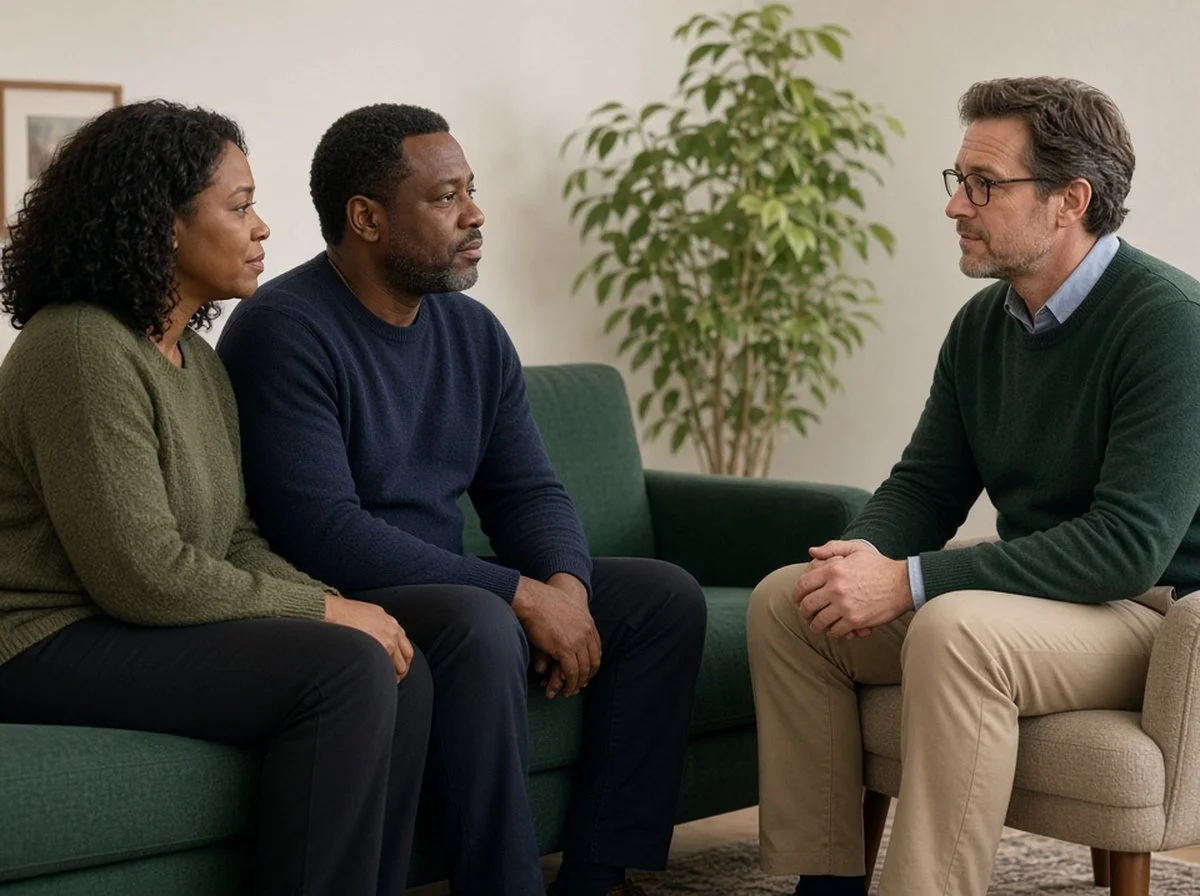
How couples counselling can help rebuild trust
Couples counselling gives both partners a safe space to talk about what happened and what each person needs now. A therapist can help you:
understand the cycle of doubt and defensiveness you get stuck in
talk about a betrayal in a way that leads toward repair, not more hurt
help the hurt partner feel heard and the other partner know how to respond
rebuild closeness step by step
Many of our therapists use approaches like Emotionally Focused Therapy, which focuses on the emotional bond between partners. You can learn more about our counselling for trust issues in relationships. If your trust issues come mostly from past experiences, individual counselling can help you work through those old wounds too.
We offer couples and individual counselling at our Kitchener-Waterloo, Cambridge and Ottawa offices, and online anywhere in Ontario, and you can choose in person together or online together. For online sessions, both partners need to be in Ontario.
On the practical side, we can direct bill many insurers, including for sessions with a Registered Psychotherapist (Qualifying). Desjardins is the exception: through TELUS eClaims, we can direct bill Desjardins for sessions with an RSW, RP or psychologist, but not for an RP (Qualifying). Coverage depends on your plan, so check with your insurer.
Not sure where to start? Book a free 15-minute consultation with our admin team, and we'll help you find a therapist who fits your situation.
If you're in crisis: if you or someone you love is in immediate danger, call 911. If you're thinking about suicide, call or text 9-8-8 any time, day or night.
Trust that's been shaken can feel impossible to rebuild. With patience, honesty and the right support, many couples find their way to a steadier connection.
Last reviewed: October 2026
Sources
Campbell L, Stanton SCE. Adult attachment and trust in romantic relationships. Current Opinion in Psychology, 2019;25:148-151
Yılmaz CD, Lajunen T, Sullman MJM. Trust in relationships: a preliminary investigation of the influence of parental divorce, breakup experiences, adult attachment style, and close relationship beliefs on dyadic trust. Frontiers in Psychology, 2023;14:1260480
Johnson SM, Makinen JA, Millikin JW. Attachment injuries in couple relationships: a new perspective on impasses in couples therapy. Journal of Marital and Family Therapy, 2001;27(2):145-55 (PubMed 11314548)