
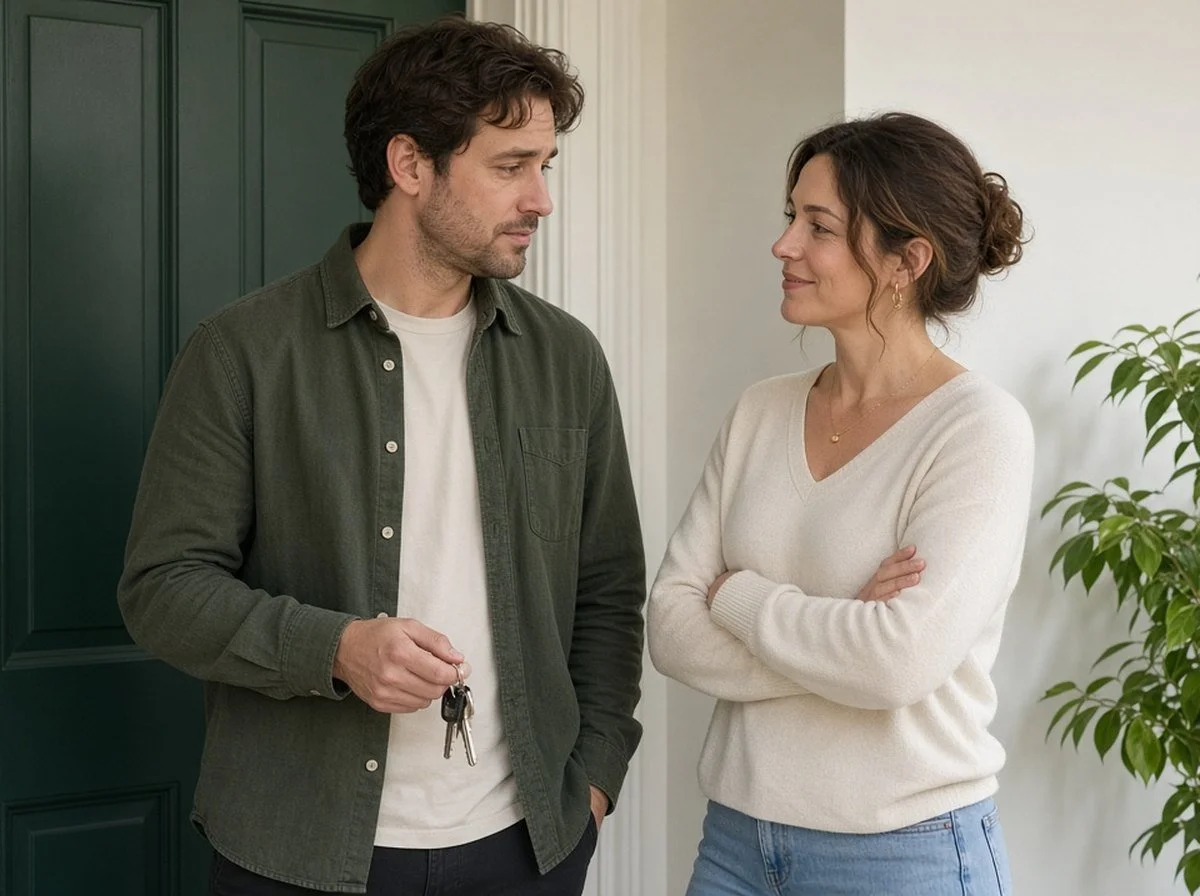
The supermarket at the end of your street is four minutes away. You drive twenty minutes to a different one, because that one has a second exit at the far end of the building and a car park you can see out into from most of the aisles.
Nobody has ever asked why. If they did, you've got an answer ready about the parking or the coffee. It isn't a lie exactly. It's just nowhere near the real reason. Agoraphobia symptoms almost never announce themselves as a fear. They arrive first as preferences, then as habits, then as rules you never wrote down. The most reliable sign of all isn't something you feel. It's the shape of where you still go, which has been quietly changing for a while.
This page maps the thing by where it lands: your body, your thinking, the geography of your week, and the people who have started coming with you. Then what it is not, which matters more here than usual, because this condition is widely misunderstood by people who mean well.
Agoraphobia symptoms in your body, at the edge of the safe zone
The body is usually further ahead than the thinking. You'll often be physically uncomfortable in a place several minutes before you have any thought about leaving it. It starts as a change of setting rather than an event: heart moving up, breath going high and shallow, a light head, hands going damp around a shopping basket.
Then the specific ones, which are the frightening ones:
Things looking slightly flat or far away, as if the room were on a screen
A push from somewhere behind your ribs with one instruction in it, which is out
Standing still makes it worse. Almost everybody with this notices it more in a queue than while walking: the checkout line, the middle of a row at the cinema, the stretch of a subway tunnel between two stations. Anywhere that leaving would be slow, or visible, or would require getting past people. It also starts early. The day before an appointment you can wake with the same chest and the same stomach, hours before anything's required of you. That isn't weakness of will. Your body is doing the journey in advance, and it does a thorough job. Afterwards there's a flatness that lasts the rest of the day.
If your list of safe places keeps getting shorter, that's worth saying out loud to somebody. A free 15-minute consultation you can take from your own kitchen is a very short first trip.
In your thinking, where the exits are
There's a running calculation most people with this don't realize they're running until it gets pointed out. How far is the door. If I had to leave right now, how long would it take, and how much of a scene would it be.
The fear underneath is worth naming precisely. It's rarely fear of the place itself. It's fear of what your own body might do in that place, and of being somewhere that makes getting help, or getting out, difficult. Fainting in front of strangers, or losing control somewhere with no exit and no way to explain.
So the conditions pile up. You'll go if you can drive yourself, if you can sit on the aisle, or if your sister's coming. Each condition feels like sensible planning, and each one is quietly a new rule. Then there's the kit, like a tablet in the coat pocket that has never been taken. Leaving without it is harder than the outing itself.
In the map of where you will still go
Draw your own map for the last three months and you've got most of what a clinician would want to know. The places that go first are usually predictable: public transit, large shops, cinemas, anywhere with a queue, highways without an exit.
But the version that catches people out is the one that still looks normal from outside. You go to work. You see friends. It's simply that you drive rather than take the bus, you sit where you can see the door, and you haven't been to the cottage since 2022 for reasons that are always about the timing.
"My safe zone is shrinking" is a sentence we hear in almost those words, and it's the most useful thing a person can notice about themselves. The boundary tends to move inward rather than hold. A route you managed in spring becomes a route you manage only in the morning, then only with someone, then not really.
In your relationships, and who you bring
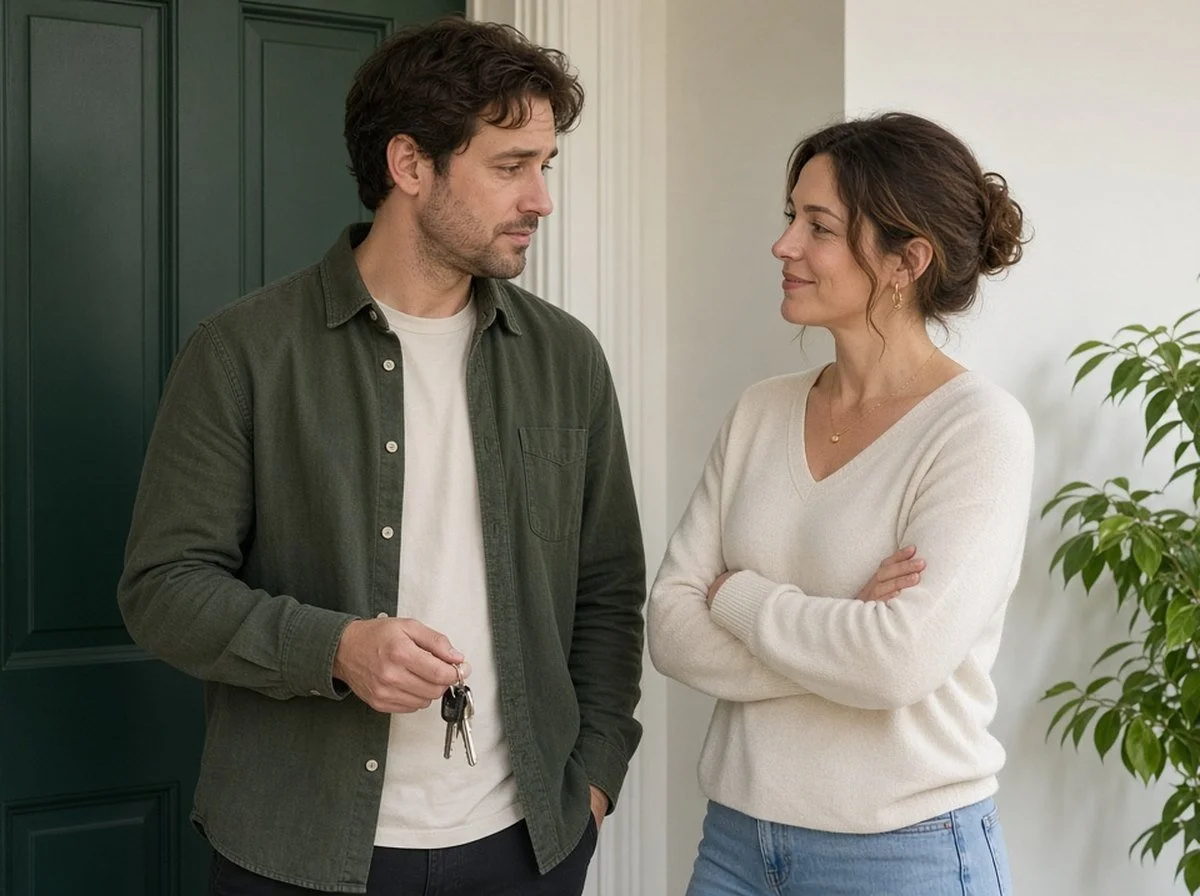
Most people with this acquire a safe person without ever discussing it, usually a partner, a sibling or one friend. Their presence genuinely changes what's possible. That isn't manipulation. Having someone who'd handle it lowers the alarm in a real, physical way.
The cost is on both sides. They start doing the errands and driving when you'd once have driven. Each of those is a kindness, and each also takes a little practice away from you, which is why the arrangement tends to settle rather than improve. There's a particular shame in it, so the asking gets disguised, and the invitations you decline get a reason attached that's almost true. After enough of them people stop asking, which solves a problem and creates a much worse one.
What agoraphobia is not
It is not a fear of the outdoors. This is the biggest misreading of the word. Many people with agoraphobia can walk for an hour in an empty field with no trouble and can't manage the corner shop. The common thread isn't open air. It's whether getting out would be quick, quiet and entirely up to you.
It is not only about leaving the house. For plenty of people the home is fine and the trouble is transit, or crowds, or being any real distance away alone.
It is not the same as social anxiety. Both shrink your week and can look identical from the outside. The deciding question is what you're afraid of in the room: how you're being judged, or what your body will do and how you'd get out.
It is not always paired with panic attacks. They travel together often, and for many people the whole map started after one attack in one specific place. But some people have never had a full attack and have the avoidance anyway.
It is not being a homebody, and it is not fixed by forcing yourself through the worst version once. Someone who loves being home chooses it. And being overwhelmed and unable to leave confirms the alarm rather than correcting it. Progress is built out of steps you can actually complete.
Why the map shrinks, and how agoraphobia treatment works on it
The mechanism is simple and slightly cruel. Avoiding works. You skip the thing, the dread stops immediately, and the relief is enormous and completely real. From that your alarm takes the only lesson available to it, which is that not going was the reason nothing went wrong. So the warning arrives sooner next time, about a place where nothing has ever actually happened.
The conditions do the same work more quietly. Going only with your sister teaches the alarm that your sister is why nothing went wrong. Sitting only on the aisle teaches it the aisle was load-bearing. These are called safety behaviours, and they're why someone can go out regularly for years and get no easier.
Treatment mostly runs on reversing that, deliberately and at a pace you agree to in advance: a graded plan built with you rather than sprung on you, work on the physical sensations so they stop being evidence of catastrophe, retiring the props in a deliberate order, and phasing out the safe person by design rather than by accident. Cognitive behavioural therapy is the most established route. It works by repetition rather than insight. If panic is the engine here, our post on how to stop a panic attack covers the other half of this picture, and our anxiety counselling page covers how we work with it.
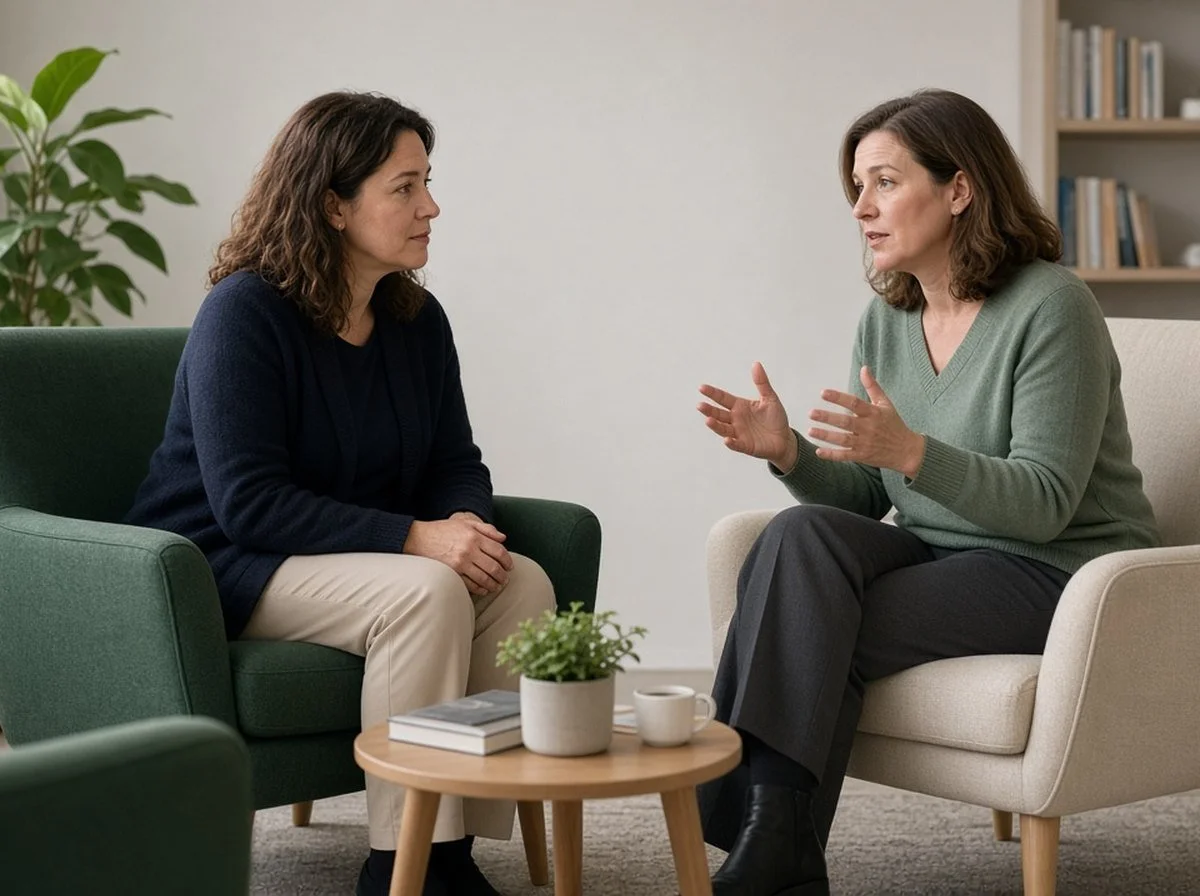
At our practice, psychologists and Nurse Practitioners can assess and diagnose, and our Registered Psychotherapists and Registered Social Workers provide therapy. Our Nurse Practitioners, who see clients in Kitchener, Waterloo and Cambridge, can assess, diagnose and prescribe medication when it's needed. If you're already taking medication and something doesn't feel right, raise it with your prescriber or ask about our Nurse Practitioners, and don't stop anything on your own.
If things have gone further than avoidance, and thoughts of ending your life or of hurting yourself have been part of it, please don't wait for an appointment. Our practice can't offer crisis support. Call or text 9-8-8 any time. In Waterloo Region, call Here 24/7 at 1-844-437-3247. In Ottawa, call the Mental Health Crisis Line at 613-722-6914. If you're in immediate danger, call 911 or go to the nearest emergency department.
Taking the first step
Starting is easier than it looks from inside the map. Our online counselling matters more with this than with almost anything else we see, because a first appointment doesn't have to be a journey. You won't need a referral. We've been part of Kitchener-Waterloo since 2016, and we see people in person in Waterloo, Kitchener, Cambridge and Ottawa, or online anywhere in Ontario. Sessions with our therapists are $130 to $200, and there is a one-time $50 setup fee. Sessions with our student therapists are $0 to $80. Many extended health plans cover counselling, and in many cases we can bill your insurance directly, depending on your plan and your therapist.
You don't have to leave the house to make the first appointment. A free 15-minute consultation can happen online if that's what today allows.