
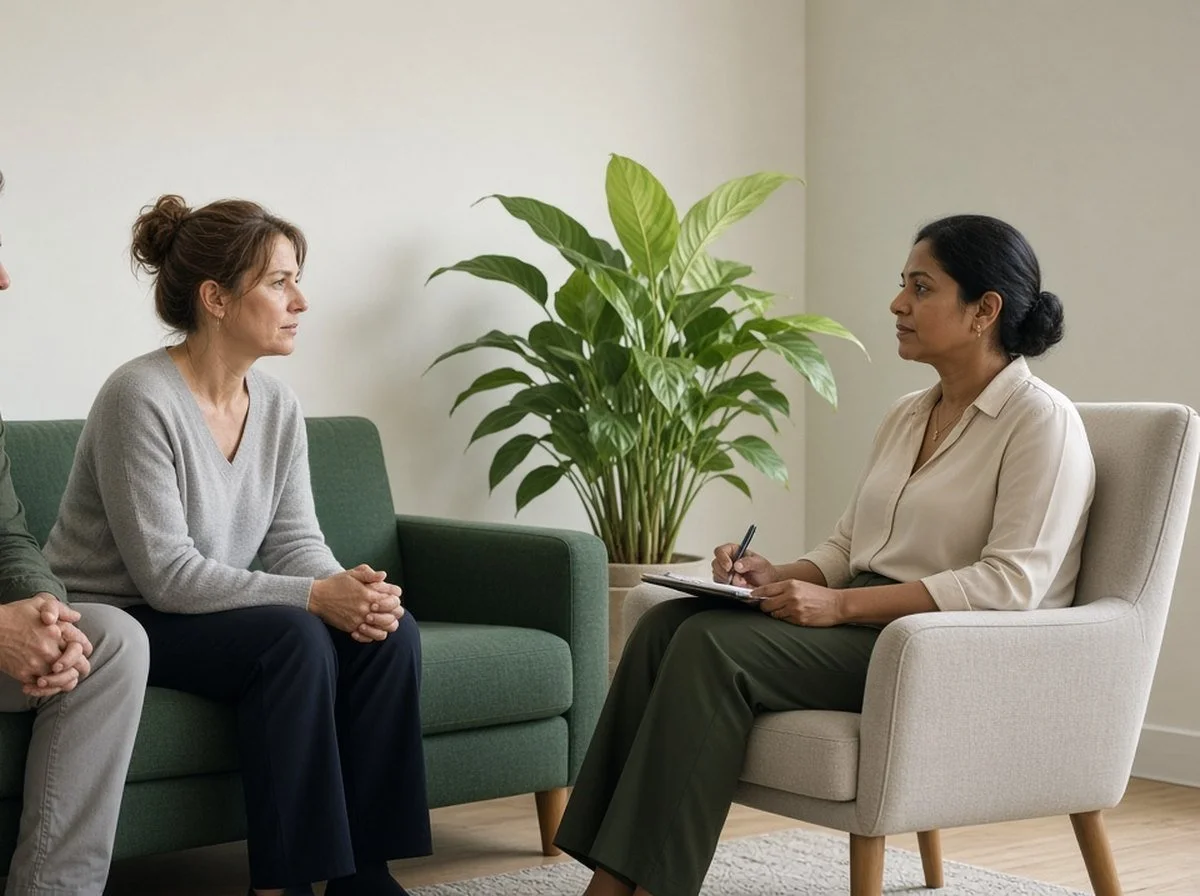
Finding out about an affair can feel like the ground has given way. Or maybe you're the one who had the affair, carrying guilt and wondering whether anything can be repaired. Either way, it's hard to know what to say, what to do or whether there's a path forward. Affair recovery counselling in Ottawa offers a steady place to work through what happened, at our downtown office or online, without rushing toward any particular outcome.
This post is general information, not a diagnosis or medical advice. Only a qualified professional can assess what you're experiencing.
Affair recovery counselling in Ottawa, where to start
Affair recovery counselling, sometimes called infidelity counselling, can include couples sessions, individual sessions or a mix of both. Many couples start together. Some partners start alone, especially if emotions are too raw to share a room yet.
The first goal usually isn't deciding whether to stay or leave. It's steadying things: lowering the intensity, creating some safety in conversations and making space for each person's feelings. Decisions about the future can come later, when you're both thinking more clearly.
Research suggests that couples who have faced infidelity can benefit from couple therapy, even though recovery is often slower and harder than with other problems. Recovery after an affair is complex, and rebuilding trust and clear communication take time.
There's no promise of reconciliation and no set timeline. Some couples rebuild a stronger relationship. Others decide to part with more understanding and less bitterness. Counselling supports both paths.
If you're the partner who was hurt
Discovering an affair often brings a flood of reactions:
Shock, numbness or disbelief
Intrusive images or replaying details over and over
Trouble sleeping, eating or concentrating
Waves of anger, sadness and fear
A strong urge to check phones, messages or location
Questioning yourself, your judgment or your worth
Many hurt partners also notice that their feelings change from hour to hour. You might feel calm and hopeful in the morning, then furious or heartbroken by evening. Certain places, songs or dates can bring everything rushing back. This rollercoaster is exhausting, but it's a normal part of processing betrayal.
These reactions are common after betrayal. They don't mean you're overreacting or "not moving on fast enough."
In sessions, you'll have space to express your hurt and ask the questions that matter to you, with support to do it in a way that doesn't leave you more wounded. A therapist can help you manage intrusive thoughts and the urge to check, and figure out what you need to feel safer. Individual sessions can also give you a private place to sort through your own feelings, whether or not your partner is in counselling.
If you're the partner who had the affair
If you had the affair, you may be dealing with guilt, shame, defensiveness or fear of losing everything. You might want to explain, apologize or move past it quickly.
Affair recovery usually asks a few things of you:
Ending contact with the affair partner, clearly and completely
Answering questions honestly, even when it's uncomfortable
Taking responsibility without blaming your partner or the relationship
Being patient with your partner's pain, which may come in waves
Understanding what led to the affair, not as an excuse but as part of repair
It's also common to feel torn. You may care about your partner and still have mixed feelings about the affair partner, or feel relief that the secret is out alongside fear of what comes next. Bringing these feelings into individual sessions, rather than hiding them, can help you stay honest and present in the work.
Accountability doesn't mean endless punishment. A good therapist will help both partners find a way through that respects the hurt while making room for repair. Individual sessions can also help you look at your own patterns and feelings.
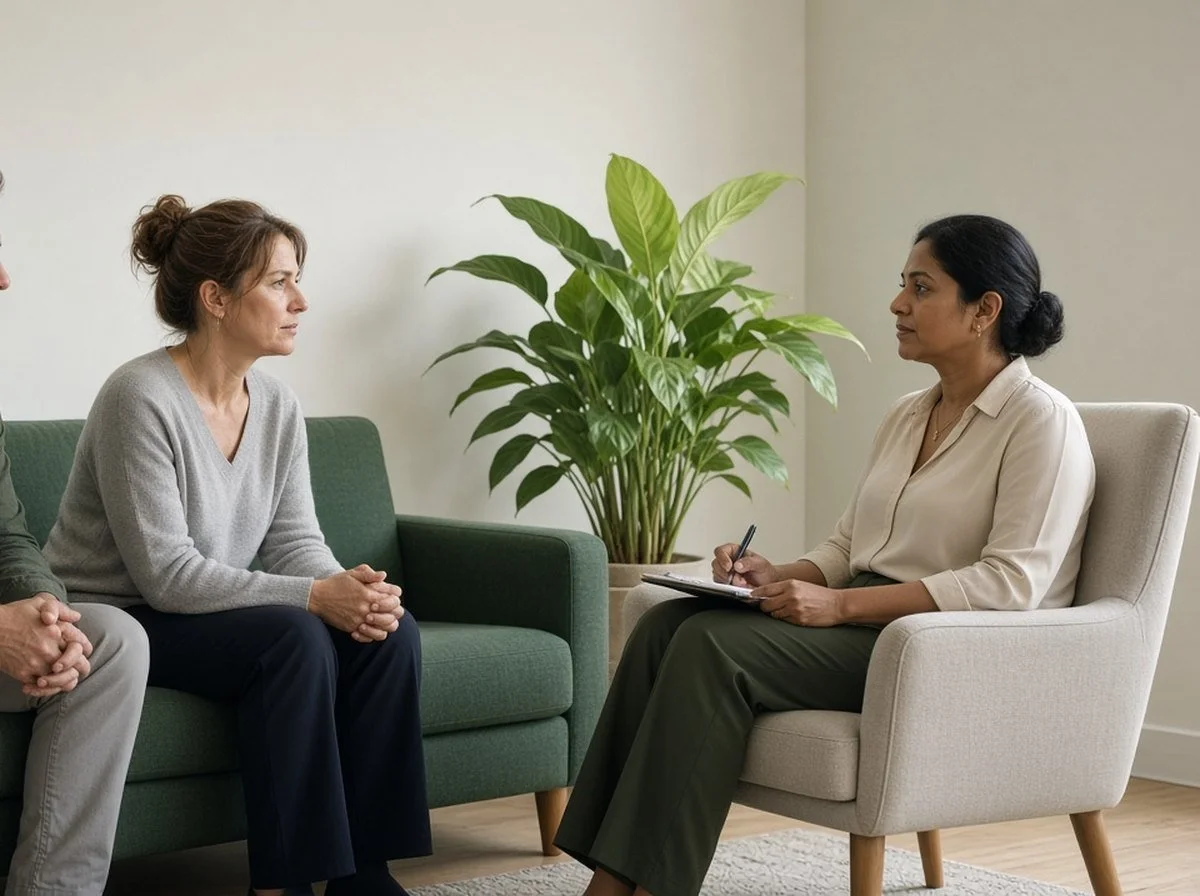
Emotional and online affairs count too
Not every affair is physical. Emotional affairs, a deep, secret emotional connection with someone outside the relationship, can hurt just as much. So can online affairs, sexting or secret relationships that happen mostly through texts or apps.
The pain often comes from the secrecy and the sense that a special closeness was given to someone else. If you're not sure whether what happened "counts," it may help to read our post on emotional affair signs. Counselling can help with any kind of betrayal, whatever form it took.
Booking couples sessions, downtown or online
Couples counselling for affair recovery can happen in person together at our Ottawa office or online together by secure video. Many couples choose online sessions because they're easier to fit around work and children.
In the first session, your therapist will usually ask each of you what brought you in and what you're hoping for. You don't need to agree on the goal yet. It's okay if one of you hopes to rebuild and the other isn't sure. Part of the early work is understanding where each of you stands.
Some couples also add individual sessions along the way, when one partner needs space to work on something on their own.
If you'd like to know more about what typically happens in sessions, from the first meeting to rebuilding trust, our post on what happens in affair recovery counselling walks through the process.
When couples work should wait
Couples counselling isn't always the right first step. It may be better to start with individual sessions if:
The affair is still going on. Repair is very hard while contact continues.
You feel afraid of your partner. If there's fear, threats or violence, couples sessions aren't safe. Individual support comes first.
There's control. If one partner monitors, restricts or pressures the other, individual sessions are a safer place to start.
One partner doesn't want to be there. Couples work needs both people to be at least willing to try.
A therapist can help you figure out what's safe and helpful right now. Starting individually doesn't close the door to couples work later.
Whether you're the partner who was hurt or the one who had the affair, reaching out is a brave first step.
Downtown at 1 Rideau Street or online across Ontario
Our Ottawa office is at 1 Rideau Street, 7th Floor, inside the Fairmont Chateau Laurier in downtown Ottawa. You can reach the office at (613) 691-1006.
Online counselling is available by secure video from anywhere in Ontario. Couples can meet in person together or online together, whichever fits best. For online sessions, partners may also join from separate locations. Both partners need to be in Ontario during the session.
We also have offices in Kitchener, Waterloo and Cambridge, and every location offers every service.
Cost, billing and your first step
Sessions with our therapists range from $130 to $200, depending on the clinician.
We accept Health Spending Accounts (HSAs).
We can direct bill many insurers, including for sessions with an RP (Qualifying). Desjardins is the exception: through TELUS eClaims, we can direct bill Desjardins for sessions with an RSW, RP or psychologist, but not for an RP (Qualifying).
Coverage depends on your plan, so check with your insurer before you start.
Book a free 15-minute consultation with our admin team. Let them know whether you're hoping for couples or individual sessions, and they'll suggest a good fit.
If you're in crisis: if you or someone you love is in immediate danger, call 911. If you're thinking about suicide, call or text 9-8-8 any time, day or night.
An affair can shake everything you thought you knew. With time and support, many people find their way to clarity, and some find their way back to each other.
Last reviewed: October 2026
Sources
Christensen A, Doss BD. Integrative behavioral couple therapy. Current Opinion in Psychology, 2017
Rokach A, Chan SH. Love and infidelity: causes and consequences. International Journal of Environmental Research and Public Health, 2023
Psychotherapies, National Institute of Mental Health (NIMH)