
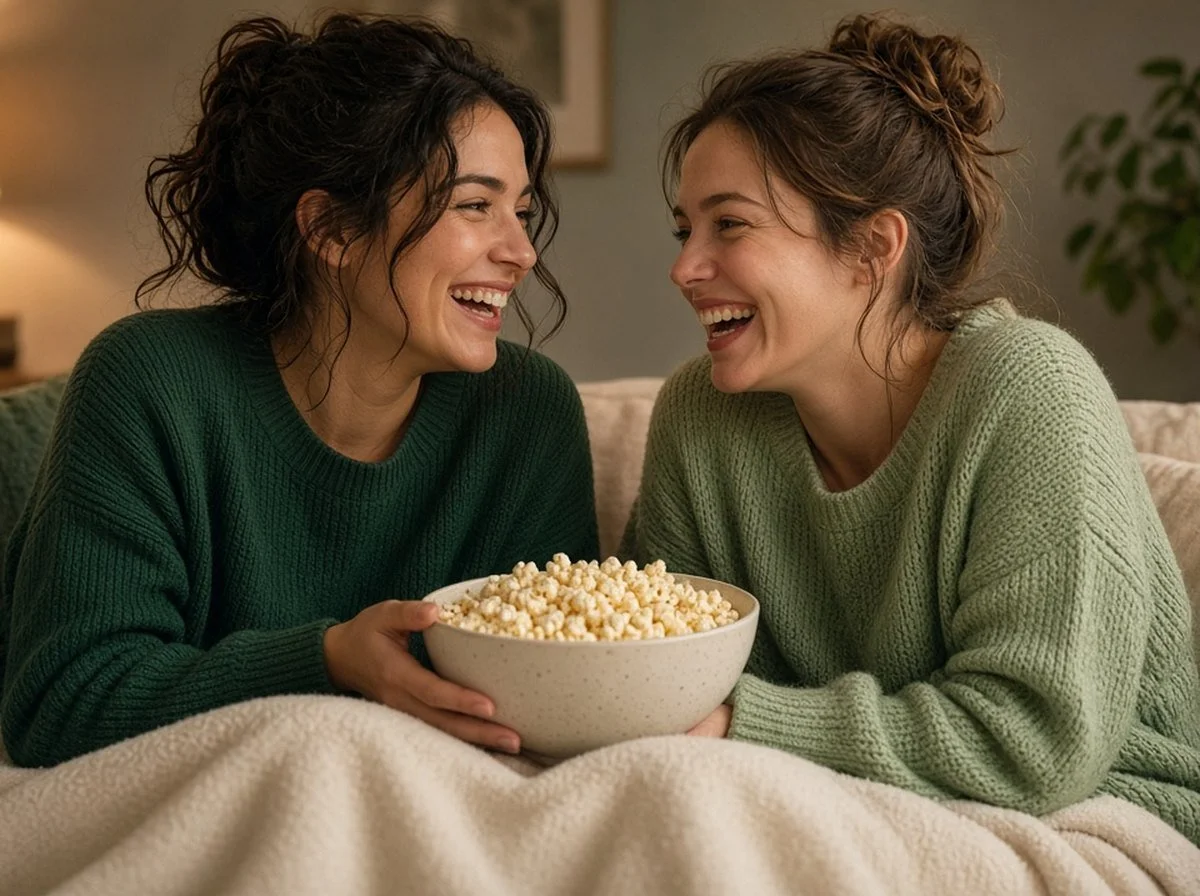
It's October, the nights are longer and somewhere a friend is queuing up another scary movie. You'd think a person who worries all the time would run the other way. Yet plenty of anxious people say a good scare is oddly relaxing. If you've ever wondered why do people with anxiety like horror movies, you're not alone. This guide looks at some possible reasons, including fear you can control, a reason for the racing heart and the relief afterward, and at when scary stories make anxiety worse.
This post is general information, not a diagnosis or treatment advice. Horror movies are entertainment, not therapy.
Why horror can feel oddly comforting with anxiety
Anxiety often feels shapeless. You might feel on edge without knowing why, or worry about things that haven't happened and may never happen. Horror offers something different: fear with a shape, a story and an ending.
Some people describe watching a scary movie as a break from their own worries. For two hours, the fear is about something on the screen, not about work, health or relationships. That doesn't mean horror is good for everyone with anxiety. So why do anxious people like horror movies more often than you might expect? The reasons below are possibilities, not rules, and they won't all fit you.
Fear with a beginning and an end
Everyday anxiety rarely comes with a clear finish line. A scary movie does. You know roughly how long it will last, you can pause it, look away or turn it off, and you know you're safe on your couch.
Researchers at Aarhus University's Recreational Fear Lab have studied this kind of "recreational fear." In a study published in Psychological Science, they followed visitors through a haunted house attraction and found that enjoyment seemed to peak at a "sweet spot" of fear: not too little, not too much. People who were barely scared, or very scared, enjoyed it less. The lead researcher described this as people "playing with fear."
For someone with anxiety, that sense of choosing the dose may be part of the appeal.
A reason for the racing heart
When anxiety hits out of nowhere, a pounding heart can feel alarming. You might wonder what's wrong, which can make the anxiety climb. During a scary movie, the racing heart has an obvious cause. It makes sense, and it fades when the scene ends.
Some people say this feels strangely reassuring: their body is doing what bodies do when something scary happens, and then it settles. The relief after a tense scene, or at the end of the movie, can feel good too. That rise and fall is one possible reason horror movies and anxiety can go together.
Why the same films and shows feel safe
Many anxious people rewatch the same movies or shows again and again, including scary ones. Predictability can feel calming. When you already know what's going to happen, there are no surprises, and you get the comfort of the familiar story without the uncertainty. If you have a favourite you've seen a dozen times, you're far from alone.
What about true crime?
Why do people with anxiety like true crime? There's no single answer. Some people say that learning how dangerous situations unfold helps them feel more prepared, or helps them make sense of frightening things in the world.
A study published in Personality and Individual Differences found that people who were fans of horror films reported less psychological distress during the early COVID-19 pandemic. The researchers suggested that frightening fiction may give people a chance to practise coping with fear in a safe setting. That's one study, and it doesn't show that horror causes resilience. But it hints at why some people are drawn to scary stories when the world feels uncertain.
Do horror movies help anxiety?
It's tempting to ask whether horror movies help anxiety, or why do horror movies help my anxiety when I'm stressed. They may help some people feel a short break or a sense of control, but they don't treat anxiety. The relief usually lasts as long as the movie, and the worries you had before are still waiting afterward.
When horror makes anxiety worse
Can horror movies cause anxiety? For some people, they can make it worse. You might notice:
trouble falling asleep, or bad dreams
scary images replaying in your mind
feeling jumpy or on edge for days afterward
scenes that remind you of something frightening that really happened
If you've lived through something traumatic, certain scenes may bring back memories or strong reactions. That's a good reason to skip them. Trauma counselling can help when reminders feel overwhelming.
It's completely okay to say no to scary movies, haunted houses or true crime. Not enjoying horror isn't a weakness. Knowing what's good for you is a strength.
Horror is not therapy
Watching a scary movie is not the same as treatment for anxiety. In therapy, facing fears is planned carefully with a trained therapist, focuses on your own specific fears and happens gradually, at a pace you agree on. Our post on exposure therapy for phobias explains how that kind of work is set up.
A horror movie, on the other hand, is designed to entertain and surprise you. Enjoy it if you like it, but it isn't a substitute for support.
Why some anxious people can't stand horror
For every anxious person who loves a scary movie, there's another who can't watch the trailer. Both make sense. If your mind already jumps to worst case scenarios, a film built around danger can feel like more of the same, not a break from it. You might find the tension sticks around long after the movie ends, or that sudden loud noises leave you shaky.
There's no right way to feel about horror. Some people enjoy a mild scare and skip anything intense. Others prefer cozy movies all October and feel no need to explain. What matters is noticing how you feel afterward and choosing what leaves you feeling okay.
Watching with someone who has anxiety
If you love horror and your partner or friend has anxiety, check in before you press play. Let them choose the film, sit close, agree that it's fine to pause or switch to something else, and don't tease them for jumping. A cozy movie night should feel fun for everyone.
When the fear follows you home
If your anxiety is with you long after the credits roll, or most days with no scary movie at all, it may be time for support. Counselling can help you understand your anxiety, manage the racing thoughts and body sensations, and feel more in control in everyday life. Approaches like cognitive behavioural therapy (CBT) and acceptance and commitment therapy (ACT) are commonly used.
We offer counselling for anxiety at our Kitchener-Waterloo, Cambridge and Ottawa offices, and online anywhere in Ontario on a secure, encrypted video platform.
Sessions with our therapists range from $130 to $200, depending on the clinician.
Depending on your plan, insurance may cover some or all of the cost. Coverage varies, so check your plan.
We accept Health Spending Accounts (HSAs).
We can direct bill many insurers, including for sessions with a Registered Psychotherapist (Qualifying). Desjardins is the exception: through TELUS eClaims, we can direct bill Desjardins for sessions with an RSW, RP or psychologist, but not for an RP (Qualifying).
Book a free 15-minute consultation with our admin team. You can share as much or as little as you like.
If you're in crisis: if you or anyone else is in immediate danger, call 911. If you're having thoughts of suicide, call or text 9-8-8 any time. More options are on our crisis lines page.
Whether you love a good scare or skip them altogether, you deserve to feel calm and in control in your everyday life.