
If you feel sad at night, you are not alone. Many people feel fine during the day, then feel low, lonely or heavy once the evening comes. Night brings quiet, fewer distractions and tired minds, and that can make hard feelings louder. The good news is that there are gentle ways to ease nighttime sadness.
This post is general information, not medical advice or a diagnosis.
Why feeling sad at night is so common
During the day, work, school, chores and people keep your mind busy. At night, that busyness stops. Thoughts and feelings you pushed aside during the day can rise to the surface.
Research also suggests mood can shift over the day. A 2011 study in the journal Science looked at millions of public social media posts from around the world. It found that people tended to wake up in a good mood that slowly worsened as the day went on. It also found that mood changed with the seasons as day length changed (Golder and Macy, see Sources).
That does not explain every sad night. But it shows that feeling worse later in the day is a common human experience.
Common reasons you might feel sad in the evening
There is often more than one reason for evening sadness. Some common ones:
Fewer distractions. In the quiet, your mind has room to wander to worries, regrets or loss.
Tiredness. When you are worn out, it is harder to cope with strong feelings.
Loneliness. Evenings can feel lonely, especially if you live alone or your day is full of people who go home.
Rumination. Going over the same thoughts again and again can pull your mood down.
Screens. Late-night scrolling can lead to comparing yourself to others or reading upsetting news.
Unmet needs. Skipped meals, little movement or a long day without a break can leave you feeling low.
Something deeper. Sometimes nighttime sadness is a sign of depression, grief or anxiety that needs care.
Why the long dark evenings of fall and winter can feel harder
In Ontario, the days get much shorter in fall and winter. Many people notice that they feel sadder when it gets dark early.
The National Institute of Mental Health (NIMH) explains that many people go through short periods of feeling sad or not like their usual selves, sometimes called the “winter blues,” when the days get shorter. It also explains that seasonal affective disorder (SAD) is more than that. SAD is a type of depression that comes and goes with the seasons, and it is not the same as the “holiday blues” (see Sources).
If the long, dark evenings seem to drag your mood down every year, it may be worth talking to someone. Our post on winter anxiety has more on how the colder months can affect how you feel.
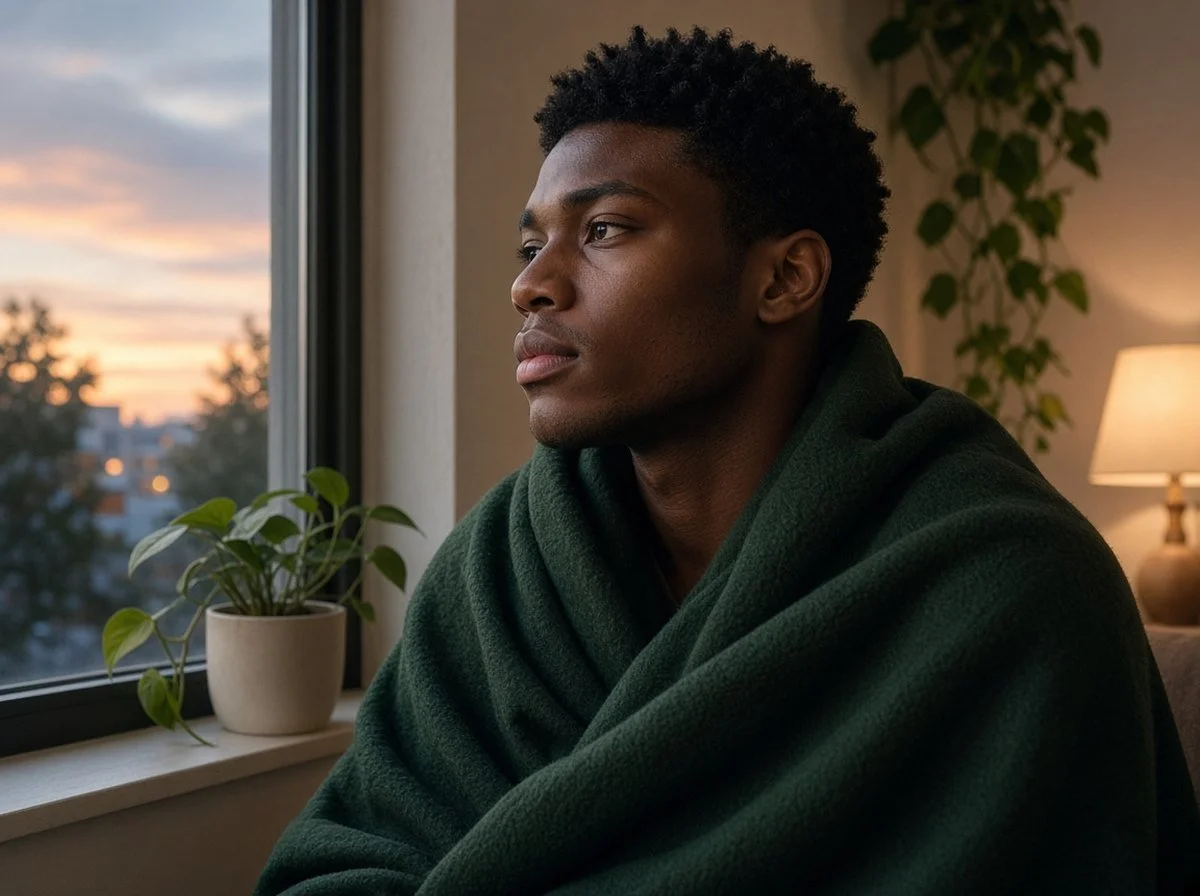
Feeling sad at night for no reason, or fine in the morning
Sometimes you feel sad at night and cannot point to a cause. That can feel confusing or even scary.
“No reason” often means the reason is not obvious yet. It might be stress building up, a feeling you have not had time to notice, tiredness or a change in season. NIMH notes that everyone feels sad or low sometimes, and that these feelings usually pass with time (see Sources).
Some people feel sad at night but fine in the morning. That pattern is common too, and it often eases with rest and a new day.
Try to meet the feeling with curiosity instead of judgment. You might ask yourself, “What did today ask of me?” or “What do I need right now?”
Nighttime sadness and loneliness
Loneliness at night is very common. When the house is quiet or you are lying in bed, the lack of company can feel sharp.
Some things that may help:
Plan a short call or text with someone you care about in the evening
Keep a cozy routine, like a warm drink, music or a favourite show
Join an evening class, group or hobby, in person or online
Remind yourself that the feeling is real, but it can pass
Simple ways to ease nighttime sadness
Small habits can make evenings feel gentler. Try one or two and see what helps.
Build a wind-down routine. Do the same calming things each night, like a shower, stretching or reading.
Write it down. Putting thoughts on paper can help get them out of your head. Our post on journaling for anxiety has easy ways to start.
Limit late-night scrolling. Set your phone aside for a while before bed.
Get light during the day. Time outside in daylight, even on cloudy days, can help your mood.
Move your body. A short walk earlier in the day can make a difference by evening.
Plan something small to look forward to. A favourite breakfast or a morning walk can give your mind something kind to rest on.
Be gentle with yourself. You do not have to fix every feeling tonight.
When nighttime sadness may be a sign of depression
Feeling sad or even feeling depressed at night now and then is normal. But sometimes it is part of something more.
The Centre for Addiction and Mental Health (CAMH) explains that depression may be present when symptoms are present most of the day, last more than two weeks and get in the way of work, school or relationships (see Sources). Signs can include:
Feeling sad, empty or hopeless much of the time
Losing interest in things you used to enjoy
Changes in sleep or appetite
Low energy or trouble focusing
Feeling worthless or guilty
Only a qualified professional can say if it is depression. If this sounds like you, reaching out is a good step.
If you are thinking about suicide or hurting yourself, call or text 9-8-8 now. If you or someone else is in immediate danger, call 911.
How counselling can help
Counselling gives you a safe space to talk about what comes up at night and why. A therapist can help you:
Understand what is behind your evening sadness
Learn ways to calm racing or heavy thoughts
Build routines that support your mood
Work through grief, loneliness or stress
You can meet with a therapist in person or from home. Learn more about our online counselling.
We offer counselling at our Kitchener-Waterloo, Cambridge and Ottawa offices, and online across Ontario. Every clinician on our team is registered with their college.
Common questions about feeling sad at night
Why do I feel sad at night? Fewer distractions, tiredness, loneliness and rumination can all make sadness feel stronger at night.
Why do I feel sad at night for no reason? The reason may not be clear yet. Stress, tiredness or the season can all play a part.
Is feeling sad at night a sign of depression? It can be, if it lasts most days for more than two weeks. Only a professional can say for sure.
Can shorter days make me feel sad? Yes. Many people feel lower in fall and winter. For some, it may be seasonal affective disorder.
What helps nighttime sadness? A calm routine, journaling, less screen time, daylight and reaching out to others can help.
Billing and your first step
We accept Health Spending Accounts (HSAs).
We can direct bill many insurers. Coverage depends on your plan, so check with your insurer before you start.
If evenings feel heavy, you do not have to face them alone. Book a free 15-minute consultation and we can help you find a therapist who fits.
If you’re in crisis: if you or someone you love is in immediate danger, call 911. If you’re thinking about suicide, call or text 9-8-8 any time, day or night.
Last reviewed: October 2026
Sources
Golder SA, Macy MW. “Diurnal and seasonal mood vary with work, sleep, and daylength across diverse cultures.” Science. 2011;333(6051):1878-81. https://pubmed.ncbi.nlm.nih.gov/21960633/
National Institute of Mental Health. “Depression.” https://www.nimh.nih.gov/health/topics/depression
National Institute of Mental Health. “Seasonal Affective Disorder.” https://www.nimh.nih.gov/health/publications/seasonal-affective-disorder
Centre for Addiction and Mental Health. “Depression.” https://www.camh.ca/en/health-info/mental-illness-and-addiction-index/depression