
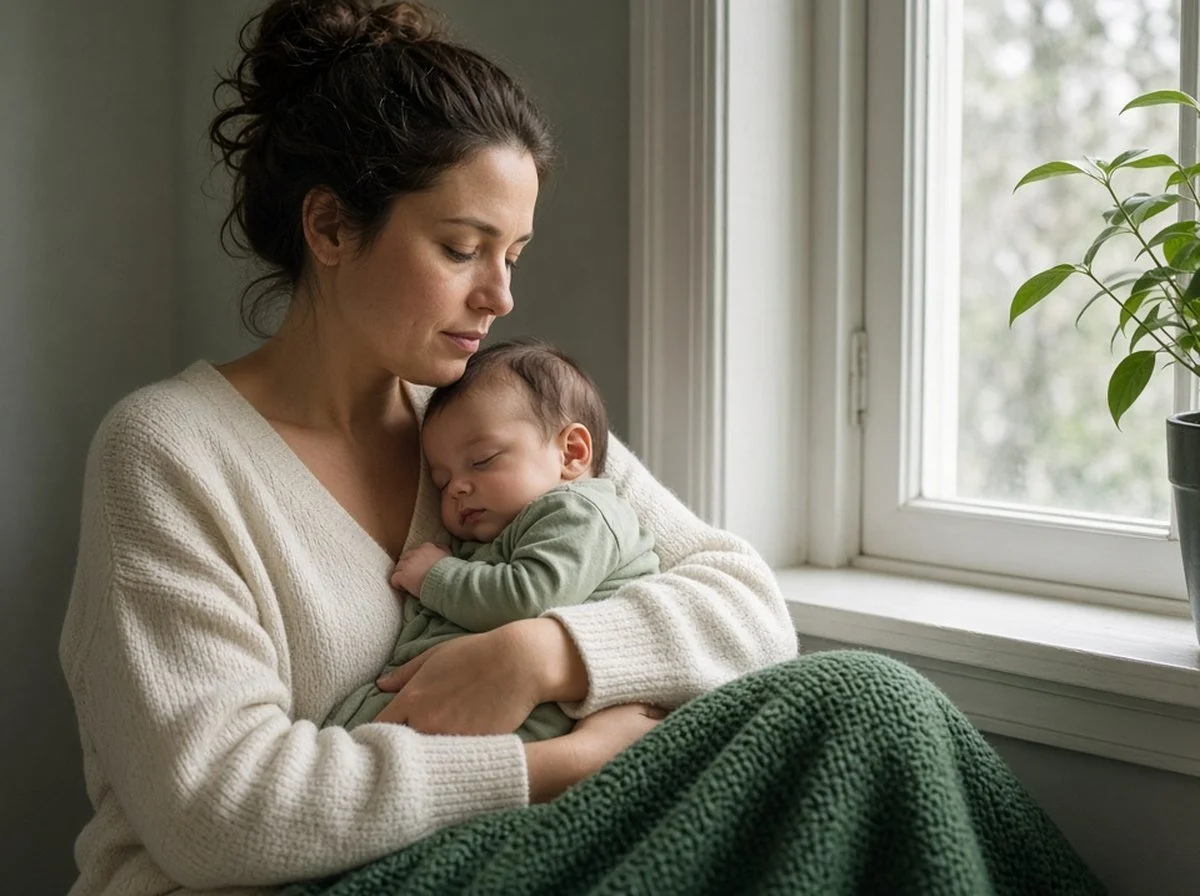
Everyone told you it would be the happiest time of your life. Instead, you feel flat, short-tempered or scared, and you can't say so out loud. If you've been wondering what is it like to have postpartum depression, or whether what you're feeling counts, this post is for you. It isn't a symptom checklist. It's an honest look at how postpartum depression can feel from the inside, and a reminder that it can get better.
This post is general information, not a diagnosis or a treatment plan.
What postpartum depression can feel like, in a sentence
It can feel like being underwater while everyone else is celebrating. Postpartum depression is more than the baby blues. The NHS describes the baby blues as feeling down, anxious or irritable for a few days after birth, usually passing within two weeks. Postpartum depression lasts longer, can begin during pregnancy or any time in the first year, and is not a character flaw or a sign you're a bad parent.
The gap between what you expected and what you feel
Most of us carry a picture of life with a new baby: soft light, a sleeping newborn, a glow of love. Reality can look very different. Feeding is hard. Sleep is broken. Your body feels unfamiliar. Your identity feels like it's slipped away.
With postpartum depression, that gap can turn into a quiet, constant sense of failure. You might think everyone else is coping better, that you should be grateful, that you have no right to feel this way. Those thoughts are part of the depression talking, not the truth about you.
Numb, flat or not feeling the bond yet
One of the hardest parts for many parents is not feeling the rush of love they expected. You might care for your baby well, feed them, change them and keep them safe, while feeling strangely distant or numb inside. The NHS lists difficulty bonding with your baby among the signs of postnatal depression.
You can love your baby and still feel this way. As our post on postpartum depression symptoms puts it, feeling nothing for a while is not a verdict. It doesn't mean something is permanently wrong with you or your relationship with your child.
Irritability and rage
What does postpartum depression feel like when it isn't sadness? For some people, it shows up as anger. You might snap at your partner, feel rage at a crying baby or explode over small things, then feel awful afterwards.
Irritability is listed among the common signs of postnatal depression. Exhaustion, pain, hormones and the endless demands of a newborn can all feed it. Anger doesn't make you a bad parent. It's often a signal that you're overwhelmed and need more support.
Guilt and the inner critic
Postpartum depression often comes with a harsh inner voice. It can say you're doing everything wrong, that your baby deserves better, that you've made a mistake you can't undo. The guilt can attach to everything, even moments that go well.
This voice can be very convincing. But it is a symptom, not an accurate report on your parenting.
Tired in a way sleep doesn't fix
Every new parent is tired. With postpartum depression, the exhaustion can feel deeper, heavier and harder to shake. The NHS notes that people can have difficulty sleeping even when they get time to rest. Your mind may feel foggy. Decisions that used to be easy can feel impossible.
It can feel like moving through the day on autopilot, doing what needs to be done while feeling far away from it all.
Frightening thoughts
Some parents experience sudden, unwanted images or thoughts about harm coming to their baby. They can be terrifying. Our post on postpartum depression symptoms explains that unwanted, intrusive thoughts after birth are extremely common, and that they are distressing precisely because they go against everything you want. They are not desires or plans, and having them doesn't mean you are dangerous.
If you're having these thoughts, it can help a lot to tell a professional. You don't have to carry them alone.
Missing who you used to be
Alongside everything else, there can be a quiet grief for the person you were before. Your time, your body, your work, your friendships and your sense of freedom may all have changed overnight. As our post on postpartum depression symptoms notes, grieving that loss is not disloyalty to your baby. You can be glad they're here and still mourn the life you had.
Naming that grief, rather than pushing it away, is often part of feeling more like yourself again.
Smiling for visitors
Many parents with postpartum depression become very good at hiding it. You smile for visitors, post happy photos and say "we're doing great" when people ask. Behind closed doors, you may cry, feel numb or count the hours until bedtime.
Masking can be exhausting. It can also make you feel even more alone, because no one sees how much you're struggling. Telling even one trusted person the truth can be a relief.
What does postpartum depression and anxiety feel like together?
Depression and anxiety often travel together after a baby arrives. Alongside low mood, you may feel constant worry, a racing mind or a sense of dread. You might check on your baby again and again or struggle to let anyone else help. The NHS lists feeling fearful, anxious or worrying all the time among the signs of postnatal depression.
Mild or severe, it still counts
What does mild postpartum depression feel like? It may feel like a persistent heaviness, irritability or lack of joy that you keep explaining away. What does severe postpartum depression feel like? It can feel like hopelessness, being unable to cope with daily life or thoughts that your family would be better off without you. Wherever you are, your experience counts, and support can help.
For partners and dads
Partners can experience depression after a baby arrives too. The NHS notes that fathers and partners can also have depression after having a baby. What does postpartum depression feel like for men? It may show up as irritability, withdrawal, working longer hours or feeling like a failure. Our post on how depression can affect new dads explores this in more detail.

The climb out, and how counselling helps
What is it like having postpartum depression once you start getting support? It may not happen all at once. The fog can lift a little at a time. You have a good hour, then a good morning, then a good day.
Counselling offers a space to talk honestly about what you're feeling without judgment. A therapist can help you make sense of guilt and difficult thoughts, find ways to rest and ask for help, and reconnect with yourself and your baby at your own pace. Our page on prenatal and postpartum therapy explains how we support new parents.
We offer perinatal counselling in person in Waterloo, Kitchener, Cambridge and Ottawa, and online anywhere in Ontario on a secure, encrypted video platform, which many new parents find easier.
Sessions with our therapists range from $130 to $200, depending on the clinician.
Depending on your plan, insurance may cover some or all of the cost. Coverage varies, so check your plan.
We can direct bill many insurers, including for sessions with a Registered Psychotherapist (Qualifying). Desjardins is the exception: through TELUS eClaims, we can direct bill Desjardins for sessions with an RSW, RP or psychologist, but not for an RP (Qualifying).
Book a free 15-minute consultation with our admin team.
When to get help right now: the NHS describes postpartum psychosis, with symptoms such as hallucinations, delusions or feeling very confused, as a medical emergency. If you or a new parent you know has these symptoms, or thoughts of harming themselves or the baby, call 911. If you're having thoughts of suicide, call or text 9-8-8 any time. More options are on our crisis lines page.
Last reviewed: October 2026
Sources
Postpartum psychosis, NHS
Perinatal Depression, National Institute of Mental Health (NIMH)