
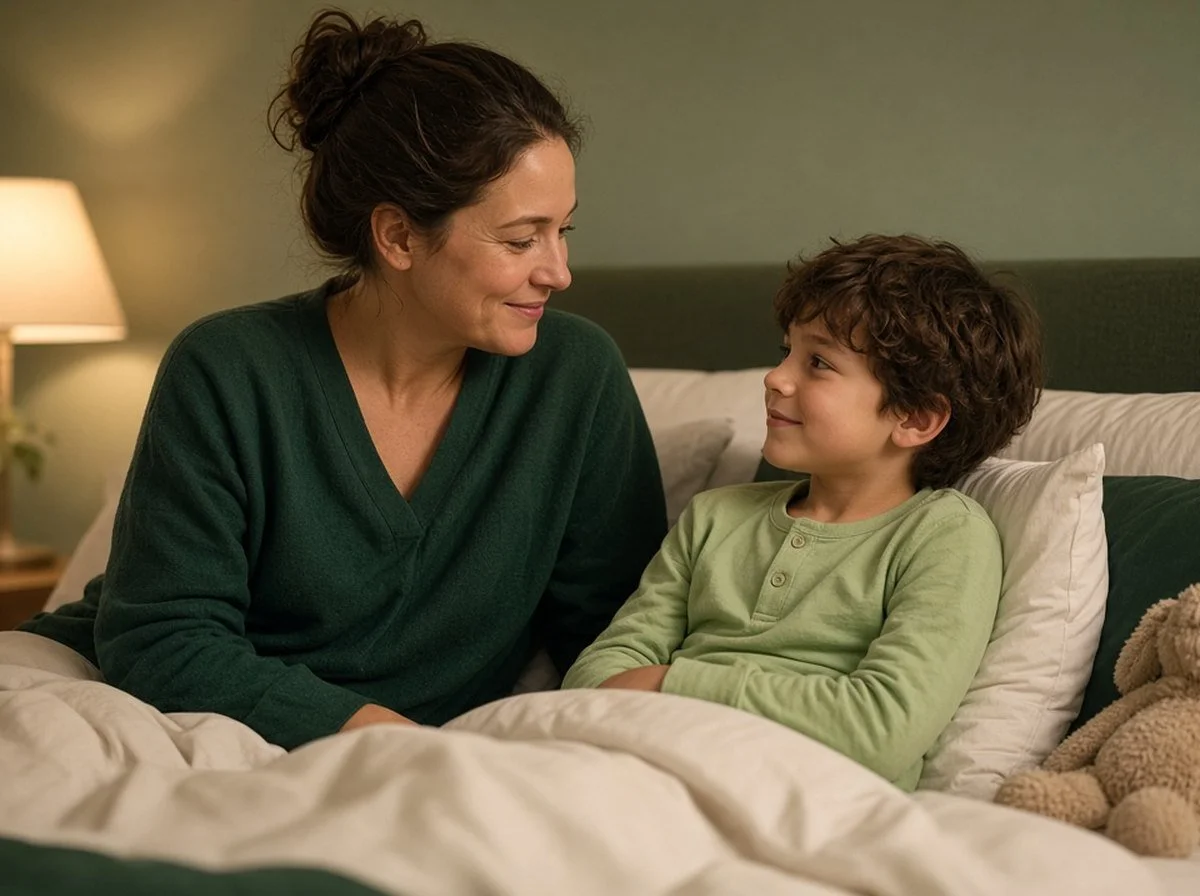
Bedtime takes an hour because the stuffed animals have to be lined up just right. Your child asks "are you sure?" ten times about the same thing. Homework gets erased and rewritten until the page tears. Many kids have quirks and routines, so it can be hard to know when something more is going on. This guide walks through common signs of OCD in children, how they differ from everyday habits and worry, and what help can look like.
This post is general information for parents. It is not a checklist or a diagnosis.
OCD in children, the short version
Obsessive-compulsive disorder (OCD) involves obsessions and compulsions. Obsessions are unwanted thoughts, images or urges that cause strong anxiety. Compulsions are things a person does, out loud or in their head, to try to make that anxiety go away. The American Academy of Child and Adolescent Psychiatry (AACAP) explains that OCD often begins in adolescence or young adulthood, but it can also show up in younger children.
OCD is not a quirk, a phase or bad behaviour, and it is not your child's choice. It is also no one's fault.
Why OCD in kids is easy to miss
Children often don't have the words to describe what is happening in their heads. Some don't realize their thoughts are unusual. Others know something feels wrong and hide it. AACAP notes that children and teens often feel shame and embarrassment about OCD and may be hesitant to talk about their thoughts.
Kids may also pull parents into their rituals. You might find yourself answering the same question again and again, checking the locks with them or washing their cup a certain way, all because it seems to help in the moment.
Signs you might notice at home
Every child is different, and none of these on its own means a child has OCD. Common signs of OCD in children can include:
mornings or bedtimes that take much longer because of routines that must be done a certain way
asking the same questions over and over, or needing you to say things in a specific way
washing hands or showering far more than usual, or worrying a lot about germs
checking doors, windows, appliances or schoolbags again and again
counting, tapping, touching or repeating actions until it feels "just right"
arranging objects in a precise order and becoming upset if they are moved
redoing homework, erasing or rereading until it feels perfect
avoiding certain places, objects or people linked to their fears
These early signs of OCD in children can be subtle at first and often grow slowly. Signs of OCD in young children may look more like rigid routines, while older kids may hide more of what they do.
Signs that show up as feelings
Some of the clearest signs are emotional. You might notice:
big distress, tears or anger when a routine is interrupted or can't be finished
intense worry that something bad will happen to them or to someone they love
a strong need for reassurance that never seems to settle the worry for long
a sense that something is "not right" that they can't explain
AACAP gives the example of a younger child who fears harm will come to the family and checks doors and windows over and over to feel safe. The ritual brings short relief, then the doubt returns.
Normal childhood rituals, anxiety or OCD?
Lots of children love routines. A favourite bedtime story, a lucky sock or wanting the crusts cut off are part of being a kid. The difference with OCD is usually in three things:
Time. Rituals take up a lot of time each day.
Distress. Your child seems driven by fear or discomfort, not enjoyment.
Getting in the way. Routines interfere with school, sleep, friendships or family life.
General anxiety and OCD can overlap, and only an assessment can sort out what is going on. If you're unsure, that's a good reason to ask, not a reason to wait.
How to talk with your child about it
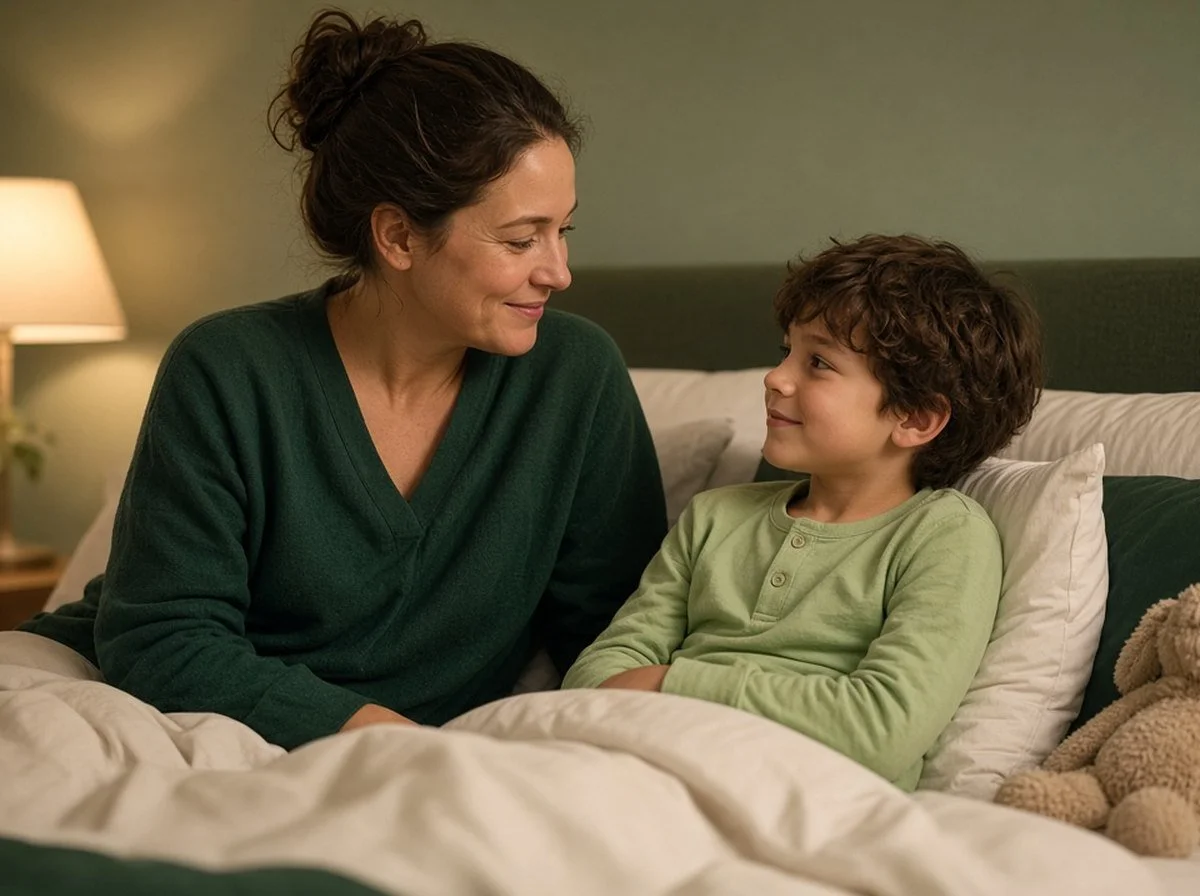
If you've spotted some signs of OCD in kids you know well, a gentle conversation can help. Pick a calm moment, not the middle of a ritual. You might say, "I've noticed bedtime has been really hard lately. It looks like some worries are bossing you around. Can you tell me about them?"
A few tips:
Stay curious, not alarmed. Your calm helps your child feel safe sharing.
Separate your child from the worry. Some families give the worry a name, which makes it easier to talk about.
Don't punish rituals. Your child isn't being difficult on purpose.
Let them know help exists. Many kids feel relieved to hear that other children have worries like theirs.
When the family gets pulled in
When a child is upset, it's natural to want to help. AACAP describes how caregivers often "give in" to a child's OCD to support them, a process called accommodation, and notes that most caregivers don't realize how much of it they're doing.
Accommodation might look like answering the same question many times, doing rituals with your child or rearranging family plans around their fears. It comes from love. But over time, it can keep the cycle going, because the child doesn't get the chance to learn that they can cope without the ritual. A therapist can help you step back gently, without leaving your child on their own with the fear.
What about teens?
OCD often becomes more noticeable in the teen years. Teens may hide rituals more carefully, or the obsessions may focus on topics that feel embarrassing to talk about. If your teen seems exhausted, withdrawn or stuck in routines they can't explain, a calm, curious conversation is a good place to start. Teen counselling can offer them a private space to talk.
How an assessment can help
A psychological assessment can bring clarity. Our psychologists offer an OCD assessment for children, as well as for teens and adults. An assessment usually includes a detailed interview, questionnaires and a look at how symptoms affect daily life, so you can understand what is going on and what kind of support fits.
Psychologists can diagnose, and an assessment can also rule out other explanations. Our Ottawa office offers psychological assessments for children, teens and adults too, so families in Ottawa don't need to travel.
What treatment can look like for kids
AACAP notes that most children with OCD can be treated effectively, with psychotherapy using cognitive and behavioural techniques as a key part. A form of CBT called ERP helps children face their fears in small, manageable steps without doing the ritual, so the anxiety gradually loses its power. With children, treatment is often playful, paced to the child and includes parents, who learn how to coach rather than accommodate.
We offer counselling for children ages 6 and up, along with parent sessions, in person in Waterloo, Kitchener, Cambridge and Ottawa, and online.

Cost and billing
Sessions with our therapists range from $130 to $200, depending on the clinician.
Depending on your plan, insurance may cover some or all of the cost. Coverage varies, so check your plan.
We can direct bill many insurers, including for sessions with a Registered Psychotherapist (Qualifying). Desjardins is the exception: through TELUS eClaims, we can direct bill Desjardins for sessions with an RSW, RP or psychologist, but not for an RP (Qualifying).
Your next step
If you've noticed some of these symptoms of OCD in children and something doesn't feel right, trust that instinct. Book a free 15-minute consultation with our admin team. Tell them what you've seen at home and whether you're thinking about an assessment, counselling or both.
If you're in crisis: if anyone is in immediate danger, call 911. If your child, or you, is having thoughts of suicide or self-harm, call or text 9-8-8 any time. More options are on our crisis lines page.
OCD is very treatable, and you don't have to figure it out alone.
Last reviewed: October 2026
Sources
Obsessive compulsive disorder (OCD): Signs and symptoms, AboutKidsHealth (SickKids)
Obsessive-Compulsive Disorder (OCD), National Institute of Mental Health (NIMH)
Obsessive-Compulsive Disorder in Children and Adolescents, Facts for Families No. 60, American Academy of Child and Adolescent Psychiatry