

Your child used to race to the door when friends came over. Now they shrug, stay in their room and snap when you ask what's wrong. Maybe they say "I'm stupid" or "nobody likes me" more than they used to. You wonder if it's a phase, a bad month or something more. This guide walks through the signs of depression in children that parents might notice at home, how to tell ordinary sadness from something bigger, how to talk with your child and when to reach out for support.
This post is general information, not a diagnosis. Only a qualified professional can assess what your child is experiencing.
Can children get depressed?
Yes. Depression isn't only something adults or teens go through. School-age children can experience it too, and it can look quite different from what many parents expect.
Every child has sad days. Depression is different because it lasts, it shows up in more than one part of life, and it starts to get in the way of play, friendships, family time and sleep. If your child is younger than school age and you're worried, you're not overreacting. Early signs of depression in children are worth noticing at any age.
Signs parents might notice at home
The American Academy of Pediatrics (AAP), on its HealthyChildren.org site, names two of the most common signs of depression in children and teens: seeming more sad and irritable than usual, and no longer enjoying activities that used to make them happy. Signs of depression in kids at home might include:
irritability, short temper or big reactions to small things
losing interest in play, hobbies or favourite shows
spending more time alone and less time with friends
harsh self-talk, such as "I'm bad at everything" or "I'm stupid"
being more clingy than usual, or pulling away from you
seeming bored, flat or "checked out" much of the time
tears or frustration over homework that used to be manageable
saying things like "what's the point" or "I don't care"
Irritability is easy to miss. Many parents expect a depressed child to look sad, but children often show it as grumpiness, defiance or meltdowns instead.
Body and sleep signs
Depression can show up in a child's body too. The AAP lists trouble falling or staying asleep, sleeping more than usual and a marked change in eating among common signs. The U.S. National Institute of Mental Health (NIMH) notes that some younger children may complain often about stomachaches or headaches.
You might notice your child seems tired all the time, has a lower or bigger appetite, or says their tummy hurts on many mornings. These signs can have many causes, and a blog can't assess physical symptoms. If anything feels urgent, call 911.

Is my child depressed or just sad?
Sadness after a hard event is normal. A move, a friendship ending, a pet dying, parents separating or a grandparent's death can all bring weeks of tears, worry or quiet. Sadness tends to come and go, and your child can still enjoy good moments.
The AAP says children may have depression if their symptoms occur every day for more than two weeks. It also helps to ask how much the low mood is getting in the way. Is your child still laughing sometimes, playing and connecting with you? Or does the heaviness seem to follow them everywhere?
Signs of depression in young children
Signs of depression in young children, including signs of depression in children under 10, can be harder to spot. Younger kids often don't have words for what they feel. Instead, you might see more tantrums, more clinginess, less interest in play or more complaints about feeling sick.
Children this age may also play out their feelings. Play themes that seem very sad or hopeless over and over can be worth gently noticing. Some autistic children or children with ADHD show distress in their own ways, so trust what you know about your child's usual patterns.
How it can look different from teen depression
Depression in teens often looks more like the adult version: sadness, hopelessness, pulling away from family and long hours alone. In school-age children, it's more likely to show up as irritability, clinginess, body complaints and changes in play. Children also tend to show their mood through behaviour rather than words, so watching what they do can tell you more than asking how they feel.
How to talk with your child
You don't need the perfect words. What matters most is that your child feels you're curious, not worried or upset with them.
Pick a low-pressure moment. Car rides, walks or bedtime often work better than face-to-face talks.
Name what you've noticed. "You've seemed tired and grumpy lately. I wonder if something's been feeling hard."
Listen more than you talk. Try not to fix, argue or reassure too quickly.
Take their feelings seriously. "That sounds really hard" goes further than "you'll be fine."
Keep the door open. If they don't want to talk today, let them know they can come to you any time.
Warning signs that need action now
Some signs need help right away. If your child talks about not wanting to be alive, wishing they were dead or hurting themselves, take it seriously, even if they seem calm or say they were joking. Stay with them, stay calm and get help.
If your child is in immediate danger, call 911.
If your child talks about suicide or self-harm, call or text 9-8-8 any time, day or night. It's for children, teens and adults.
You don't need to be sure it's serious before you reach out. Asking for help early is always okay.
How to help a child with depression at home
While you consider support, small things at home can help:
Keep routines steady. Regular meals, sleep and screen-free time give your child something solid to lean on.
Plan small, easy wins. A short walk, baking together or a favourite game can lift mood a little.
Spend unhurried time together. Ten minutes of your full attention can mean a lot.
Notice effort, not just results. "I saw how hard you tried" helps more than "good job."
How counselling helps children
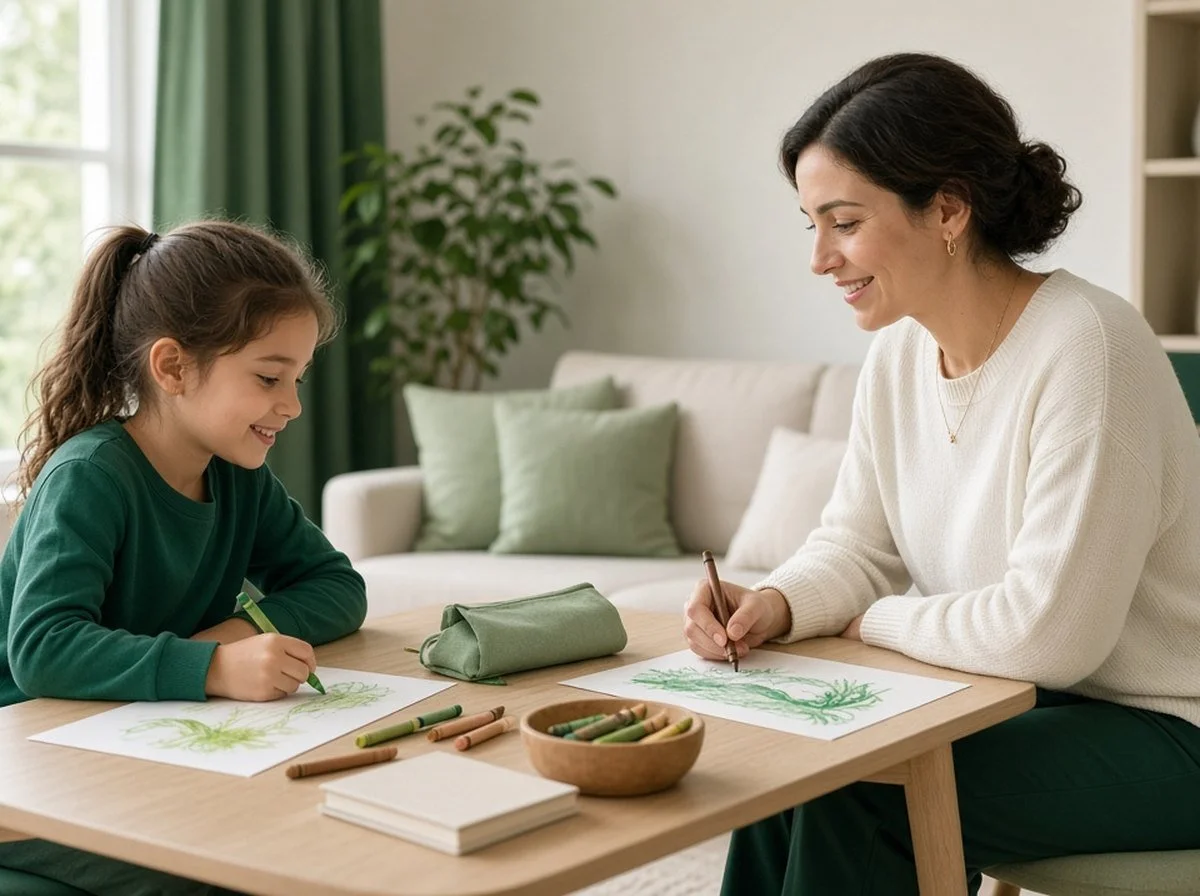
Counselling gives your child a safe place to talk, play and make sense of their feelings with a trained professional. For younger children, sessions often use play, drawing and games. Parents are usually involved, so you learn ways to support your child at home too. Family therapy can also help when the whole family is feeling the strain.
We offer counselling for children ages 6 and up in person at our Kitchener-Waterloo, Cambridge and Ottawa offices, or online. Parents can also book online counselling for themselves anywhere in Ontario. If you're in Cambridge, our guide on choosing a child therapist in Cambridge explains what to look for.
Sessions with our therapists range from $130 to $200, depending on the clinician.
Depending on your plan, insurance may cover some or all of the cost. Coverage varies, so check your plan.
We accept Health Spending Accounts (HSAs).
We can direct bill many insurers, including for sessions with a Registered Psychotherapist (Qualifying). Desjardins is the exception: through TELUS eClaims, we can direct bill Desjardins for sessions with an RSW, RP or psychologist, but not for an RP (Qualifying).
When an assessment helps
Sometimes low mood sits alongside questions about attention, learning or worry. A psychological assessment can help you understand the full picture. Our psychologists assess children, teens and adults at every office, Ottawa included. Our guide to psychological assessments in Ottawa explains how the process works. For assessment fees, ask during your free consultation.
Book a free 15-minute consultation with our admin team. You don't need to be sure what's going on. "I'm worried about my child" is enough.
If you're in crisis: if your child or anyone else is in immediate danger, call 911. If anyone is having thoughts of suicide or self-harm, call or text 9-8-8 any time, day or night. Our crisis lines page lists both.
You know your child best. Trusting that something feels off is a good place to start.
Last reviewed: October 2026
Sources
Depression: Signs and symptoms, AboutKidsHealth (SickKids)
Child and Adolescent Mental Health, National Institute of Mental Health (NIMH)
Depression in Children and Teens, American Academy of Pediatrics (HealthyChildren.org)