
Sexual performance anxiety is worry or fear about how you will do during sex. It can affect anyone, of any gender, and it is far more common than most people think. With understanding and the right support, the pressure can ease, and sex can feel more relaxed and connected again.
This post is general information for adults, not medical advice or a diagnosis.
What sexual performance anxiety is
Sexual performance anxiety means feeling nervous, tense or afraid about sex, often about whether you will “perform” well. You might worry about pleasing your partner, about your body or about how things will go.
A 2020 review in Sexual Medicine Reviews describes sexual performance anxiety as one of the most common sexual complaints. It also notes that there is no formal diagnosis for it, so research on how to treat it has been limited (Pyke, see Sources).
That means many people feel it without a clear name for what is happening. If you have felt this way, you are not broken, and you are not alone.
How anxiety can affect sex
Anxiety and arousal do not mix well. When you feel worried, your mind and body get ready to deal with a threat. That is the opposite of the calm, safe feeling that helps desire and pleasure.
Many people get caught in a worry loop:
You worry before or during sex that something will go wrong.
You start watching yourself, almost like a spectator, instead of being present.
Your body responds to the stress, and things do not go as you hoped.
The next time, you worry even more.
Over time, this kind of performance anxiety in bed can make sex feel like a test. Some people start to avoid intimacy just to avoid the worry. The 2020 review notes that this kind of anxiety can lower sexual desire and play a part in other sexual difficulties (Pyke, see Sources).
Common reasons it happens
There is rarely one single cause. Some common reasons include:
Pressure and expectations. Ideas about how sex “should” go, or how long it “should” last.
Past experiences. A painful, awkward or hurtful experience can leave you on guard.
Body image. Worry about how you look can make it hard to relax.
Stress. Work, money or family stress can follow you into the bedroom.
Relationship strain. Conflict, distance or a lack of trust can add tension.
New relationships. Wanting to impress a new partner can raise the stakes.
General anxiety. If you tend to worry in other parts of life, it may show up here too.
MedlinePlus, from the U.S. National Library of Medicine, notes that stress and emotional problems can be factors in sexual problems in men. For women, it lists work stress, anxiety, depression and relationship concerns among the possible psychological causes (see Sources). Sexual problems can also have physical causes, so it helps to keep an open mind about what is going on.

Sexual performance anxiety in men and women
Sexual performance anxiety in men often centres on erections, lasting long enough or satisfying a partner. Men may feel they have to prove something, which can make the worry loop stronger.
Sexual performance anxiety in women can look like worry about arousal, reaching orgasm, how their body looks or whether a partner is enjoying themselves. The 2020 review found it can strongly dampen desire in women (Pyke, see Sources).
People of all genders and in all kinds of relationships can feel it. The details differ, but the core is often the same: worry pulls you out of the moment.
Ways to ease the pressure
Small changes can help take the pressure off. You may find some of these useful.
Shift the goal. Focus on closeness, touch and pleasure, not on a set outcome. Sex does not have to follow a script.
Slow down. Spend more time on touch, kissing and connection. Less rush often means less worry.
Breathe and notice. When anxious thoughts show up, bring your attention back to your breath and to what you can feel right now.
Talk about it. Sharing your worry with a partner can take away a lot of its power.
Challenge the “shoulds.” Notice thoughts like “I should be able to…” and ask where they come from. Many come from myths, not real life.
Look after stress outside the bedroom. Sleep, movement and downtime can lower your overall stress level.
How partners can help
If your partner has sexual performance anxiety, your support can make a real difference.
Listen without judging, and thank them for telling you.
Let them know you care about closeness, not “performance.”
Keep the tone warm and light, without pressure.
Avoid taking it personally. It is usually not about you.
Be patient. Change can take time.
Many couples find that talking openly brings them closer, even before anything else changes.
When to talk to a sex therapist
It may help to talk to someone if:
Worry about sex has lasted for months
You avoid intimacy because of anxiety
It is causing distress for you or your partner
It is creating tension or distance in your relationship
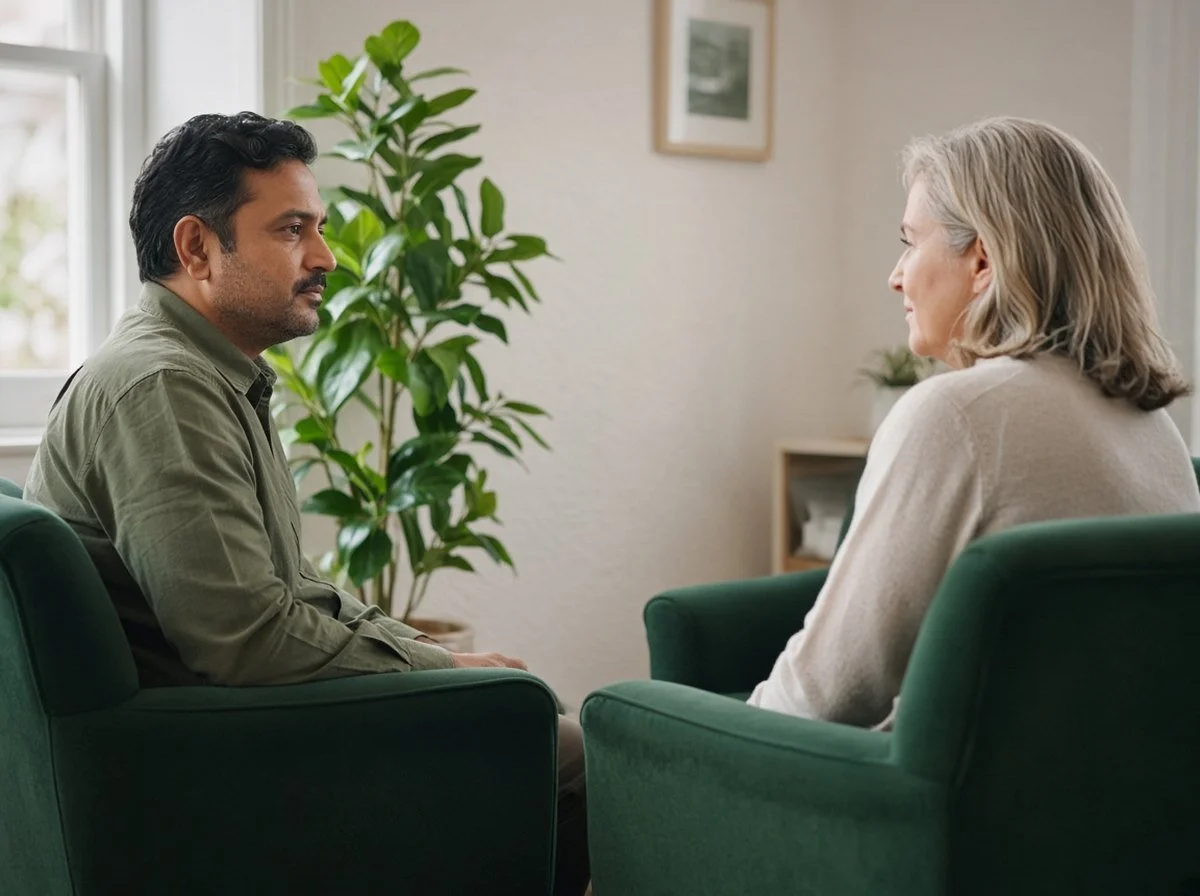
Seeking help is a sign of care for yourself and your relationship. Sex therapy is talk therapy. There is no physical exam or touching in sessions. Our post on what happens in sex therapy explains what to expect.
If you are thinking about suicide or hurting yourself, call or text 9-8-8 now. If you or someone else is in immediate danger, call 911.
How sex therapy and counselling can help
A sex therapist can help you understand where the anxiety comes from and find new ways to feel at ease. The 2020 review notes that cognitive behaviour therapy and mindfulness training are recommended for sexual performance anxiety, although more research is still needed (Pyke, see Sources).
Sexual performance anxiety treatment in therapy is talk based. In sessions, you might:
Learn how the worry loop works and how to step out of it
Explore beliefs and past experiences that add pressure
Practise ways to stay present and calm
Improve communication with a partner about needs and fears
You can come on your own or with a partner. Learn more about our sex therapy and couples counselling. For online couples sessions, both partners need to be in Ontario.
We offer counselling at our Kitchener-Waterloo, Cambridge and Ottawa offices, and online across Ontario. Every clinician on our team is registered with their college.
Common questions about sexual performance anxiety
What is sexual performance anxiety? It is worry or fear about how you will do during sex, often about pleasing a partner or how your body will respond.
Can anxiety affect sexual performance? Yes. Worry can pull you out of the moment and make it harder to relax and feel aroused.
How do I stop overthinking during sex? Slow down, focus on touch and closeness and gently bring your attention back to your breath and body.
Do women get sexual performance anxiety too? Yes. People of all genders can feel it.
Can sex therapy help with performance anxiety? Many people find it helpful. A sex therapist can help you understand the worry and practise new ways to feel at ease.
Billing and your first step
We accept Health Spending Accounts (HSAs).
We can direct bill many insurers. Coverage depends on your plan, so check with your insurer before you start.
You do not have to figure this out alone. Book a free 15-minute consultation to talk with us about sex therapy, in confidence.
If you’re in crisis: if you or someone you love is in immediate danger, call 911. If you’re thinking about suicide, call or text 9-8-8 any time, day or night.
Last reviewed: October 2026
Sources
Pyke RE. “Sexual Performance Anxiety.” Sexual Medicine Reviews. 2020;8(2):183-190. https://pubmed.ncbi.nlm.nih.gov/31447414/
MedlinePlus. “Sexual Problems in Men.” https://medlineplus.gov/sexualproblemsinmen.html
MedlinePlus. “Sexual Problems in Women.” https://medlineplus.gov/sexualproblemsinwomen.html