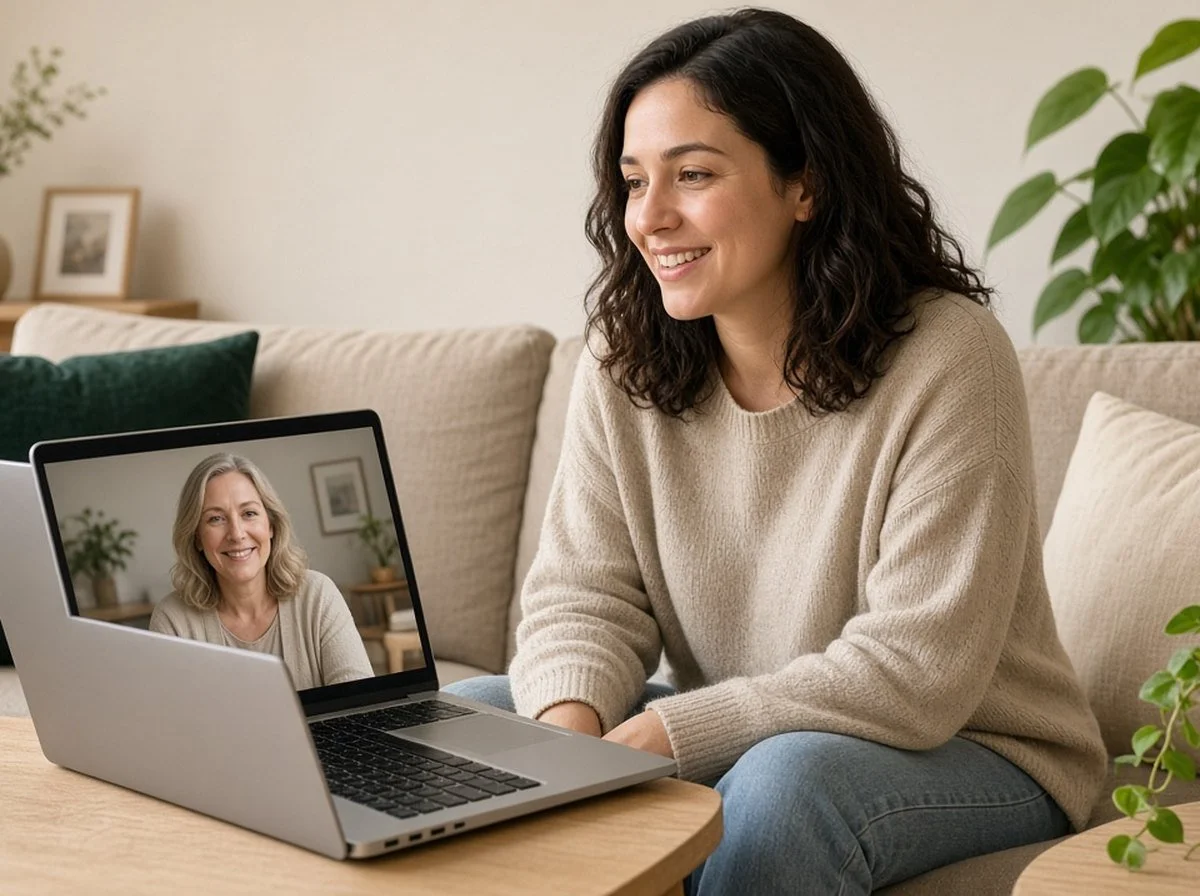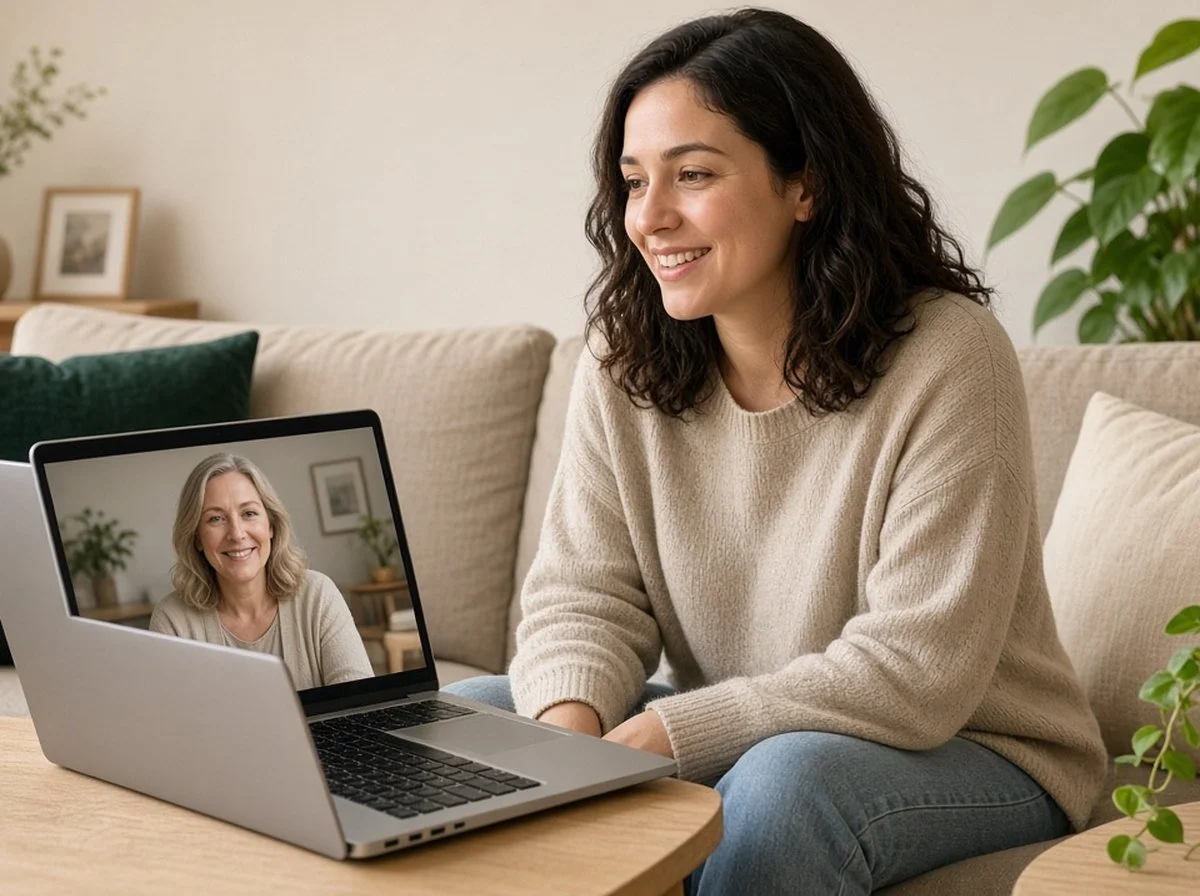
In person therapy gives you a room you have to travel to. Online therapy gives you the same hour without the travel, and takes the room away with it. Nearly everything that matters in online vs in person therapy comes down to that one trade.
We offer both, at our offices in Waterloo, Kitchener, Cambridge and Ottawa and by video, so we don't need you to pick one. This article compares the two honestly: what stays the same, where they differ, what the research says, and how to choose.
Online vs in person therapy in Ontario, the one-line difference
The hour is the same hour. Same therapist, same approach, same session length, same professional standards behind it.
What changes is everything around the hour. In person, the trip does work you don't notice. The drive there is where you sort out what to say, and the drive home is where the session settles. The room is neutral ground, nobody knocks on the door, and the hour has a clear edge around it.
Online, that structure is gone. So are the barriers it came with. No parking, no commute, no childcare gap to cover, no rescheduling because the highway is closed in February. For many people, that turns weekly therapy from an intention into something that actually happens, and showing up consistently matters a lot.
Torn between the two? A free 15-minute consultation can settle it faster than a pros and cons list.
Where online and in person therapy overlap
Mostly, the clinical part.
The professional rules are the same. A registered psychotherapist, psychologist or social worker in Ontario has the same duties on video as in a room: confidentiality, record keeping, consent and the same complaints process. Virtual counselling isn't a lighter version of the service.
The approaches travel well too. CBT, ACT, DBT skills and most talk therapy for anxiety, depression and relationship issues don't depend on being in the same room.
Your file is the same file. Notes, consent forms and receipts are handled the same way whichever format you choose.
Where online and in person therapy differ
Often a better fit in person: trauma processing, dissociation, young children, and anyone who can't get privacy at home.
Often a better fit online: busy weeks, long drives, rural areas, and mobility or health limits that make travel hard.
Privacy: in person, almost no risk once you're inside. Online, it depends on who else is home and how thin the walls are.
What your therapist can see: in person, your whole body, your breathing and what your hands are doing. Online, mostly your face and shoulders, which is a real loss.
If you freeze up: in person, someone is with you until it passes. Online, the call can end and you're alone in the room you froze in.
Hidden costs: in person, travel, parking, time off work and childcare. Online, a reliable connection and one uninterrupted hour.
Missed sessions: in person, weather, traffic and sick kids all get in the way. Online, fewer things do.
The row about freezing up is the one therapists weigh most. If the work involves trauma processing, panic that builds during the session, or dissociation, being in the same room matters. You can be helped back down before you leave. On a video call, the session ends and the window closes. If you're interested in EMDR, ask whether online or in person suits you better before you book.

Is online therapy as effective as in person?
It's the most searched question in this whole comparison, and for most people the answer is reassuring. A 2021 review that pooled many studies found that video-based mental health care produced results similar to in-person care overall.
What tends to matter more than format is whether you and your therapist are a good fit, whether you practise between sessions, and whether you keep showing up. A format you'll actually attend beats one you admire and cancel.
Where format does change things is narrower. Complex trauma work, sessions with children too young to stay with a screen, situations where someone at home is part of the problem, and homes with no private hour. In those cases the room isn't just a preference.
Privacy and insurance for online therapy
Privacy. A secure platform is the easy part. The harder part is your end. Think about who else is home, who can hear you, and whether you'll hold back because of it. Headphones help. A parked car can work better than people expect. If neither is possible, that may answer the format question for you.
Insurance. Many extended health plans cover counselling, and in many cases we can bill your insurance directly, depending on your plan and your therapist. Depending on your plan, your insurance may cover the full session fee. Plans differ, so if you're unsure whether yours treats video sessions the same as office visits, check your plan details before you book.
How to make an online session work at home
If you choose video, a little setup goes a long way.
Find the same spot each week. A consistent chair or room helps your brain treat the hour as therapy, not just another call.
Test your connection and audio first. A quick check a few minutes early saves the first ten minutes of the session.
Close everything else. Turn off notifications and shut other tabs, so the hour stays yours.
Build in your own "drive home". In person, the trip back gives a session time to settle. Online, give yourself ten minutes afterward for a walk, a cup of tea or a few notes before you jump back into your day.
Tell your therapist what isn't working. If the screen feels awkward or you're holding back, say so. It's useful information, and it can often be fixed.
Which to start with, and when to switch
A useful rule: start with whichever format gets you to a first appointment this month. The exception is trauma processing, where it's best to start in a room if you can.
Choose in person if:
your home has no private hour
you tend to drift away from things that don't involve going somewhere
you know you dissociate or freeze
being on camera makes you edit yourself
Choose online if:
getting there is the reason you'd cancel
you live far from our offices
your week is unpredictable
mobility or illness makes travel hard
leaving the house has been the whole battle lately
Can I switch formats later? Yes, and it's normal rather than a restart. Because we offer both formats, you can talk with us about switching instead of starting your search from scratch. Plenty of people start in a room and move online once the work is underway, or keep a regular online slot and come in for the harder stretches.
People often move from online to in person when the work gets heavier, someone moves into the house, or sessions start to feel like one more video meeting. Going the other way is usually about logistics, like a new job, a new baby or winter driving. Either way, it's a scheduling change, and you don't have to justify it.
Neither format is a crisis service. If you're in crisis, call or text 9-8-8 any time. In Waterloo Region, call Here 24/7 at 1-844-437-3247. In Ottawa, call the Mental Health Crisis Line at 613-722-6914 (adults) or the Youth Services Bureau crisis line at 613-260-2360 (youth). If you're in immediate danger, call 911 or go to the nearest emergency department.
How to get started
Learn more on our online counselling page, or read about the anxiety counselling we offer in both formats. Sessions with our therapists are $130 to $200, and there is a one-time $50 setup fee. You won't need a referral, and we don't have a waitlist.
Taking the first step
Pick whichever format gets you to a first appointment, and change your mind later if it suits you. A free 15-minute consultation is a good place to start.