
If your partner yells at you, the first questions are often “is this normal?” and “what should I do now?” Raised voices happen in some conflicts. They are not something you have to accept as the usual way of talking, and they are not your fault. If you are afraid, safety comes first.
Is it normal for a partner to yell?
A raised voice in a tense moment is not rare. A pattern of yelling in a relationship, especially over small things, is a different problem. If you are living with a partner always yelling at me as an everyday reality, that pattern deserves attention.
People search phrases like “my husband yells at me” and “my wife yells at me” because the shame can feel isolating. Yelling can come from any partner, of any gender. This article speaks to that experience without blaming you or excusing the yelling.
Yelling can leave you tense, small or unable to think clearly. That effect matters even when the words that follow are “I was just upset.” You can care about your partner and still say that this way of fighting is not okay.
One hard night does not settle the whole relationship. Repeated yelling, especially when it is used to control, frighten or shut you down, is a sign that something needs to change.
When yelling is not safe
What to do when your partner yells at you depends first on whether you feel safe. If you are in immediate danger, call 911. That includes times when you fear you will be hurt, when someone is being physically harmed or when you cannot leave a situation safely.
Yelling that comes with threats, smashed objects, blocking a doorway or harm to you, a child or a pet is not just a communication problem. In those moments, the task is safety, not a better script for the talk.
If you feel afraid of your partner, you do not have to “talk it out” in the same room in order to get help. Individual support can come first. Couples counselling is not a good fit when you are scared of the person you would sit with.
You also do not need to decide today whether to stay or leave. This article will not tell you that. It will not label your partner. It will help you notice danger, care for yourself in the moment and plan a later talk only if that feels safe.
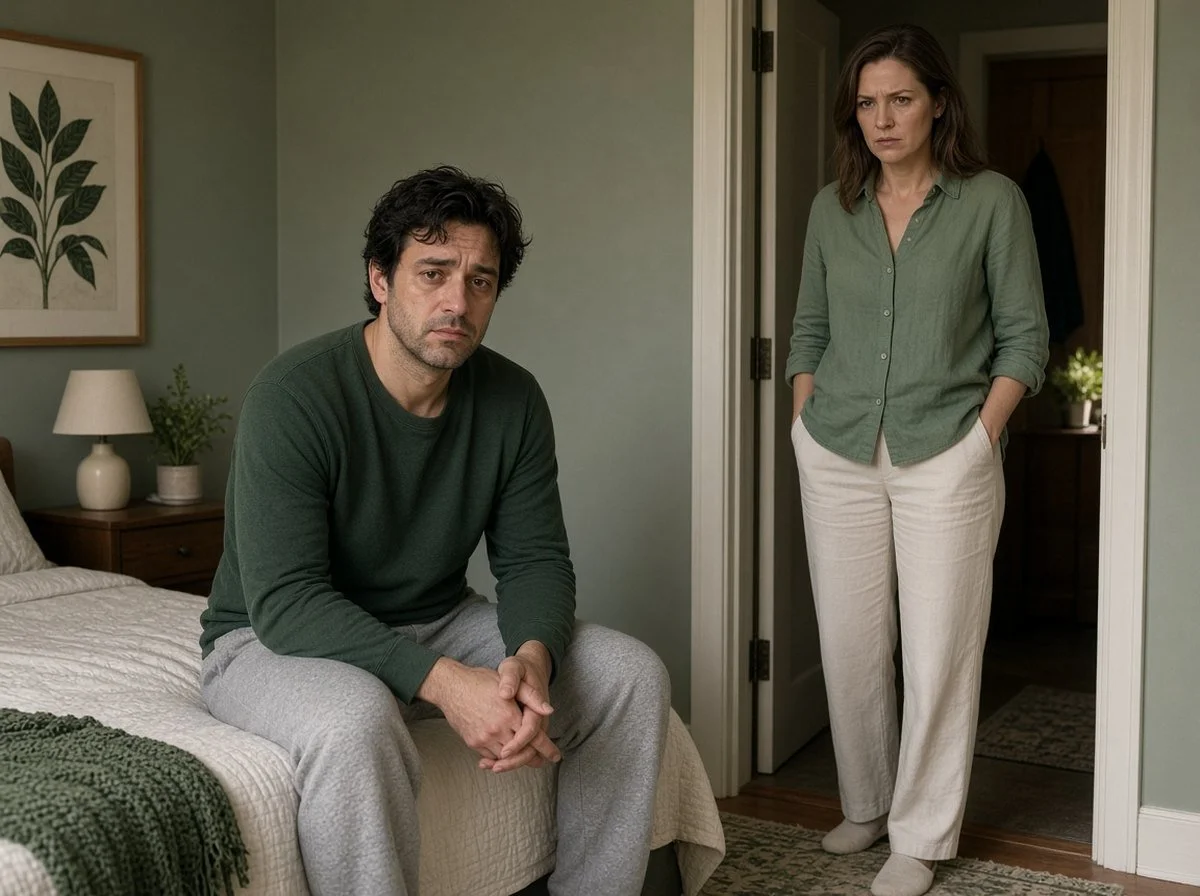
Why some people yell in a relationship
People yell for many reasons: feeling unheard, old family habits, stress, shame or a need to win. None of those reasons makes the yelling acceptable. An explanation is not an excuse.
Some people yell when they feel flooded and cannot stay in a calm conversation. Others use volume to take control of the room. The difference matters for what happens next, but you do not have to diagnose your partner in order to protect yourself.
Yelling can also travel with other harsh patterns. Our article on the Gottman four horsemen looks at those patterns in more detail. This post will not repeat that list. The point here is simpler: yelling is one way conflict can become harmful, and it is worth taking seriously.
Research has also found that harsh verbal conflict and physical violence can be more closely linked when a couple’s communication is poorer, and when the couple is under heavier outside strain. That finding, from Hammett and colleagues, is a general pattern. It is not a verdict on your home. It is one more reason to treat yelling as important, especially if you already feel unsafe.
What to do in the moment
If the yelling is not immediately dangerous, you can still step out of the heat. You might say, “I want to talk about this, and I cannot do it while we are yelling. I am going to take a break.” Then leave the room if you can do so safely.
Keep your own voice lower if you can. Matching volume often makes the fight worse. You do not have to win the point in that moment.
If you cannot leave, try to keep the exchange short. You do not need to defend every charge while someone is shouting. You can repeat that you will talk later, then stop adding fuel.
Writing from the Gottman Institute describes taking about 20 minutes to calm your body after a flooded conflict, then returning to the conversation when you can. Use a timeframe that is safe for your situation. A break is not a way to avoid the issue forever.
How to talk about it later
Choose a calmer time, not the moment right after the fight. Sit at a table or take a walk, if that feels safer than standing in the same doorway where the yelling happened.
Speak from your experience and from specific moments. “I felt scared when you yelled about the dishes last night” is clearer than “you are always angry.” Ask for one change, such as agreeing to pause when voices rise.
Our guide to how to set boundaries in a relationship can help you put that limit into words. A boundary might be, “If yelling starts, I will leave the room and we can try again later.” Follow through if you can do so safely.
If they listen, even imperfectly, that is useful information. If they mock you, threaten you or turn the talk into another shouted fight, stop. You do not have to keep practising a conversation that puts you at risk.

If you are the one who yells
If you are reading this because you yell, the same rule applies: yelling is not okay, and you can still change the pattern. Waiting until you “feel ready” often means waiting too long.
Notice the early signs in your body: heat, a tight chest, a rush to win. That is the moment to pause, say you need a break and step away. Come back when you can talk without raising your voice.
Later, own the yelling without making your partner comfort you. “I yelled, and that was not okay. I want to hear what that was like for you” is a start. Then listen.
If this happens often, get support. Individual counselling can help you understand the pattern and practise other ways of handling anger. Joint work can be considered later only if both of you feel safe enough to do it.
If you are thinking about suicide or hurting yourself, call or text 9-8-8 now. If you or someone else is in immediate danger, call 911.
How counselling can help
If you feel afraid, individual counselling is the safer starting point. You can talk through what is happening, what you need and how to feel more steady, without sitting in the same session as someone you fear.
If both of you feel safe enough and want to work on conflict, couples counselling can be a later step. For online couples sessions, both partners must be in Ontario during the session. They may join from different places. Anger counselling can also be named as an option in a consultation if that is the right fit.
If yelling has become part of your relationship, book a free 15 minute consultation and we can help you work out what you need to feel safe and heard.
Your next step
You can book a free 15-minute consultation with our admin team. It is a chance to explain what you are looking for, ask questions and discuss current options. You do not have to know which therapy approach to request.
We offer counselling at our Kitchener-Waterloo, Cambridge and Ottawa offices and online. Ask about the option that fits your needs. The consultation is not a therapy session or crisis service, and booking it does not commit you to ongoing appointments.
If you or someone you love is in immediate danger, call 911. If you are thinking about suicide, call or text 9-8-8, any time.
Last reviewed: November 2026
Sources
When does verbal aggression in relationships covary with physical violence? https://pubmed.ncbi.nlm.nih.gov/34178418/
The Gottman Institute. The Four Horsemen: Criticism, Contempt, Defensiveness, and Stonewalling. https://www.gottman.com/blog/the-four-horsemen-recognizing-criticism-contempt-defensiveness-and-stonewalling/