
Your partner laughs at a text, and your stomach drops. You wonder who it's from. You tell yourself it's nothing, but an hour later you're still thinking about it, scrolling their followers or asking a question you already know will start a fight. Afterwards you feel embarrassed and a little out of control. Jealousy in relationships is something almost everyone feels at some point. This guide looks at where it comes from, how to stop the checking loop, and when jealousy turns into something more serious.
This post is general information, not a diagnosis. Only a qualified professional can assess what you're experiencing.
Is jealousy in relationships normal?
Yes, feeling jealous sometimes is a normal human emotion. It usually shows up when we sense that something or someone we care about might be at risk. Psychology Today describes jealousy as a complex emotion that can range from suspicion to fear to humiliation, most often set off when someone senses a threat to a valued relationship, whether that threat is real or imagined. A flash of jealousy when your partner gets a lot of attention from someone else doesn't mean you're a bad partner or that your relationship is broken.
Healthy jealousy tends to be brief and manageable. You notice it, maybe talk about it, and it fades. It can even point to something useful, like a need for more time together or reassurance during a stressful season.
Jealousy becomes a problem when it starts running the relationship. That's when it leads to checking, accusing, testing or controlling, and when it leaves both of you feeling anxious, watched or misunderstood.
Why am I so jealous in my relationship?
There's rarely one cause. Usually a few things work together.
Insecurity and self-worth. If part of you doubts you're lovable or "enough," it's easy to read any attention your partner gives someone else as proof you could be replaced.
Past betrayal. If you've been cheated on or lied to before, in this relationship or an earlier one, your mind may be on high alert, scanning for signs it's happening again.
Attachment patterns. Researchers have long linked jealousy to how we bond with the people we depend on. A 1997 study in the Journal of Personality and Social Psychology found that people's attachment styles were related to how they experienced and expressed jealousy. Our post on anxious vs avoidant attachment explains these patterns in plain language.
Social media and comparison. Likes, follows and old photos give the jealous mind lots of material. A 2025 study from Quebec followed 322 young adults in relationships over two years. It found that jealousy related to social media was linked with more electronic partner surveillance, such as checking a partner's online activity, and with lower relationship satisfaction a year later.
None of this means you're stuck. Understanding where your jealousy comes from is often the first step to loosening its grip.

Jealousy in relationships examples
Jealousy doesn't always look dramatic. It often shows up in small, repeated behaviours, such as:
checking your partner's phone, location or social media
reading hidden meaning into a message, emoji or like
needing to know where they are and who they're with at all times
asking for reassurance again and again, then not quite believing it
comparing yourself to their co-workers, friends or exes
feeling upset when they spend time with others, even people they've always seen
picking a fight instead of saying "I'm feeling insecure"
Many people also experience retroactive jealousy, which is distress about a partner's past relationships. It can follow the same loop.
That loop usually goes like this: a trigger, a jealous story, an urge to check or ask, a short moment of relief, and then doubt returns. Each round can make the next one feel more urgent.
How to stop being jealous and insecure in a relationship
You can't simply switch jealousy off. But you can change how you respond to it, and that changes the loop over time.
Some steps that many people find helpful:
notice the story: ask yourself, "What am I telling myself this means?" and "What else could explain it?"
delay the check: when you feel the urge to look at their phone or ask again, wait 20 minutes and see what happens to the feeling
name the feeling, not the accusation: "I felt a bit insecure when you didn't text back" lands very differently than "Who were you with?"
build your own security: invest in friendships, interests and goals that are yours, so your sense of worth doesn't depend on one person
agree on fair transparency together: talk openly about what feels respectful for both of you, rather than secretly monitoring
be kind to yourself: shame tends to fuel jealousy, while self-understanding tends to calm it
If insecurity is at the root, working on self-worth can make a real difference. Our self-esteem counselling page explains how that work can help.
If your partner is the jealous one
Living with a jealous partner can be exhausting. You might feel like you're always explaining yourself or walking on eggshells.
It's reasonable to offer some reassurance, to be open about your plans and to be patient while your partner works on their insecurity. It's also reasonable to expect that they take responsibility for their feelings, rather than making you responsible for managing them.
It's not reasonable for a partner to demand your passwords, track your location, stop you from seeing friends or family, or punish you for normal contact with others.
This is where jealousy can become control. The Department of Justice Canada describes family violence as someone using abusive behaviour to control or harm a family member or intimate partner. The Government of Canada's guide to recognizing family violence lists using jealousy or possessiveness to control someone as part of family violence. It also lists controlling behaviours such as tracking where someone goes or who they talk to, and stopping someone from seeing friends or family.
If a partner's jealousy includes tracking you, controlling who you see, threats or making you afraid, that is not normal jealousy. If you are in danger, call 911. You can also call or text 9-8-8. In these situations, safety comes first, and couples counselling is not the right first step.
How counselling can help
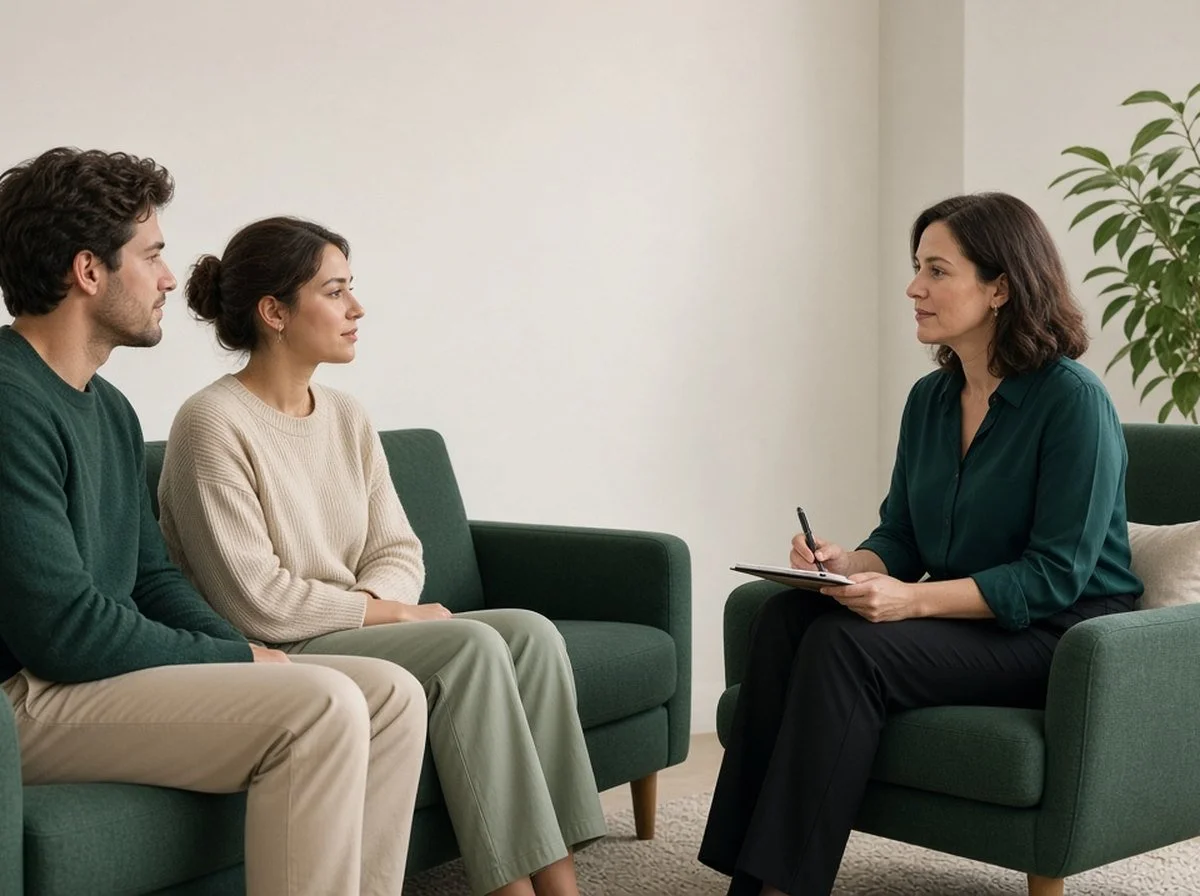
Jealousy often has deep roots, and it can be hard to untangle on your own. Counselling gives you a space to understand where it comes from and practise new ways of responding.
At Transformation Counselling, we offer individual counselling for jealousy, insecurity and anxiety, as well as couples counselling when both partners feel safe and want to work on trust together. We see people at our Kitchener-Waterloo, Cambridge and Ottawa offices, and online anywhere in Ontario.
In counselling, you can:
understand what triggers your jealousy and why
work on self-worth and attachment fears
practise talking about insecurity without accusing
rebuild trust after past hurts
On the practical side, we can direct bill many insurers, including for sessions with a Registered Psychotherapist (Qualifying). Desjardins is the exception: through TELUS eClaims, we can direct bill Desjardins for sessions with an RSW, RP or psychologist, but not for an RP (Qualifying). Coverage depends on your plan, so check with your insurer.
Book a free 15-minute consultation with our admin team. You don't need to explain everything on the call. "I get really jealous and I want to change that" is enough to start.
If you're in crisis: if you or someone you love is in immediate danger, call 911. If you're thinking about suicide, call or text 9-8-8 any time, day or night.
Jealousy is a feeling, not a fact. With some understanding and support, it can stop running your relationship.
Last reviewed: October 2026
Sources
Attachment Anxiety and Relationship Satisfaction in the Digital Era: The Contribution of Social Media Jealousy and Electronic Partner Surveillance, Metellus S, Vaillancourt-Morel MP, Brassard A, Daspe ME, Journal of Marital and Family Therapy, 2025
Sharpsteen DJ, Kirkpatrick LA. Romantic jealousy and adult romantic attachment. Journal of Personality and Social Psychology, 1997;72(3):627-40 (PubMed 9120787)
Department of Justice Canada. About Family Violence. justice.gc.ca
Jealousy, Psychology Today Basics
How to recognize family violence, Public Health Agency of Canada (canada.ca, accessed October 2026)