
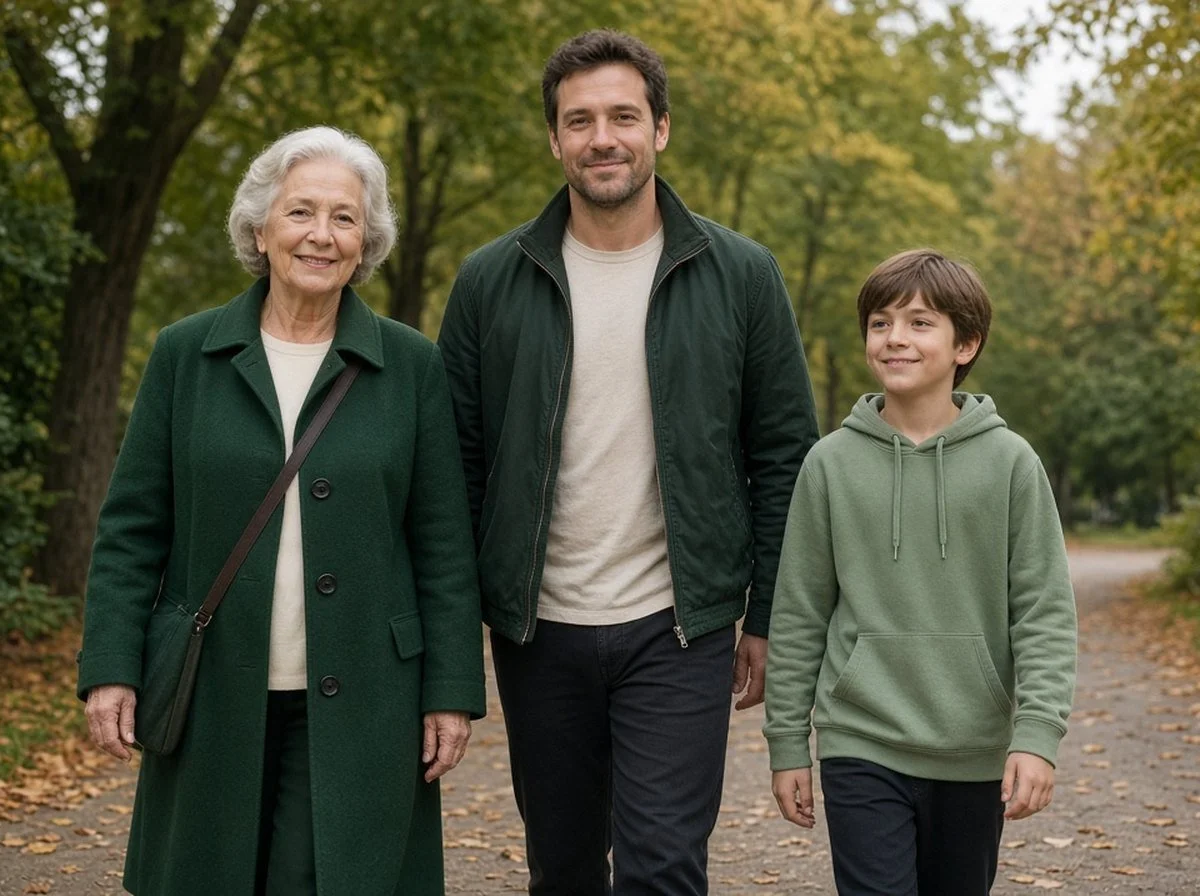
You notice you react to stress the way your parent did. Maybe your family never talked about feelings, or about the past. Maybe your grandparents lived through war, loss or forced separation, and the effects still seem to linger. If you see painful patterns repeating in your family, you're not imagining it. This post explains intergenerational trauma, how it can pass down and how cycles can change.
This post is general information, not a diagnosis or medical advice. It is written with respect for every family and community.
Intergenerational trauma meaning
Intergenerational trauma describes how the effects of trauma in one generation can shape the next. A grandparent or parent lives through something very hard, such as war, violence, forced loss of home or deep poverty. The pain doesn't always end with them. It can show up in how they parent, what they talk about and what they keep silent about. Then it can affect their children and grandchildren.
It is a way of understanding a family's story, not a diagnosis. It also isn't about blame. Most parents do their best with what they were given. Many of them were never offered support for what they went through. Understanding that can make room for both honesty and compassion.
Intergenerational trauma vs generational trauma
You'll see a few terms used for this idea, including intergenerational trauma, generational trauma and transgenerational trauma. In everyday use, they mean much the same thing. Some writers use "transgenerational" for effects that reach grandchildren and beyond. The main idea is the same: the impact of trauma can pass through families over time.
How trauma can pass down through families
Researchers are still learning how this happens. A review by Yehuda and Lehrner explains that children of trauma survivors may show effects linked with their parents' trauma. Researchers are studying both family experiences and possible changes in how the body handles stress.
It's important not to overstate the biology. Studies on how stress might affect the body across generations are still early, and many have been done in animals. Trauma is not written into anyone's fate. Most of what we know points to everyday family life:
Parenting styles. A parent who grew up afraid may be very strict, very anxious or hard to reach emotionally.
Silence. Families may not talk about the past, so children sense pain without understanding it.
Stress in the home. Ongoing stress, money worries or conflict can shape how safe a child feels.
Learned ways of coping. Children often copy how adults handle feelings, for better or worse.
Generational trauma examples in families
Every family is different. Some patterns people notice include:
Not talking about feelings, or feelings being seen as weakness
Harsh, fearful or very anxious parenting
Children taking on adult jobs, like caring for a parent or siblings
Anger or drinking patterns that repeat across generations
Always being on alert, even when things are safe
Strong pressure to succeed, or fear of standing out
A deep silence about where the family came from
Seeing a pattern in your family doesn't mean something is wrong with you. It means you're noticing, and noticing is the first step to change.
It can also help to talk with family members, if it feels safe. An older relative may be able to share parts of the family story you never heard. Some people find this brings them closer. Others find family members aren't ready to talk, and that's okay too. You can still do your own healing, even if the whole story stays unclear.
Intergenerational trauma in Canada
Content note: this section mentions residential schools.
In Canada, research describes the lasting effects of Indian Residential Schools on the children and grandchildren of Survivors. A Canadian review by Bombay, Matheson and Anisman explains that the harms of these schools have affected families and communities across generations. It also notes that these effects can mix with the stress of daily life today.
Healing looks different for each person, family and community. Each person gets to choose their own path.
Newcomer and refugee families can also carry the effects of war, loss and displacement. Parents may have lived through things they don't talk about. Their children, raised in a new country, may feel that weight without knowing its source. Our page on immigration trauma explains how counselling can help.
We offer counselling for Indigenous people and counselling for refugees. You can ask our admin team about either when you reach out.
Signs family history may be affecting you
You don't need to know your whole family story to feel its effects. You might notice:
Strong reactions that feel bigger than the moment
Trouble trusting people or feeling safe, even when things are calm
Feeling numb, or feeling everything very deeply
Worry that you will repeat what your parents did
A sense of shame or sadness you can't quite explain
Feeling torn between your family's ways and your own
These signs can have many causes. A counsellor can help you sort out what is going on. You don't have to work it all out by yourself.
How to break generational trauma
You can't change the past. But you can choose what you carry forward. Lehrner and Yehuda note that families and communities also pass down strength, resilience and ways to adapt.
Steps that can help:
Notice the patterns. Write down what you saw growing up and what you'd like to keep or change.
Calm your body. Slow breathing, walks and rest help your stress system settle.
Learn new ways to relate. Practise naming feelings and asking for what you need.
Repair when you slip. No one breaks a cycle perfectly. Saying sorry and trying again is part of it.
Be kind to yourself. This is hard work, and you're doing it without a map.
Honour what was good. Many families pass down love, humour, faith, food and culture too.
If you or someone you love is in immediate danger, call 911. If you are thinking about suicide, call or text 9-8-8, any time.
How counselling can help with intergenerational trauma
Counselling offers a safe place to understand your family's story and how it lives in you today. A counsellor won't ask you to blame your parents. Instead, you can explore what happened and decide what you want for yourself and your family.
In counselling, you might:
Make sense of family patterns and where they came from
Work through your own painful memories
Learn skills to calm stress and strong feelings
Build new ways of relating to loved ones
Approaches like Internal Family Systems therapy can help you understand the different parts of you that formed to cope. EMDR and family therapy can also help, depending on your goals. If you're unsure where to start, our post on the best therapy for childhood trauma in adults explains some options.
You can see us in Kitchener, Waterloo, Cambridge or Ottawa, or by secure video from anywhere in Ontario.

Cost, billing and your first step
We accept Health Spending Accounts (HSAs).
We can direct bill many insurers. Coverage depends on your plan, so check with your insurer before you start.
Book a free 15-minute consultation with our admin team. Let them know family patterns are what's bringing you in, and they'll help you find a good fit.
If you're in crisis: if you or someone you love is in immediate danger, call 911. If you are thinking about suicide, call or text 9-8-8, any time.
Last reviewed: October 2026
Sources
Intergenerational transmission of trauma effects: putative role of epigenetic mechanisms, Yehuda and Lehrner, World Psychiatry, 2018
Trauma across generations and paths to adaptation and resilience, Lehrner and Yehuda, Psychological Trauma: Theory, Research, Practice, and Policy, 2018
The intergenerational effects of Indian Residential Schools: implications for the concept of historical trauma, Bombay, Matheson and Anisman, Transcultural Psychiatry, 2014