
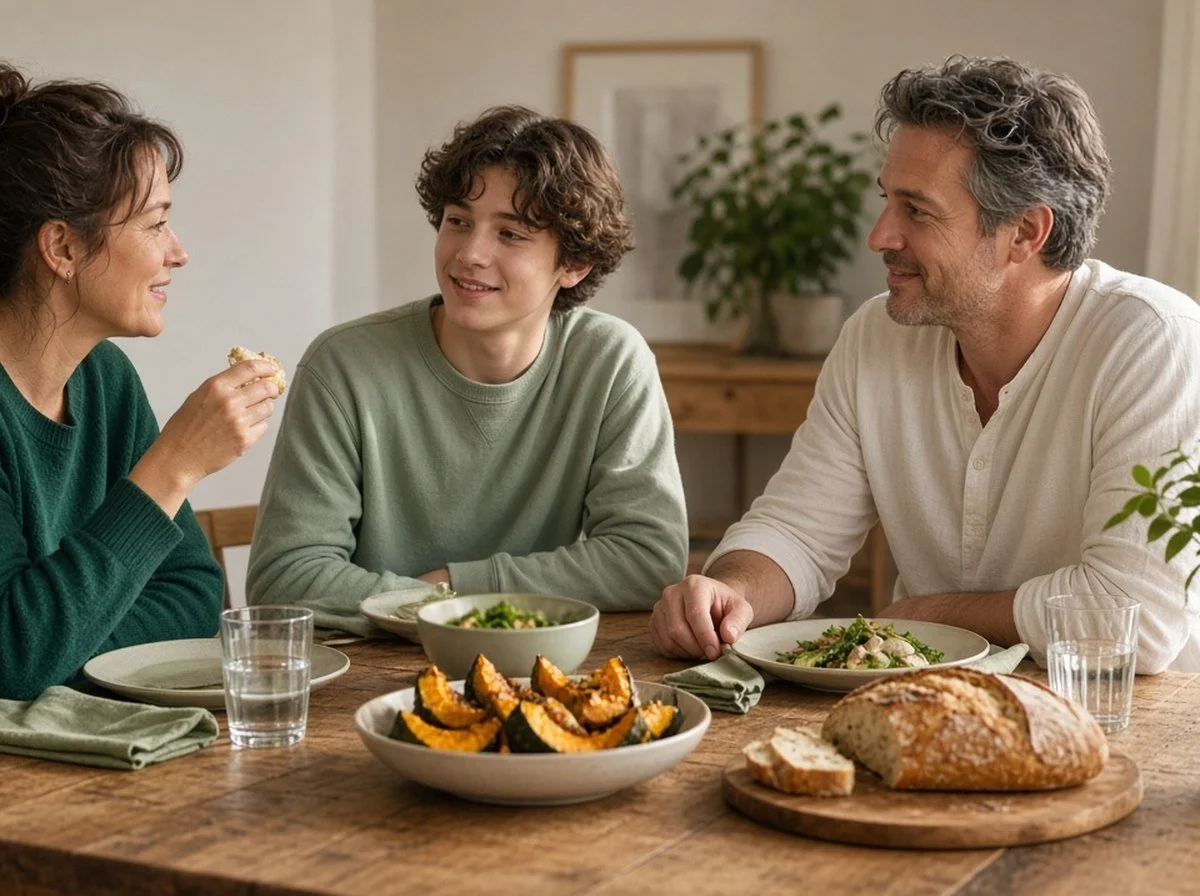
Canadian Thanksgiving falls on Monday, October 12, 2026. If you're already rehearsing the dinner in your head, the questions, the old roles, the long drive home, you're not being dramatic. You're planning. This page is a calm plan for before, during and after, so the day doesn't run you.
Feeling anxious before a family holiday is common. Crowded rooms, old expectations and a long table can wake up stress that is quiet the rest of the year. The goal here isn't a perfect dinner. It's getting through the day with your dignity and a way home.
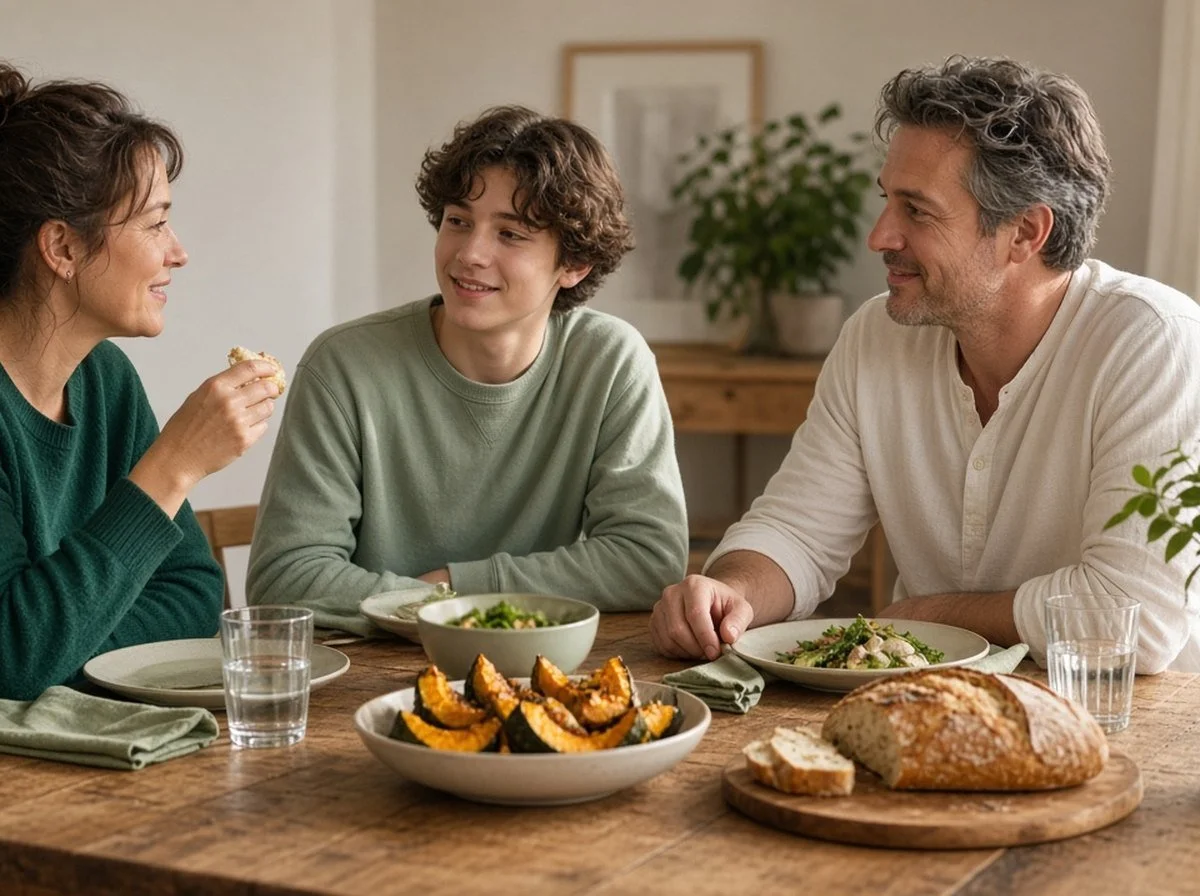
Why family holidays can feel so stressful
Family holidays often pull you back into roles you outgrew years ago. You may still be "the quiet one," "the peacemaker" or "the one who always helps in the kitchen," even if that is not who you are now.
The room itself adds pressure. More people, more noise, more watching. Alcohol can raise the temperature, so notice how the room changes if drinks keep coming. Topics that stay buried on ordinary Sundays show up next to the mashed potatoes: work, weight, relationships, money, politics, kids.
None of that means something is wrong with you. It means the day is loaded. NIMH describes how stress can show up in the body and in your thinking, and how simple coping steps can help when the pressure rises.
Decide what you want from the day before you go
A plan beats a hope. Before you leave, decide three things. Put them in a note on your phone so you are not deciding under pressure in the driveway.
How long you will stay. Two hours, four hours, or through dessert. Write the number down.
Where you will sit or stand. Near a quieter cousin. Near the door. Away from the person who starts fights.
What you will and will not discuss. Jobs, dating, weight, money, and politics are the usual traps. Pick your off-limits list now.
CMHA's holiday guidance says knowing your boundaries before a gathering helps you handle hard moments when they come up. You do not owe anyone a full explanation for needing space.
If you can, drive yourself or arrange your own ride home. Having an exit that does not depend on someone else's mood is a quiet kind of safety.
Scripts for the questions you know are coming
You do not need a speech. You need a short, kind redirect. Practise these out loud once so they are ready.
"I'm keeping that private for now. How's your garden doing this year?"
"Work is fine. Tell me about your trip."
"I'd rather not talk about weight at the table. This stuffing is great."
"We're figuring things out. What's new with you?"
"I'm going to skip politics today. Did anyone try a new pie?"
If they push, repeat the same line once, then change the subject or leave the room. You are allowed to protect the meal.
A useful rule: answer the question you wish they had asked. "How's work?" can become "I started a new project I like." You stay polite without handing over private details.
If social anxiety makes the day hard
Social anxiety can make a holiday table feel like a stage. Your body may heat up, your mind may go blank, and small talk can feel like a test. That response is your nervous system doing a job it learned long ago. It is uncomfortable, and it is also workable.
Small steps help more than big promises.
Arrive a little early, when the room is quieter, or a little late, when people are already settled.
Give yourself a job: bring a dish, clear plates, play with the kids, walk the dog.
Step outside for five minutes when your chest tightens. Feel your feet on the ground and slow your exhale.
Text a friend a short check-in: "Still here. Doing okay."
CAMH explains how anxiety differs from everyday worry, and NIMH covers anxiety disorders in plain language. If the dread of gatherings is running your year, not just this Monday, anxiety counselling is one place to start.

A plan for leaving early, calmly
Leaving early is not a failure. It is a boundary with a clock.
Pick your exit line before you arrive.
"I'm heading out, thank you for having me. This was lovely."
"I need to get on the road before it gets late. Happy Thanksgiving."
"I'm going to call it a night. Thanks for dinner."
Say it once, stand up, get your coat, and go. Do not wait for permission. If someone protests, repeat the line and keep moving.
A check-in buddy helps. Agree with a friend or partner that you will text when you leave, and that they can send a "need an out?" message at a set time.
If you live with the people hosting, the exit plan looks different. A walk around the block, a shower, or an early bedtime can be your version of leaving early. The point is the same: you get a break before you boil over.
Your first thanksgiving after a separation or a loss
Some Thanksgivings arrive with an empty chair, or with a table that used to be yours and is not anymore. Grief and separation change the day, even when the food looks the same.
You get to redesign the day. A shorter visit. A different host. A quiet morning walk before you go. A meal with chosen family instead of the usual table. None of that is disrespectful. It is honest.
Expect waves. A smell, a song, or an empty seat can catch you off guard. Plan one gentle thing for yourself afterward, even if it is only tea and a show you like.
If disrespect or old patterns are the main problem, our guide on how to deal with disrespectful family members has boundary tools that fit any season. If the ache is about loss, grief counselling is a soft place to land. You do not have to wait until January.
The day after
Plan a soft landing. Sleep, water, a walk, and something ordinary that is yours. Do not schedule a hard conversation for the morning after unless you truly want to. Your nervous system needs a quiet hour more than it needs a post-mortem.
Notice what worked: the length of stay, the seat you chose, the script you used, the moment you left. Notice what drained you too. Crowded kitchens, long goodbyes, and the relative who follows you into the hallway all count.
Write one change for next time while it is fresh. "Leave by 7." "Sit by Aunt M." "Skip the politics talk." Future-you will thank present-you.
If the gathering left you shaky for days, not hours, that is useful information. Holiday stress that keeps echoing is worth talking about. WHO's page on stress notes that stress is a normal response to pressure, and that ongoing strain can affect how you feel and function.
When holiday stress points to something bigger
A hard Thanksgiving does not mean you need therapy. Ongoing dread, sleep that will not settle, anger that spills into the week, or a sense that you disappear in your family might. If you find yourself counting down to the next holiday with the same knot in your stomach, the pattern is trying to tell you something.
Individual counselling can help you sort what belongs to the day and what belongs to a longer pattern. Family therapy can help when several people want to change how they show up together. You do not have to wait until everyone agrees that something is wrong.
A free 15-minute consultation lets you describe what this weekend is like, with no commitment. Individual sessions with our therapists are $130 to $200, and there is a one-time $50 setup fee for new clients, which is not charged for the free consultation. Depending on your plan, your insurance may cover the full session fee. We offer online sessions across Ontario, and offices in Waterloo, Kitchener, Cambridge and Ottawa.
If you do not feel safe
You do not have to attend a gathering where you are unsafe. If you are in danger, call 911. If you are in crisis or thinking about suicide, call or text 9-8-8 any time. In Waterloo Region, Here 24/7 is 1-844-437-3247.