
The trip is booked, and part of you is excited. Another part has been dreading it since the moment you clicked "confirm." You picture the takeoff, the bumps, the closed door, and your heart starts racing before you've even packed. Maybe you've skipped trips, driven for hours instead or white-knuckled your way through flights in silence. Fear of flying is common, and it's something you can work on. This guide explains why it happens and what can help before, during and after your next flight.
This post is general information, not a diagnosis. Only a qualified professional can assess what you're experiencing.
Why am I afraid of flying?
Feeling nervous about flying is very common. For some people, though, the fear becomes intense enough that it shapes travel plans, family visits or even job choices. When that happens, it may be a specific phobia.
NIMH defines a specific phobia as an intense, irrational fear of something that poses little or no actual danger. Mayo Clinic lists airplanes among the common situations people develop specific phobias about, and notes that specific phobias are common anxiety disorders.
People fear flying for different reasons. You might worry about:
the plane crashing
turbulence and the feeling of not being in control
having a panic attack in front of strangers
being unable to get off or step outside
being high up or in an enclosed space
A 2010 review by Oakes and Bor in Travel Medicine and Infectious Disease found that fear of flying is a heterogeneous problem, shaped by a mix of psychological, social and physical factors unique to each person. In plain words, two people with fear of flying can be afraid of very different things. Knowing what you're actually afraid of is an important first step.
Mayo Clinic also notes that many phobias start after a bad experience or a panic attack, and that even hearing about a bad experience, such as a plane crash, can sometimes be enough to start one.
Fear of flying anxiety, what happens in your body
Fear of flying often starts long before you get to the airport. You might notice:
dread in the days or weeks before the trip
trouble sleeping the night before
a racing heart, sweating or a tight chest
shortness of breath or dizziness
constant scanning for sounds or movements on board
Mayo Clinic lists sweating, a rapid heartbeat, a tight chest and trouble breathing among the physical reactions people with specific phobias can have. It also notes that anxiety can get worse as the feared situation gets closer, physically or in time.
Here's the tricky part. Avoiding flights can bring short-term relief, but it tends to keep the fear going. Mayo Clinic notes that avoidance is the most common way people cope with phobias, and that anxiety typically gets worse as a result. CAMH also describes "safety behaviours," habits people use to feel safer, as part of how anxiety is maintained.
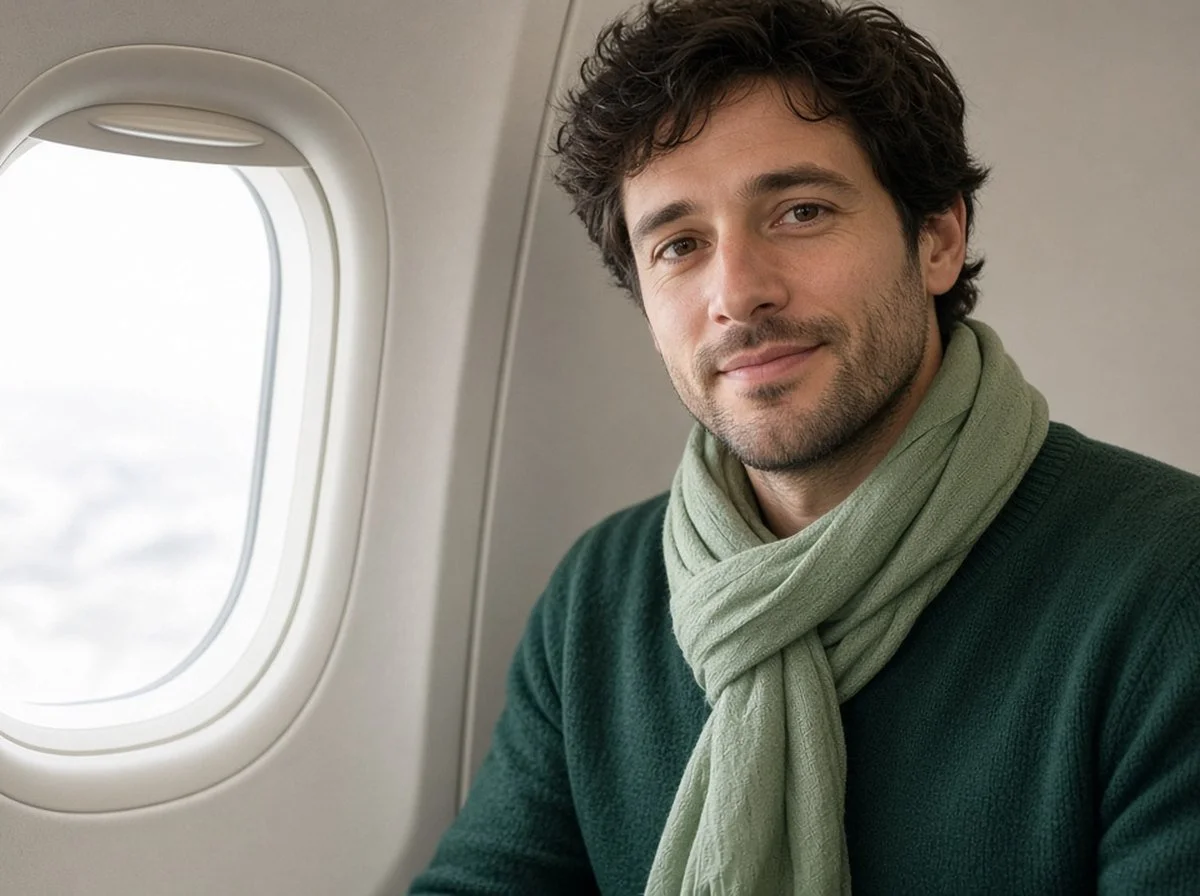
Fear of a panic attack while flying
For many people, the scariest part isn't the plane. It's the fear of panicking on the plane.
This is sometimes called "fear of fear." You worry that your heart will race, you'll feel trapped and you won't be able to cope in front of other passengers. CAMH notes that people with panic attacks can develop persistent worry about having another one, and may start avoiding places where they fear it might happen.
If this sounds familiar, it may help to know that panic sensations, while very uncomfortable, rise and then fall. Learning to ride them out, rather than fight them, is a skill many people build with practice. If you'd like to understand what anxiety can feel like from the inside, our post on what it's like to have anxiety puts it into everyday words.
How to get over fear of flying, before, at the airport and on board
There's no single trick that works for everyone, but some general strategies can make flying more manageable.
Before the trip
write down what exactly you're afraid of, in as much detail as feels okay
expect some anticipatory anxiety, and remind yourself it's part of the process
plan a few coping tools in advance, like slow breathing or a grounding phrase
get enough sleep and avoid packing your schedule too tightly
At the airport
arrive with plenty of time so you're not adding rush to the stress
notice anxious thoughts without arguing with every one of them
try slow breathing, with your out-breath a little longer than your in-breath
On board
tell yourself, "This is anxiety. It's uncomfortable, but it will pass."
let bumps happen without bracing against every one; turbulence can feel alarming, and the feeling of it is often the hardest part
focus on your senses: the feel of the seat, the sound of the engine, the taste of a drink
gently bring your attention back to the present each time your mind jumps ahead
These tools work best with practice, so try them on the ground first.
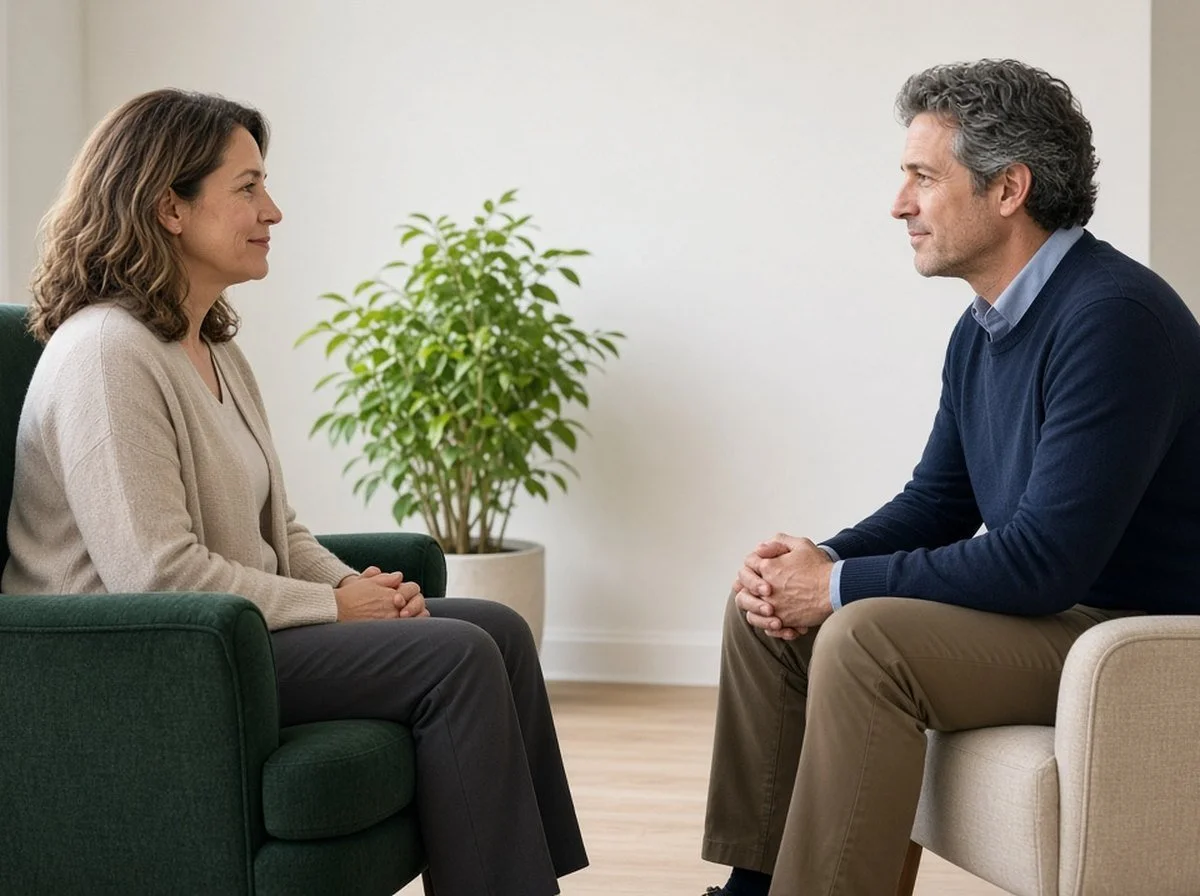
Fear of flying therapy and CBT for fear of flying
If fear of flying is affecting your life, therapy can help.
Oakes and Bor note that published research on fear of flying treatment uses language that closely resembles cognitive behavioural therapy (CBT). In general terms, CBT helps you understand the thoughts, feelings and behaviours that keep the fear going, and gradually practise facing it. That might include gradual exposure, starting with small steps like looking at pictures of planes or visiting an airport, and building up over time. Our post on exposure therapy for phobias explains how this kind of step-by-step work is done safely.
Oakes and Bor's second review on fear of flying treatment concluded that the most effective psychological help is likely to be based on a careful understanding of each person and their situation, rather than a fixed, one-size-fits-all program. That's why good therapy starts with getting to know what your fear is really about.
There's no promised timeline for overcoming fear of flying. Some people notice progress quickly, while others take longer. Either way, starting before your next trip can help you feel more prepared.
How counselling can help before your next trip
At Transformation Counselling, we offer anxiety counselling and cognitive behavioural therapy (CBT) at our Kitchener-Waterloo, Cambridge and Ottawa offices, and online anywhere in Ontario.
In counselling, you can:
understand what's driving your fear of flying
learn tools to manage anxiety and panic sensations
practise facing fears step by step, at a pace that feels manageable
build confidence for your next trip
On the practical side, we can direct bill many insurers, including for sessions with a Registered Psychotherapist (Qualifying). Desjardins is the exception: through TELUS eClaims, we can direct bill Desjardins for sessions with an RSW, RP or psychologist, but not for an RP (Qualifying). Coverage depends on your plan, so check with your insurer.
Book a free 15-minute consultation with our admin team. You don't need a flight booked to start. "I'm scared of flying and I'd like help" is enough.
If you're in crisis: if you or someone you love is in immediate danger, call 911. If you're thinking about suicide, call or text 9-8-8 any time, day or night.
Your fear makes sense, and it doesn't have to decide where you go. With practice and support, the sky can feel a little less scary.
Last reviewed: October 2026
Sources
Specific Phobia, National Institute of Mental Health (NIMH)
Anxiety Disorders, Centre for Addiction and Mental Health (CAMH)
Specific phobias: Symptoms and causes, Mayo Clinic (mayoclinic.org, accessed October 2026)
Oakes M, Bor R. The psychology of fear of flying (part I). Travel Medicine and Infectious Disease, 2010;8(6):327-38 (PubMed 21050826)
Oakes M, Bor R. The psychology of fear of flying (part II): approaches to treatment. Travel Medicine and Infectious Disease, 2010;8(6):339-63 (PubMed 21071281)